In a Nutshell:
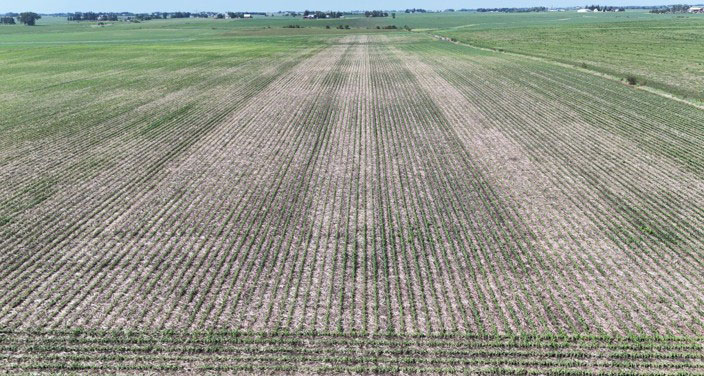
- No-till and strip-till planting methods both allow farmers to reduce soil disturbance and plant green into living cover crops.
- Strip-till requires an extra equipment pass compared to no-till but may result in higher yields. However, five out of seven past PFI research trials directly comparing the two practices have shown no difference in corn or soybean yields between no-till and strip-till.
- This year, farmers Joe Rowe and Kyle Spowart investigated how no-till vs. strip-till planting affected yield of their corn crops.
Key Findings:
- Neither farmer found a statistically significant difference in corn yield between no-till and strip-till treatments.
- Both farmers observed other dynamics during their trial that led them to prefer strip-till over no-till on their farms.
Background
No-till and strip-till planting are popular conservation practices practiced broadly throughout the US to reduce soil erosion and improve soil quality [1]. No-till planting also eliminates the labor and fuel costs of preplant tillage. One drawback of no-till management is that it can cause modest yield declines of about 3.4% compared to conventional tillage when it is first implemented. After about a decade, crop yields on no-till managed fields generally match or exceed those in conventionally tilled systems [2],[3], [4]. Some academic studies have shown that strip-tillage can outyield no-till, mitigating the early yield loss while maintaining some soil benefits [5]. Farmers must determine for themselves whether strip-till planting increases yields enough to offset the extra fuel and labor costs compared to no-till planting.
Past research conducted by PFI farmers in 2018, 2023 and 2024 found that strip tillage did not consistently significantly increase yields in on-farm settings [6], [7], [8]. Only one of the four past trials investigating corn yields and one of three trials investigating soybean yields found greater yields and economic returns in strip-till compared to no-till crops. In all other cases, the yields of no-till and strip-till crops were not statistically significantly different. Similarly, multi-year research done by Iowa State University has shown that strip-till did not increase corn or soybean yield compared to no-till in most trial years [9], [10], [11].
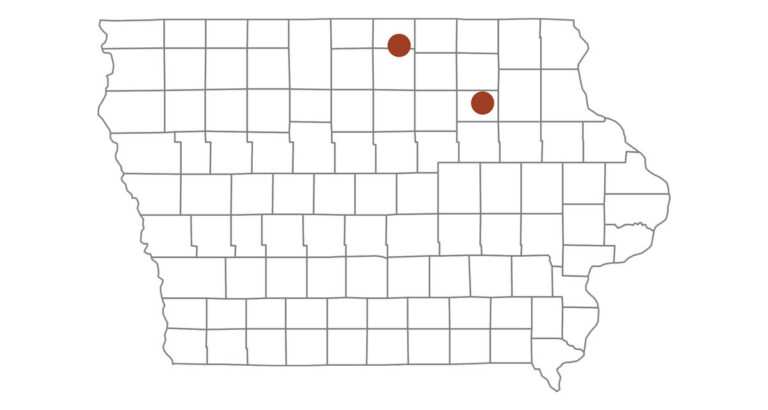
In 2025, farmers Joe Rowe and Kyle Spowart opted to trial no-till vs. strip-till in their own corn fields. Rowe was interested in the trial in large part because he does not “know if anyone in North Iowa is doing no-till corn on corn” and wanted to see if it could work on his farm. Spowart wanted to assess whether strip-till continued to make financial sense for his operation.
Methods
Design
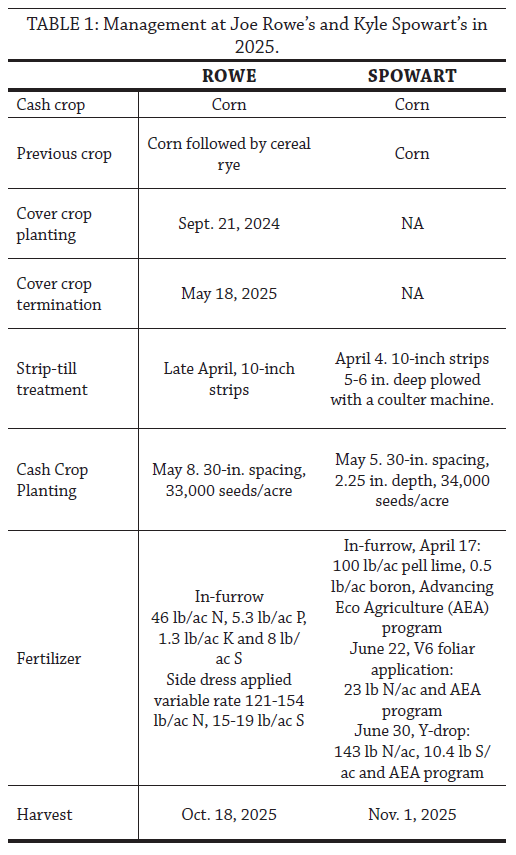
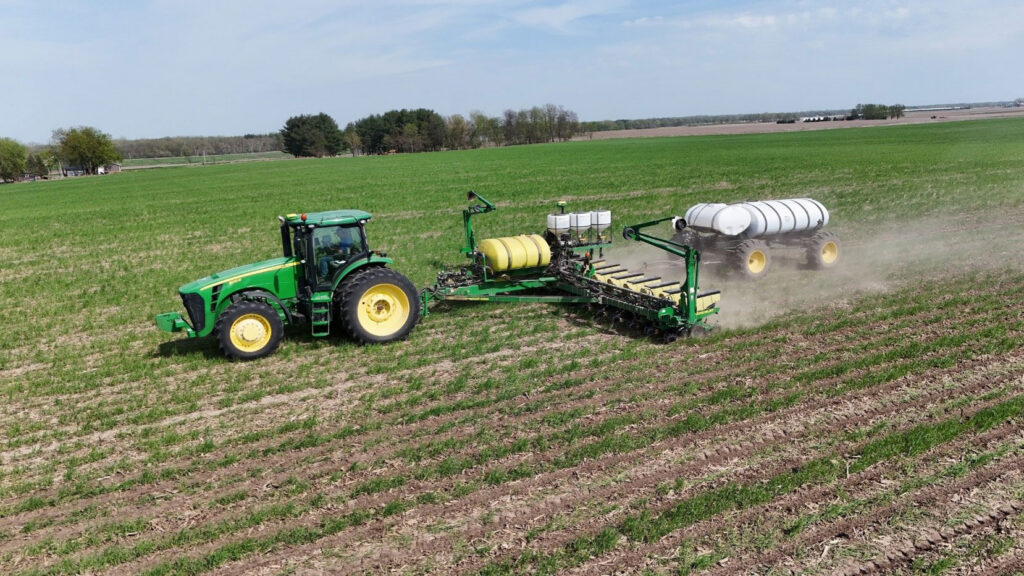
Planting details and field management at both farms are presented in Table 1. Cooperators established treatments in randomized, paired strips: 2 treatments × 4 replications = 8 strips total. Rowe planted wide strips and measured corn yield on two passes within each strip. Spowart had to omit one replicate from the study due to combining error.
Measurements
Both Rowe and Spowart recorded grain yield and moisture using a yield monitor or weigh wagon. Corn yields are corrected to 15.5% moisture.
Data Analysis
We used a 2-way ANOVA (Analysis of Variance) at a 95% confidence level to determine if there were significant differences in yield no-till and strip-till treatments while accounting for variability across the field. 95% confidence means that any treatments we declare statistically different would be expected to occur 95 times out of 100 under the same conditions. We can perform this analysis because the cooperators had completely randomized and replicated experimental designs (Figure A1).
Results and Discussion
Neither Rowe nor Spowart saw statistically significant differences in yield between their no-till and strip-till treatments (Figure 1). However, both farmers observed other evidence to lead them to conclude that strip-till might generally outyield no-till on their farm. After looking at his precision soil and yield maps, Rowe reported that the strip-till seemed to have outyielded the no-till in the poorer parts of his field. He said “when I consider the year, and the soil types [the trial] was on, it was about as advantageous of a situation for the no-till there could be. So, with other stressors and heavier ground I believe the [difference between no-till and strip-till] would be wider yet.”
Strip tillage cost Spowart $32/ac, but even after seeing no statistically significant yield difference between his treatments, he reports that he prefers it to no-till. He observed better plant emergence in his strip-till treatments, with about 4,500 more plants per acre. He also likes banding on and incorporating his dry fertilizer before planting. Spowart reported that they will take the yield results and re-assess their financials “to decide if strip-till is still beneficial to our overall operation,” but expects that they will continue to strip-till corn.
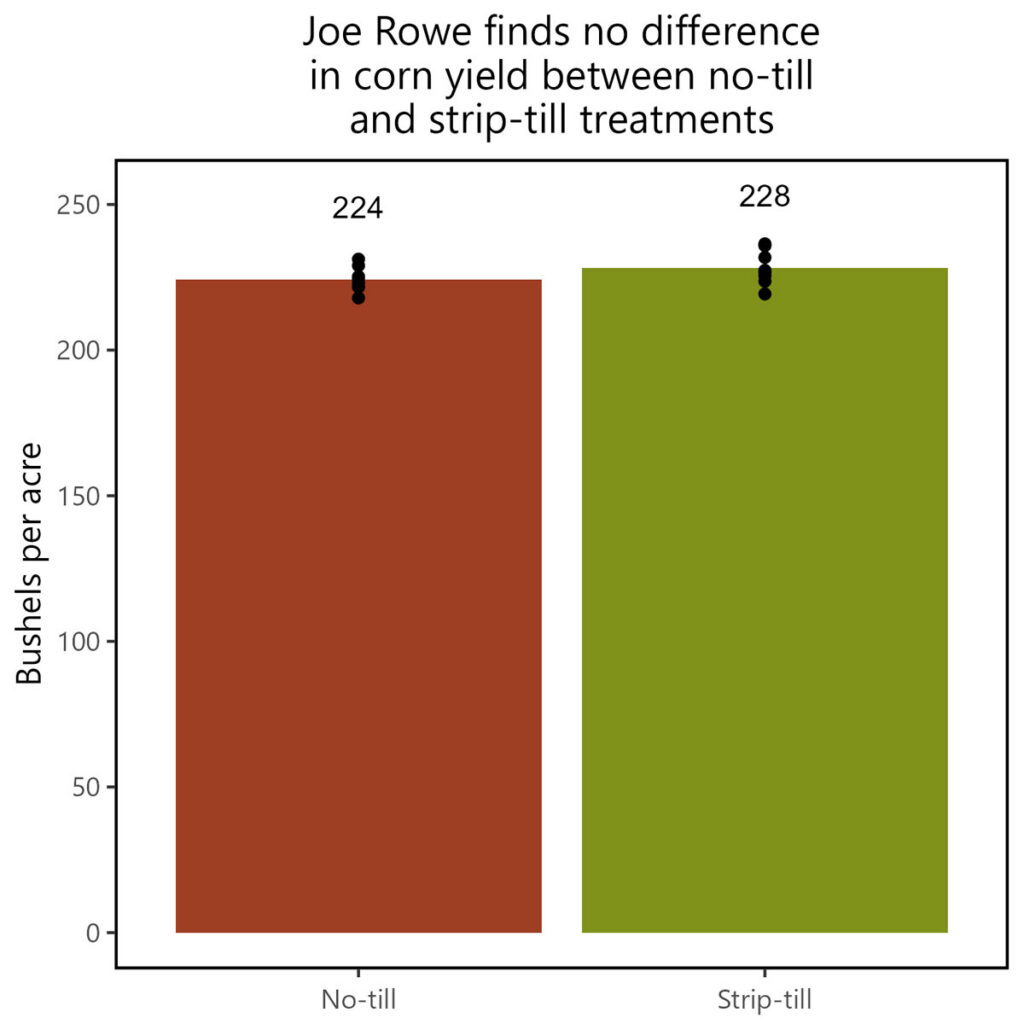
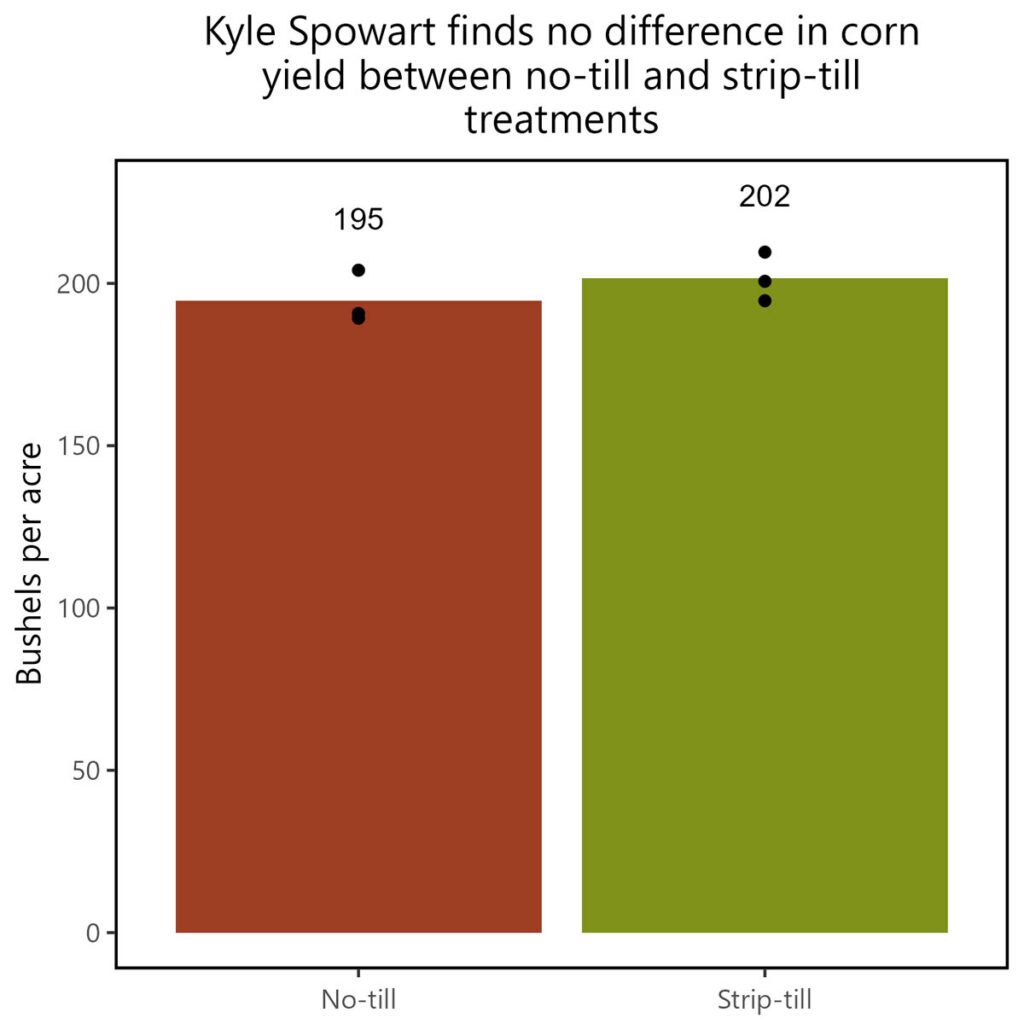
FIGURE 1. Corn yield at Joe Rowe’s and Kyle Spowart’s in 2025. Columns represent the average corn yield for each treatment. Points represent corn yield from each individual plot. There were no statistically significant differences in corn yield between no-till and strip-till treatments on either farm at the 95% confidence level. Click to enlarge.
Conclusions and Next Steps
On-farm trials conducted by PFI farmers continue to demonstrate that there is no consistent, statistically significant yield difference between corn or soybeans planted using no-till and strip-till. Farmers must carefully consider whether strip-till offers them benefits compared to no-till that offset the extra cost of equipment use, fuel and labor. Rowe and Spowart both concluded that strip-till continues to be a better option for their operations.
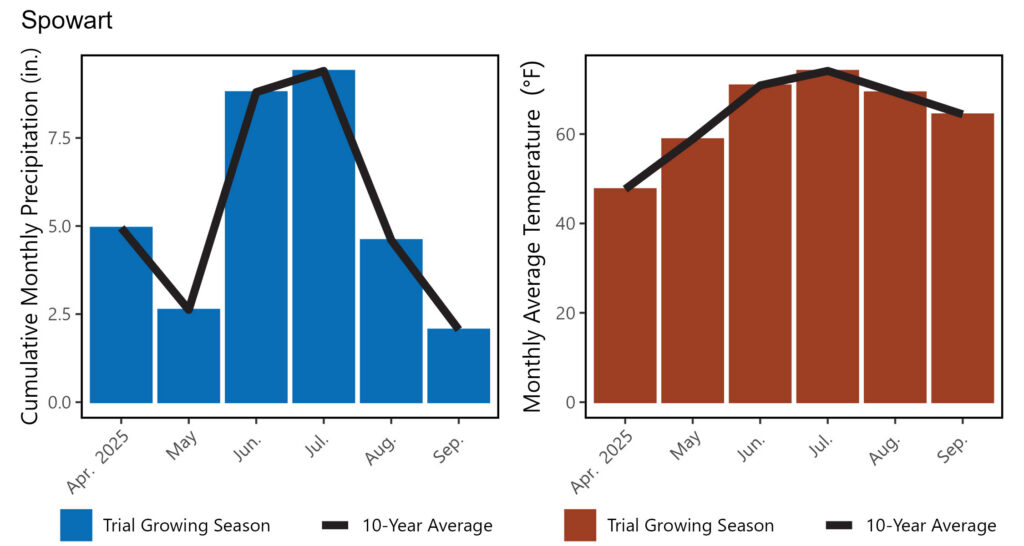
Appendix - Trial Design and Weather Conditions


References
- T. Vilsack, “2022 Census of Agriculture United States Summary and State Data,” United States Department of Agriculture National Agriculture Statistics Service, AC-22-A-51, Feb. 2024. [Online]. Available: https://www.nass.usda.gov/Publications/AgCensus/2022/index.php
- C. M. Pittelkow et al., “When does no-till yield more? A global meta-analysis,” Field Crops Res., vol. 183, pp. 156–168, Nov. 2015, doi: 10.1016/j.fcr.2015.07.020.
- T. Rai, S. Kumar, T. Nleya, P. Sexton, and G. Hoogenboom, “Simulation of maize and soybean yield using DSSAT under long-term conventional and no-till systems,” Soil Res., vol. 60, no. 6, pp. 520–533, Feb. 2022, doi: 10.1071/SR21042.
- S. Cusser, C. Bahlai, S. M. Swinton, G. P. Robertson, and N. M. Haddad, “Long-term research avoids spurious and misleading trends in sustainability attributes of no-till,” Glob. Change Biol., vol. 26, no. 6, pp. 3715–3725, 2020, doi: 10.1111/gcb.15080.
- S. Dou et al., “Strip tillage promotes crop yield in comparison with no tillage based on a meta-analysis,” Soil Tillage Res., vol. 240, p. 106085, Aug. 2024, doi: 10.1016/j.still.2024.106085.
- S. Gailans, J. Boyer, T. Sieren, and J. Gustafson, “No-till vs. Strip-till Corn and Soybeans Following a Cereal Rye Cover Crop,” Practical Farmers of Iowa, 2018. [Online]. Available: https://practicalfarmers.org/wp-content/uploads/2019/04/18.FC_.CC.No-vs.-strip-till-following-a-cover-crop.pdf
- K. Krueger, T. Sieren, and E. Link, “Strip-Till Vs. No-TIll Soybeans and Corn Following A Cover Crop,” Practical Farmers of Iowa, Research Report, 2023. [Online]. Available: https://practicalfarmers.org/resources/research-reports/strip-till-vs-no-till-soybeans-and-corn-following-a-cover-crop/
- E. Link, K. Krueger, and L. Brown, “Strip-Till vs. No-Till Following Cover Crop - Practical Farmers of Iowa,” PFI, 2024. Accessed: Jul. 15, 2026. [Online]. Available: https://practicalfarmers.org/resources/research-reports/strip-till-vs-no-till-following-cover-crop/
- M. Al-Kaisi and M. A. Licht, “Effect of Strip Tillage on Corn Nitrogen Uptake and Residual Soil Nitrate Accumulation Compared with No-Tillage and Chisel Plow,” Agron. J., vol. 96, no. 4, pp. 1164–1171, 2004, doi: 10.2134/agronj2004.1164.
- M. A. Licht, Z. A. Koopman, and K. R. Berns, “No-tillage, Strip-tillage, and Chisel Plow Tillage Trial,” Iowa State University, Digital Repository, Ames, 4142686, 2013. doi: 10.31274/farmprogressreports-180814-1815.
- M. Perez-Bidegain, R. M. Cruse, and A. J. Ciha, “Strip Till, No-Till and Conventional Tillage Comparisons - Does Planting Date Affect Results?,” in Proceedings of the Integrated Crop Management Conference, Iowa State University, Digital Press, Dec. 2003, p. 11977502. doi: 10.31274/icm-180809-761.
- A. H. Sparks, “nasapower: A NASA POWER Global Meteorology, Surface Solar Energy and Climatology Data Client for R,” J. Open Source Softw., vol. 3, no. 30, p. 1035, Oct. 2018, doi: 10.21105/joss.01035.
- A. H. Sparks et al., nasapower: NASA POWER API Client. (May 18, 2024). Accessed: Sep. 11, 2024. [Online]. Available: https://cran.r-project.org/web/packages/nasapower/index.html