In a Nutshell:
- The objective of this trial was to determine the effect of seeding a cereal rye companion cover crop just prior to planting organic soybeans on weed pressure and soybean yield.
- Daniel Sheetz and Eric Madsen hypothesized that a spring-seeded companion cover crop would reduce weed pressure without reducing soybean yield relative to a treatment with no cover crop.
Key Findings:
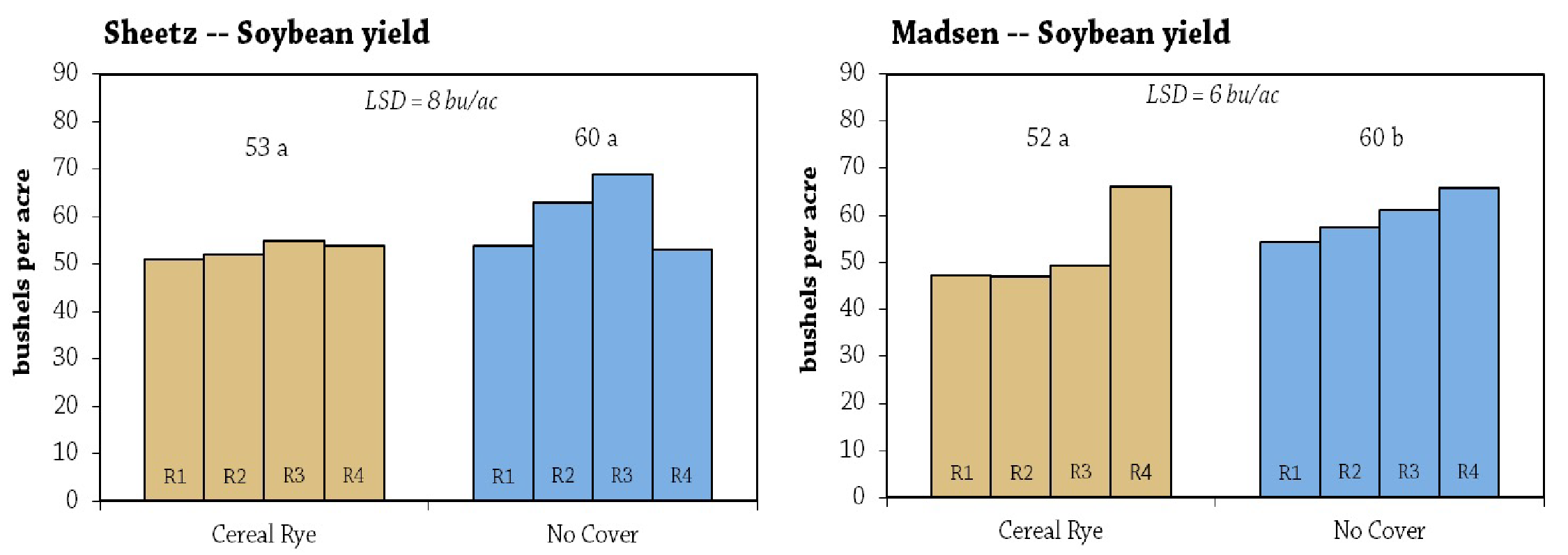
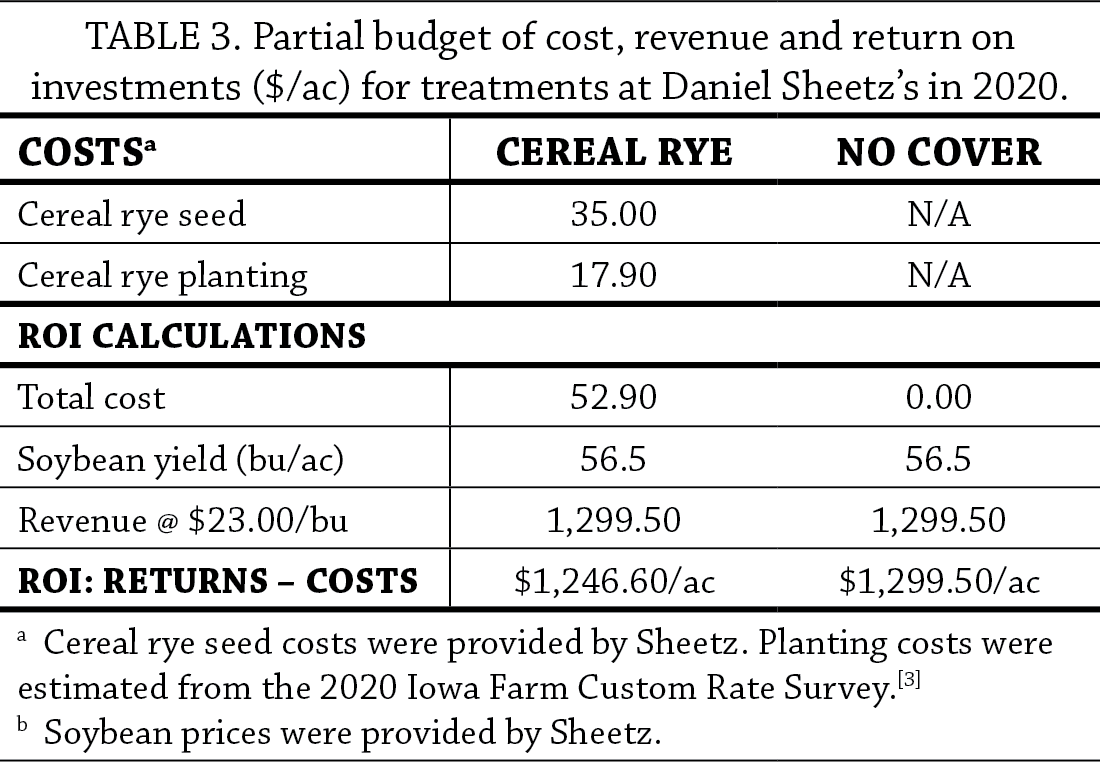
- Spring-seeding cereal rye as a companion cover crop in organic soybean provided similar weed control to a no cover treatment on both farms; however, it reduced soybean yield at Madsen’s and reduced ROI by $53/ac (Sheetz) and $192/ac (Madsen).
- Repeating the trial in a non-drought year might generate different results. Although Sheetz has a few years of experience with spring-seeding cereal rye in corn and soybean, the results of this trial encouraged him to consider using shorter season corn hybrids to create opportunity for planting cereal rye in the fall.
Background
For organic field crops producers like Daniel Sheetz and Eric Madsen, managing weeds and erosion in organic soybeans poses an admirable challenge. Without herbicides, organic producers rely heavily on tillage and cover crops for weed control. And while fall-seeding cereal rye ahead of soybeans is the go-to cover crop strategy across Iowa for organic and conventional production alike, Sheetz worries about being able to control it the next spring. He does not want volunteer rye to show up in his food-grade oats that follow soybean in his crop rotation.
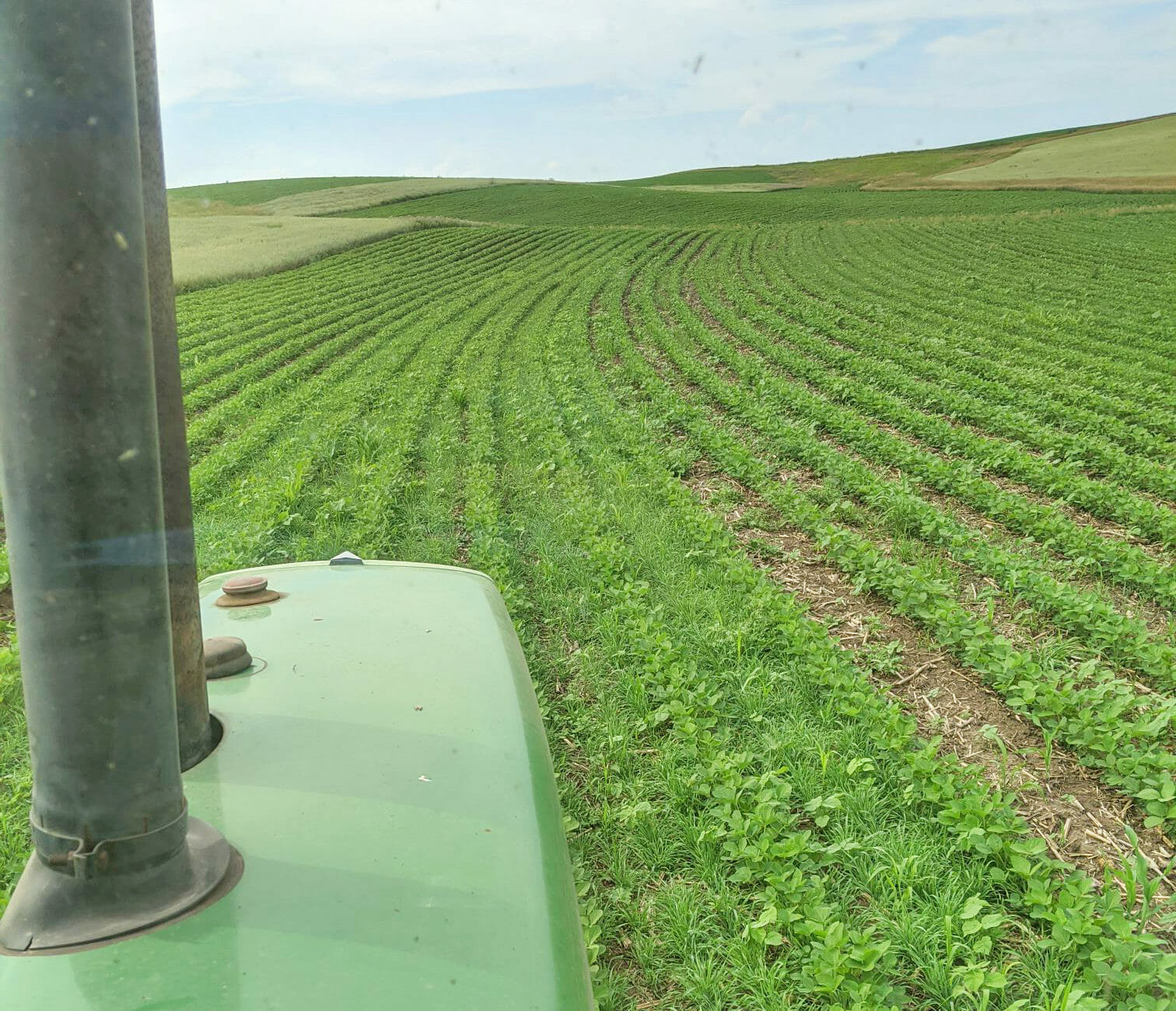
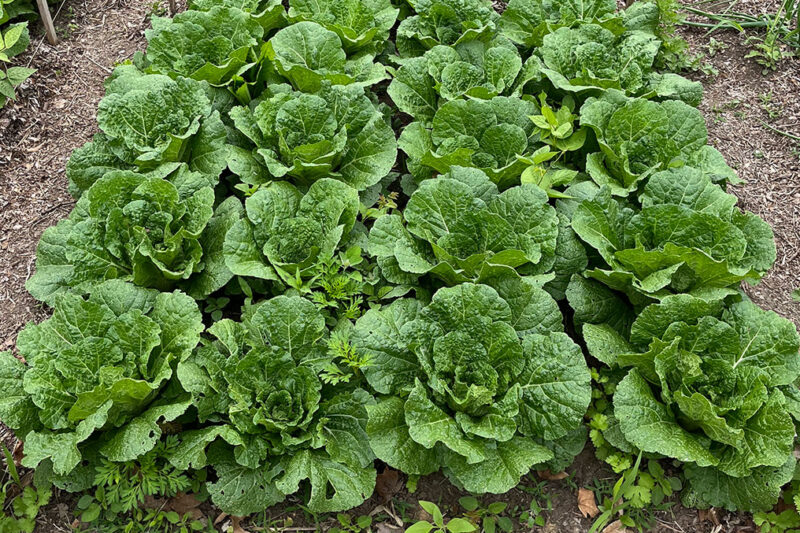
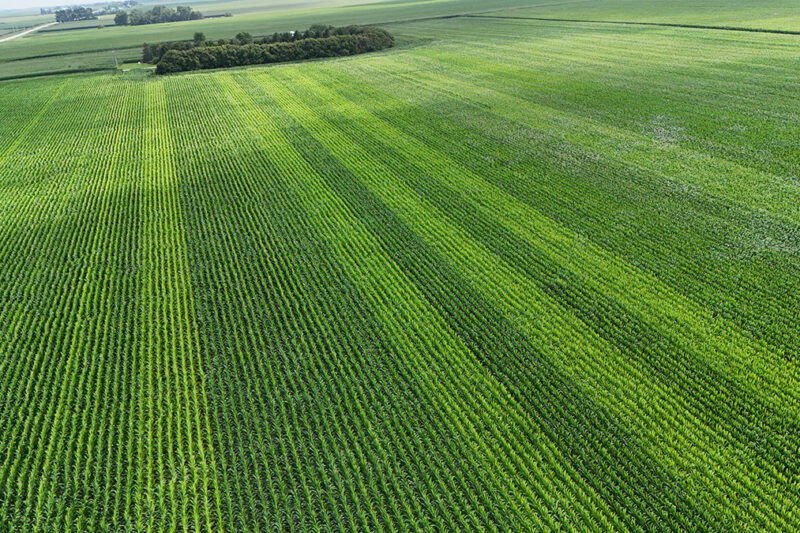
- Cereal rye – Cereal rye companion cover crop seeded just prior to planting soybeans.
- No cover – Control. No cover crop seeded.
Methods
Design
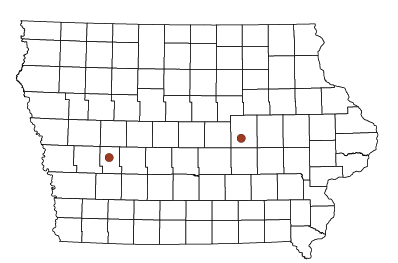
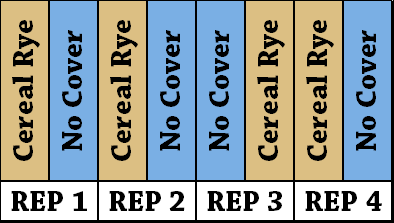
Field management at Sheetz’s and Madsen’s sites in 2020 is detailed in Table 1. Following two cultivations in the spring of 2020, Sheetz and Madsen established treatment strips by planting cereal rye. They arranged treatments randomly in neighboring strips and replicated each treatment 4 times for a total of 8 strips at each farm (Figure A1). This arrangement allowed us to conduct statistical analyses to assess the effects of a cereal rye companion cover crop on weed pressure and organic soybean yield. Treatment strips measured 180 ft by 750 ft at Madsen’s and 30 ft by 435 ft at Sheetz’s.
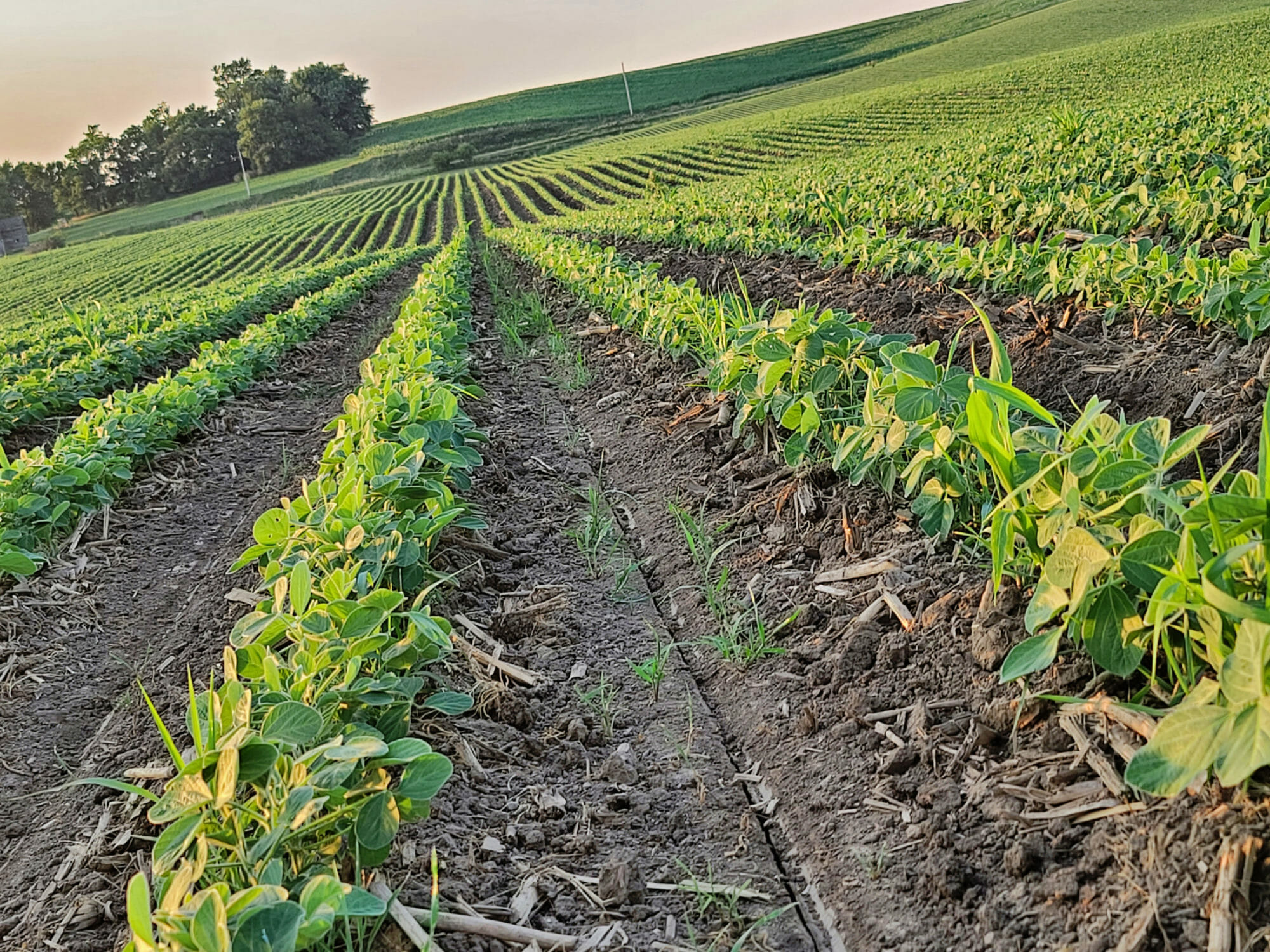
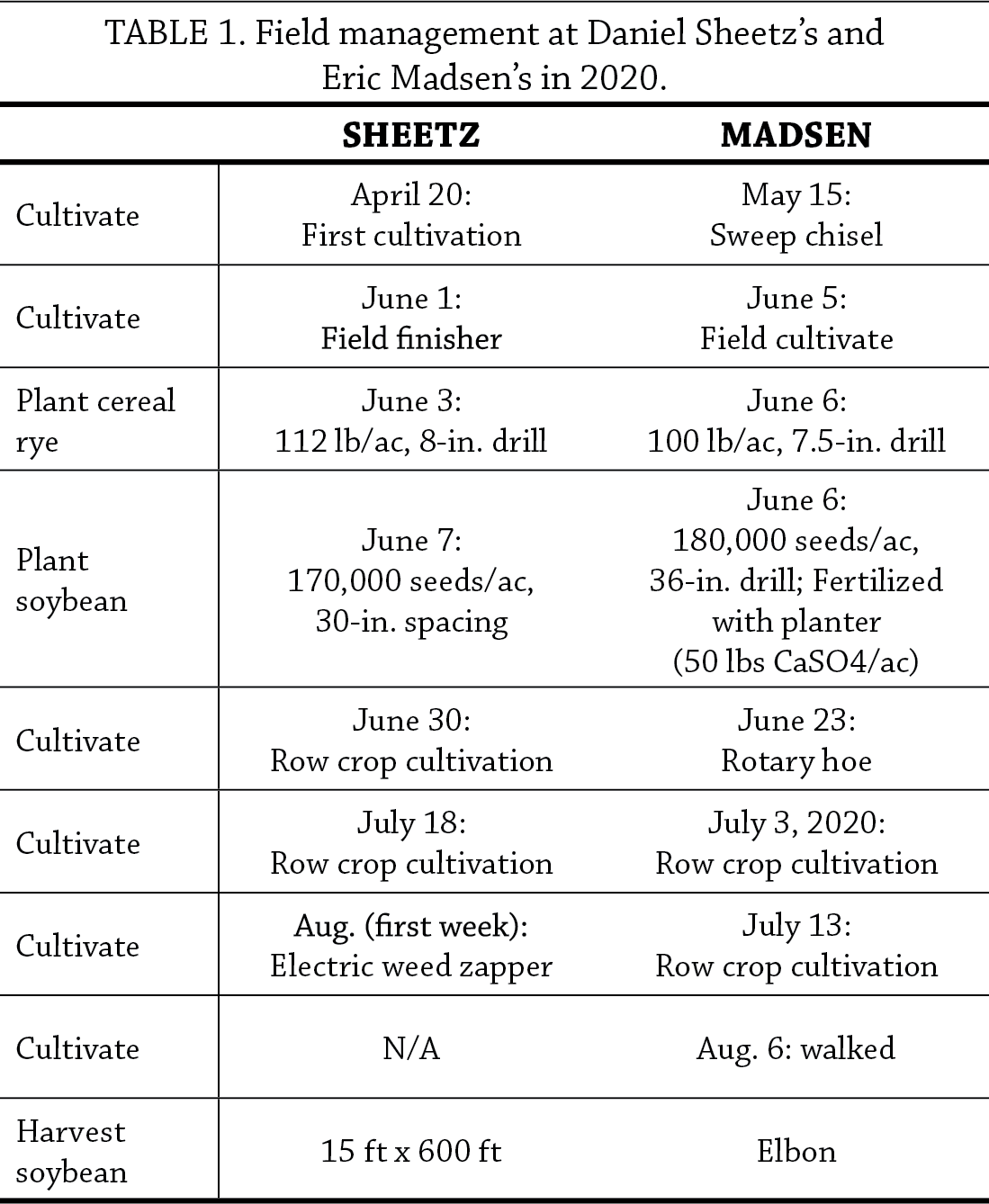 The cooperators planted soybeans in all strips within 4 days after planting cereal rye (Table 1). After planting soybeans, Sheetz cultivated twice then used an electric weed zapper in all strips. Madsen used a rotary hoe once, cultivated twice, then walked all strips for weed control.
Results and Discussion
Weed pressure
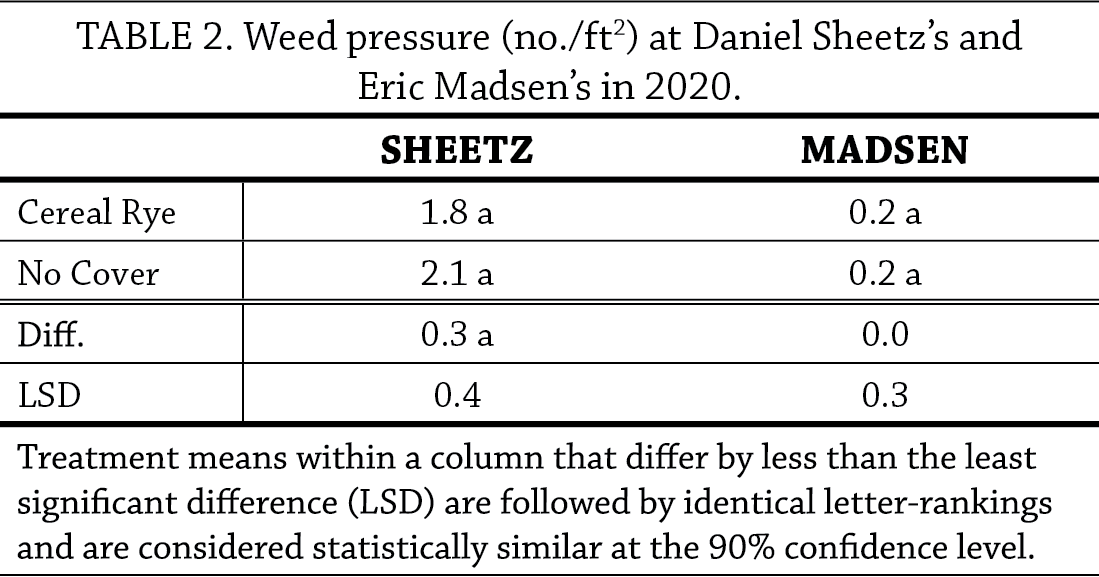
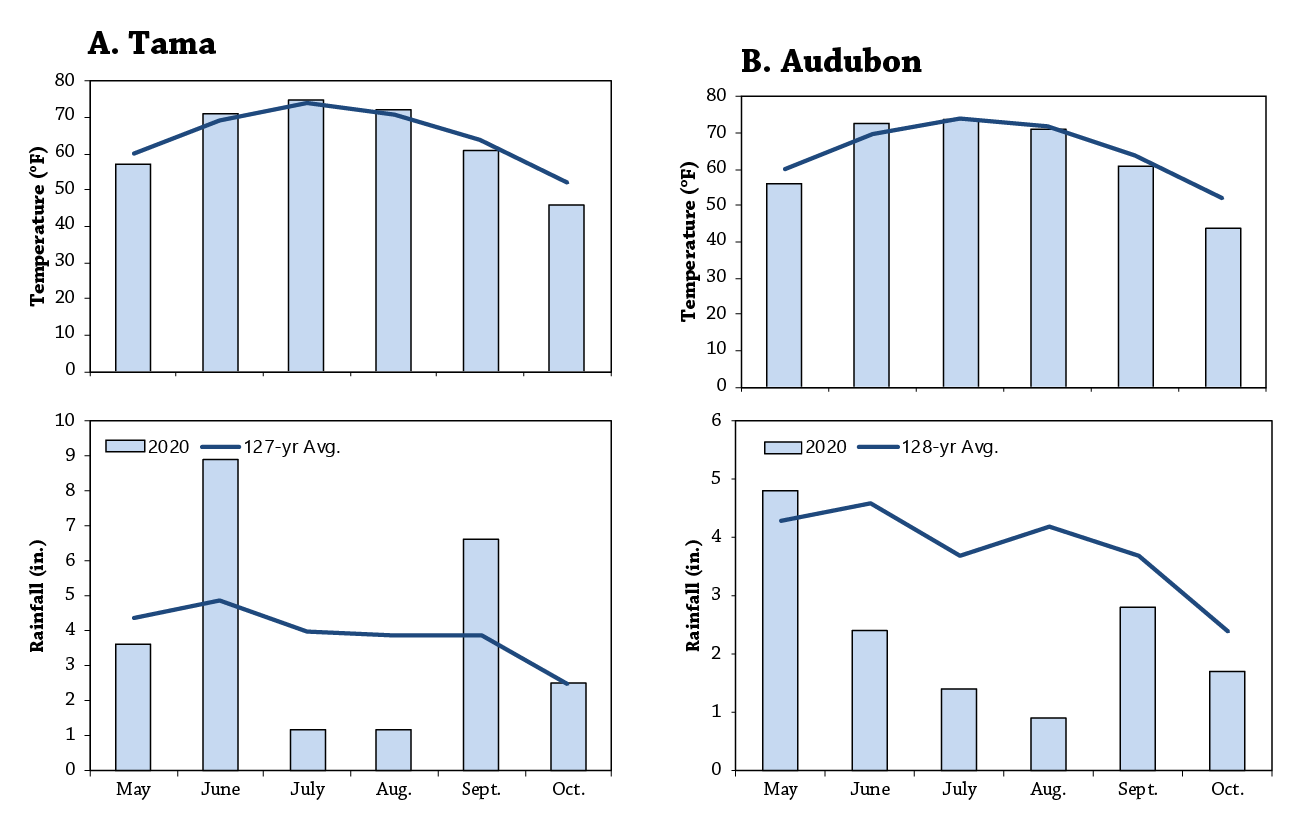
Contrary to their hypothesis, neither Sheetz nor Madsen experienced a reduction to weed pressure in their cereal rye treatment strips (Table 2). Weed pressure was generally low in both treatments of both sites, and drought conditions through July and August likely played a role (Figure A2).

Conclusions and Next Steps
Spring-seeding cereal rye as a companion cover crop in organic soybean provided similar weed control to a no cover treatment at Sheetz’s and Madsen’s farms in 2020; however, the same treatment reduced soybean yield at Madsen’s and reduced ROI at both sites by $53/ac and $192/ac, respectively. Reflecting on the trial, Madsen commented, “I feel the drought likely skewed my results.” It is possible that repeating the trial in a wetter year might result in different weed pressures and results. In the three years preceding this trial, Sheetz found some success fine-tuning the practice of spring-seeding cereal rye in both corn and soybean; however, when asked if he will change practices more permanently as a result of conducting this trial, Sheetz responded, “I will possibly select for shorter season corn hybrids to give me an opportunity to plant rye in the fall.”
Appendix – Trial Design and Weather Conditions
References
- Nelson, H., M. Smith, D. Alert and R. Alexander. 2020. Spring Seeding Cereal Rye for Weed Control in Organic Soybeans. Practical Farmers of Iowa Cooperators’ Program. https://practicalfarmers.org/research/spring-seeding-cereal-rye-for-weed-control-in-organic-soybeans/ (accessed October 2020).
- Johanns, A. 2020. Historical Soybean Yields by County in Iowa. A1-13. Ag Decision Maker. Iowa State University Extension and Outreach. https://www.extension.iastate.edu/agdm/crops/pdf/a1-13.pdf (accessed April 2021).
- Plastina, A., A. Johanns and O. Massman. 2020. 2020 Iowa Farm Custom Rate Survey. FM1 1698. Ag Decision Maker. Iowa State University Extension and Outreach. https://www.extension.iastate.edu/agdm/crops/html/a3-10.html (accessed March 2021).
- Iowa Environmental Mesonet. 2021. IEM “Climodat” Reports. Iowa State University Department of Agronomy. https://mesonet.agron.iastate.edu/climodat/ (accessed March 2021).