In a Nutshell:
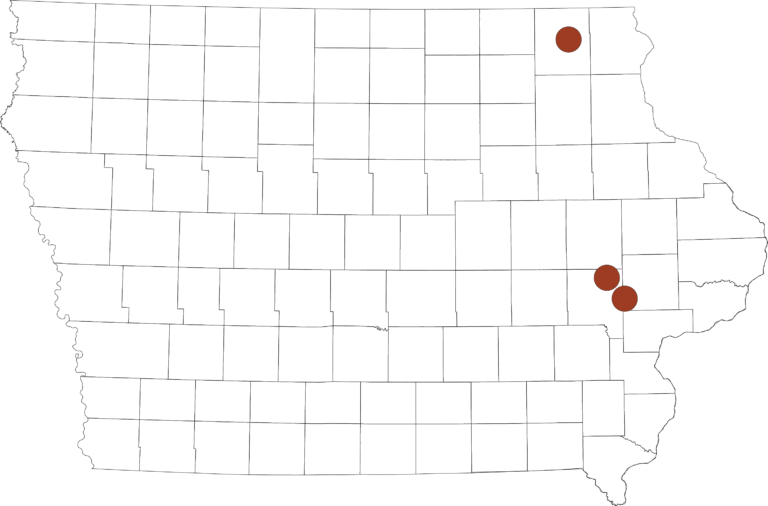
- Hannah Breckbill & Emily Fagan; Kate Edwards; and Mark Quee wanted to know how fertilizer practices on their farms affected broccoli production.
- Each farm took a different approach to comparing their typical practice with new practices that interested them – they each wanted to test whether their existing practice was adequate or if a change was in order.
Key Findings:
- Breckbill & Fagan learned that their typical practice, applying Sustane at the time of transplanting, turned out to be the right practice for them
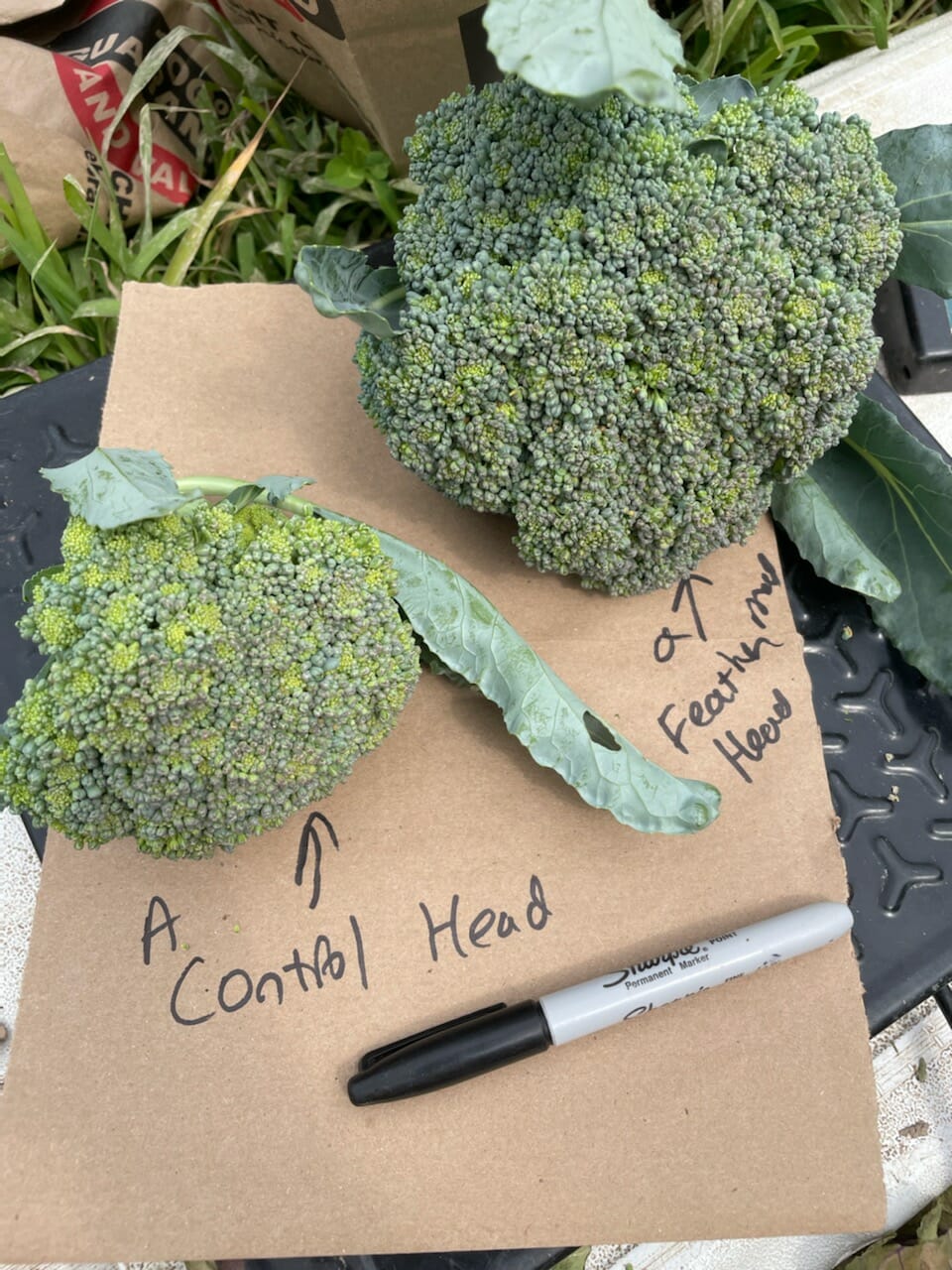
- Edwards learned that side-dressing feather meal produced a more robust broccoli crop than adding no fertility.
- Quee found that side-dressing blood meal reduced broccoli yield and chalked it up to already decent levels of soil fertility on his farm.
Methods
- 1x planting – Typical practice: apply ¼ cup of Sustane to each plant at the time of transplanting.
- 2x planting – Double the typical practice: apply ½ cup of Sustane to each plant at the time of transplanting.
- 2x split – Apply ¼ cup of Sustane to each plant at transplanting and an additional ¼ cup when plants were 8-in. tall (results in ½ cup total applied).
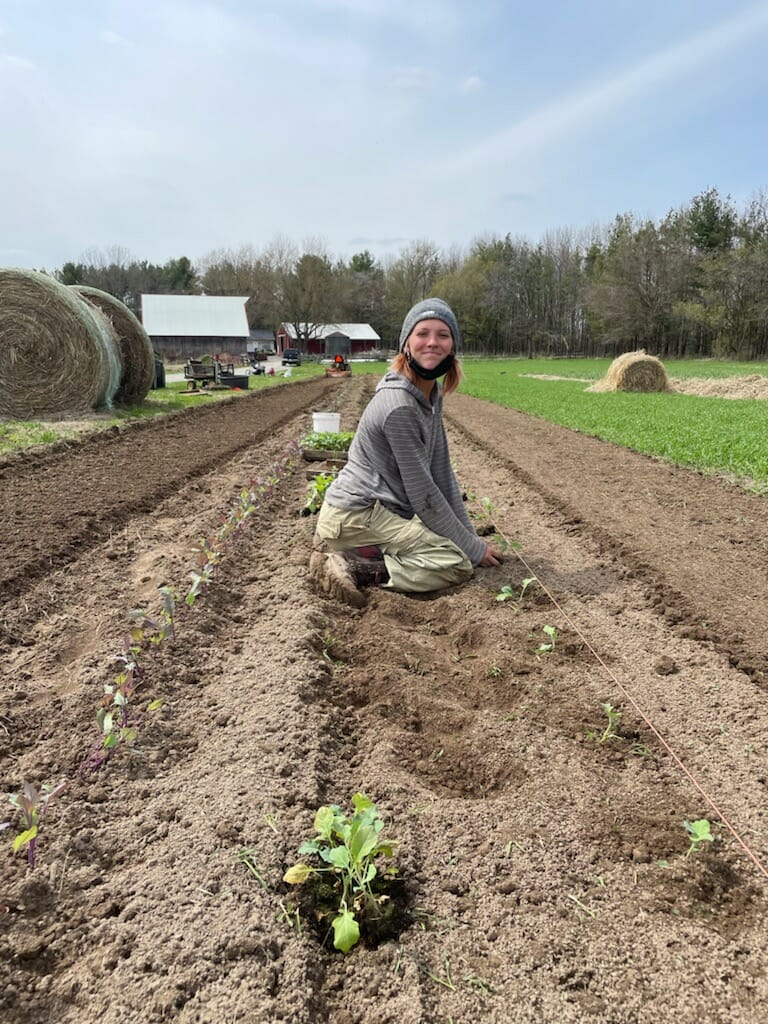
At the other two farms, Edwards and Quee trialed blood meal and feather meal side-dressed to plants about one month after transplanting. Edwards used rates of 1/3 cup of blood meal per plot and 2 lb of feather meal per plot. Quee only trialed blood meal and applied ½ cup per plant.
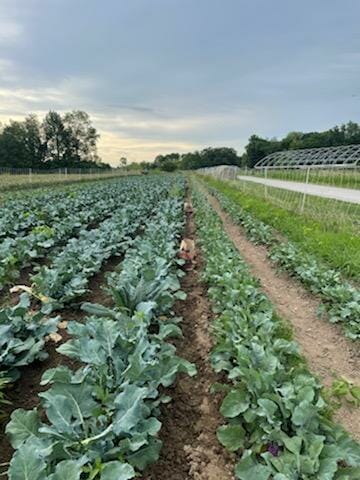
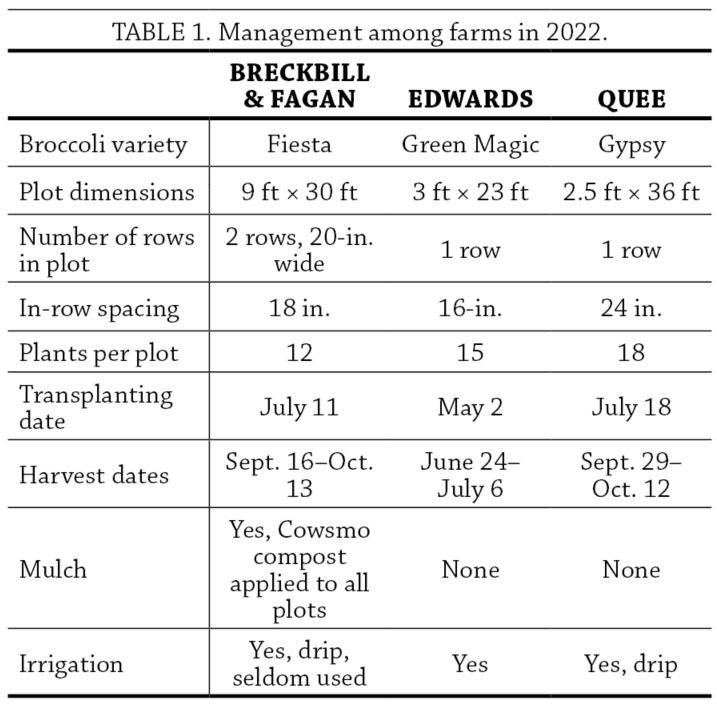
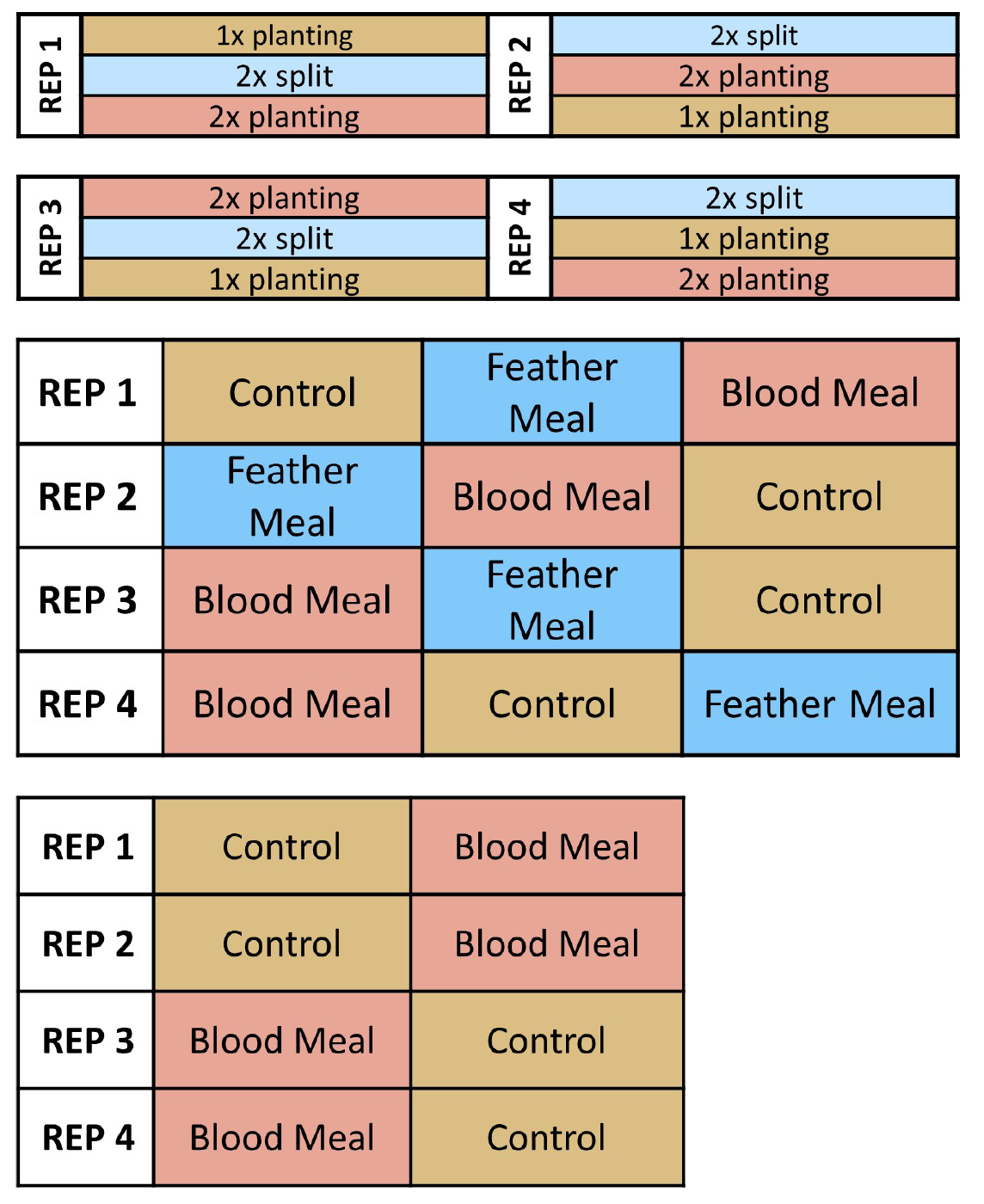
Each farm replicated their treatments four times (Figure A1). Plot management at each farm is presented in Table 1.
 Measurements
Each farm recorded the number of broccoli heads harvested per plot and the total weight of heads harvested per plot on each harvest date. Total number total weight of marketable heads harvested from each plot were used in the analysis. From these values we also calculated the average weight of an individual marketable head.
Data analysis
To evaluate the effect of the fertility treatments on broccoli at each farm, we calculated Tukey’s least significant difference (LSD). If the difference between any two of the treatments was greater than the LSD, we considered this as a statistically significant effect. On the other hand, if the resulting difference between any two treatments was less than the LSD, we would consider the results to be statistically similar. We could make these statistical calculations because the farms’ experimental design involved replication of the treatments (Figure A1).
Measurements
Each farm recorded the number of broccoli heads harvested per plot and the total weight of heads harvested per plot on each harvest date. Total number total weight of marketable heads harvested from each plot were used in the analysis. From these values we also calculated the average weight of an individual marketable head.
Data analysis
To evaluate the effect of the fertility treatments on broccoli at each farm, we calculated Tukey’s least significant difference (LSD). If the difference between any two of the treatments was greater than the LSD, we considered this as a statistically significant effect. On the other hand, if the resulting difference between any two treatments was less than the LSD, we would consider the results to be statistically similar. We could make these statistical calculations because the farms’ experimental design involved replication of the treatments (Figure A1).
Results and Discussion
Breckbill & Fagan
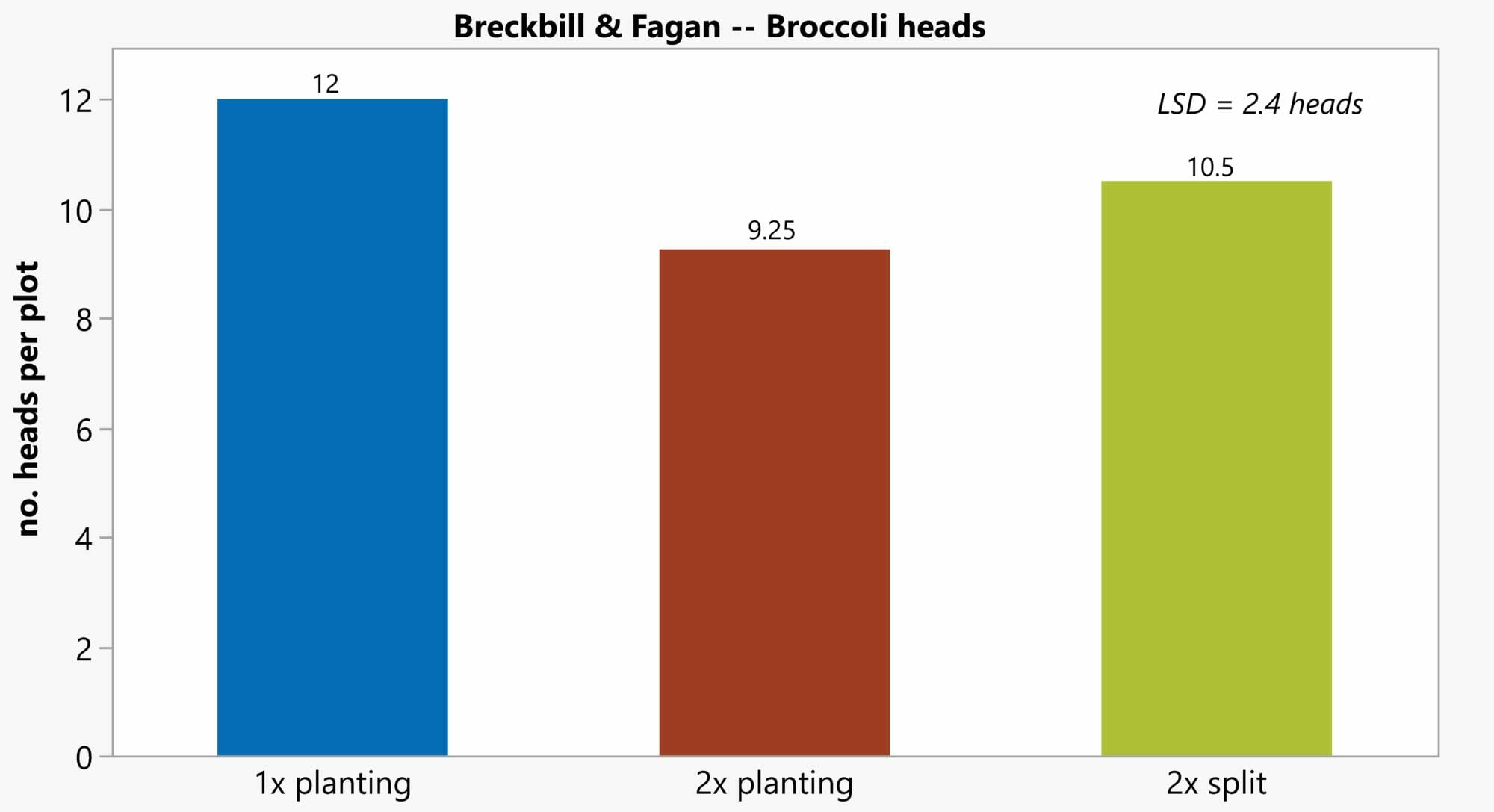
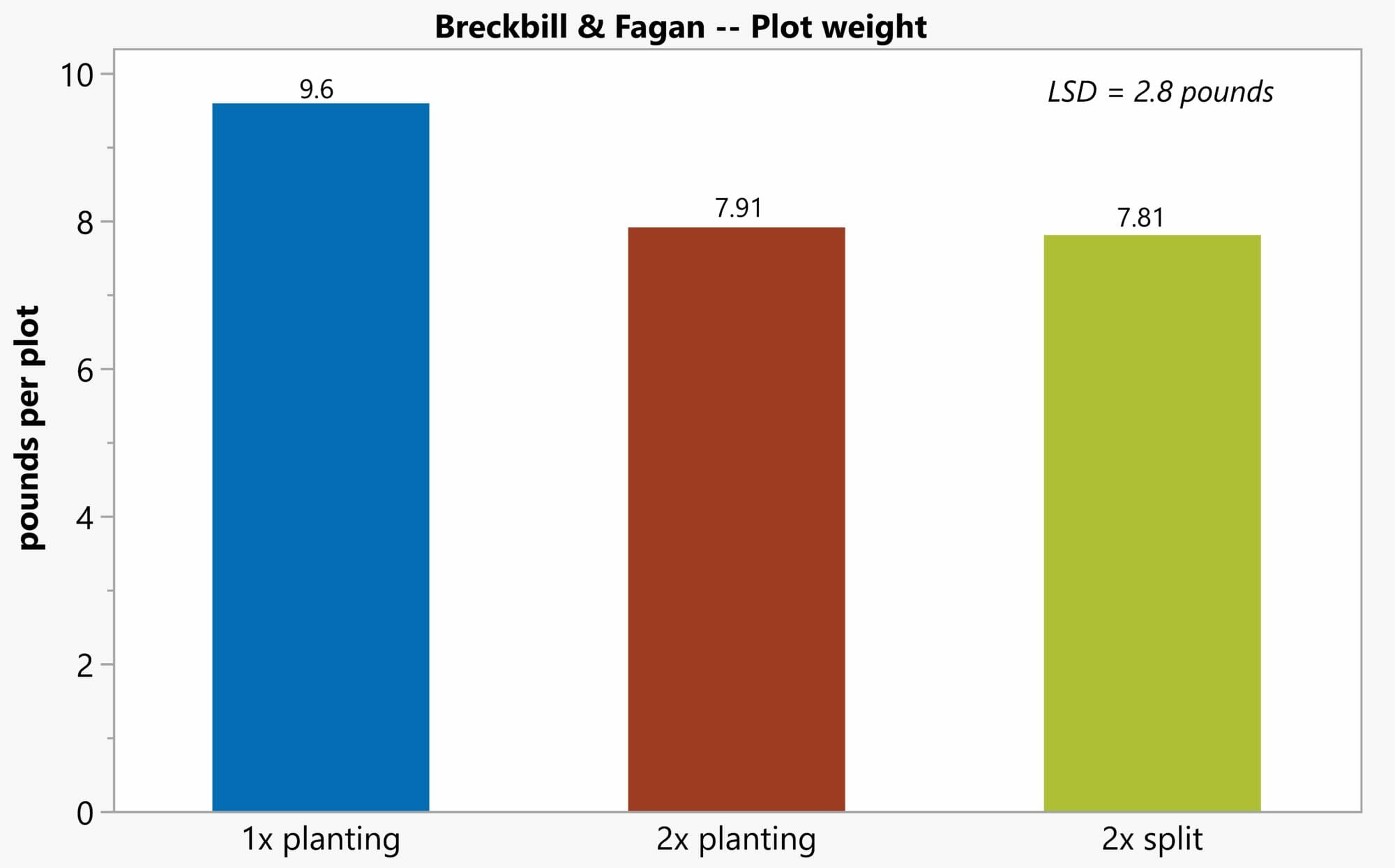
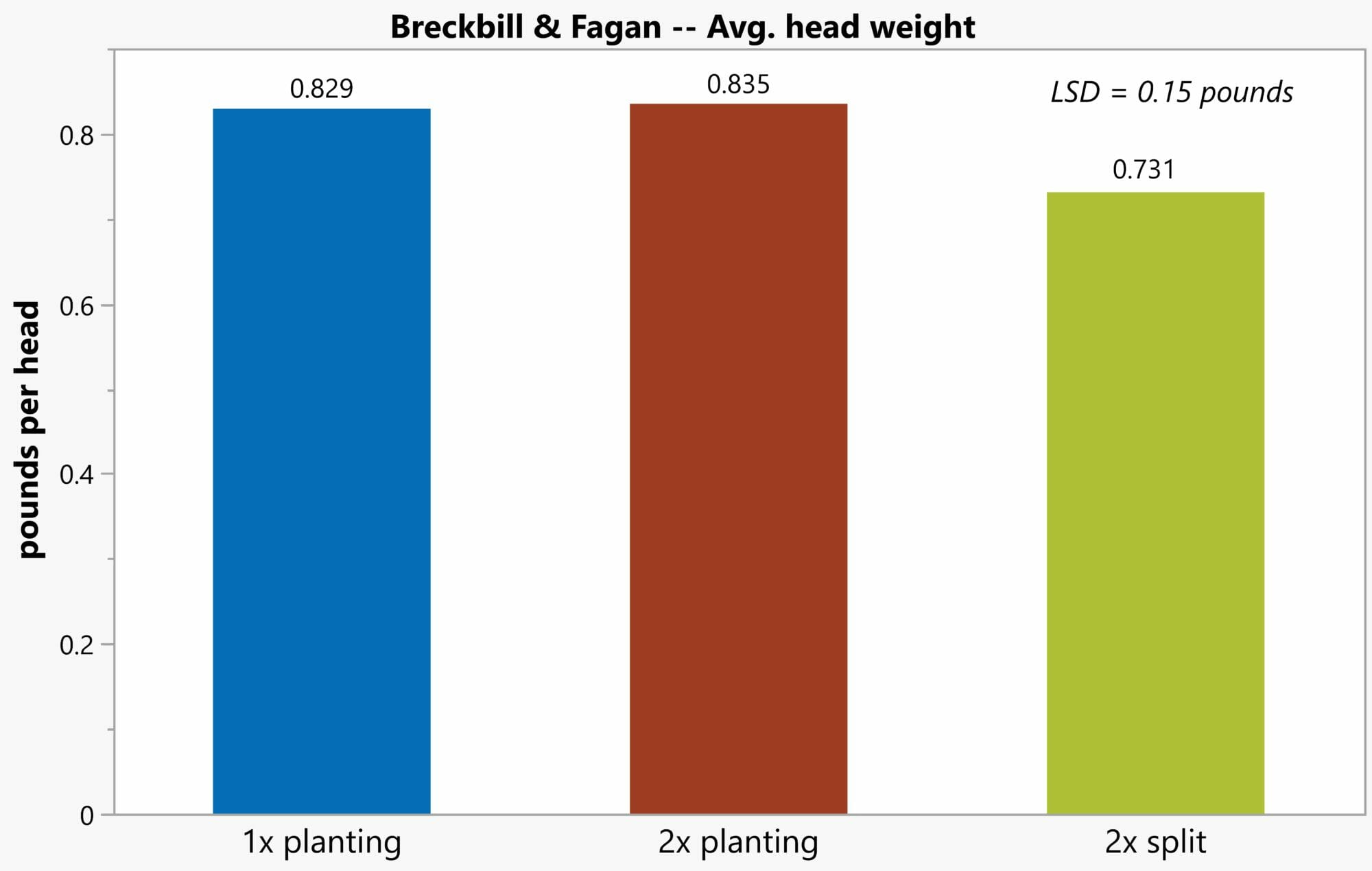
Applying twice as much Sustane did not improve broccoli yield at Breckbill & Fagan’s. Their typical practice (1x planting) resulted in more heads produced per plot than the 2x planting (Figure 1). Total weight of heads harvested per plot and the average weight per head were similar among all three treatments (Figures 2 and 3). On average, each broccoli head harvested weighed 0.8 lb regardless of treatment. Breckbill was relieved to learn that the practice she was using on the farm (1x planting) was adequate for their farm.
 Quee
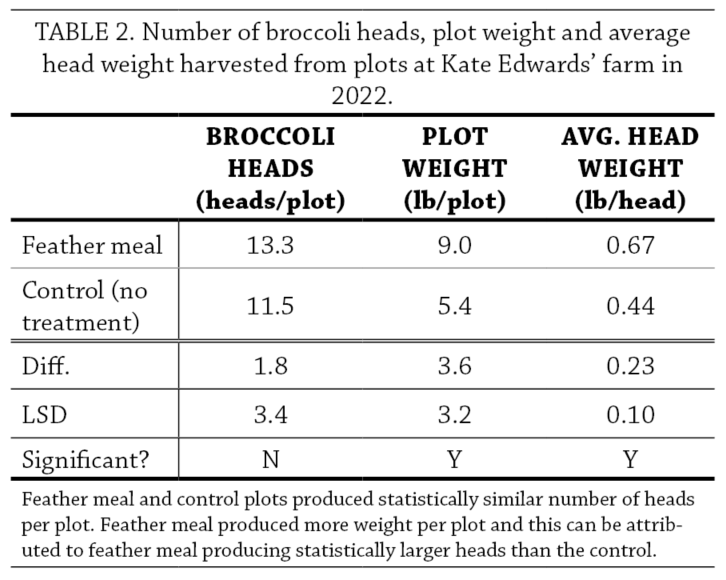
Quee’s experiment was originally scheduled for a summer broccoli succession, but like at Edwards’, all broccoli amended with blood meal mysteriously died before harvest. Quee suggested that this was probably due to burn from overfertilization – he applied the blood meal directly into the hole before transplanting broccoli plants. His experimental results below come from a fall broccoli succession in which he side-dressed blood meal to plants in August, one month after transplanting broccoli in July (Table 1).
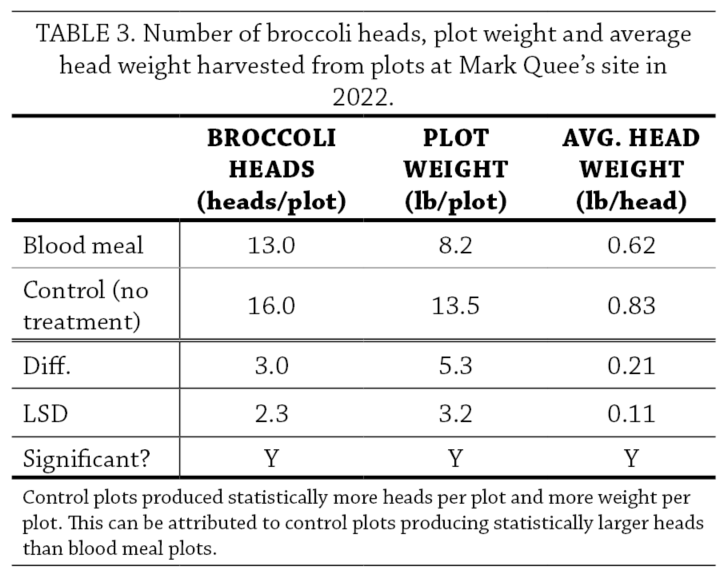
Compared with the control, blood meal reduced the amount of broccoli harvested. Control plots produced more heads and weight per plot and produced larger heads (Table 3). “The field I grew broccoli in this year may have had outstanding fertility since everything growing there looked robust (including 15-ft-tall broom corn),” Quee said. “I assume the blood meal was just too hot and not really needed here, so ultimately interfered with production rather than enhancing it.”
Quee
Quee’s experiment was originally scheduled for a summer broccoli succession, but like at Edwards’, all broccoli amended with blood meal mysteriously died before harvest. Quee suggested that this was probably due to burn from overfertilization – he applied the blood meal directly into the hole before transplanting broccoli plants. His experimental results below come from a fall broccoli succession in which he side-dressed blood meal to plants in August, one month after transplanting broccoli in July (Table 1).
Compared with the control, blood meal reduced the amount of broccoli harvested. Control plots produced more heads and weight per plot and produced larger heads (Table 3). “The field I grew broccoli in this year may have had outstanding fertility since everything growing there looked robust (including 15-ft-tall broom corn),” Quee said. “I assume the blood meal was just too hot and not really needed here, so ultimately interfered with production rather than enhancing it.”
Conclusions and Next Steps
Each farm involved in this research project set out with slightly different plans to address the issue of fertility needs for broccoli. While results understandably differed among the farms, each took away lessons and a clearer path forward from the experience.
“We have a rate of application now so can more confidently grow broccoli!” Breckbill exclaimed after learning that the fertility practice they were already using turned out to be the best practice for their farm. She also added, “We got really nice broccoli this season, and in part this is because of the attention we paid to it due to this trial!”
Edwards was very satisfied by the performance of summer broccoli amended with feather meal. So much so that they amended all fall broccoli with feather meal as a result and will plan to do so with other brassica crops going forward. “In the past we have thought broccoli variety was the reason behind different head size,” Edwards said. “But now I am starting to think that fertility plays a more important role.”
Appendix
References
1. Iowa Environmental Mesonet. 2022. Climodat Reports. Iowa State University. http://mesonet.agron.iastate.edu/climodat/ (accessed December 2022).