Research funded by Builders Vision Philanthropy and McMurray Hatchery.
In a Nutshell:
- Fermenting grain can increase the availability of nutrients in animal feed and make the feed more digestible.
- There is a growing body of research that shows that fermenting chicken feed may increase chicken weight.
- Aaron Heath and John Seiser each decided to test whether fermenting feed for a batch of their broiler chickens affected bird final weight, average daily gain, and feed costs.
Key Findings:
- Seiser found no significant difference in hanging weight between broilers fed fermented feed and those fed regular feed. However, he observed that the broilers fed fermented feed appeared healthier, and he plans to continue the practice.
- Heath found that the time-intensive fermentation process did not fit well with his operation. He was wasting a lot of feed and noticed that the birds were not as healthy as his birds on regular feed. He eventually decided to abandon the trial and feed all his chickens regular feed.
Background
Broiler chickens need a lot of protein to grow, especially when they are young. However, their digestive systems are not very efficient at processing proteins. This limits the types of crops that can be used for the protein component of chicken feed, decreases feed use efficiency and can contribute to poor animal health [1], [2]. Recently, fermenting feed has been gaining attention as a way of improving feed digestibility and feed nutrient availability for animals including chickens. A recent synthesis of published research found that fermenting soybean meal used for chicken feed can lead to increased chicken final body weight. [3] This weight gain occurred regardless of how much of the feed was replaced by fermented feed (up to about 35%) but did not occur when certain microbial strains were used for the fermentation.
Having heard about the potential for fermented feed to increase chicken weight and/or reduce feed costs, Aaron Heath and John Seiser decided to conduct trials on the effect of fermented feed on final chicken weight and feed consumption on their farms. Both farmers were new to fermenting feed and open to the idea of switching to it entirely if the process was manageable and would improve their enterprise economics. At the trial outset, Heath reported that “we hope that this will help us and others to determine the viability and benefits of fermenting chicken feed to improve yield, animal health, nutrition of meat, and other currently unidentified areas.” Seiser was very interested in learning if fermenting feed lowered feed costs.
Methods
Design
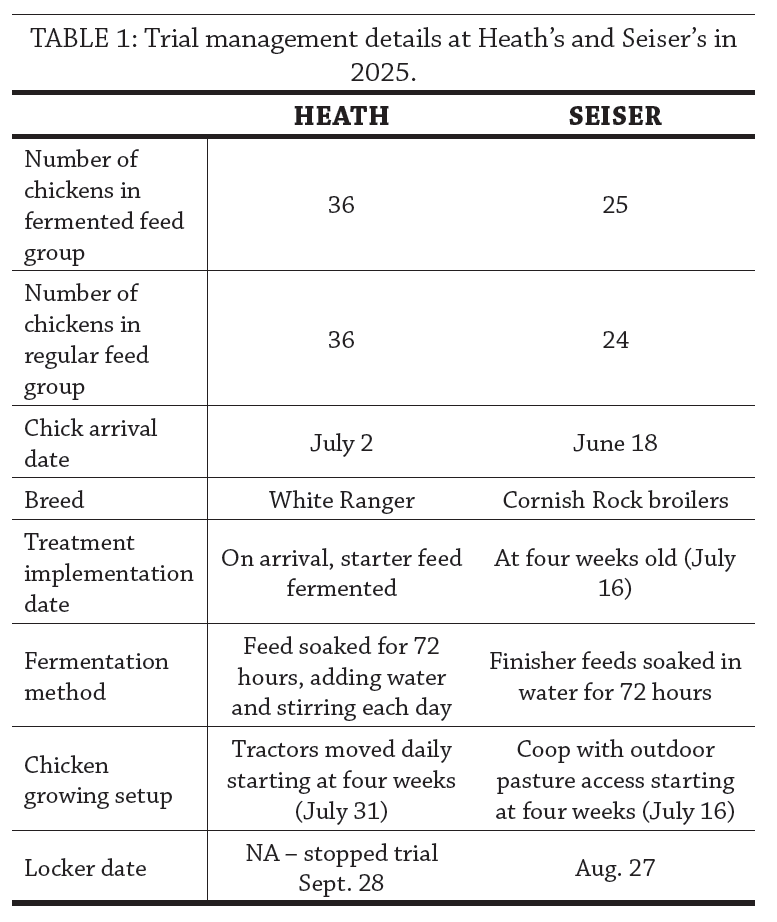
Both Heath and Seiser raised chickens in two groups simultaneously, feeding one group a fermented feed mix and the other group the same feed mix, non-fermented. Treatment group sizes and management details are shown in Table 1.
Measurements
Seiser recorded the dressed weight of each bird and also tracked the total feed consumption of both fermented and non-fermented feeding groups. Heath did not report chicken weights or feed consumption because he abandoned his trial and mixed his birds into one group for ease of management.
Data Analysis
We used a t-test at a 90% confidence level to determine if there were significant differences in final bird weight and average daily gain between the fermented feed and not fermented feed treatments at Seiser’s. If the t-test determines that one group outperformed the other, the farmer can expect the same results to occur 90 out of 100 times under the same conditions. We could conduct statistical analysis because Seiser reported the weight of each individual bird from the two feed treatments.

Results and Discussion
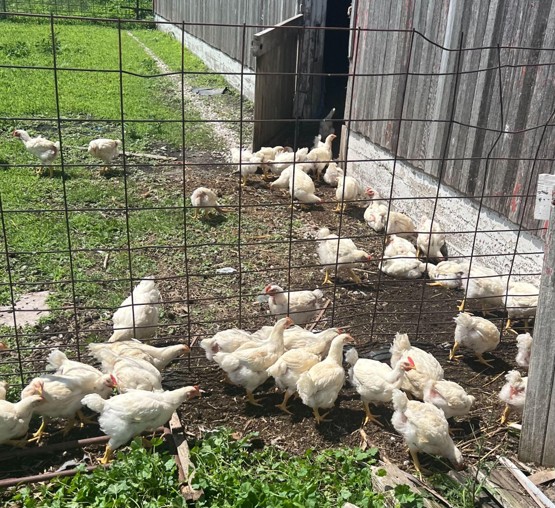
Heath saw differences in bird health between his fermented and non-fermented feed groups and eventually decided to abandon the trial. He says that, “At week three, we could see that the birds looked different. The fermented feed birds had fewer feathers/fluff on their heads. As the months progressed, we found the fermented group to be less healthy looking than the non-fermented.” Ultimately, when the birds were about eight weeks old, they decided to abandon the trial. “On 28 Sept., the fermented birds were looking rough. They had many spots without feathers, had fewer feathers in general, and looked in poorer health than the non-fermented birds. We started giving the birds the same food and saw some improvements in the fermented group.”
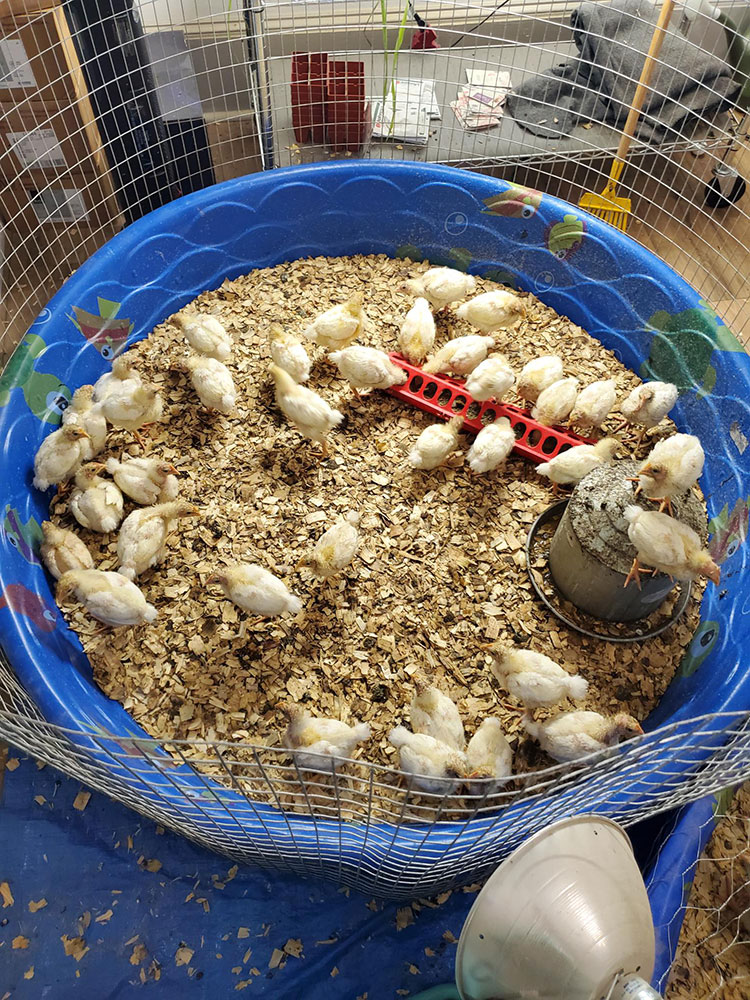
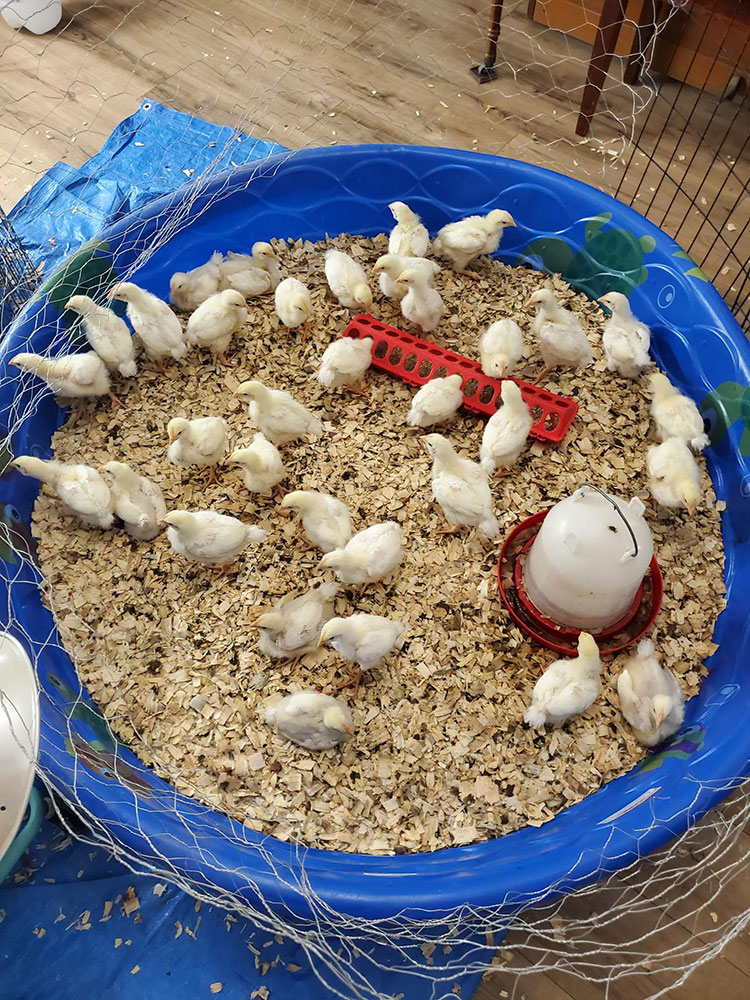
In addition to seeing negative effects on animal health, Heath found that fermenting feed took more time than he expected and led to a lot of molding and wasted feed, making it a poor fit for his farm. His experiences highlight the benefits of testing new systems on a small scale before adopting them broadly.
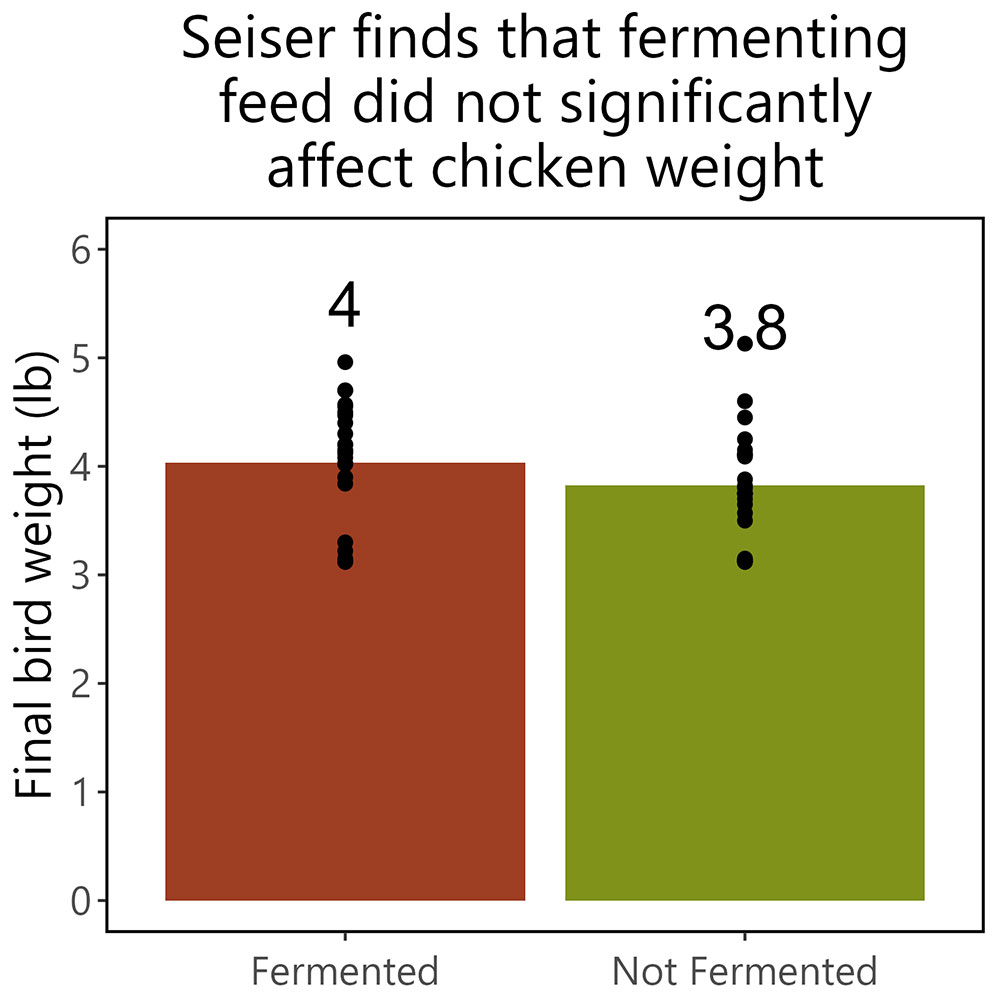
Seiser, in contrast, found that the extra time required to ferment chicken feed fit well into his schedule. He did not have much feed waste due to batches spoiling or molding. He also did not find any statistically significant differences in chicken weight between the two treatments (Figure 1). However, he observed that the chickens in his fermented feed treatment looked healthier than the chickens on non-fermented feed. “Something that we noticed was that the fermented batch had far less feather loss and overall better appearance,” Seiser said. “While fermented feed may not move the needle on growth rate or meat quality, the aesthetic benefit of fuller, shinier feathers can be leveraged as a marketing advantage — particularly in direct sales, agritourism, and customer farm visits.”
Following this success, Seiser thinks that he will implement fermented feed with his ducks and laying hens next year. He wonders whether there is an alternative growing setup or scale at which fermenting feed as an economic advantage. He hypothesizes that, “I think I would like to try this again keeping them inside of the 8 x 12 chicken tractors versus the 320 ft.² rotating pasture. A lot of the birds did not run right to the feed all the time because they were content foraging. I think that played a big difference in the final weights.”
Conclusions and Next Steps
Heath and Seiser had opposite takeaways from their trials which reflect the differences in their operations. Heath reports that, "I will not try to ferment chicken feed again. This will save time with the entire feeding process.” Seiser, on the other hand, found that the practice fit well within his broiler enterprise and plans to expand it to his other poultry enterprises in 2026.
Both farmers really appreciated the support from PFI to conduct their trials, which allowed them to economically de-risk the new fermentation practice and practice taking good records. Seiser said, “By tracking feed costs and usage in detail, I now have a much clearer picture of our true cost of production. This is foundational for scaling up and it lets me plan margins, set accurate price points, and forecast feed needs as the flock grows.”
Appendix

References
- F. Xu et al., “The Effects of Fermented Feed on the Growth Performance, Antioxidant Activity, Immune Function, Intestinal Digestive Enzyme Activity, Morphology, and Microflora of Yellow-Feather Chickens,” Animals, vol. 13, no. 22, p. 3545, Jan. 2023, doi: 10.3390/ani13223545.
- S. Sugiharto and S. Ranjitkar, “Recent advances in fermented feeds towards improved broiler chicken performance, gastrointestinal tract microecology and immune responses: A review,” Anim. Nutr., vol. 5, no. 1, pp. 1–10, Mar. 2019, doi: 10.1016/j.aninu.2018.11.001.
- A. Irawan et al., “Effect of feeding fermented soybean meal on broiler chickens’ performance: a meta-analysis,” Anim. Biosci., vol. 35, no. 12, pp. 1881–1891, Dec. 2022, doi: 10.5713/ab.21.0546.
- Climodat Reports, “Iowa Environmental Mesonet.” Iowa State University. [Online]. Available: http://mesonet.agron.iastate.edu/climodat/