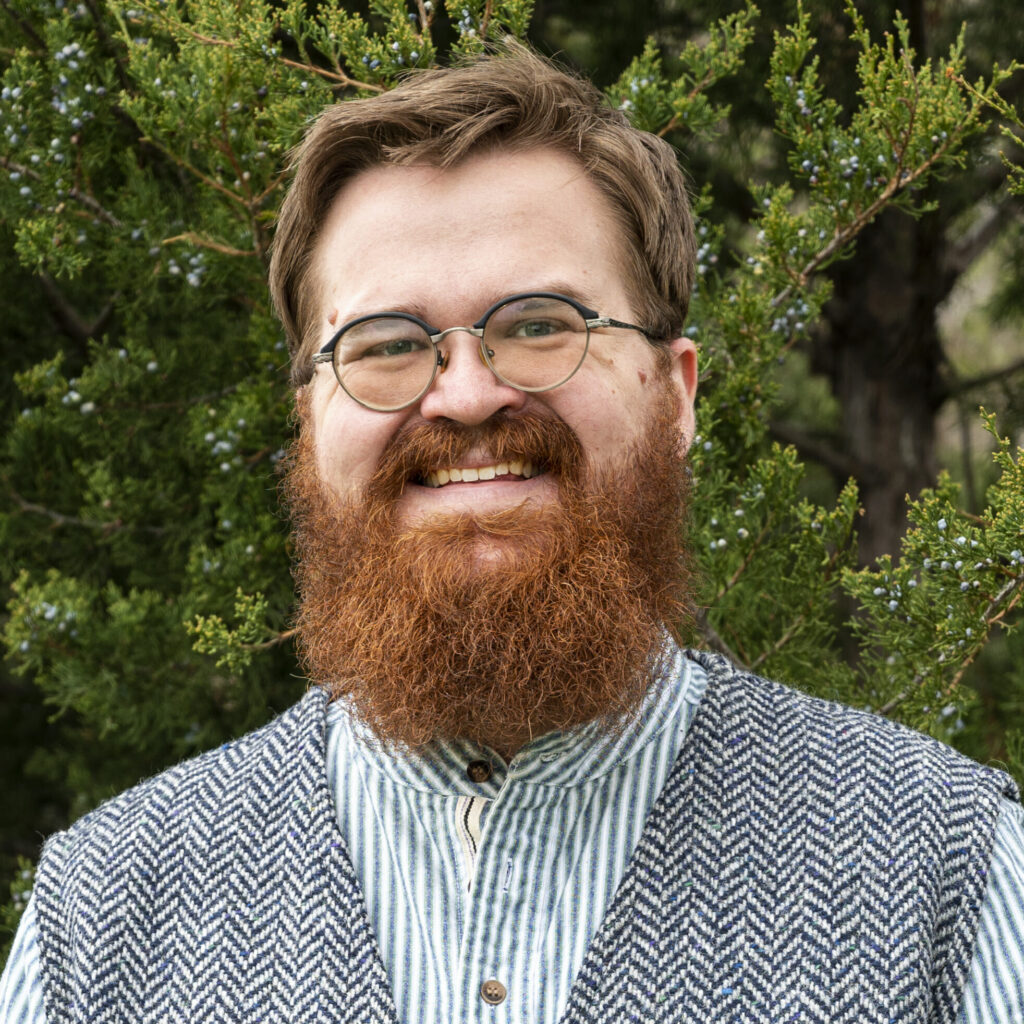
Mike DeCook’s passion is restoring wildness on his land. He’s using nature-inspired grazing practices to transform it into a place where native species, birds and cattle can thrive
Sometimes, if you’re in the right place, or right moment, you can almost imagine what it must have been like many summers ago. There are no cars droning on the highway because the highway, and cars for that matter, don’t exist. The rumble of a train won’t be heard until sometime in the future. But there is not silence.
Here on the prairie, a cacophonous symphony of noise abounds. Billions of bugs buzz and whir. Scores of birds fill the air with boisterous chatter and the beat of wings. In the prairie wetlands that dot the landscape, legions of frogs boom and croak.
Plants crunch and swish as vast herds of ungulates graze and tramp. At times, they bellow, and the earth thrums with the rumble of their hooves as they move on their endless migration.
These sounds were ubiquitous across much of the Great Plains and Midwest from about 8,000 years ago, when post-glacial climatic shifts led grasslands to spread, until about 150 years ago, when white settlement started drastically changing the landscape. The base upon which this bevy of life relied was the extraordinary abundance – both in biomass and species diversity – of grasses and forbs that once comprised the most extensive continuous ecosystem in North America.
It’s estimated grasslands historically spanned 550 million to 1 billion acres, from parts of Ohio to the Rocky Mountains, and from central Canada to Texas. Iowa was once around 80% prairie. Today, that number has plunged to less than 0.1% due to habitat loss from farming and development.
But on his southern Iowa farm, sprawling across the hills outside Lovilia, Mike DeCook is trying to bring back some of this vanishing ecosystem to his family’s land.
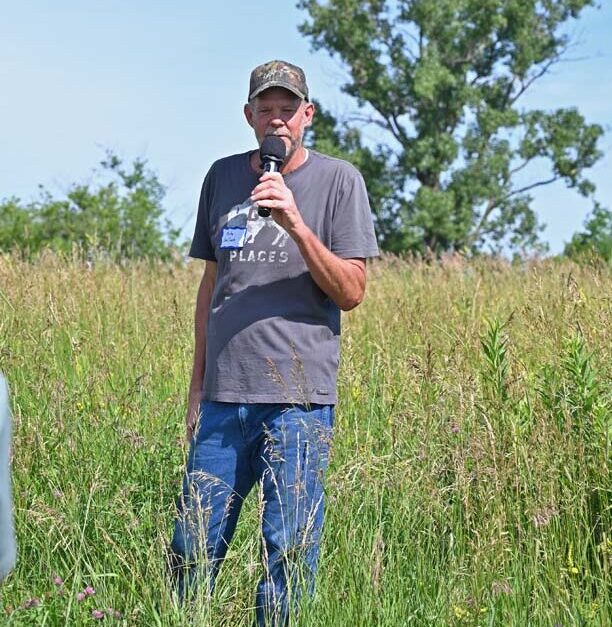
“My passion in life is protecting the natural world – wild nature, open space, restoring native biodiversity,” Mike says while standing in a wave of waist-high pasture. “The cattle, and grazing, is our income source, and one of our tools.”
The Ethic
Mike has developed a land ethic that guides how he manages the interconnected web of livestock and land that make up his farm. “I care about all species on this earth, not just human beings,” Mike says. “I want the woodland warblers to thrive, and I want the grass. I want insects, mammals, everything.”
To achieve this diverse cornucopia, Mike’s goal is to return the land as closely to wildness as he can manage using the tools at his disposal. In the grazing season, he contract-grazes 650 head of cattle, rotating every two weeks and never returning to a spot more than once in a year.
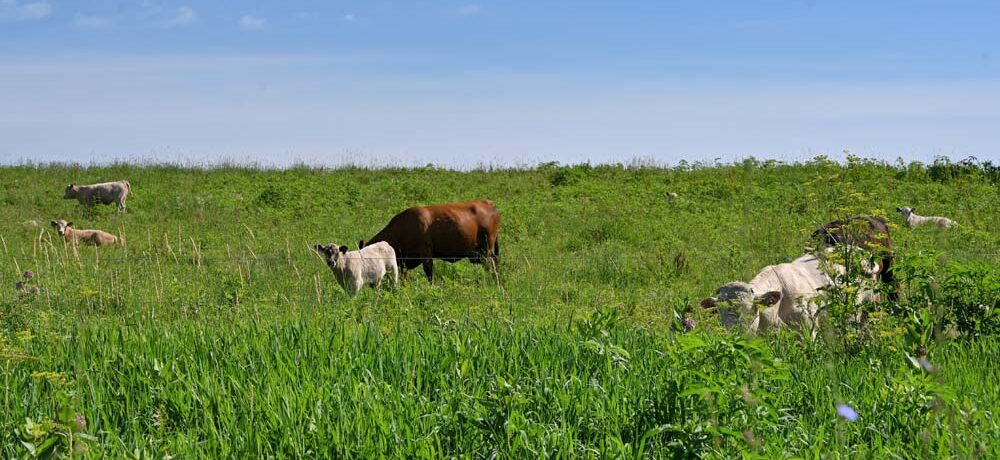
In the early spring and late summer, Mike burns much of his grassland. Throughout the year, he continuously cuts and spot-sprays invasive woody species that have encroached on and consumed open spaces since the last bison roamed freely across the state. (The last known sighting of wild bison in Iowa was near Spirit Lake, in 1870.) And whenever he can, he removes human-made infrastructure. So far, Mike has ripped out miles of fenceline and torn down barns and sheds.
“With the endless human growth and development that keeps swallowing up everything I love, I try my best to be a counter to that to restore open space.” Mike says. “It’s for wildlife, but it’s also for my soul.”
Grazing for Birds
Mike’s grazing system mimics the pattern of use and rest that occurred on the prairie when bison were present and migrating. Because of this approach, plants are responding. Mike is seeing a transformation towards a more diverse makeup of native species. It takes years of focused management, and an occasional scattering of native seeds. But as Mike says, “prairie is patience. There’s an art to waiting. But it’s awful rewarding when it happens.”
This increase in plant diversity is cascading upwards, positively affecting everything that relies on those plants. “In a pasture with only 10 species, you might have protein and carbohydrates,” Mike says. “Here, there are 170 different plant species for a cow to choose from, and that’s medicine to them.”
He’s also seeing a greater diversity of birds. Different bird species require different lengths of grass for nesting and foraging, he explains. “There’s some birds that actually like it real short, and some need it tall and rank. With our grazing system, you’ll have short stuff on the area that was just grazed. But there’s also the ones [grasses] we haven’t grazed since November and won’t be back to for months.”
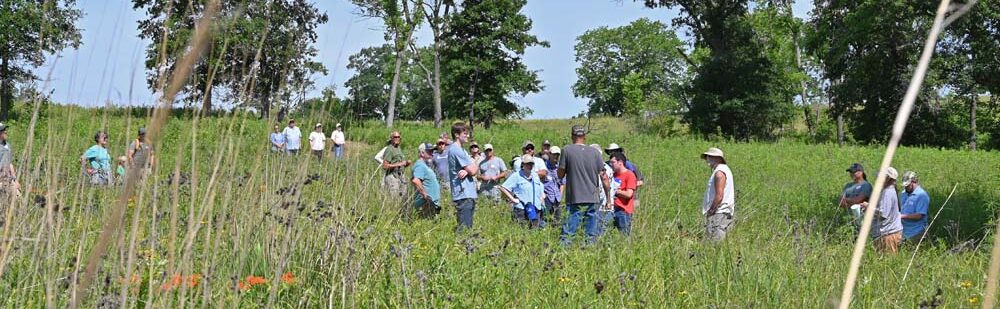
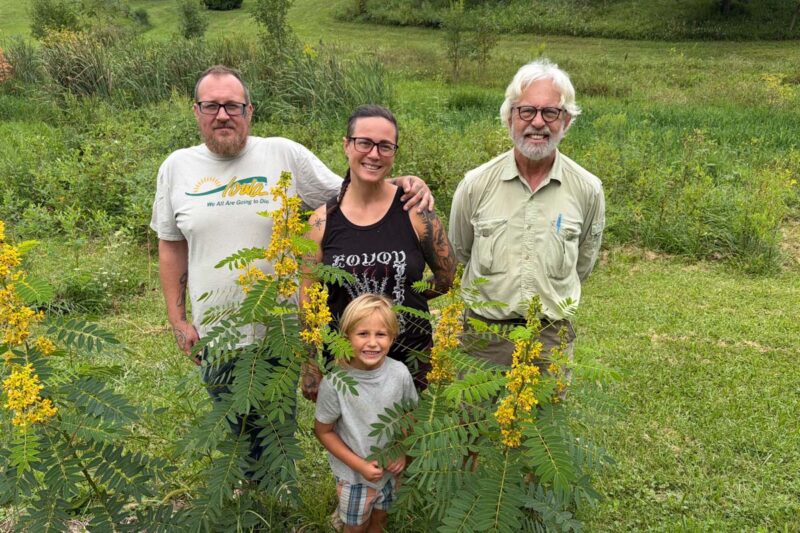
In June, Mike and his sons, Joshua and Wyatt, hosted a PFI field day about their efforts to create grassland bird habitat through nature-inspiring grazing practices. Tucker Lutter, who serves as the Iowa conservation manager for Audubon Society, spoke at the field day and emphasized why restoring native plant species is vital for grassland birds.
“A lot of these native grasses are bunch grasses – the bluestems and the switchgrass – that grow in clumps. The [invasive] Eurasian species tend to grow in a mat,” Tucker says. That habitat makes a big difference for small birds, like quail chicks and turkey poults. Native bunch grasses, Tucker says, leave gaps and paths that are easier for these small birds to navigate. They also provide abundant food.
“They’re getting all the insect benefits provided by all these flowers. Plus they’re able to walk on these little alleyways, whereas they’d be stumbling over really thick mats of vegetation in your traditional cool-season cattle pasture,” he says. “We might think all grass is the same, but if you’re a 3-inch-tall bird fledgling, that’s a big difference.”
Creating this kind of habitat is what motivates Mike. “We have so much wildlife just because we have good, diverse habitat,” Mike says. “Don’t get me wrong, we have a lot of invasive species and there’s a lot I mess up, but I know I’m doing the right thing when I see bobolinks and harriers and snakes.”
Mike’s land is still a work in progress. But standing in his pasture – dappled with blooming prairie and savanna stretching all around – you don’t have to close your eyes to imagine what the land could have looked like so long ago. Guided by his land ethic, Mike is starting to bring back the joyful din of wildness.
“I just think the world would be a lot better place if … most people had, you know, a little bit of a land ethic,” Mike says. “It would be not only for humanity, but for all the other species we share this earth with.”