In rural Donnellson, the Hohl family’s farm-to-table dinners connect local farmers, chefs and the community in support of the local food system.
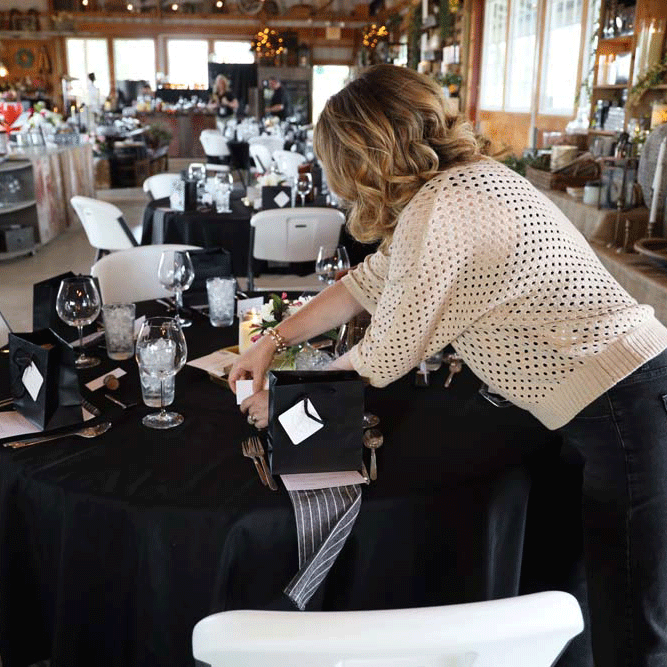
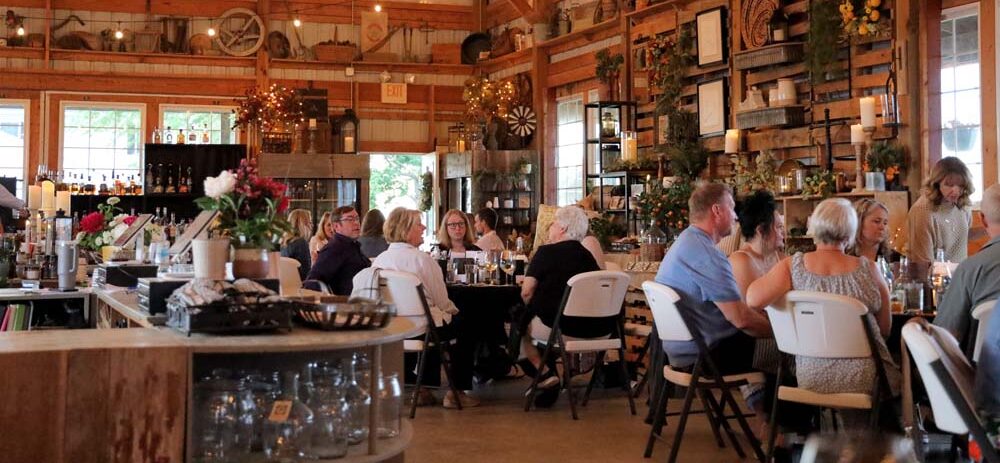
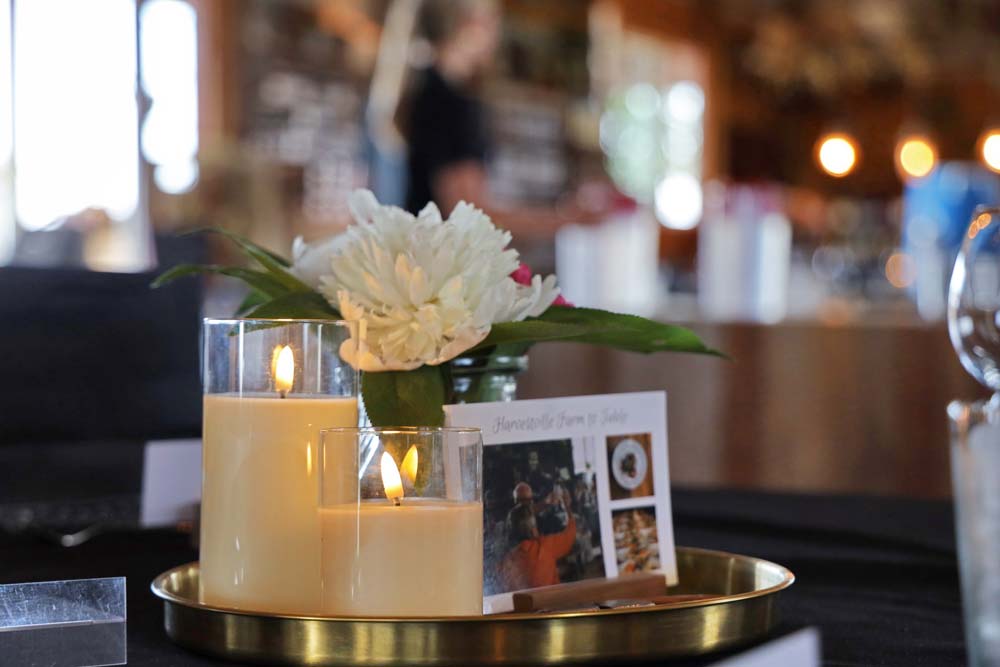
It’s mid-May and rain clouds gather in the distance behind a red barn. Inside, candles are lit on tables and the crew at Harvestville Farm is buzzing as guests begin to arrive for one of their much sought-after farm-to-table dinners.
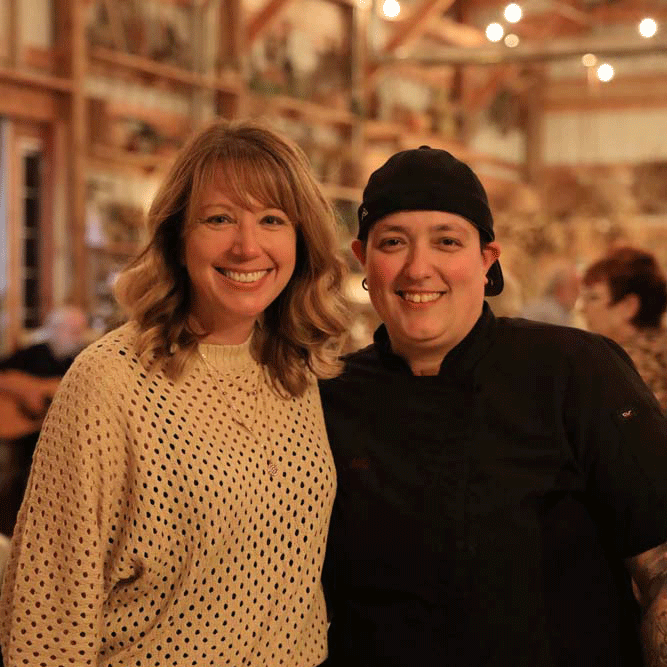
In a kitchen just behind the barn, which also serves as a cafe for Harvestville, Chef Ashley Phillips is prepping the first course with her team.
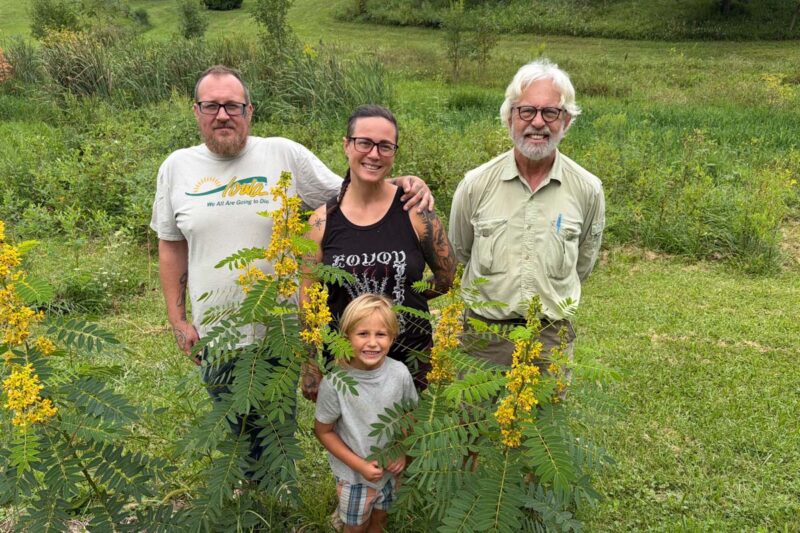
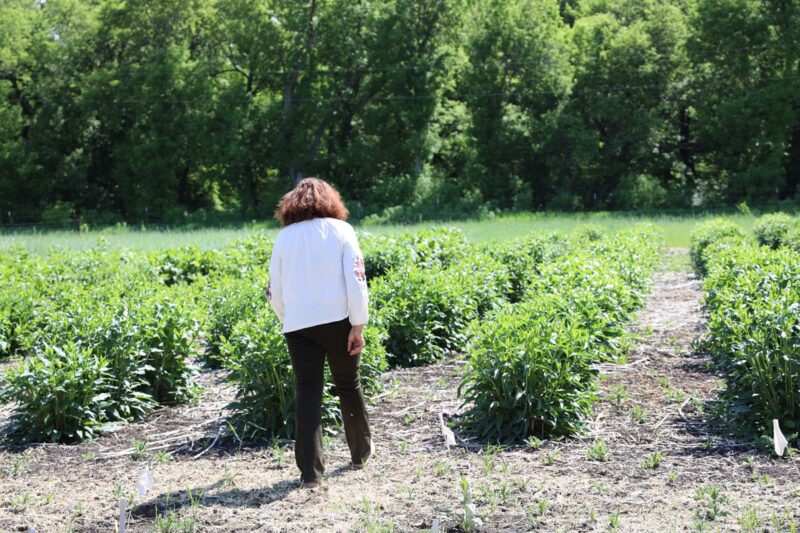
Located in Donnellson, Iowa – a town of under a thousand – Harvestville Farm is run by Adam and Julie Hohl. The farm itself focuses predominantly on pumpkins, which began as Adam’s high school FFA project, and other seasonal produce.
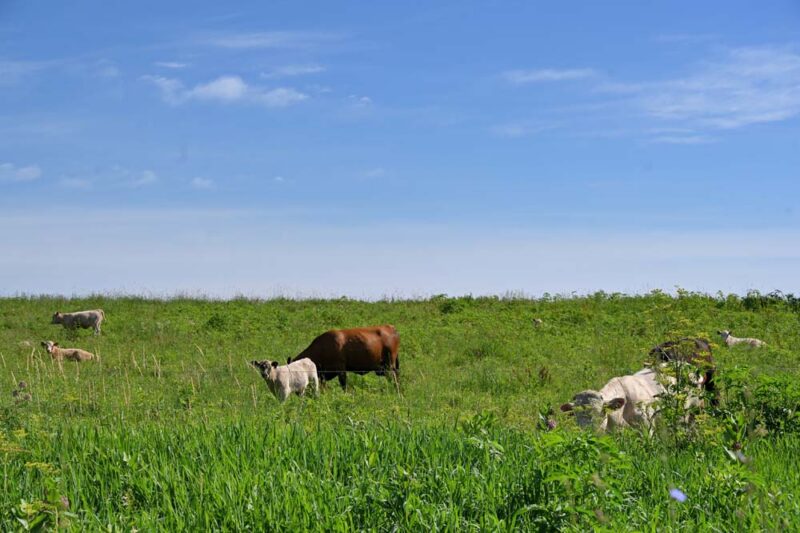
Adam’s brother-in-law, Blake Conlee, manages the more traditional side of the Hohl family farm, including cattle and about 200 acres of row crops. Adam and Julie’s kids are the fifth generation to be part of the farm.
Kathy Hohl, Adam’s mother, is proud of how her family has maintained more traditional Iowa farming practices while also expanding and innovating, bringing new life to the farm. She believes their ability to successfully diversify shows what can be possible in rural Iowa.
The current iteration of Harvestville Farm started in 2004 when Adam and Julie opened their doors on weekends in the fall for their pumpkin patch. At the time, they commuted each weekend from St. Louis. Since then, they’ve moved back to the area and have expanded to include events throughout the year, a cafe with a full lunch menu and a shop that’s open in the winter featuring local products and seasonal items.
“We’re just constantly reinventing ourselves and being creative,” Julie says.
Creating a Network and an Experience
One way they’ve creatively reinvented themselves is with their farm-to-table dinners. Adam and Julie launched them in 2011 to connect their community with local producers. They also wanted to offer unique experiences that would draw people to their rural business.
Since starting the dinners, the events have become hugely popular. The 2026 season sold out in just a few minutes after online registration opened in early March. Some guests booked a table or seat at multiple dinners throughout the summer.
Farm-to-table dinners typically focus on in-season, locally grown produce. The goal of these events is to strengthen relationships with nearby farmers, and to connect guests to local food systems. At the start, the Hohls organized just a few dinners a year. They hadn’t yet built relationships with regional chefs, so they worked with the Culinary Arts program at Indian Hills Community College in Ottumwa.
Since then, they’ve expanded considerably, offering more dinners crafted by a growing list of top chefs in the region. This season, for instance, Adam and Julie are offering 14 dinners from April to September featuring 12 chefs. Now that they’ve built these chef relationships, the whole enterprise has developed a kind of rhythm. But when they first decided to expand their dinner offerings, Julie says it was hard to find chefs to work with.
First, it was hard to convince a chef to take time off to come to the southeast corner of the state. Many of those chefs also work full-time jobs at restaurants, adding logistical challenges. “So we kind of geared more towards private chefs,” Julie explains, “then just started developing really good relationships with some of them and it’s just blossomed from there.”
It’s important to the Hohls that any chef they partner with “believes in growing and using local products, believes in the farm-to-table movement and doesn’t use the term loosely,” Julie says. An impeccable attention to detail is also key. Adam and Julie personally meet and interview every chef before signing them up to cook a dinner at Harvestville.
Some chefs, like Ashley Phillips, are based in Iowa. Ashley owns Chef A LLC and has done dinners at Harvestville for the past four years. But Adam and Julie have also connected with chefs in Columbia, Missouri, and Quincy, Illinois. As they’ve built these relationships, they’ve gotten leads for new chefs to reach out to. The positive feedback loop has helped the Hohls’ farm-to-table dinners gain momentum.
The events are beneficial for the chefs too: Cooking for the farm-to-table dinners lets them expand their clientele and connect with more local producers. It’s a system that aims to fortify local food systems. More chefs connecting with farmers means more local food on plates – and more opportunities for farmers.
Creating a Local Menu
Every meal consists of five courses – and anything Adam and Julie can source locally, they do. “Iowa, to us, is local,” Julie says. But she notes that, being so close to Missouri and Illinois, they sometimes get ingredients from those states. While seasonality can affect what’s available, Adam and Julie do their best to find as many ingredients as possible from farmers they know.
The chefs also help with sourcing when it’s their turn. Since they’re booked weeks in advance, they have time to start planning menus. This year, for instance, Ashley knew she was scheduled to cook on May 16.
"I knew to use asparagus and some greens,” Ashley says. “Generally speaking, I start with what can I get local, what’s going to be in season, and I go from there. And then I try to change it up a little bit and use techniques or flavor profiles people may not know and try to create a different experience.”
Because the menu is set, guests have a chance to try new foods. “I think the biggest compliment I get is that someone didn’t like this vegetable [beforehand], but I made them enjoy it,” Ashley says.
She describes her style as “very, very vegetable-forward,” and says that the focus on procuring locally adds to the joy of cooking for Harvestville’s dinners. “Any chance you can have to work with local farmers or small businesses I think is beneficial not only to me, but to the community as well. It’s a win in my book.”
Adam and Julie aim to source at least half of the products on the menu from local farmers. But in the peak of the growing season, some meals are almost entirely locally sourced. On the cooking prep side, the Hohls do what they can to make the job as easy as possible for their chefs. “Because we have chefs that come from such a distance, we try to provide pots and seasonings,” Julie says.
Once the menu is designed, Adam and Julie work with the chef to source products. Each chef approaches the task differently. But typically, if Harvestville can’t supply the item from their own farm and the chef can’t find it, Julie and Adam will work to find it for them. Sometimes, however, ingredients aren’t available. Trends change and weather affects availability, both of which can lead to a menu change.
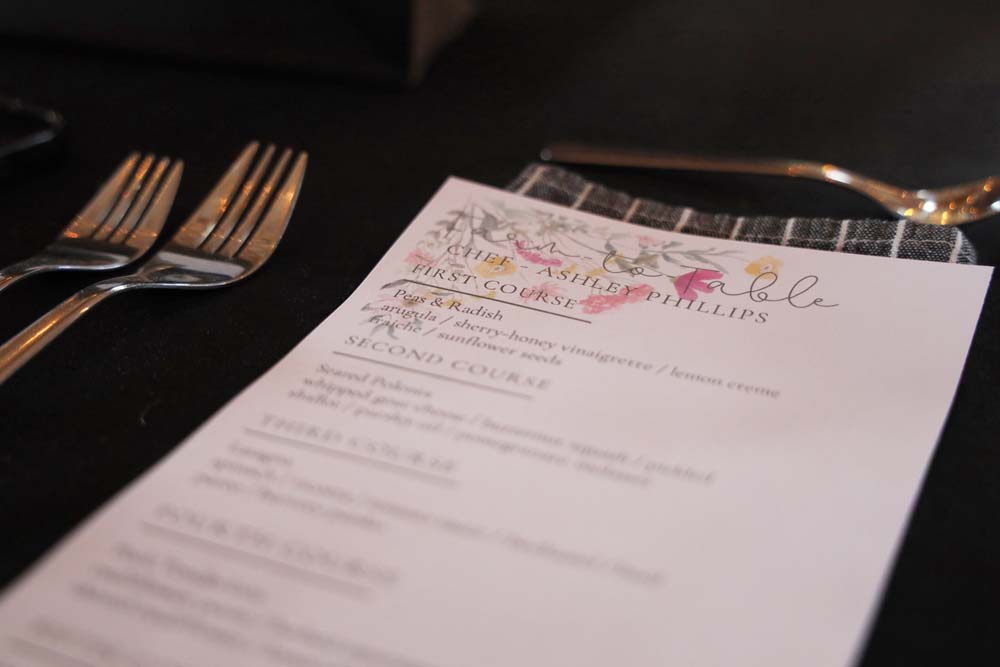
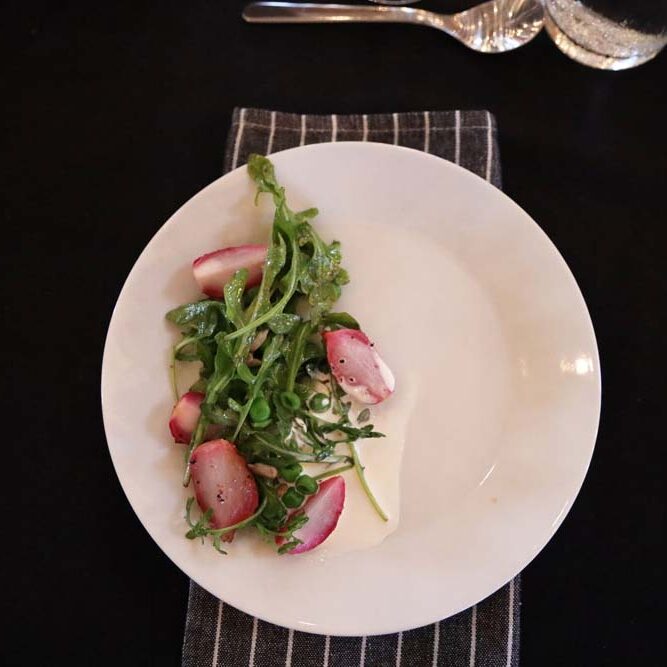
For the May 16 meal at Harvestville, the Hohls and Ashley have sourced pork, asparagus, greens and radishes locally. Ashley has turned these ingredients (along with others) into a mouthwatering array of dishes: a salad of peas, radishes and arugula; seared polenta with butternut squash, pickled shallots and whipped goat cheese; a spinach-ricotta lasagna; pork tenderloin with cauliflower and asparagus; and a lemon tart with blueberries for dessert.
As guests wait for the various courses on the menu, the barn hums with conversation. Outside it’s gently raining. But inside, it’s warm and cozy as guests savor delicious food – each bite, a thread connecting local farmers, chefs and community.