Beginning farmers are turning their passions into unique products that delight customers while building their businesses.
For beginning farmers, building a viable farm business often means finding ways to make the most of what they grow. Value-added products can provide an important opportunity to increase the value of farm products while creating additional income streams over the winter months. For some, value-added products provide an inroad to establishing their budding businesses.
Here are three snapshots of PFI farmers who are doing just that: carving a niche by creating unique value-added products for their customers.
A Novel Nut Oil | Levi Geyer
Levi Geyer established Fancy Twig Farm in Parnell, Iowa, in spring 2023 with a vision of foraging nuts, pressing oil and eventually planting an orchard. His oil of choice? Hickory nuts – a tree crop vital for thousands of years to Indigenous Peoples across the eastern U.S. but largely unfamiliar in modern mainstream food systems.
“Hickory nut oil is light, nutty and delicate in flavor,” Levi says. “It’s softer and more mellow than olive oil, with a similar smoke point.”
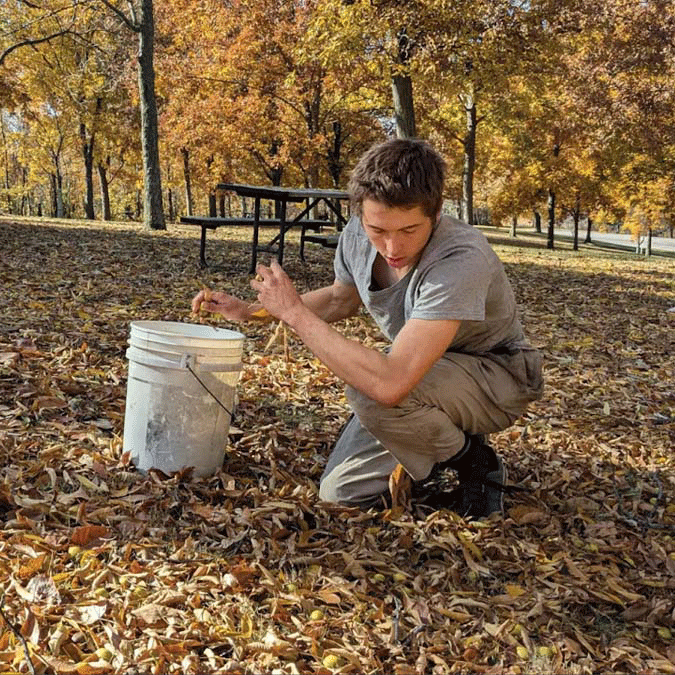
Levi first learned about hickory nut oil while reading “Trees of Power” by Akiva Silver. “The book mentioned hickory nut oil and noted that not many people were producing it,” he says. “I had been hoping to establish a chestnut orchard, and I wanted another canopy tree and crop to complement the chestnuts. Chestnut trees can be prone to oak wilt, and having hickory trees between them can help reduce the risk of disease spread.”
Today, Levi forages all the hickory nuts he uses to make oil from wild trees – specifically, from bitternut hickories (also known as yellowbud hickory).
Iowa has six native species of hickory. But of those, nuts from bitternut hickories have the highest oil content – 70-80% – and much thinner shells. Still, Levi says producing 1 gallon of finished hickory nut oil requires about 15 gallons of nuts. To get the supply he needs, he drives as much as an hour and a half “to forage as many nuts as possible.”
Production has grown from 3 quarts in his first year to 50 gallons in his third year. He sells the oil through his farm website, at the Iowa City farmers market and via on-farm sales.
Despite the rapid growth, Levi estimates he needs to produce about 100 gallons annually to be profitable. To help him on the path, he applied for PFI’s Savings Incentive Program. The two-year program offers mentorship and business planning support, along with a savings match.
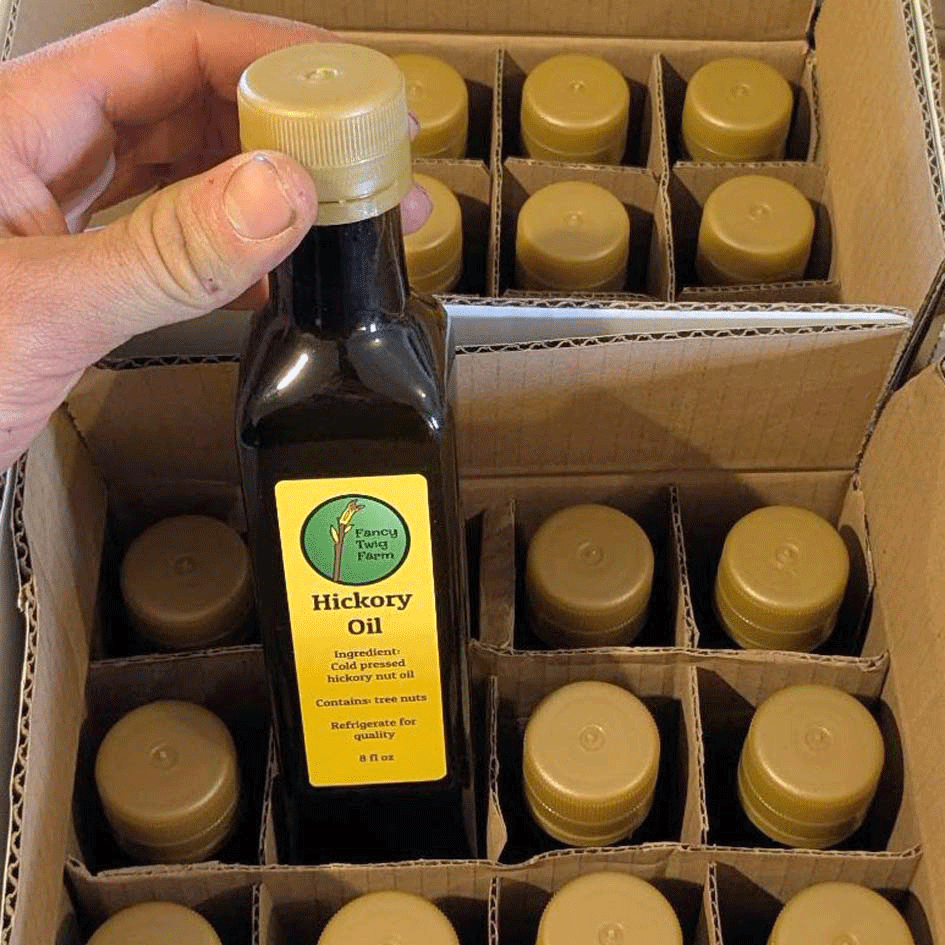
“I’m learning financial modeling for my business,” he says. “I started with how much I’d like to earn, then worked backward to understand gross profit, overhead costs and the production volume I need to make those earnings.”
The hickory nut oil community has also helped him grow. At present, there’s not much research available for hickory nut oil producers – and Levi says misconceptions about hickory nut trees abound. The community of nut oil producers is helping fill the gap. “We rely on each other for troubleshooting and sharing data.”
Medicinal Herbs | Cal and Zak Wolfpack
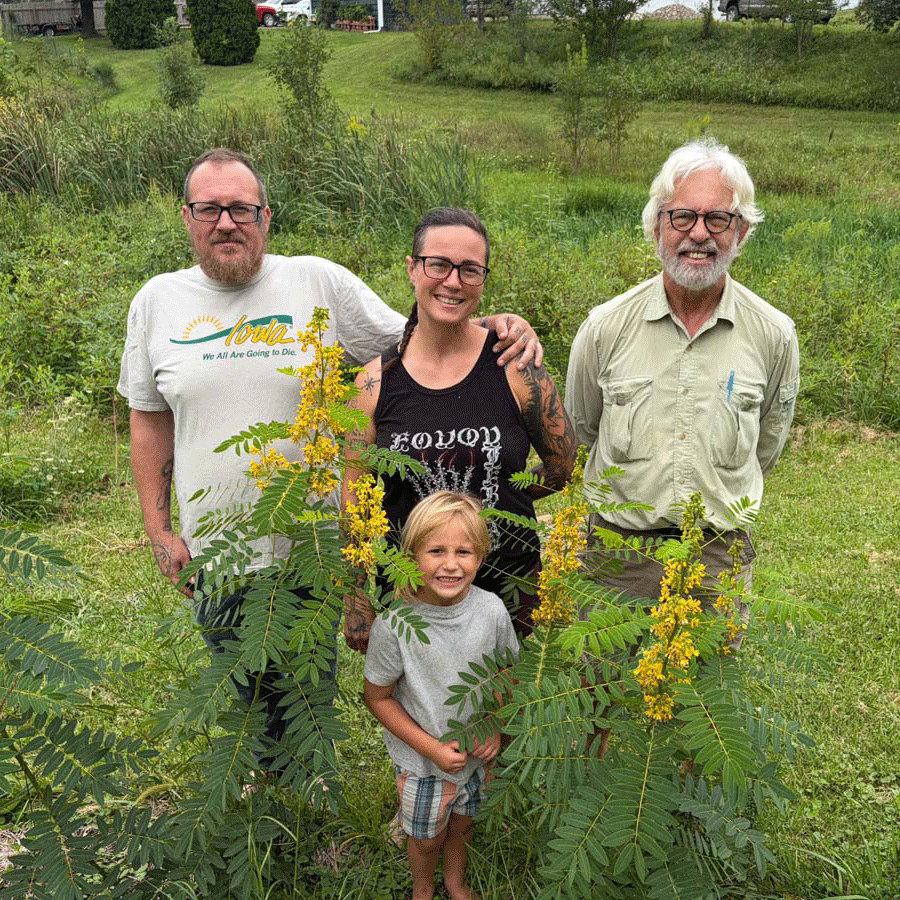
A couple of hours west, about 30 miles south of Des Moines, Cal and Zak Wolfpack are carving out a value-added niche with medicinal herbs. They own and operate Profound Existence Herbs in Milo, Iowa, where they produce medicinal herbs and plants, fruits, vegetables and eggs.
Cal is also a clinical and community herbalist, offering care through clinics at Pollinator Hive House in Des Moines.
“My interest in living in right relationship with the Earth got me into herbal medicine,” Cal says. “I feel like farming and herbal medicine can’t be separated.” Through Profound Existence Herbs, Cal and Zak are in their fourth year selling tinctures, teas, incense bundles, salves and other herbal extracts.
While the Wolfpacks are still analyzing sales data from the past few years, Cal has identified clear trends. “Teas sell really well, but they’re at a lower price point,” says Cal, who uses the pronoun they. “Tinctures are higher priced, but we sell fewer of them, so I feel like we need both. It’s also about having the right product for the right person.”
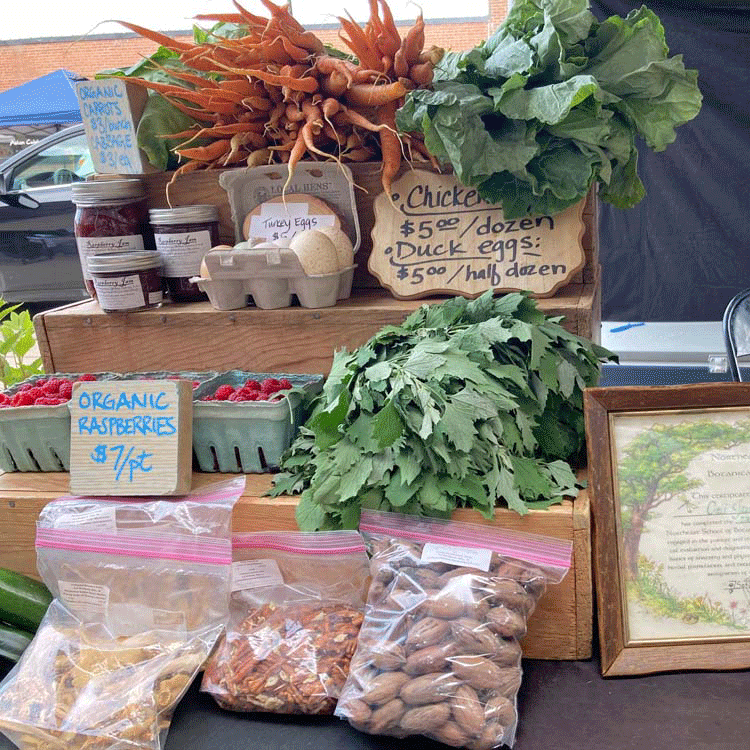
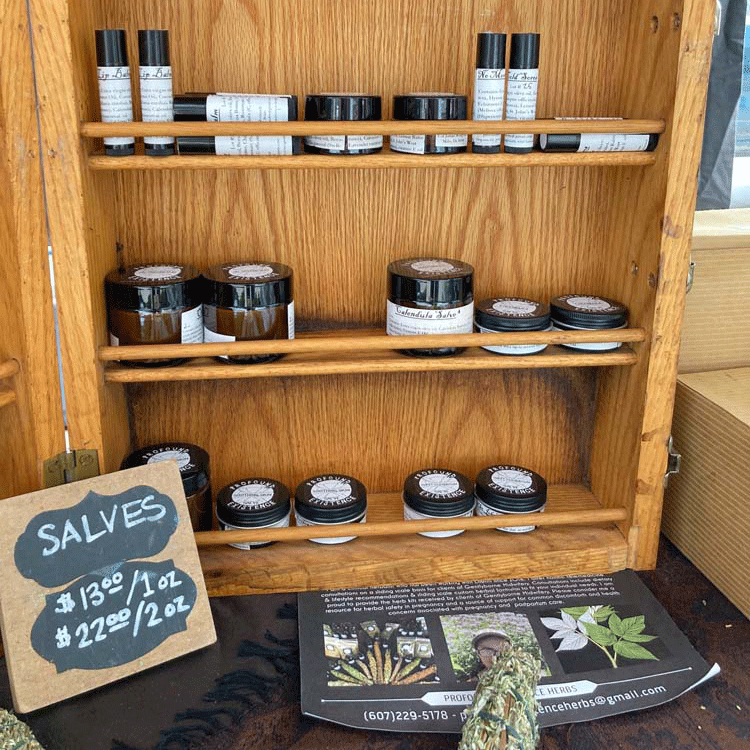
They note other tradeoffs, too. Tinctures are produced by the gallon and have a long shelf life. Teas are simpler to make but require significant storage space for dried herbs. Today, most sales happen in person at farmers markets. Cal also takes orders by email. “I don’t have a web store, and I’m not interested in one,” they say. “I really try to focus on selling in person.”
Cal’s passion for herbal medicine began in their 20s, during a time when they and friends lacked health insurance and “didn’t have the skills to take care of ourselves.” While Cal didn’t set out to build a business around herbal medicine, they’re pleased with the direction their path has taken.
“I started studying so I could help care for people. It’s always been rooted in social justice, access to medicine and living in right relationship with the Earth.”
A Piquant Pepper Sauce | Alfred Matiyabo
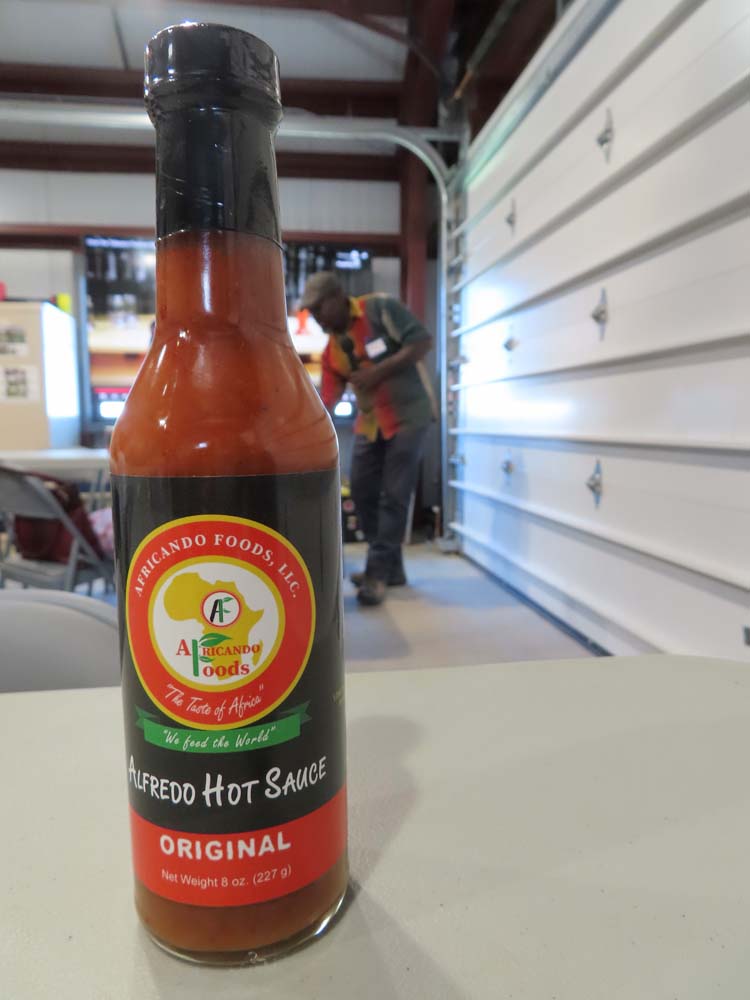
In Iowa City, Alfred Matiyabo has carved out a different sort of niche – one with a kick. He grows habanero peppers, onions, white eggplant and other crops on his 4½-acre farm, Africando Farms. About 70% of profits come from value-added hot sauce sales.
With a mischievous grin, Alfred says, “My sauce is a little spicy.” It’s an understatement. He started his operation in 2018 and says he first tried selling his hot peppers in bulk, but the profit margin was too small. “I knew I needed a value-added product,” he says. He then tried buying peppers to make sauce, but margins were worse.
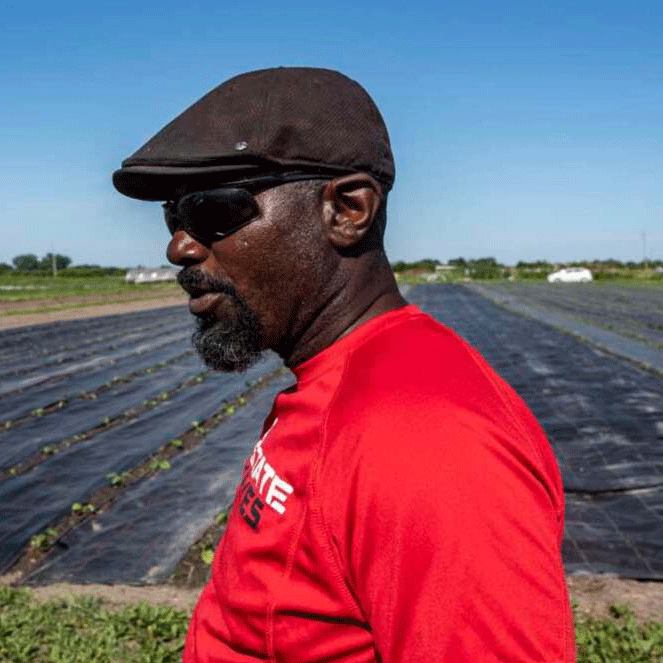
“The only way to increase my profit margin was to grow the ingredients and process the hot sauce myself,” he says. A friend of Alfred’s connected him with Ansel Cummings of Awesome Sauce, based in Riverside, Iowa, who spent two hours on the phone with Alfred explaining licensing, food safety training, testing and pH requirements.
Packaging and labeling are Alfred’s biggest costs; he buys bottles by the pallet, but his ability to scale up his operation is limited because he still bottles by hand. To address this, Alfred is currently applying for grants for a pneumatic filler.
To market his hot sauce, Alfred has been visiting shops across Iowa and beyond. “I go state by state, in person,” he says. “Last year, I targeted Ohio. I started in Cincinnati and stopped at African grocery stores and other places where I thought people would enjoy really hot sauce. I ask for the owner or manager, leave a business card and offer a sample.”
Because many retailers hesitate to place an order right away, Alfred offers them a trial period.
“I tell them to try the product for two or three weeks and see how it goes. When I come back, they can purchase sauce by the case. If they don’t have to pay up front, they’re more willing to give it a try.”
Alfred also sells to a distributor in Florida. “He’s my largest buyer right now,” Alfred says. Looking ahead, he plans to expand into more states, add bottling equipment and develop a milder second sauce for customers who can’t take the heat.