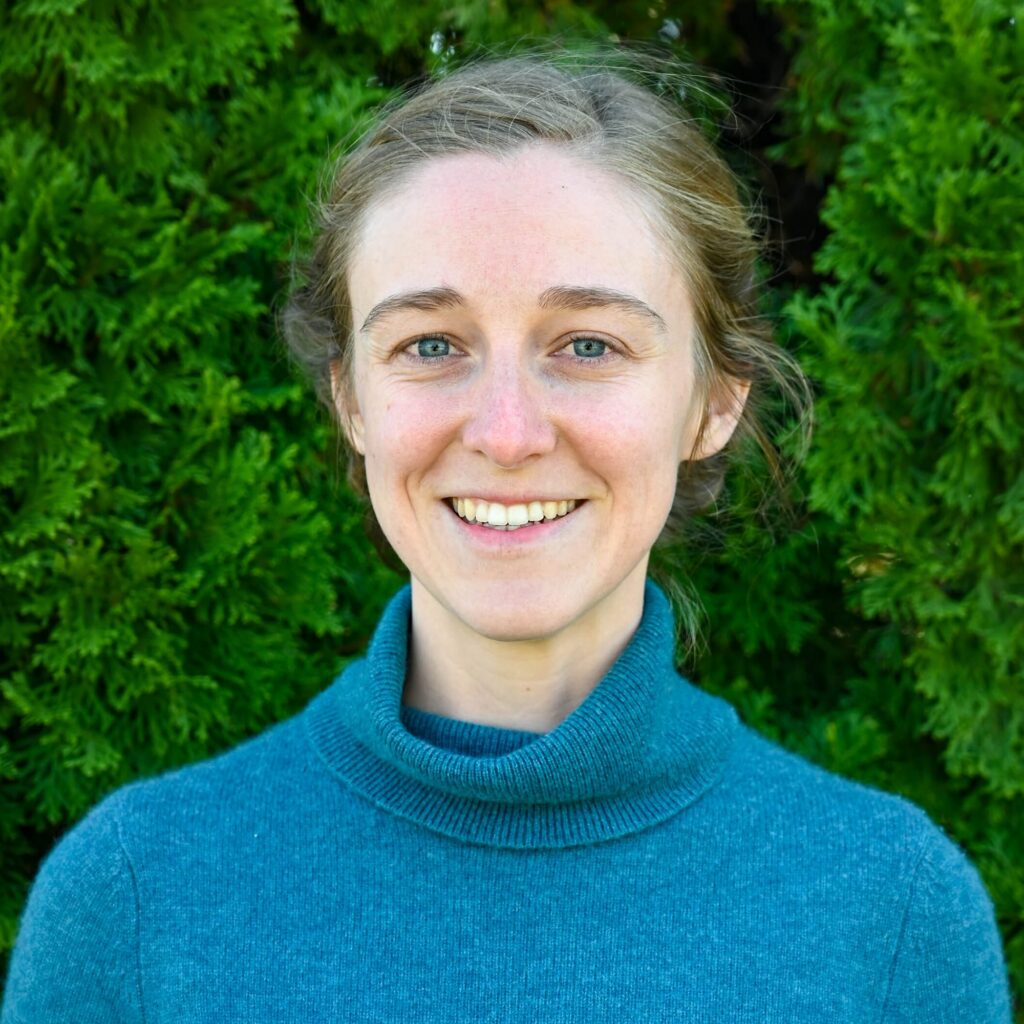
Noreen Thomas is growing community around local foods through creativity and a focus on reciprocity
Turning onto Main Street in the small town of Hendrum, Minnesota, during the noon hour in early June, it’s quiet aside from a steady wind and the music playing in the local tavern. American flags are neatly mounted on the iconic black lampposts. Despite the quiet, cars line the street. One of them belongs to Noreen Thomas, who has just arrived to deliver ground beef to the local food pantry.
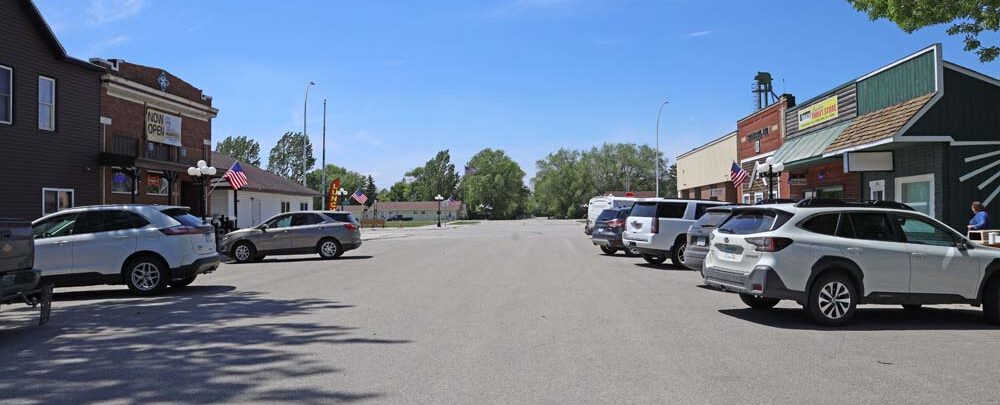
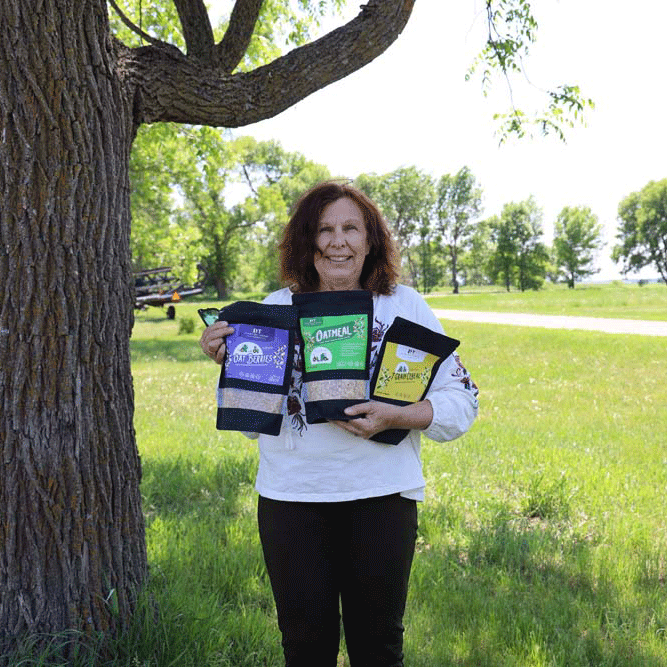
Noreen – a farmer and local-food advocate from Doubting Thomas Farms, located near Moorhead, Minnesota, 17 miles to the south – is a consistent contributor to the pantry.
“It’s rural, so they don’t get support like in a bigger city. They realized that their lifeline is the local people,” she says. “I think we gave about $1,500 worth of grain and flour, seven-grain cereal, rolled oats and pearled barley through a local food assistance program.”
Noreen and her husband Lee, a fifth-generation farmer, have been growing certified organic oats, barley, wheat, corn, blue corn, soybeans and more since 1997. Much of their grain sells to restaurants in the greater Fargo-Moorhead area.
But some of it ends up in Hendrum, used by the local tavern or shared through the food pantry. Formerly run by another organization, the food pantry had been at the brink of closing before a group of motivated townspeople banded together to keep it alive. They created a nonprofit, Hometown HOPE (Helping Others Provide Enrichment), to run the food pantry out of the Hendrum community building. The organization also kept the thrift store, located next door to the pantry, from closing.
Noreen finds Kristi Beyl, director of the nonprofit, chatting with employees in the thrift store as several new shoppers enter. Together, Noreen and Kristi go out and gather the ground beef from Noreen’s car and bring it into the food pantry where boxed goods line the shelves and many dozens of eggs are stacked in the fridge awaiting the next pantry opening in two days.
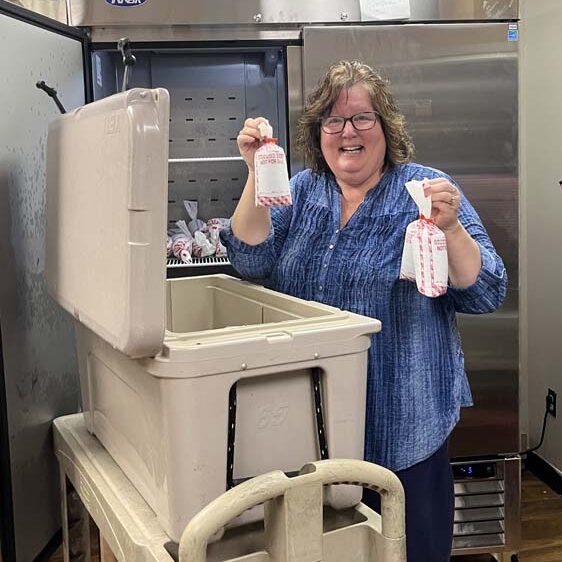
Once all the beef is tucked into the freezer, they head back out and admire a row of large containers filled with flowers, tomatoes and other plants – a project they recently led with the local Girl Scouts and 4-H club to green up an otherwise unused nook. Walking across the street to Maggie’s Hometown Tavern, Kristi and Noreen run into multiple townspeople, each happy to pause and chat for a time.
“It’s like a different world [in Hendrum],” Noreen says. “They help each other. They all are collective thinkers. And when we’re there, people are curious why we’re there and stop by.”
Though not from Hendrum (she grew up in Montana), Noreen has woven herself into the folds of this small community. With a population of less than 300 and no grocery store, Noreen likes to know that her nutrient-dense whole-grain products are still nourishing the local community. But that begs a question: If Doubting Thomas Farms grows grains, why is she bringing beef to the food pantry?
For Noreen, the answer is simple: her desire to support local-food access in Hendrum. The local 4-H club had recently raised money through a fundraiser and chose to use the funds to buy meat for the pantry. Noreen stepped in to help, picking up the ground beef from her tenant farmer.
Sharing Space
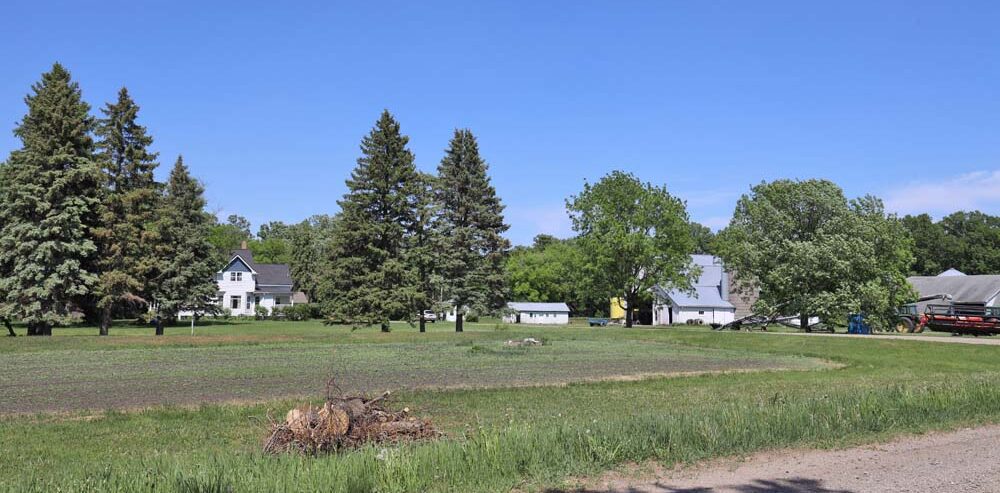
One of Noreen’s keys to building community is reciprocity. Often, this involves opening her farm to the community.
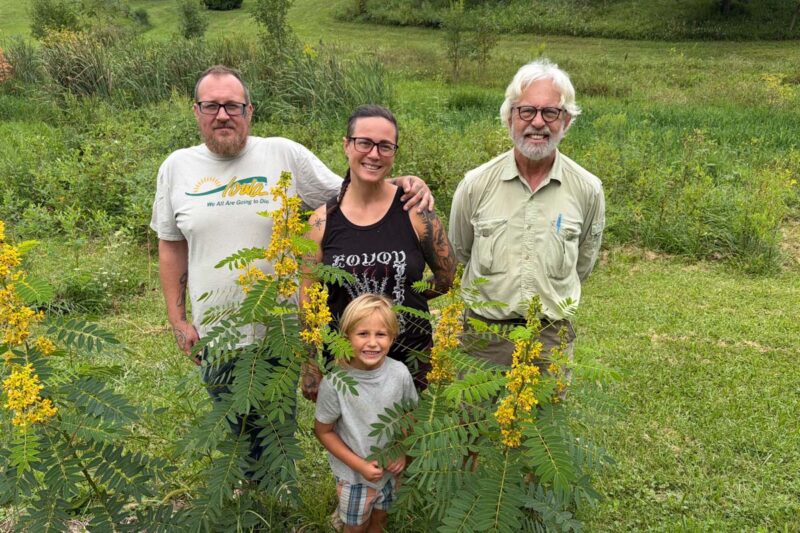
She welcomes people onto her farm for a host of reasons, from studying perennial sunflowers to foraging for wild edible plants to attending educational classes she hosts. In those instances, Noreen shares her land and knowledge while delighting in the positive impact of those partnerships.
One example is her ongoing youth programming. For several years, Doubting Thomas Farms has hosted educational programs for local Indigenous youth through the growing season. The students learn about foraging, gardening and cooking.
Together, they sow and save Indigenous seed varieties for their families as well as for White Earth Nation. Last year, with Noreen’s help, they planted a Four Sisters plot featuring the traditional Three Sisters of corn, beans and squash plus sunflowers, one of several other crops many Native communities include with the triad.
Noreen doesn’t do this work alone, though. “People in the community have been over-the-top supportive of things,” she says. “I’ll ask for boots for the kids because it rains a lot, and boxes and boxes show up. I think that’s because I’m not asking for me, I’m asking for them.”
She has also had help from local Indigenous leaders like Candace Stock. Candace is a member of the Ho-Chunk Nation and grew up on the White Earth Reservation. She is executive chef for Salt & Scoria at the Theodore Roosevelt Presidential Library in Medora, North Dakota.
For the youth program and other events at Doubting Thomas Farms, Candace teaches cooking demonstrations and leads foraging walks. Reciprocally, she purchases Noreen’s grains for her restaurant.
Mentoring Others
For Noreen, these efforts and partnerships all stem from her desire to increase access to diverse, nutritious and locally grown foods. She first came to the farm with a Bachelor of Science in food and nutrition and no previous row crop farming experience. But she jumped in, learning how to use equipment, keep records and find markets.
After years of learning – and lacking a mentor of her own – she is now using her experience to mentor and help beginning and non-traditional farmers as a peer connector with Renewing the Countryside.
For example, when the U.S. Department of Agriculture opened enrollment in June for the Assistance for Specialty Crop Farmers program, which offered over $1.6 billion in payments to specialty crop farms that hadn’t been covered through an earlier program, Noreen immediately got to work “calling the bean growers, the potato growers, the hazelnut farmers that I know.”
She wanted those farmers to know about the opportunity before the application window closed on Aug. 7. And with each call, Noreen offered to help with paperwork, especially for those who don’t have strong English skills yet.
It’s not that she wants to spare these farmers from making any mistakes. It’s the mistakes, she says, that have guided her own path to the many successes she can appreciate today. Rather, Noreen wants to help these farmers navigate the initial barriers – the bureaucratic hurdles that might prevent them from having the sorts of creative mistakes that lead farmers to expand their knowledge.
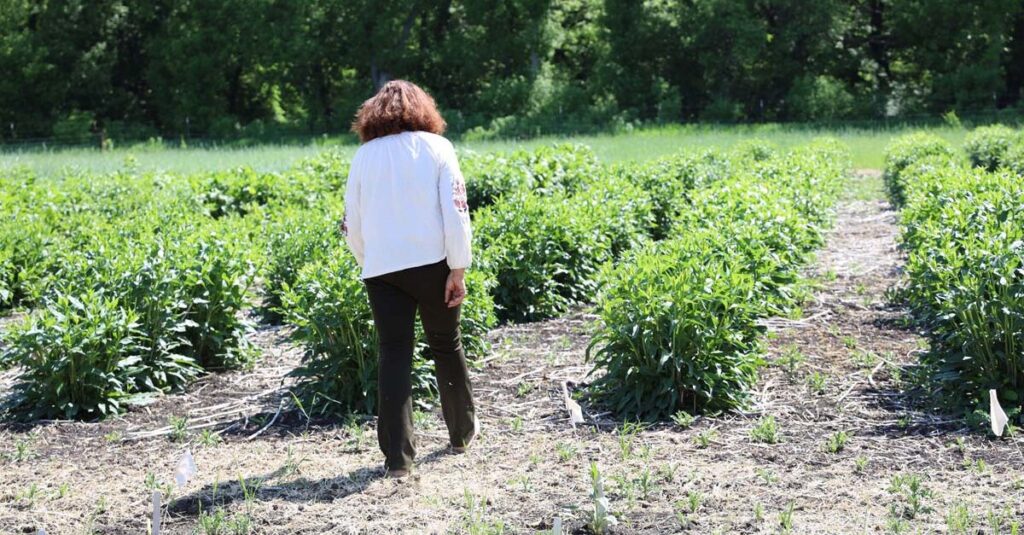
“Each mistake is a learning curve,” Noreen says. “Some of the best things that have happened to me were mistakes where I pivoted.” Instead of seeing those experiences negatively, Noreen says she reframes them as creativity.
Sowing Seeds of Connection
Driving back to the farm from Hendrum after a filling lunch with Kristi at the tavern, Noreen reflects on the value of marketing clubs of the 1980s when farmers collectively decided on grain prices. She wonders how farmers could better cooperate to accomplish goals today.
“I think there has to be a return of more togetherness [in agriculture]. I’ll let some people use equipment, or we’ll share seed or buy fuel together.”
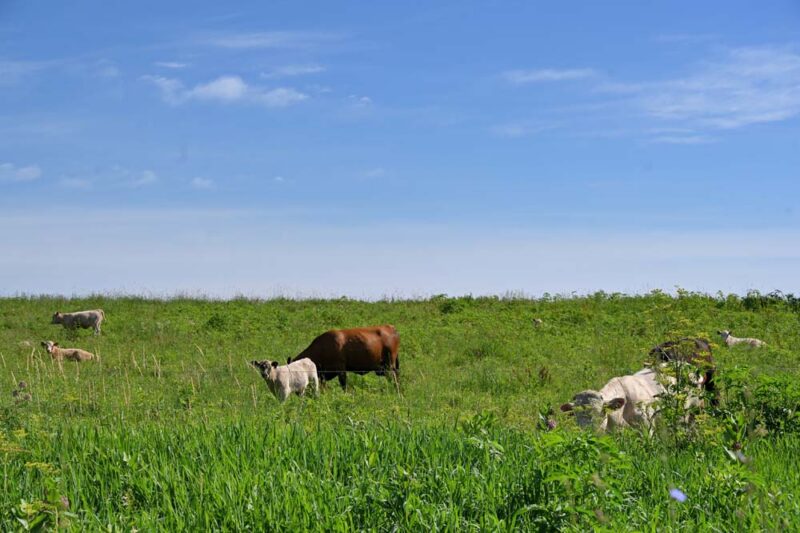
For Noreen, trading with neighbors builds that reciprocity and trust in her community. After grain harvest, for example, Doubting Thomas Farms gives any chaff and poorer-quality grain to a neighbor farmer to feed his cattle. In return, he gives Noreen beef. She has similar partnerships with other farmers, some raising pork or chicken to trade instead of beef.
“There are some people that I exist with in a very circular, non-currency environment,” Noreen says. “Some people really get it. I say to them, ‘Hey, I’ll give you some grain, and when your beef is ready, then let’s trade.’ We both come away really happy.”
Even as Noreen weaves the fabric of community through her many partnerships and projects, she is constantly using her creativity to envision new possibilities. “I always have seeds in my pocket,” she says, “and usually rolling around in my purse.”
For Noreen, each new relationship, each mistake and every challenge, is a seed she will soon sow to further nourish the communities she has found and fostered.
Note: Since the writing of this article, Noreen applied for funding through Minnesota’s Farm to Food Security Grant. Hendrum’s food pantry was recently granted $30,000 thanks to Noreen’s efforts and grant writing experience.