Funded by Walton Family Foundation.
In a Nutshell:
- Potatoes are a staple of the Midwestern diet but are often grown far away.
- Interest in local food has increased the motivation of local growers to grow potatoes, requiring the adaptation of production and management to local climates and conditions.
- Isabel Schmidt and Kimberly Ropp were growing potatoes for the first time at commercial scale and were interested in finding both varieties and planting dates that both maximized yields and fit into their planting schedules.
- In addition to testing varieties and planting dates, Matteson also conducted an experiment to test the profitability of his irrigation system.
Key Findings:
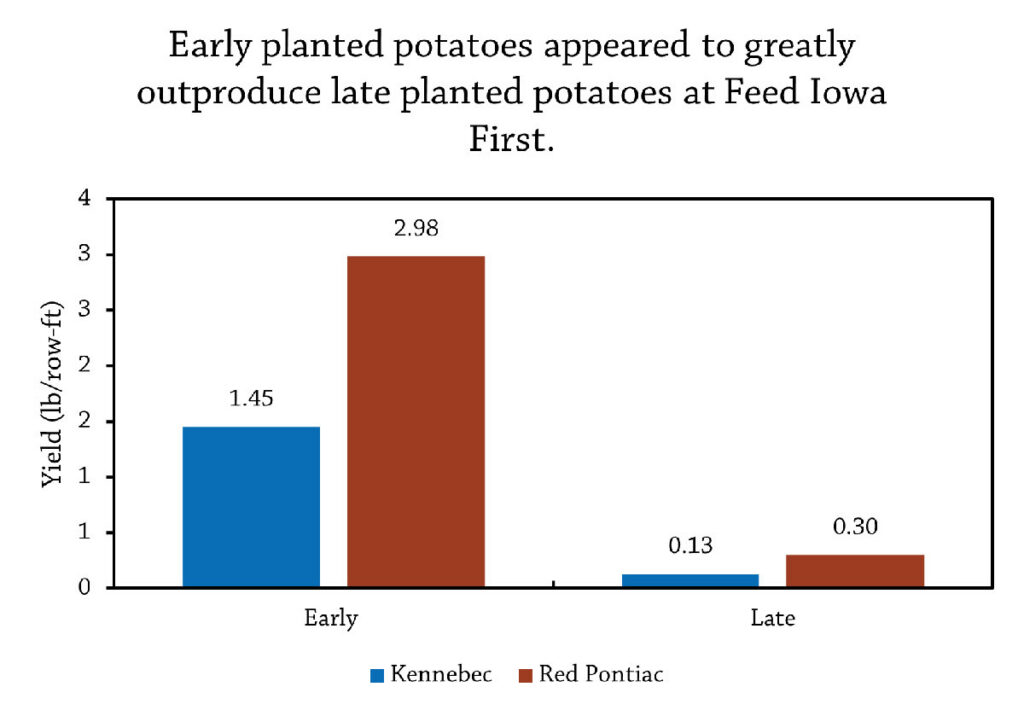
- For Schmidt at Feed Iowa first, early plantings outperformed late in both varieties. Red Pontiac outperformed Kennebec in both plantings.
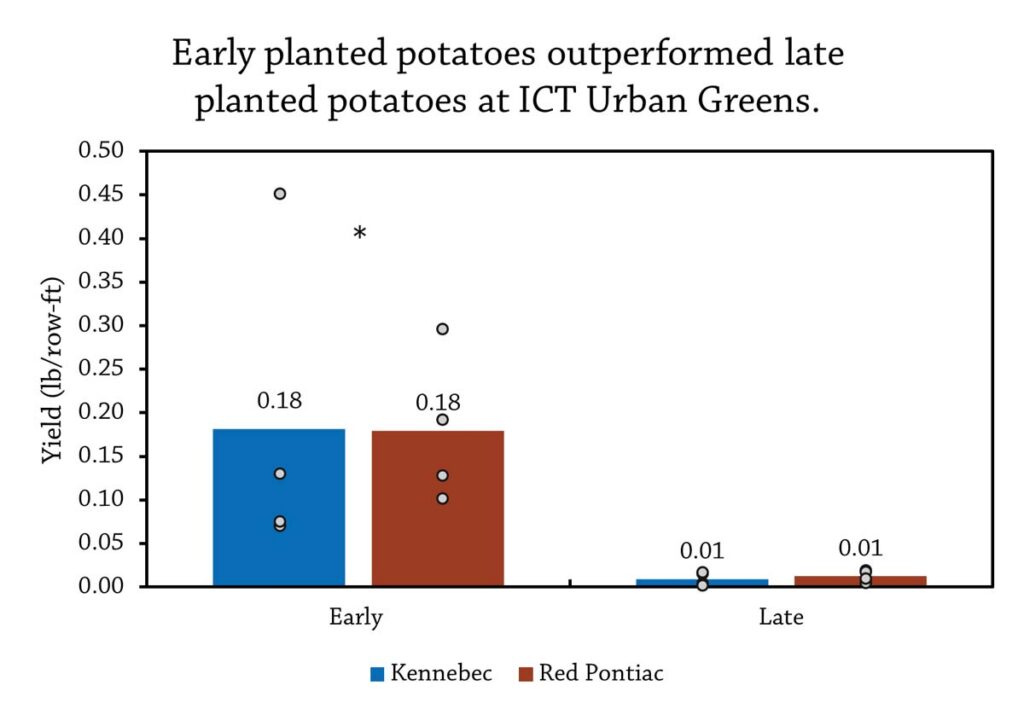
- For Ropp at ICT Urban Greens, early plantings significantly outperformed late for both varieties.
- For Matteson at Lee’s Greens, Kennebec outperformed when planted in April, while Red Pontiac did better with the later, May, planting date.
Background
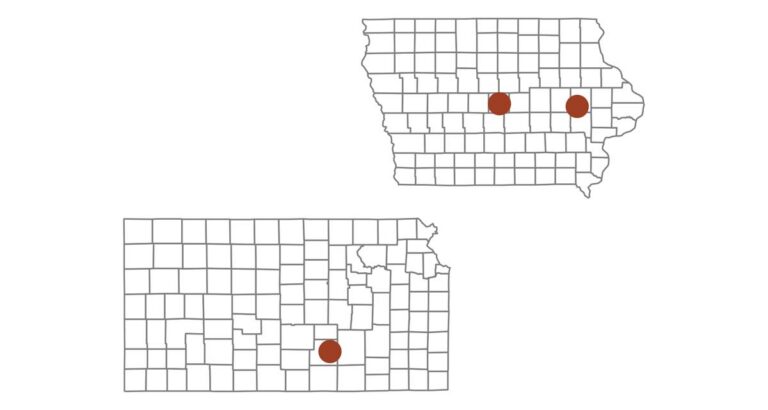
Today, large-scale potato production in the United States is concentrated in areas with well-drained, nutrient-rich, sandy soils, such as the volcanic sands of Idaho, Washington, and Oregon and the sandy riparian flood plains of Wisconsin and Minnesota [1]. However, Iowa has a long history of potato production. In 1902, Iowa produced 9,757,000 hundredweight (cwt) of potatoes [2]. By 1942, that had fallen to 3,600,000 cwt [2]. In 2002, the last year for which the USDA National Agriculture Statistics Service has numbers, Iowa only grew 231,000 cwt [2]. As production has moved further away, potatoes have remained mainstays of the midwestern human diet and culinary repertoire. Demand for locally grown produce in Iowa and other former-prairie states has motivated some horticulture farmers to add potatoes to their rotations. As potato production has receded from the landscape, there is less cultural knowledge for farmers to rely on, especially at scales larger than garden production. Some norms have also shifted since common practices were last common in Iowa—the 1942 Iowa State University publication “Growing Potatoes in Iowa” recommends treating seed potatoes with formaldehyde or acid-mercury dips to protect against pests [3]. Facing the question of how best to grow potatoes to meet the demand for local produce that matches the local diet, three cooperators decided to set up experiments to help them explore different practices and set norms for their operations going forward. The three factors involved with potato production that they tested were: variety, planting date, and irrigation.
All three locations tested the same two varieties, one white and one red. A 2016 Iowa State University blog-post primer on growing potatoes describes the two varieties of potatoes as follows [4]:
‘Kennebec’ is a late maturing white cultivar with block-shaped tubers and shallow eyes. Cooking quality is excellent.
‘Red Pontiac’ is a late maturing red cultivar. Potatoes are oblong with deep eyes. It produces high yields with many large tubers. Table quality is only fair. Storage quality is very good.
The ideal planting date is an elusive target, with every geography experiencing a different set of conditions each year. Lee Matteson ran a potato planting date trial last year that yielded mixed results, with the two varieties preferring opposite planting timings [5]. In the present trial, the cooperators chose different planting dates based on what potential timings they thought would work with their locations and operations.
Irrigation can be a costly investment, but it can save a potato crop in a dry year. 2025 was the second year that Matteson tried to measure the effect of his drip irrigation system, to calculate ROI for his operation. Wet conditions in 2024 nullified the results of his first irrigation trial that summer [6].
Matteson had a prior history of growing potatoes at Lee’s Greens, including the two trials mentioned above [5], [6]. Isabel Schmidt, the farm manager at Feed Iowa First, and Kimberly Ropp of ICT Urban Greens, were growing potatoes at small commercial scale for the first time. These trials provided them with valuable experience and knowledge that they will use going forward.
Methods
Design
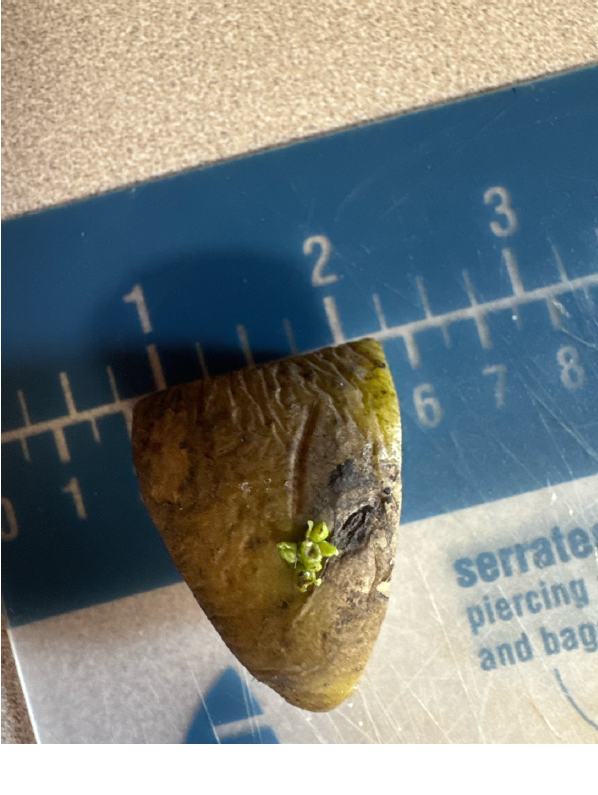
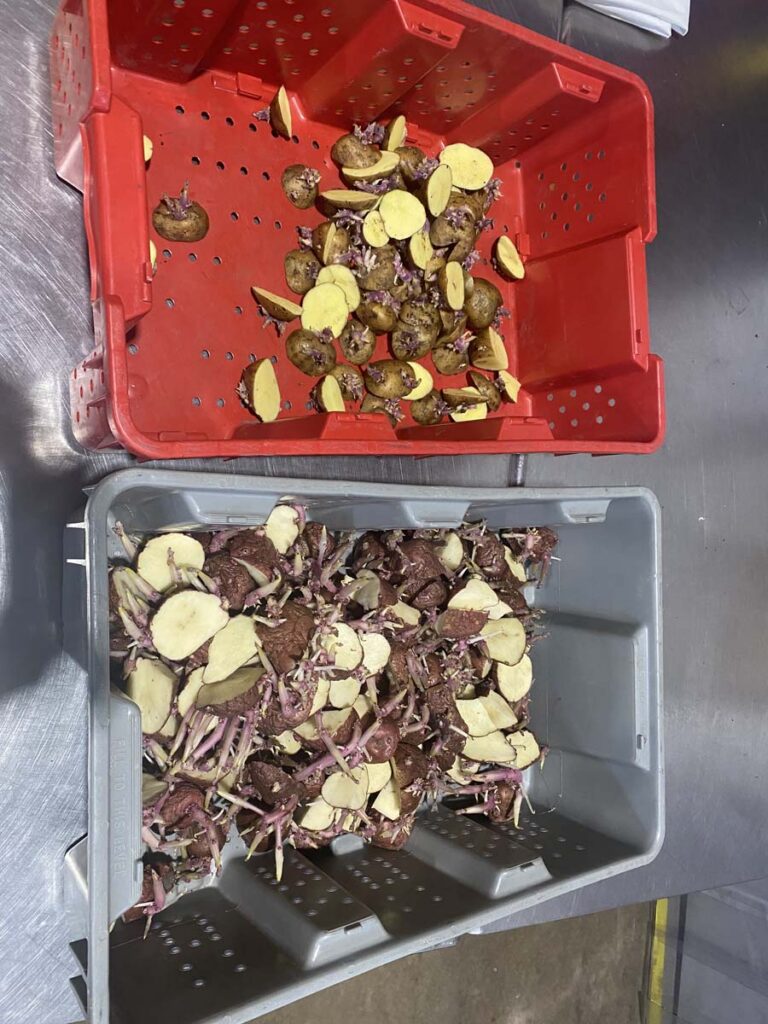
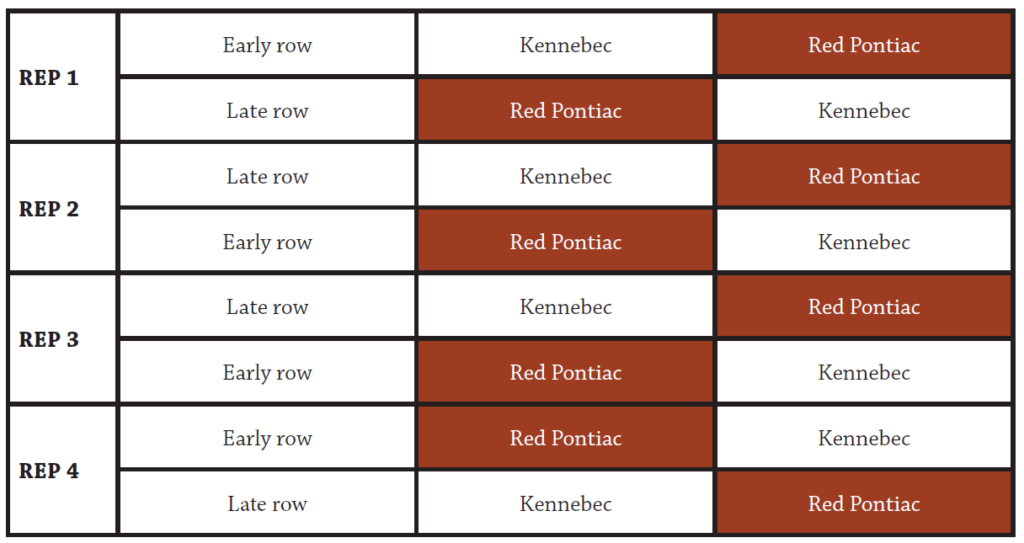
Three farms conducted trials on potato planting date in 2025. All compared the effects of early and late planting dates on the same two varieties of potatoes: Kennebec and Red Pontiac. This amounted to four treatments in randomized plots being carried out on each farm, each replicated four times. Four replicate rows were planted early, and four were planted late; the two halves of each row were randomly assigned to the two varieties. Information about each farm’s planting and management practices is detailed in Table 1. All farms planted pieces of their seed potatoes cut into 1-2 in. chunks. At Feed Iowa First, in an effort to maintain consistency, all the chunks for both planting dates were prepared at once, in time for the early planting date. This may have introduced variability into the experiment, as those chunks destined for late planting aged, cut, until the later planting date, which may have reduced their viability. The other farms prepared their seed potatoes closer to planting.
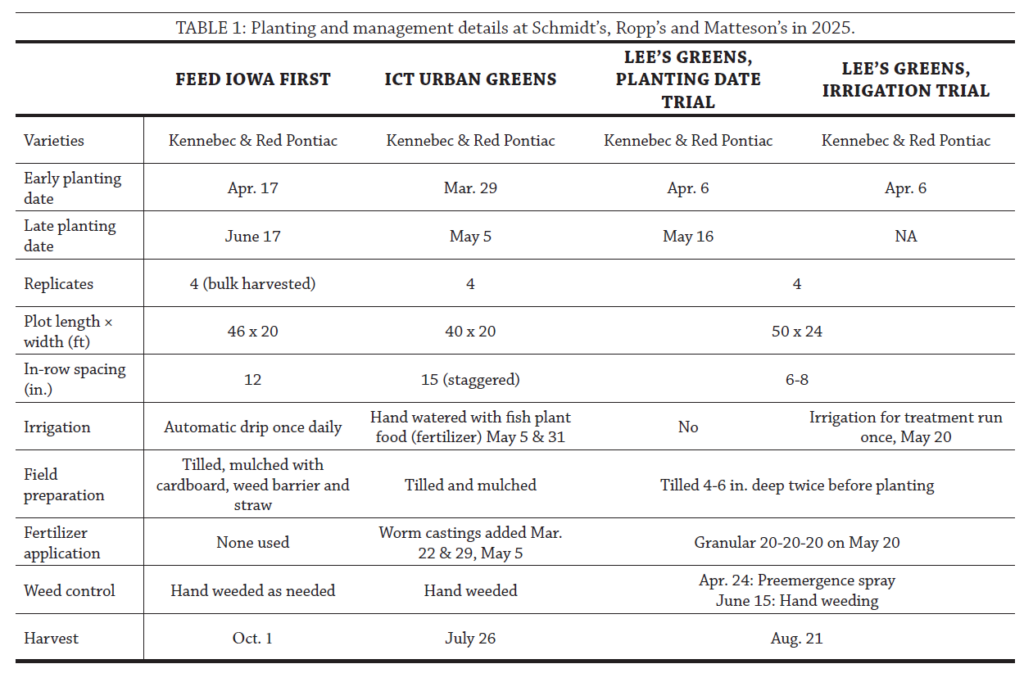
Matteson of Lee’s Greens also ran a trial investigating the effect of irrigation on Kennebec and Red Pontiac. Each irrigation treatment ran an entire row, with the two halves of each row randomly assigned to the two varieties. Thus, four rows were irrigated and four were not. This matches the design of the experiment seen in Figure A1, with ‘irrigated’/’non-irrigated’ substituted for ‘early’/’late’. Because of the wet prevailing conditions, soil moisture levels never fell to a level where irrigation was required.
Measurements
The total weight of all marketable potatoes from each plot was measured fresh at harvest. At harvest at Feed Iowa First, the four reps were accidentally combined; although total yield data is available for each treatment, without data from each replicate we cannot statistically analyze the data.
Data analysis
We performed an analysis of variance (ANOVA) to determine any effects of variety, planting date and irrigation on potato yield at the 90% confidence level. This means any effects we declare statistically significant would be expected to occur at least 9 times out of 10 if the experiment was carried out in identical conditions. We could perform these analyses because the trials at ICT Urban Greens and Lee’s Greens had completely randomized and replicated experimental designs (Figure A1). Because the four replicates at Feed Iowa First were unfortunately harvested together, no analysis could be performed.
Results and Discussion
Schmidt – Feed Iowa First
On Feed Iowa First’s Cedar Rapids field, volunteer workers unfortunately bulk-harvested the potatoes from the four reps that were set out, so although we have yield data from each treatment, we were not able to analyze the data statistically. Nonetheless large differences are visible between the two varieties and the two planting dates (Figure 1). Red Pontiac produced more potatoes than Kennebec with both early and late planting dates—105% and 130% more, respectively. Early planting provided a huge benefit to both Red Pontiac and Kennebec compared to late plantings—an additional 894% and 1,013%, respectively. The two-month-long aging period of the seed pieces of the late-planted potatoes between cutting and planting seems likely to have negatively impacted the sprouts viability.
Reflecting on what she thought were the most probable causes for differences between the planting dates, Schmidt wrote that the cuttings made in April may have been less viable by the time of planting in June (as noted above). The June-planted rows were also not tilled again closer to the late planting date, allowing more weeds to get established. And April-planted plants simply had a longer window to grow.
Ropp – ICT Urban Greens
At ICT Urban Greens in Wichita, KS, there were no differences between varieties, but early plantings of both varieties significantly outperformed their late-planted counterparts (Figure 2). Average late-planted yield was only 6% of the average early-planted yield. In her reflection, Ropp wrote that she would not be planting potatoes that late again.
Matteson – Lee’s Greens
This was the second year that Matteson ran this trial at Lee’s Greens in Neveda, IA [5]; 2024 was a bad year for growing potatoes in central Iowa, and 2025 was a worse one. Overall average yield per row-foot dropped from 1.84 lb in 2024 to 0.14 lb in 2025. Heavy rains in late June and July (see Figure A2 below) reduced yields tenfold, compared to last year’s disappointing results. Matteson commented that, were it not for this being a research trial, he would have plowed the plants under without bothering to dig the potatoes. Nevertheless, a clear and interesting pattern emerged. Early planting benefited Kennebec, and late planting benefited Red Pontiac (Figure 3). This pattern matches Matteson’s results from last year where Kennebec preferred early planting and Red Pontiac preferred late [5].
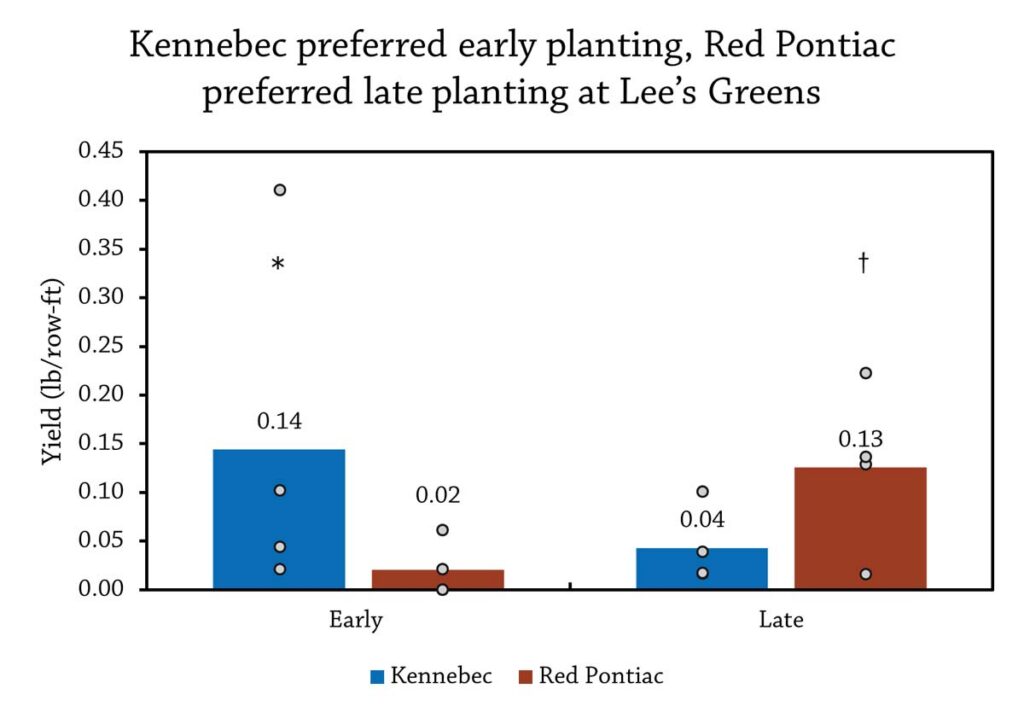
Kennebec at the 90% confidence level. Click to enlarge.
Matteson – Lee’s Greens
Since the potatoes for Matteson’s irrigation trial were planted on Apr. 6 with his ‘early’ potatoes, they act as unofficial corroboration for the pattern above. In this trial, Kennebec significantly outperformed Red Pontiac (Figure 4). It was so wet in 2025 that Matteson only ran the irrigation system once, on May 20 when he first set it out, and we decided that irrigation could be ignored as a treatment. Ultimately, this trial effectively acted as another variety comparison.
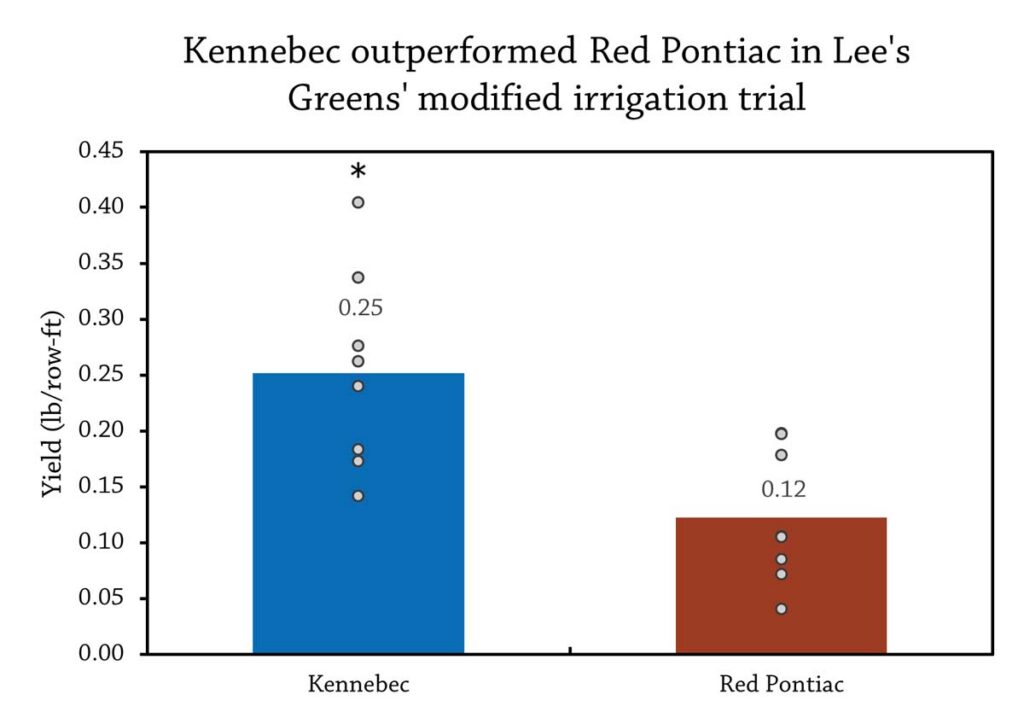
statistically greater yields than Red Pontiac at the 90% confidence level. Click to enlarge.
Conclusions and Next Steps
Wet weather and field conditions affected the results. All three farms had very wet Junes and Julys (Figures A2-A4). Although we saw significant differences in potato yields, we cannot draw a clear conclusion about best practices for the future based on this data. Local factors—those in the fields and those introduced by management techniques—always introduce variation and skew results. In this case each farm saw a different set of treatments perform best.
Results from the three farms were not uniform, but these trials played an important role in informing new potato producers. Speaking at the 2025 Cooperators’ Meeting, Schmidt of Feed Iowa First said that they “learned so much about how to grow potatoes [through this trial]. This was [their] first time growing potatoes. Everything from preparing the seed potatoes, planting, to harvesting was all new knowledge to [them].” With this debut, learning foray into growing potatoes, potatoes jumped into the top 10 highest-producing crops on Feed Iowa First operations, and were very popular with the community recipients of their produce. However, Feed Iowa First are not sure whether they will continue growing potatoes, since they are available so inexpensively at the grocery store.
Ropp of ICT Urban Greens was growing potatoes in a new space. She wrote that she would use a larger space that was accessible to the tractor to ease planting and aid harvesting. She valued the opportunity to gain insight on better planting practices. “This trial also spurred us to tour another local farm’s [sweet] potato harvest”, which they found very insightful. They found others’ knowledge of specific crops to be valuable to their learning and implementation of best practices.
Both trials were repeats for Matteson, who initiated them in 2024 [5], [6]. After years of dry summers, he wanted to test the return on investment of his irrigation system but was rained out in 2024. He had hoped for more cooperative weather this year but did not get it. Matteson wrote on his reflection that “due to excessive moisture the yield result was very small” and he could not therefore answer his research questions. However, the drive to optimize small-scale potato production in prairie soil will continue in 2026. Matteson and others will be investigating the effect of biodegradable black plastic as weed suppression in potato production systems.
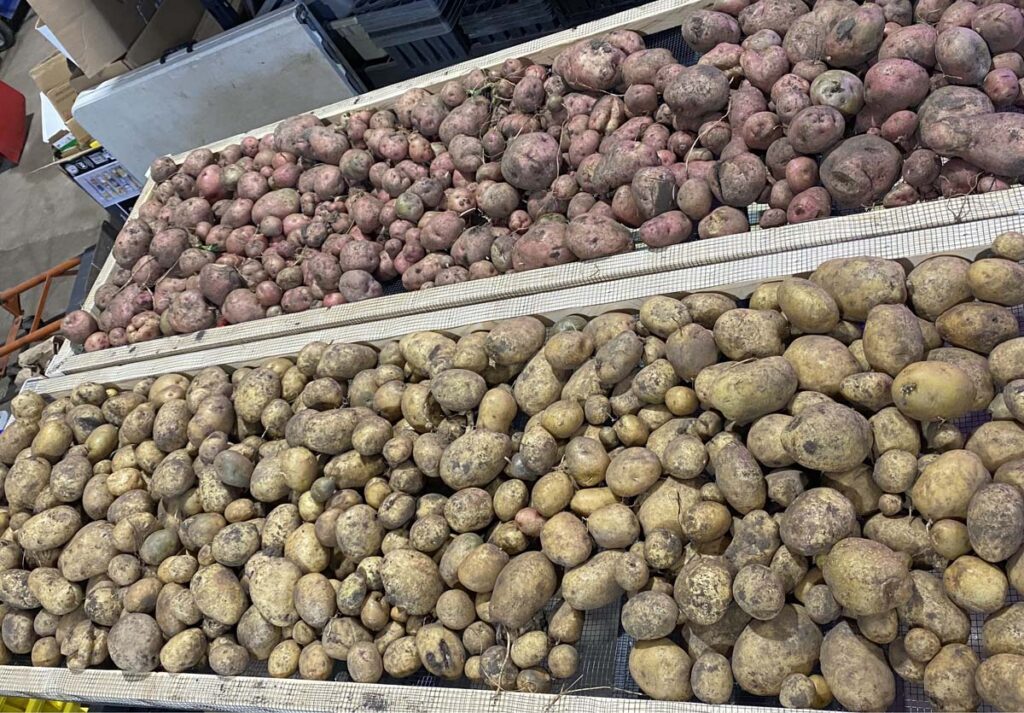
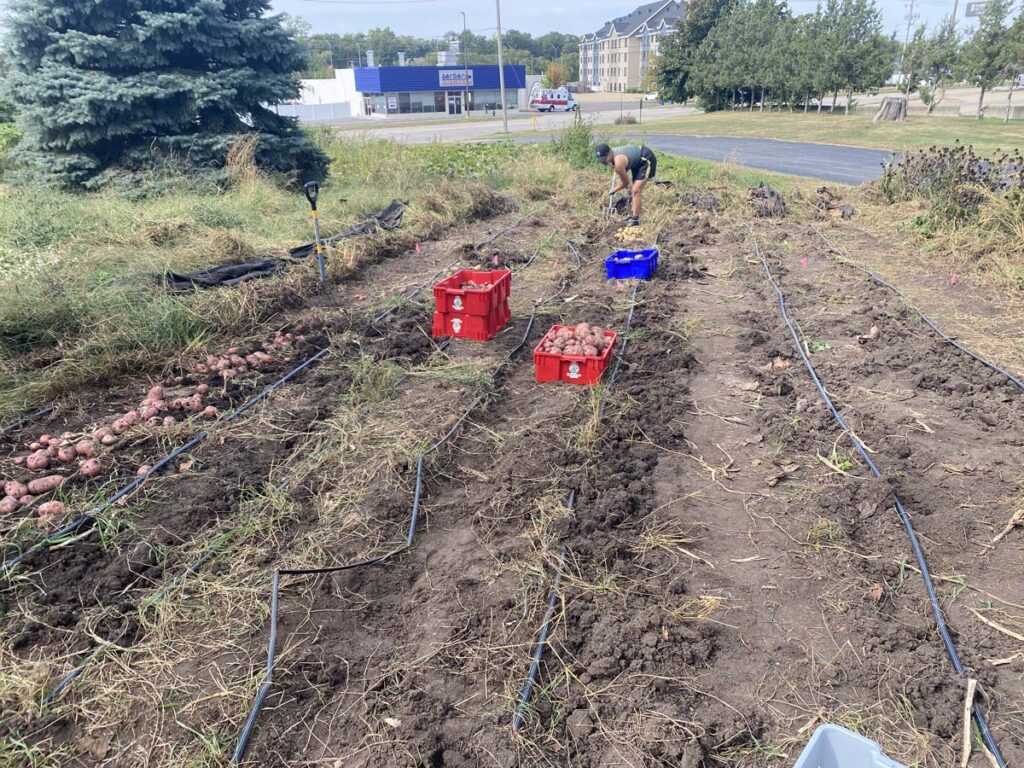
Feed Iowa First in 2025.
Appendix - Trial Design and Weather Conditions
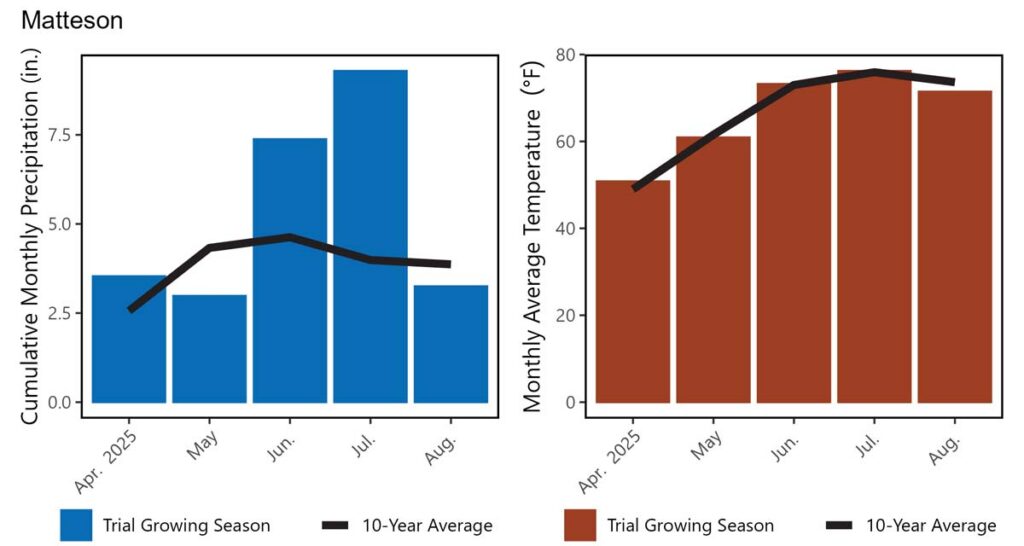
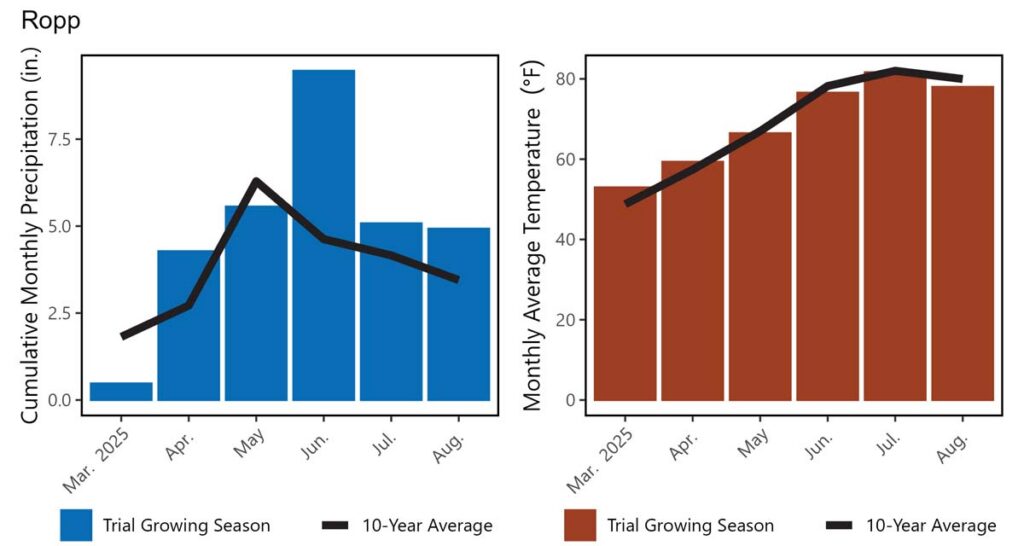
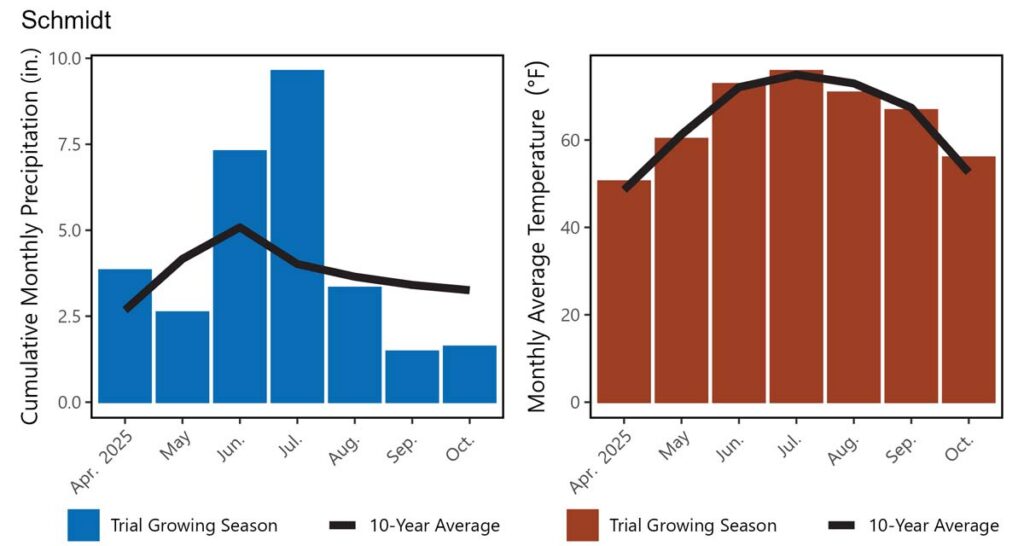
year averages (lines) for Nevada IA, Wichita KS, and Cedar Rapids IA [7], [8]. June and July were abnormally
wet at all three locations. Click to enlarge.
References
- “USDA Potatoes 2024 Summary,” Natl. Agric. Stat. Serv., Sep. 2025, [Online]. Available: https://www.nass.usda.gov/Publications/Todays_Reports/reports/pots0925.pdf
- [“USDA/NASS QuickStats Ad-hoc Query Tool.” Accessed: Jan. 30, 2026. [Online]. Available: https://quickstats.nass.usda.gov/results/F526A7EA-82E8-34C5-AFD3-BDBD05E1A57E
- “Potato growing in Iowa.” Accessed: Jan. 30, 2026. [Online]. Available: https://dr.lib.iastate.edu/entities/publication/af529272-f5ec-4390-827b-085fb69a60ee
- “Yard and Garden: Planting and Raising Potatoes In Iowa,” News. Accessed: Jan. 30, 2026. [Online]. Available: https://yardandgarden.extension.iastate.edu/how-to/growing-potatoes-home-garden
- “Potato Planting Date,” Practical Farmers of Iowa. Accessed: Jan. 30, 2026. [Online]. Available: https://practicalfarmers.org/research/potato-planting-date/
- “Drip Irrigation for Potatoes,” Practical Farmers of Iowa. Accessed: Jan. 30, 2026. [Online]. Available: https://practicalfarmers.org/research/drip-irrigation-for-potatoes/
- A. H. Sparks, “nasapower: A NASA POWER Global Meteorology, Surface Solar Energy and Climatology Data Client for R,” J. Open Source Softw., vol. 3, no. 30, p. 1035, Oct. 2018, doi: 10.21105/joss.01035.
- A. Sparks, nasapower: NASA-POWER Data from R. (2024). [Online]. Available: https://CRAN.R-project.org/package=nasapower