In a Nutshell:
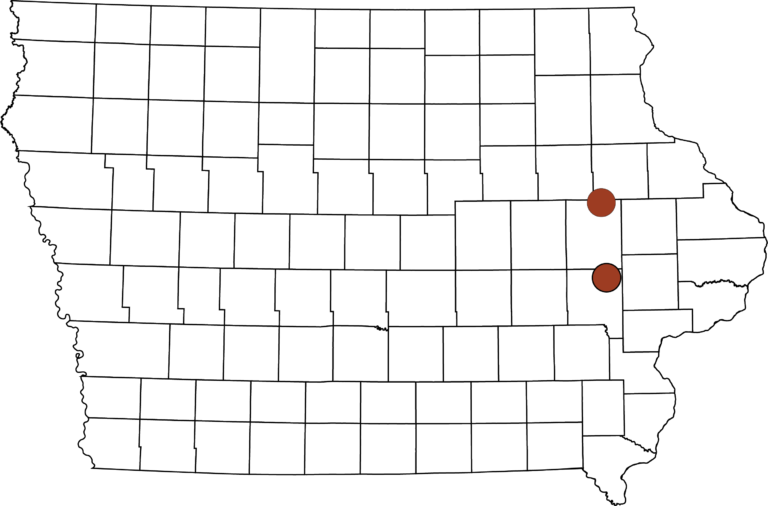
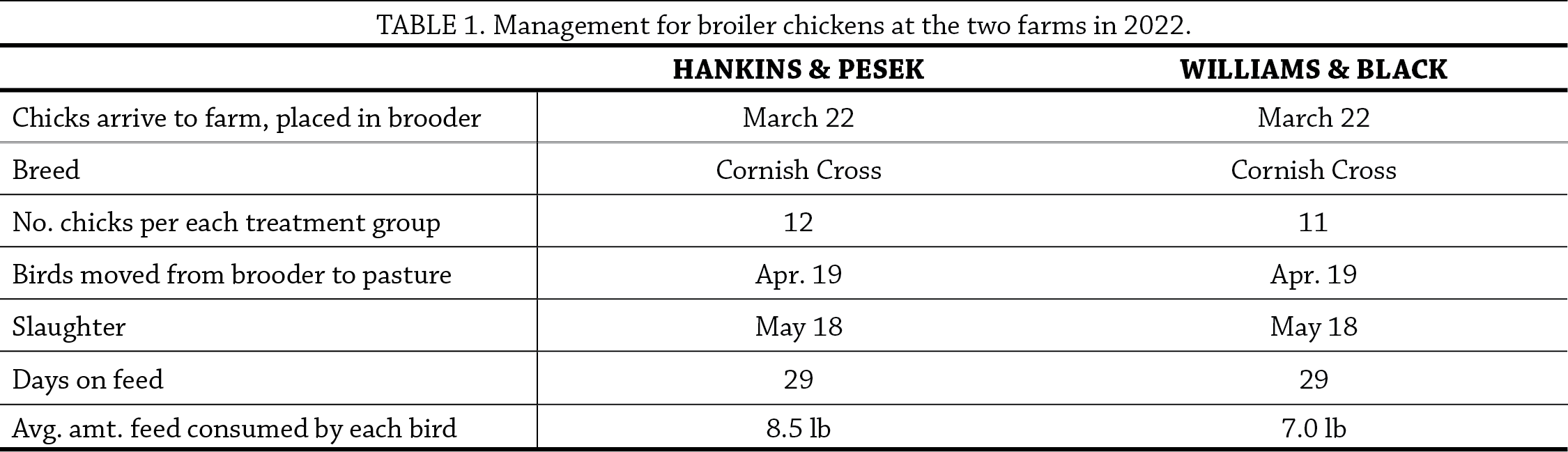
- Anna Hankins & Shae Pesek and Carlos Williams & Maja Black raise broiler chickens on pasture. They wondered whether replacing a portion of the corn in a typical ration with oats would affect gain and economics of the broiler chickens.
- Perhaps more importantly, the cooperators noted opportunities for marketing birds fed a diversified ration (rather than primarily corn and soybeans) as a driver for this project. Hankins said: “As direct-to-consumer farmers, there's potential increased profitability that could come with feeding a more diverse ration due to customer desire.”
- Going into the trial, they thought the diversified ration with oats might be more expensive but that it would be compensated for by improved weight gain and vitality of the broilers. “Chicken has a very small profit margin which is why feed efficiency is so important,” Hankins said at the onset.
Key Findings
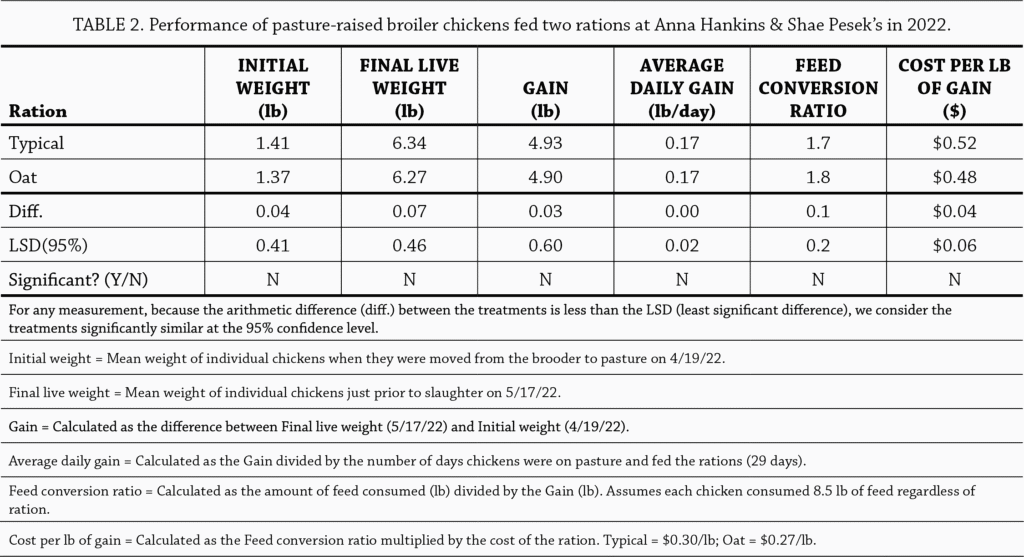
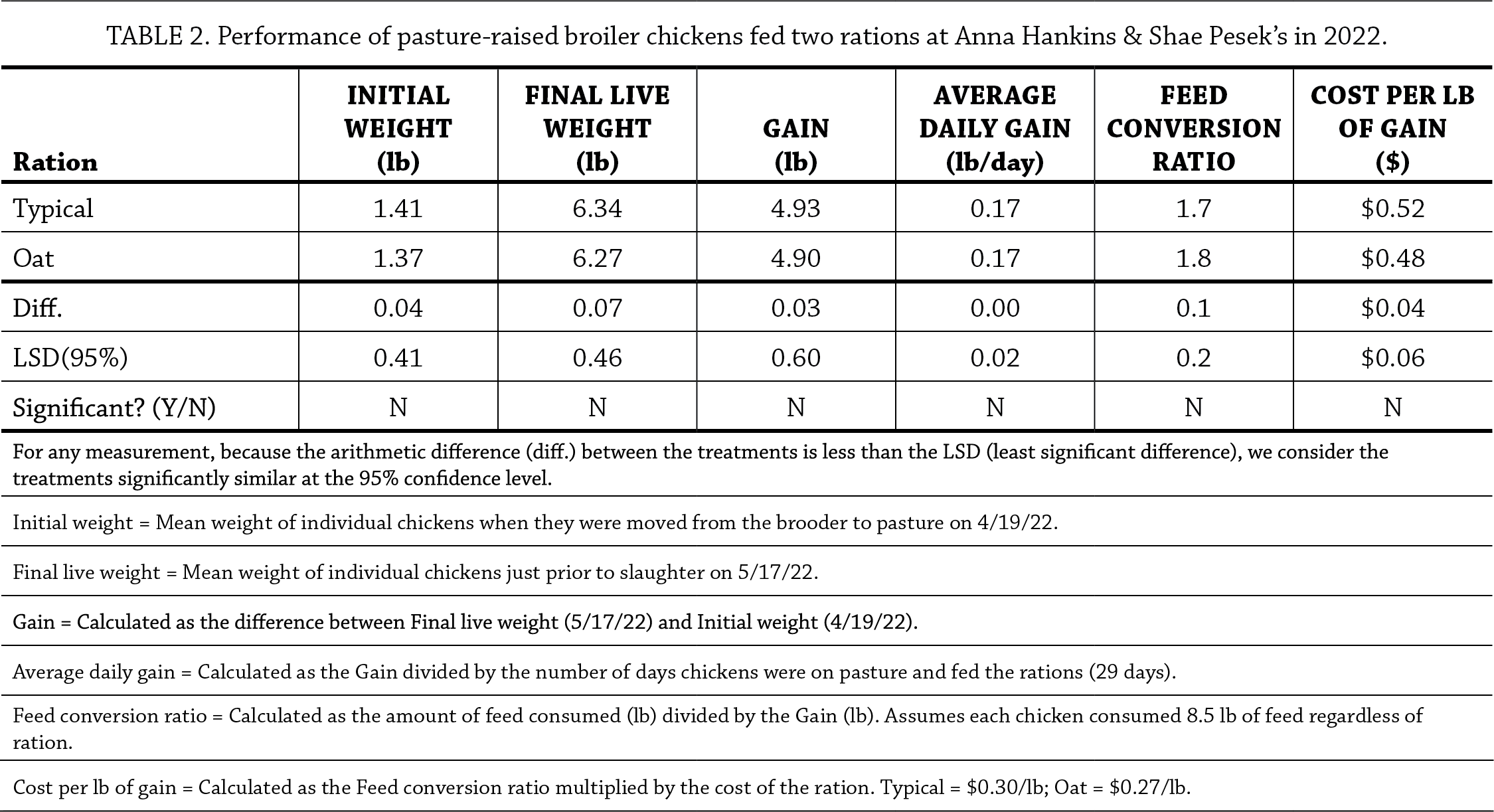
- At Hankins & Pesek’s farm, chickens fed the oat ration performed equally well as the chickens fed the typical ration in terms of gain, average daily gain, feed conversion ratio and cost per pound of gain.
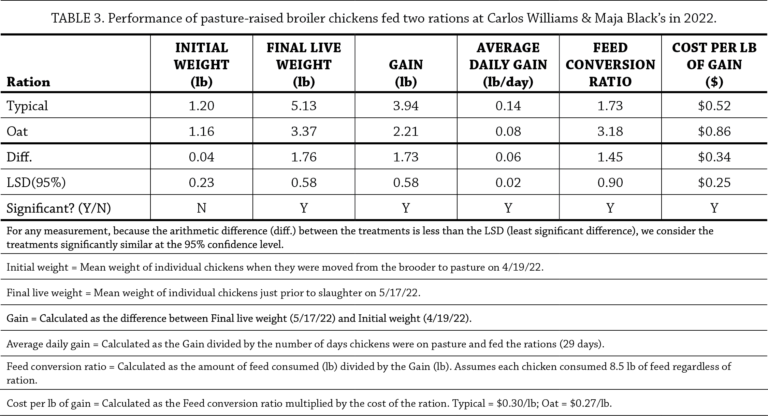
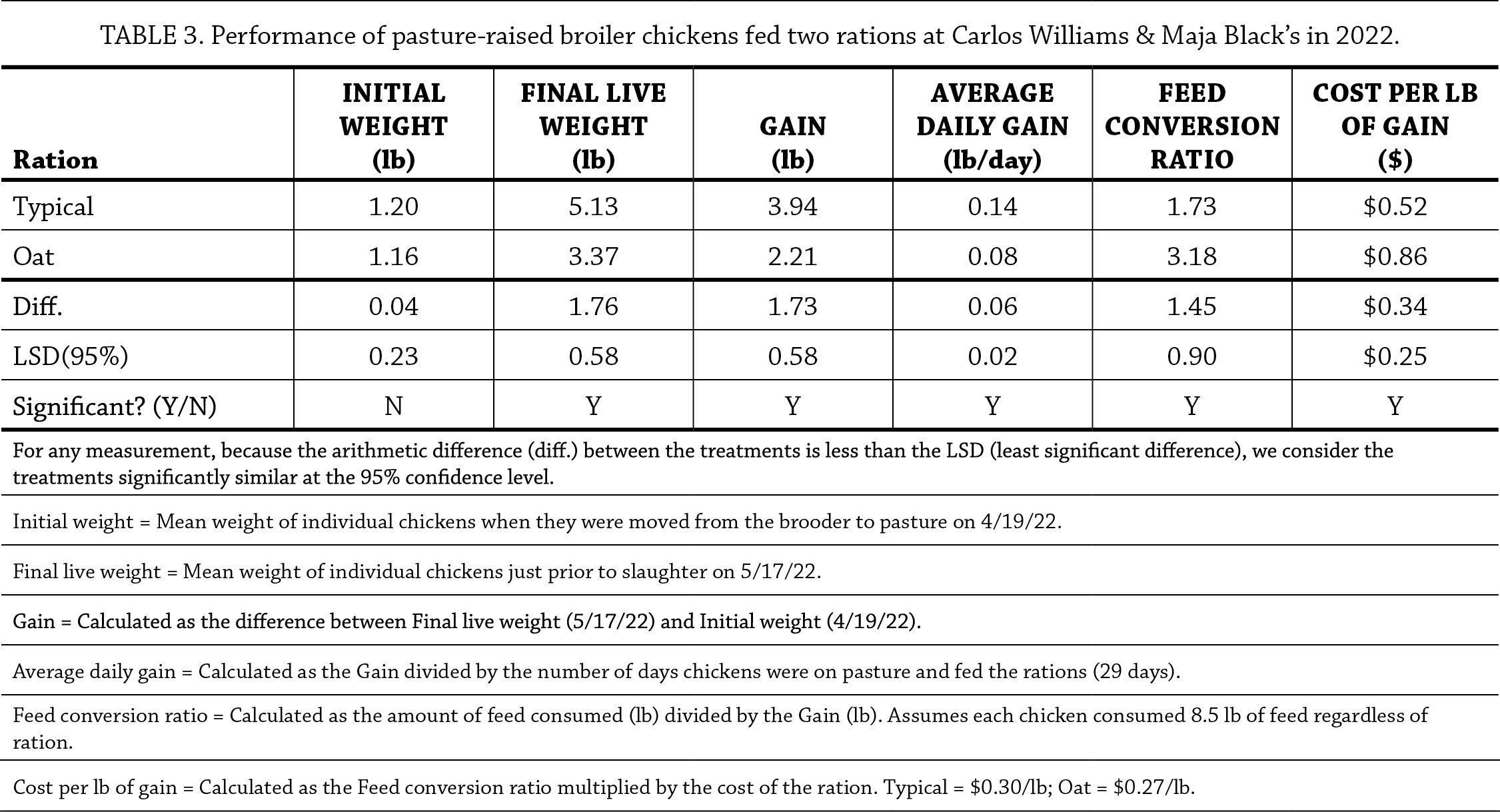
- At Williams & Black’s farm, chickens fed the typical ration out-performed those fed the oat ration.
Methods
Design
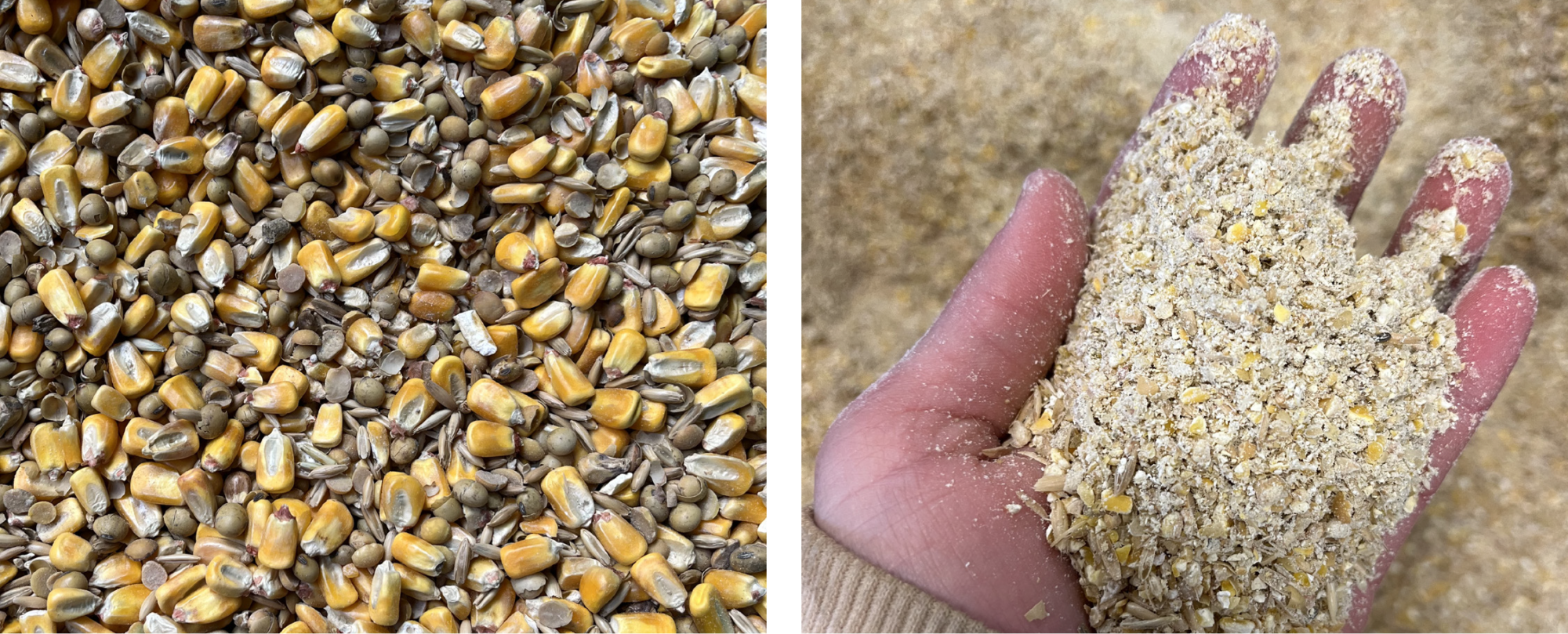
To determine the effect of replacing corn with oats in the ration, Hankins & Pesek and Williams & Black compared two rations: (1) typical ration, consisting of corn, soybeans, vitamins and minerals; and (2) oat ration, in which 10% of the corn in the typical ration was replaced with oats. The typical ration was ground by and sourced from D&J Feeds (Hopkinton, IA) and cost $0.30/lb. The oat ration was ground at Sundog Farm (Solon, IA) and included a vitamin mix from Heritage Poultry VTM in order to balance the vitamins and minerals in each ration. The oat ration ended up costing less than the typical ration ($0.27/lb).
Results and Discussion
Hankins & Pesek
Final live weight, gain, average daily gain and feed conversion ratio were statistically similar between treatment groups at Hankins & Pesek’s farm (Table 2). In other words, the chickens fed the oat ration performed equally well as the chickens fed the typical ration. There was a slight numeric economic advantage to the oat ration because it was less expensive than the typical ration and chickens performed similarly on either ration. This economic advantage (cost per lb of gain) was not statistically significant, though. Hankins was pleased with the results and said, “I feel like the corn-soybean ration for broilers is well documented and very successful and advantages for diversified diets may not be as apparent statistically but are something to consider for consumer demand and market differentiation of our birds.”
Conclusions and Next Steps
The cooperators went into the trial thinking the oat ration would be more expensive than the typical ration but that broilers fed the oat ration would perform better. For Hankins and Pesek, it turned out that the oat ration cost less than the typical ration and that broilers fed either ration performed similarly. “I'm so excited about this trial because it means we've done so much poultry math this spring and we are so much more in the know about our own cost analysis when it comes to feed and we have improved our production tremendously by making more observations about access to feed and why increasing our efficiency is so important,” Hankins said of their trial. She also remarked that the very act of monitoring broiler gain on pasture was valuable to their operation. “In a pasture setting there are many factors out of our control but this trial made us think about the factors that are in our control and how we best keep them consistent.” Black found it interesting that they saw different results from Hankins & Pesek’s farm and the trial also helped her realize the most appropriate strategy going forward: “Even if there had been a difference in rate of gain or cost [between the rations], we currently do not have the infrastructure to continue grinding our own rations, making the typical ration still a more affordable and convenient choice.”