Funding provided by Builders Vision Philanthropy.
In a Nutshell:
- For many farmers, feed is the most expensive input required to raise pigs.
- Ron Mardesen usually finishes his pigs exclusively in a hoop barn but wondered if he could instead graze them in cover cropped paddocks to alleviate some feed costs.
- Mardesen raised two groups of pigs, one in a hoop barn and one with access to pasture planted in annual forages. He tracked costs and pig weights to answer his question “Is grazing cover crops a viable option to alleviate feed costs in raising pigs?”
Key Findings:
- Mardesen’s trial was complicated by a Porcine Reproductive and Respiratory Syndrome (PRRS) Virus outbreak in early fall. He was unable to send all 200+ of his pigs to the processor at or around the same time.
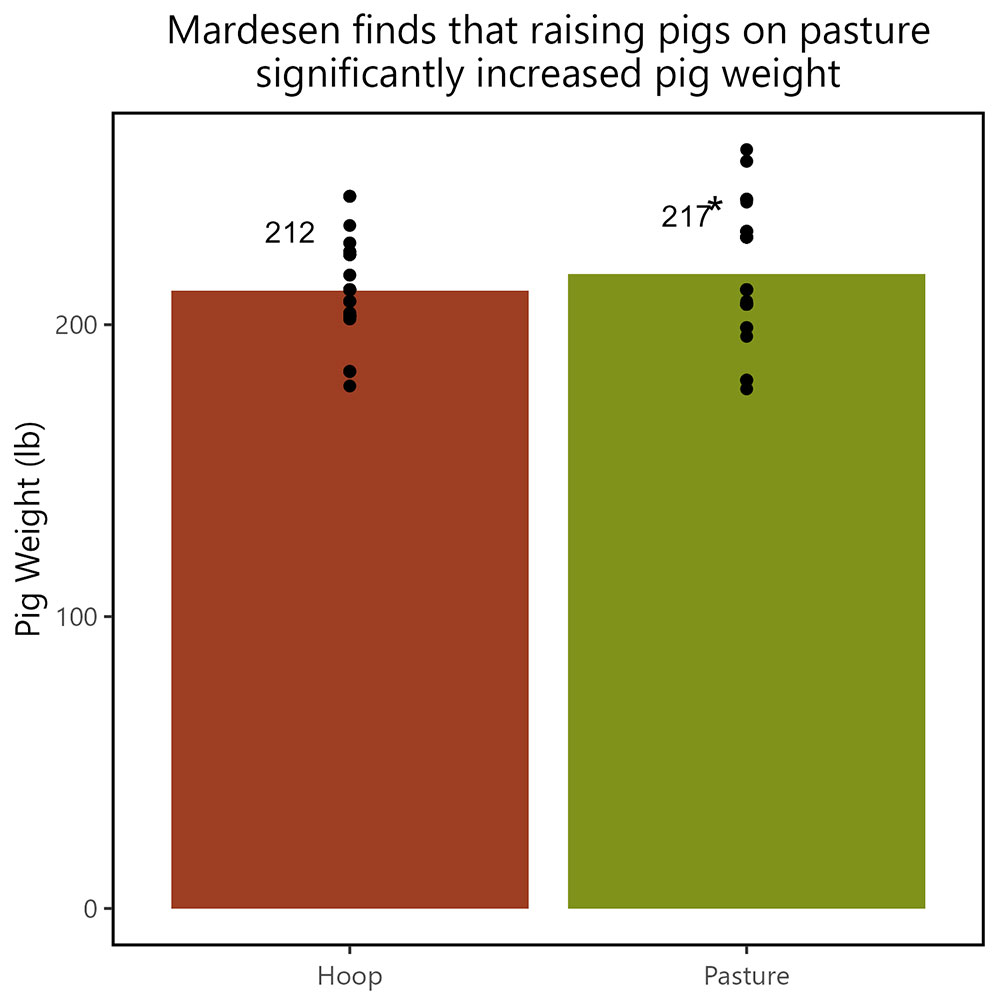
- Weights of 120 pigs sent to the processor on Nov. 11, 2025, revealed a significant difference between treatments. Pastured pigs weighed on average 5 lb more than pigs raised in a hoop. However, due to the changes made in the trial design after the PRRS outbreak, Mardesen would like to repeat the trial to confirm these results.
- Mardesen reports that he was very satisfied “letting the pigs be pigs!” in the pasture.
Background
Many pig farmers today raise their pigs exclusively indoors on grain-based feed with added mineral. Pigs eat a lot, and after initial infrastructure investments, feed from the mill is most farmers’ biggest expense when raising pigs. However, pigs can also eat forage crops; after all, they were bred from wild boars.
In recent years, there has been increasing interest in raising pigs entirely on or with access to pasture. Farmers like Ron Mardesen are curious about whether they can supplement purchased feed with homegrown forage to reduce feed costs. Academic research has shown that pig feed consumption while on pasture can vary based on weather, climate, and pasture conditions, and it remains to be seen whether switching to pasture can reduce feed costs while growing pigs to size on the same fast timeline as indoor pigs [1], [2] Farmer and consumer interest in forage is also in part driven by concerns over pig mental and physical health in indoor and confinement conditions [3]. While raising pigs on pasture comes with its own set of animal welfare issues, including increased biosecurity threats and challenges in poor weather and pasture conditions, in many cases these risks can be managed while allowing pigs express more of their natural behaviors like rooting. [4]
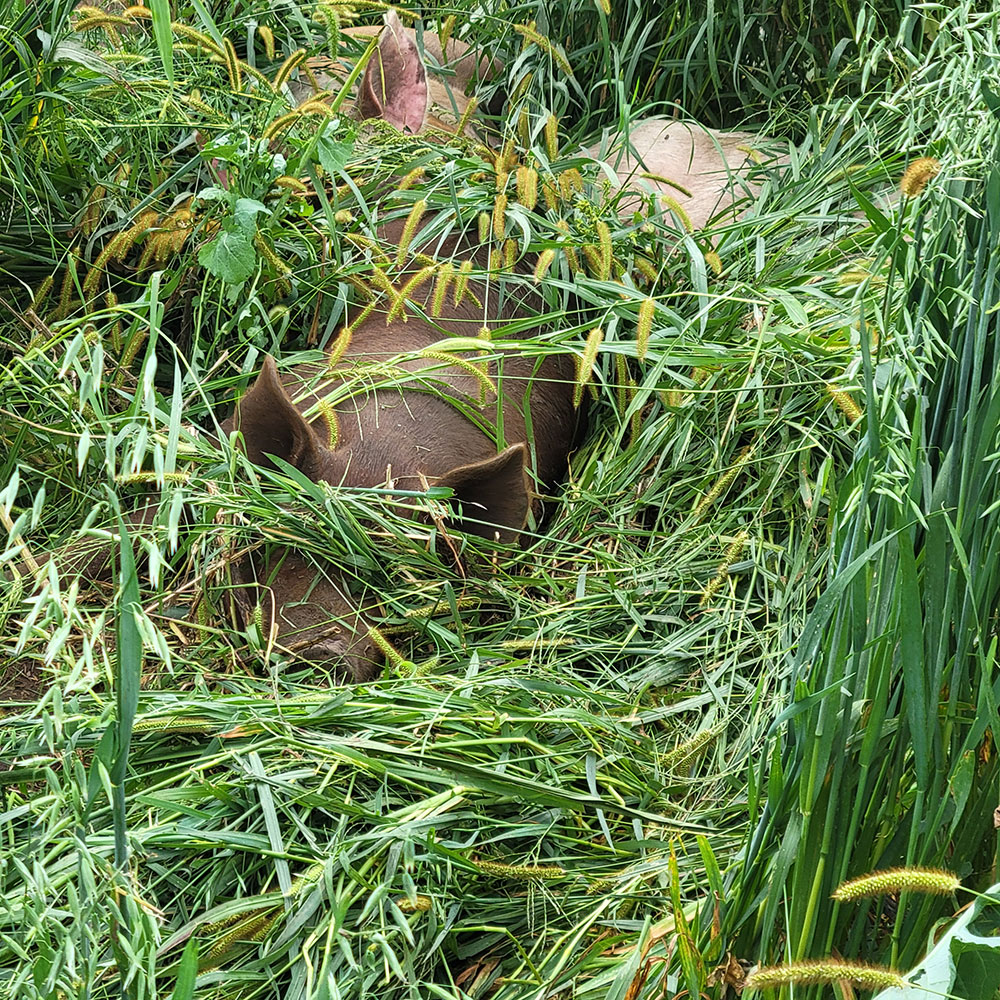
Mardesen has raised farrow-to-finish pigs for Niman Ranch in hoop barns for many years. He also already had a few fenced paddocks near the hoop barns. In 2025, he designed and implemented a trial where he raised two groups of pigs; one in his usual hoop-finishing setup, and one on paddocks planted to annual forage for pasture. Mardesen tracked the amount of feed that each group consumed, the beginning and end weights of each pig and all costs associated with pasture and hoop-raising pigs in order to determine whether raising pigs on pasture made economic sense on his farm.
Methods
Design
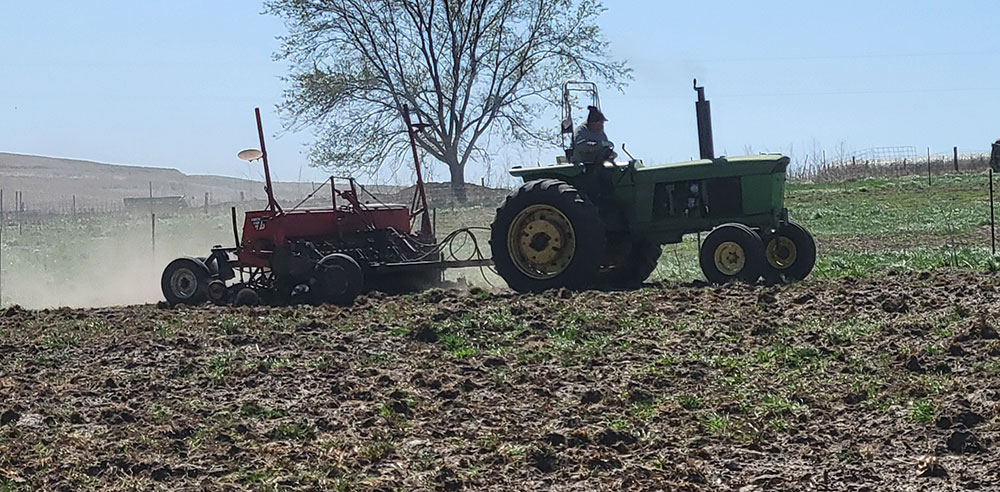
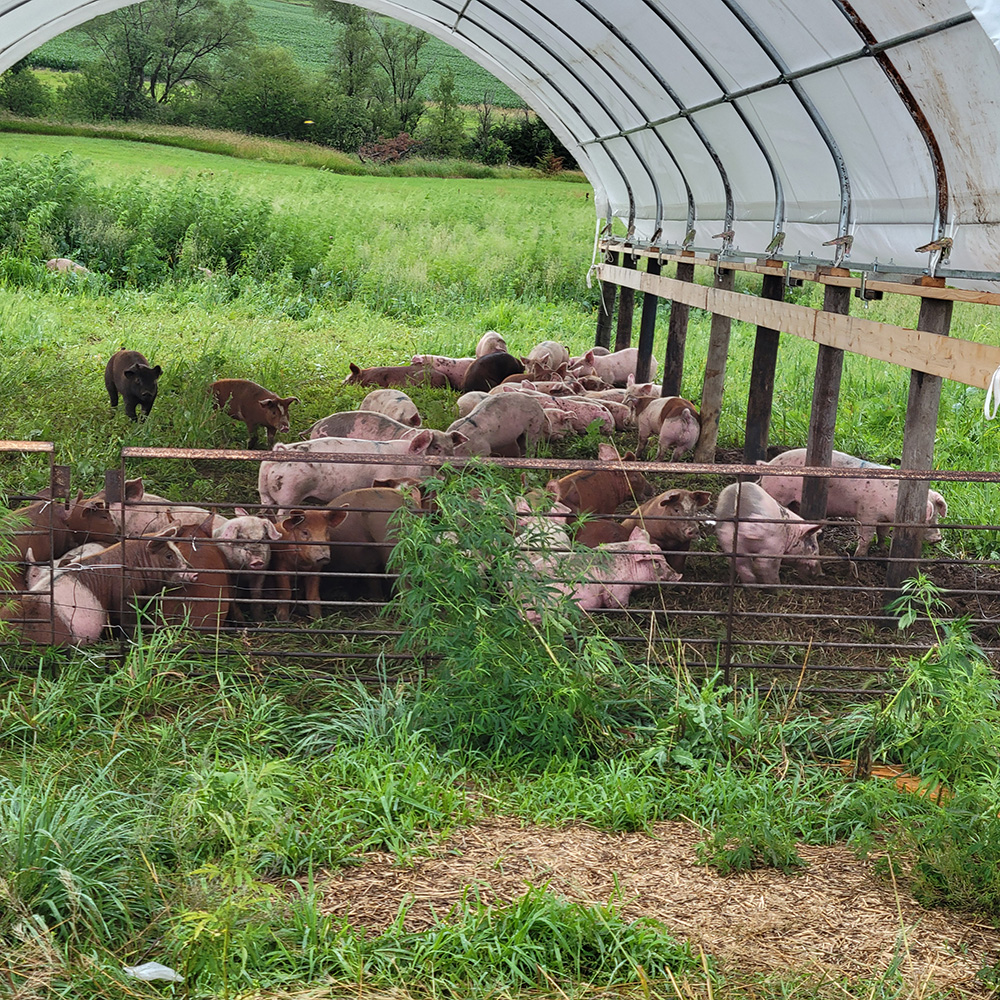
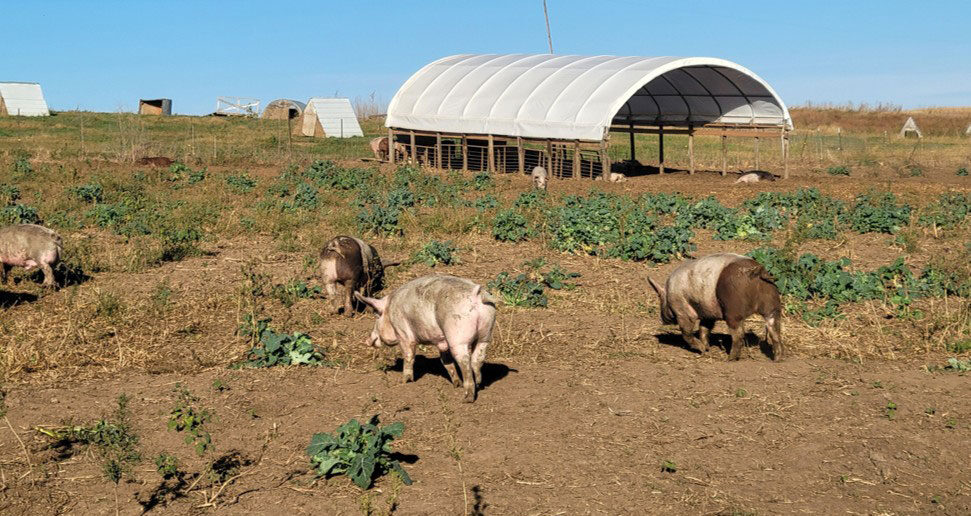
Mardesen prepared his paddocks for seeding with annual forage with a controlled burn in late March 2025 followed by discing in April. He no-till drilled the three paddocks with 20 lb/acre of Albert Lea Seed’s ‘Laugh and Grow Fat Hog and Sheep Pasture Mix’ plus 2 bu/acre of oats on April 14, 2025. The mix is 35% Dixie Crimson Clover, 25% Hybrid Piper Sudan Grass, 25% Evolution Italian Rye Grass, and 15% Trophy Forage Ryegrass. One paddock was 1.17 acres, the second was 1.27 acres and the last was 1.26 acres. Mardesen built a centrally-located 20 ft x 40 ft hoop barn for shade for the pasture pigs.
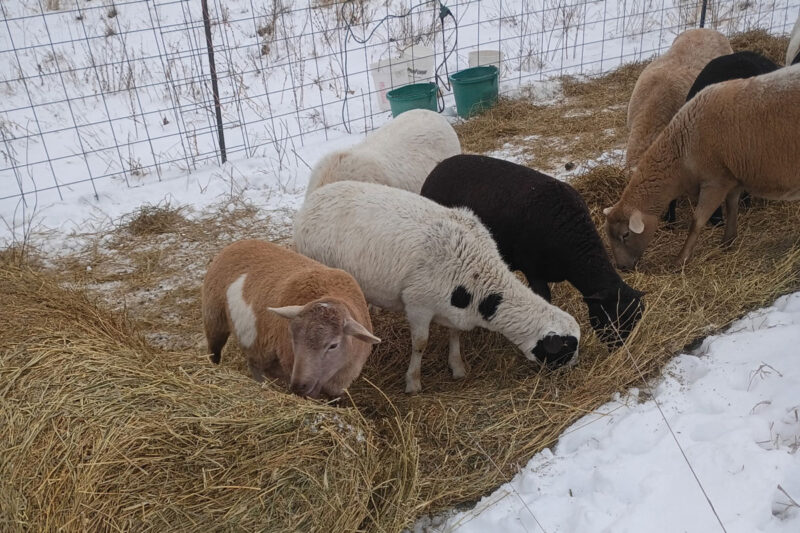
Mardesen divided his shouts into treatments on June 28, putting 108 pigs into the first pasture and 109 pigs into a hoop. The pigs came from the same farrowing group born between April 15 and May 2, and he divided them into treatments at the gate. The pigs were a genetic mix of 50% Hereford, 25% Tamworth, and 25% TN70. He rotated the pasture pigs between his three paddocks weekly.
Measurements
Mardesen recorded the total initial weight of the pigs in each treatment when he divided them into treatments. For the duration of the trial, he recorded the weight of all feed fed to each group of pigs and the weight of all animals that died, were culled or were processed. He also recorded costs of seeding the paddocks as well as building the shade structure for the pasture pigs.
Mardesen’s intention was to send all pigs to the processor at or around the same time in order to assess differences in pig weight between treatments. He was not able to due to a PRRS outbreak beginning in late September, which led to sometimes dramatic differences in growth rate and condition among the pigs. He was able to send 30 pigs from both the hoop and pasture treatments to the processor on both Oct. 28 and Nov. 18 and received hanging weights for each of the 120 pigs from the processor. Hanging weights were reported as the number of pigs in each 10-lb weight range and total weight of pigs in that weight range. For example, 5 pigs weighed between 200 and 210 lb, and in total they weighed 1,007 lb.
The majority of the remaining pigs were processed by Dec. 14, but were sold regardless of treatment when their size and condition allowed. As a result, they could not be included in the trial.
Data Analysis
We used an ANOVA (Analysis of Variance) at a 90% confidence level to determine if there were significant differences in pig weight between the pasture and hoop treatments. We also accounted for processing date in the model since the pigs were processed in groups of 30 per treatment on two different dates (2-way ANOVA). 90% confidence means that any treatments we declare statistically different would be expected to be different at least 9 times out of 10 if the experiments were carried out in identical conditions. Since ANOVA identified significant variance in weight by treatment, we followed the ANOVA with a Tukey’s Honest Significant Difference test (HSD). We could perform statistical analysis because Mardesen included large groups of pigs in each treatment (60 animals) and kept factors such as age and processing date the same across treatments.
Results and Discussion
Mardesen found that his pasture pigs weighed statistically significantly more than his hoop pigs (Figure 1). On average, the pigs were 5 lb heavier. There was no statistically significant difference in pig weight between the two processing dates included in the study despite the fact that they were 21 days apart. This is likely due to PRRS.
Over the course of the trial, Mardesen’s pastured pigs consumed 91,349 lb of feed and generated 25,410 lb (straight weight including deaths/culls), for 3.6 lb feed/lb gained. In contrast, the hoop pigs consumed 86,099 lb of feed and generated 24,438 lb, for 3.5 lb feed/lb gained. Given the PRRS outbreak and the extended finishing season, these numbers are not likely a reliable description of feed conversion ratios under normal circumstances.
Mardesen observed that the pasture pigs recovered better from PRRS. He sold 103 of the original 108 pasture pigs, but only 92 of the original 109 hoop pigs. The remaining pigs either died or were not in good enough condition to sell to the processor. For both groups, this was much more death loss than he usually sees during the finishing process.
Mardesen reports that, “Water supply and heat were the two biggest challenges in the pasture this year.” He did not have permanent water access in each paddock and ended up adjusting fencing so that the pigs could walk to the permanent water source from each paddock. The 20 ft by 40 ft open-sided hoop barn he built for shade worked well but also had to be centrally located so the pigs could access it from each paddock. Mardesen also did not have quite enough forage for the pigs, and by mid-fall each of the paddocks was quite bare. However, he remains interested in finishing pigs on annual forage again and thinks that he could invest a bit more in fencing and water infrastructure to overcome these issues.
Conclusions and Next Steps
Mardesen is taking a break from research to recover his farrow-to-finish pig enterprise after his PRRS outbreak. He is very excited that his initial trial showed that his pastured pigs weighed more than his hoop pigs and potentially stayed healthier in the face of PRRS. He enjoyed “letting the pigs be pigs” in the pasture this year and would like to continue experimenting with the practice. His next trial will ideally include more pigs in each treatment and will buckle down on feed conversion ratios and input costs.
Appendix

historic averages. Data is from the NasaPOWER climate dataset [5], [6].
References
- S. A. Edwards, “Intake of nutrients from pasture by pigs,” Proc. Nutr. Soc., vol. 62, no. 2, pp. 257–265, May 2003, doi: 10.1079/PNS2002199.
- M. Fornós, S. Sanz-Fernández, E. Jiménez-Moreno, D. Carrión, J. Gasa, and V. Rodríguez-Estévez, “The Feeding Behaviour Habits of Growing-Finishing Pigs and Its Effects on Growth Performance and Carcass Quality: A Review,” Animals, vol. 12, no. 9, p. 1128, Jan. 2022, doi: 10.3390/ani12091128.
- L. J. Pedersen, “Chapter 1 - Overview of commercial pig production systems and their main welfare challenges,” in Advances in Pig Welfare, M. Špinka, Ed., in Woodhead Publishing Series in Food Science, Technology and Nutrition. , Woodhead Publishing, 2018, pp. 3–25. doi: 10.1016/B978-0-08-101012-9.00001-0.
- M. Delsart, F. Pol, B. Dufour, N. Rose, and C. Fablet, “Pig Farming in Alternative Systems: Strengths and Challenges in Terms of Animal Welfare, Biosecurity, Animal Health and Pork Safety,” Agriculture, vol. 10, no. 7, Art. no. 7, Jul. 2020, doi: 10.3390/agriculture10070261.
- A. H. Sparks, “nasapower: A NASA POWER Global Meteorology, Surface Solar Energy and Climatology Data Client for R,” J. Open Source Softw., vol. 3, no. 30, p. 1035, Oct. 2018, doi: 10.21105/joss.01035.
- A. Sparks, nasapower: NASA-POWER Data from R. (2024). [Online]. Available: https://CRAN.R-project.org/package=nasapower