Funded by Walton Family Foundation and USDA National Institute of Food and Agriculture.
In a Nutshell:
- Many small grains farmers interseed or frost-seed red clover with their small grains. This cover crop grows rapidly after small grain harvest, boosting soil N for the following year’s corn and providing a high-protein forage.
- Some farmers also interseed or frost-seed perennial clovers into existing pasture to boost forage quality.
- Clover seed is expensive, and some farmers struggle to identify a seeding rate that results in dense clover stands without wasting a lot of seed.
- A group of cooperators decided to test how clover seeding rate when interseeding or frost-seeding into small grains affects clover stand establishment and biomass over the life of the cover crop. Farmers each planted two rates that made sense for their farms, ranging from 8 to 20 lb/ac.
Key Findings:
- The effects of clover seeding rate were different on farms that interseeded compared with farms that frost-seeded.
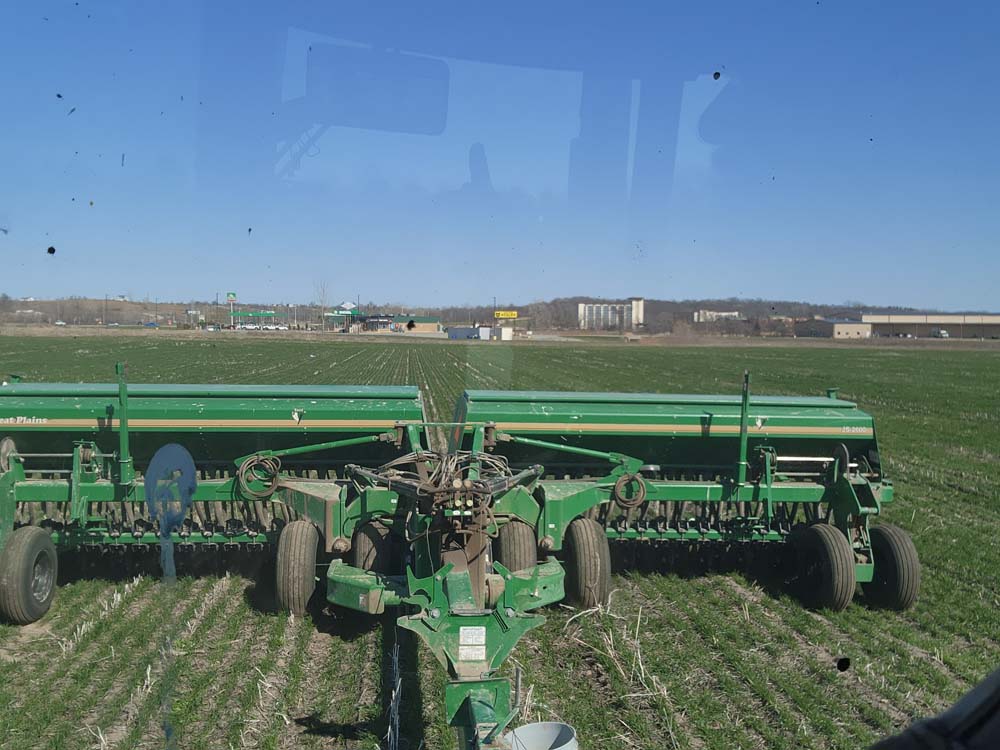
- Neil Peterson and Braxton Clubb both interseeded their clover with a drill. They found that doubling their clover seeding rates from 10 to 20 lb/ac ( Peterson) and 4 to 8 lb/ac (Clubb), respectively, nearly doubled their clover biomass production.
- Lyndon Miller and Daniel Sheetz, meanwhile, frost-seeded clover into winter wheat that had been planted the previous fall. They each found that higher seeding rates did not correspond with differences in plant counts or biomass.
Background
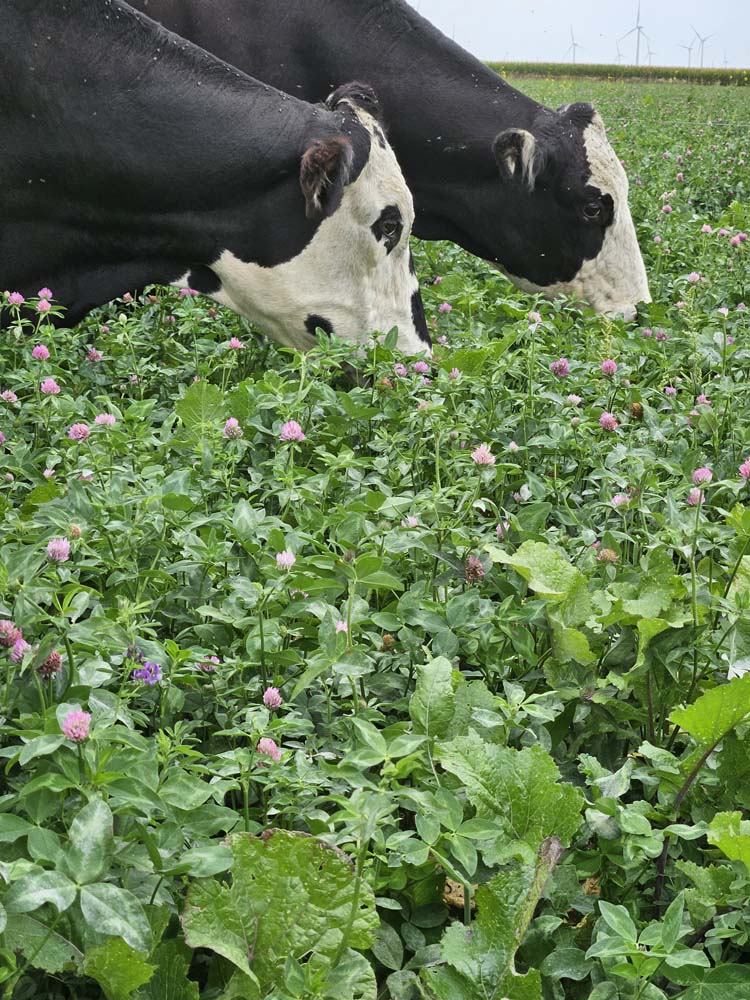
Spring interseeding or frost-seeding perennial clovers is a fairly common practice in two different settings: when farmers are looking to establish legumes in existing pasture and when farmers are looking to interseed a perennial legume cover into fall- or spring-planted small grains. In both cases, the clover germinates but grows very little while the pasture grasses or small grains are in their growing season. Following mid-summer grazing, haying or harvest, however, the clover grows rapidly. In most years, it provides a high-quality fall forage or haying crop, groundcover over the winter and a nitrogen credit to the following year’s corn.
Clover seed is expensive, and many farmers worry that they are either wasting money by seeding too densely or seeding too lightly to achieve optimal forage biomass or N credit to corn. The general recommended rate for frost-seeding red clover is 15 to 20 lb/ac. This rate maximizes return on investment for fall forage, and PFI farmers and academics report successfully crediting at least 30 lb/ac of nitrogen to their corn following a 15 lb/ac interseeded clover cover crop [1, 2]. However, farmers often wonder if higher or lower rates could also allow them to reach their goals.
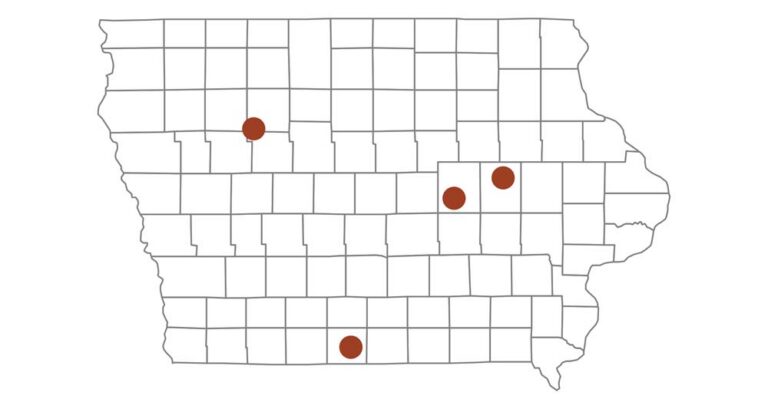
In 2024, Braxton Clubb, Daniel Sheetz, Lyndon Miller and Neil Peterson decided to test different seeding rates when frost seeding or interseeding clover to evaluate how seeding rate affects stand density and clover biomass over the life of their clover cover crop. Some have previously used interseeding and frost-seeding, while others were new to the practice entirely.
Methods
Design
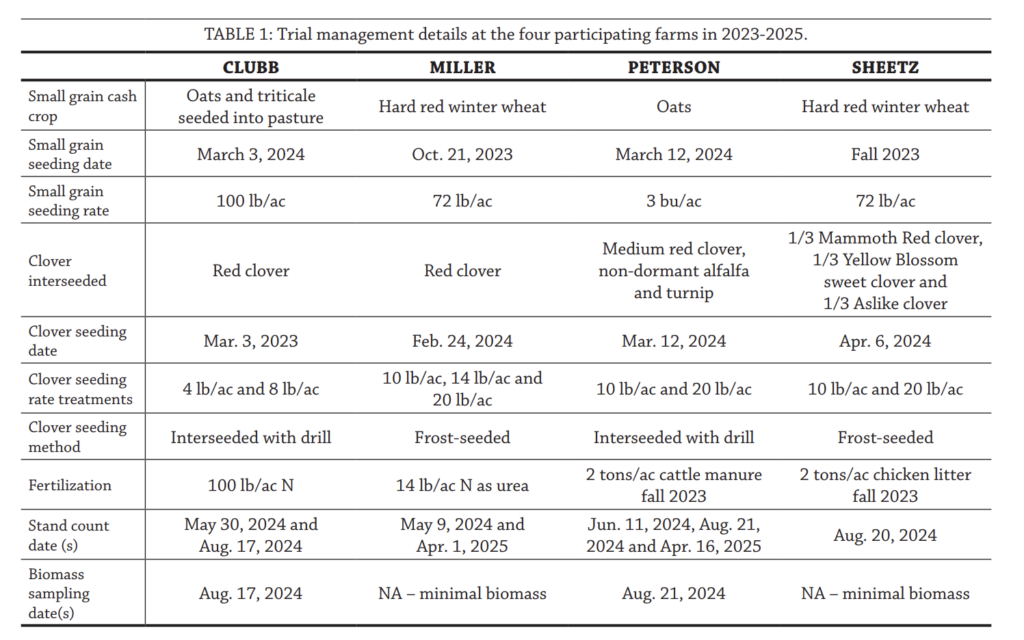
Most participating farmers established four replications of each of their chosen seeding rates, though Lyndon Miller did not replicate his trial. Treatments were randomly assigned within four blocks to account for spatial variability in the field (Figure A1). Replication and treatment randomization allow for statistical analysis and conclusions about the effect of the treatments on yield and cover crop biomass. Management details unique to each farm can be seen in Table 1.
Measurements
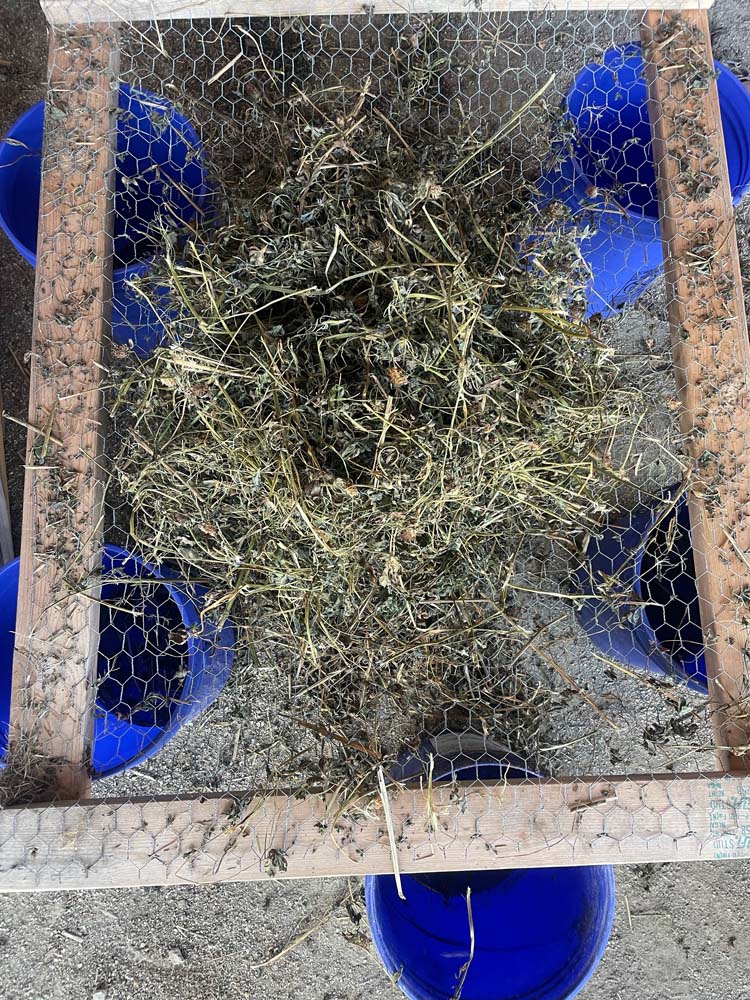
As conditions allowed, farmers conducted stand counts of clover around May and August 2024 and collected biomass samples in August 2024 and/or Spring 2025 before any grazing or haying activities and termination. Cooperators also tracked and reported all management practices done to the fields during the course of the experiment.
Data Analysis
We used an ANOVA (Analysis of Variance) at a 90% confidence level to determine if there were significant differences in clover biomass between treatments at each farm. The models accounted for whether clover seeding rate and/or replication contributed to clover biomass (2-way ANOVA).
The 90% confidence level means any effects we declare statistically significant would be expected to occur at least 9 times out of 10 if the experiments were carried out in identical conditions. We could perform statistical analysis because each farm had replicated and randomized experimental designs (Figure A1).
Results and Discussion
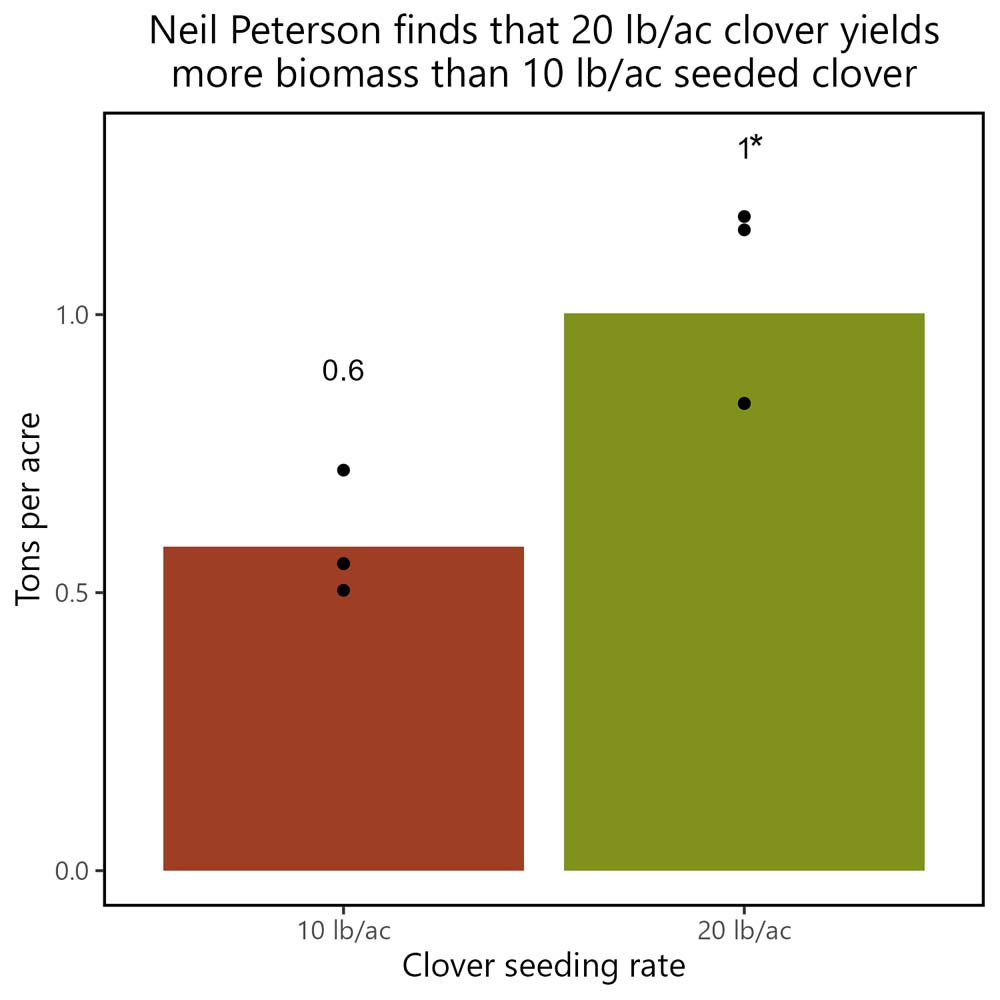

FIGURE 1. Clover biomass at Braxton Clubb’s and Neil Peterson’s in August 2024. Columns represent the average clover biomass for each treatment. Points represent clover biomass from each individual plot. Asterisk (*) indicates that the higher clover seeding rates at Clubb’s and Peterson’s resulted in statistically greater biomass at the 90% confidence level. Click to enlarge.
Clover biomass and stand counts
The effects of clover seeding rate were different on farms that interseeded compared with farms that frost-seeded. Peterson and Clubb both interseeded their clover by drilling the clover at the same time as their oats and diverse cover mix in March 2025. They found that doubling their clover seeding rates from 10 to 20 lb/ac (Peterson) and 4 to 8 lb/ac (Clubb) nearly doubled their biomass production for their fall forage and hay cutting and also increased their clover plant counts (Figures 1 and 2). Clubb reported that his main takeaway was that drilling the clover at a higher seeding rate in his pasture was well worth the extra cost. “If you are doing all the work to prepare a seed bed, make sure you don’t take shortcuts!”
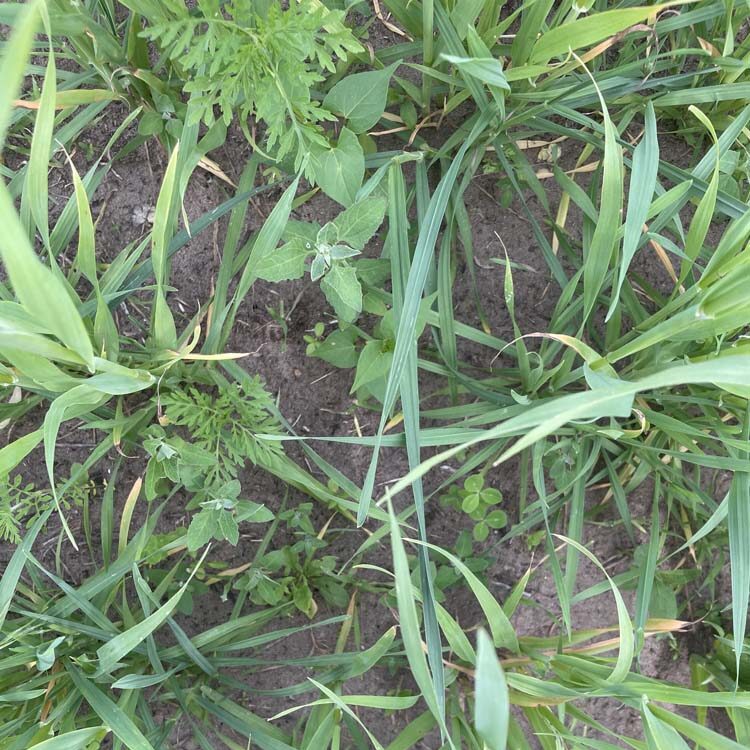
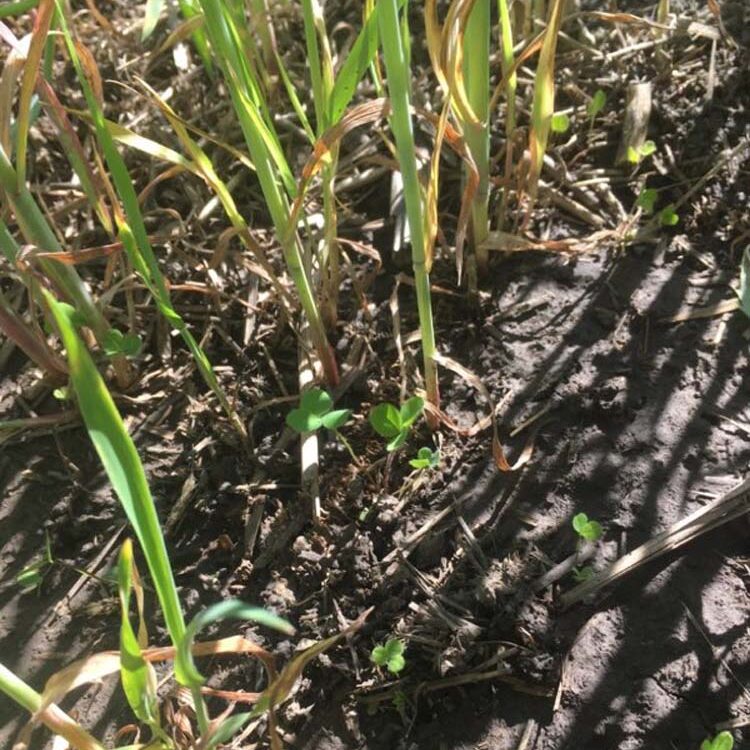
Lyndon Miller and Daniel Sheetz, meanwhile, frost-seeded clover into winter wheat that had been planted the previous fall. Miller broadcast seed in late February at 10, 14 and 20 lb/ac in an unreplicated trial. Sheetz broadcast in April at 10 and 20 lb/ac. Each found that higher seeding rates did not correspond with differences in plant count in 2024 (Figure 2). They generally had poor, patchy and delayed red clover germination and concluded that the frost-seeding did not produce sufficient seed-to-soil contact. Miller counted clover plants in the spring of 2025 before planting his corn and found that much of the seed had germinated. He reports that “if I were to do a clover seeding again, I think I would use a drill for a more accurate establishment of plants. Broadcasting clover seed at different rates may affect plant density, but moisture and seed to soil contact may play a greater role in germination.”
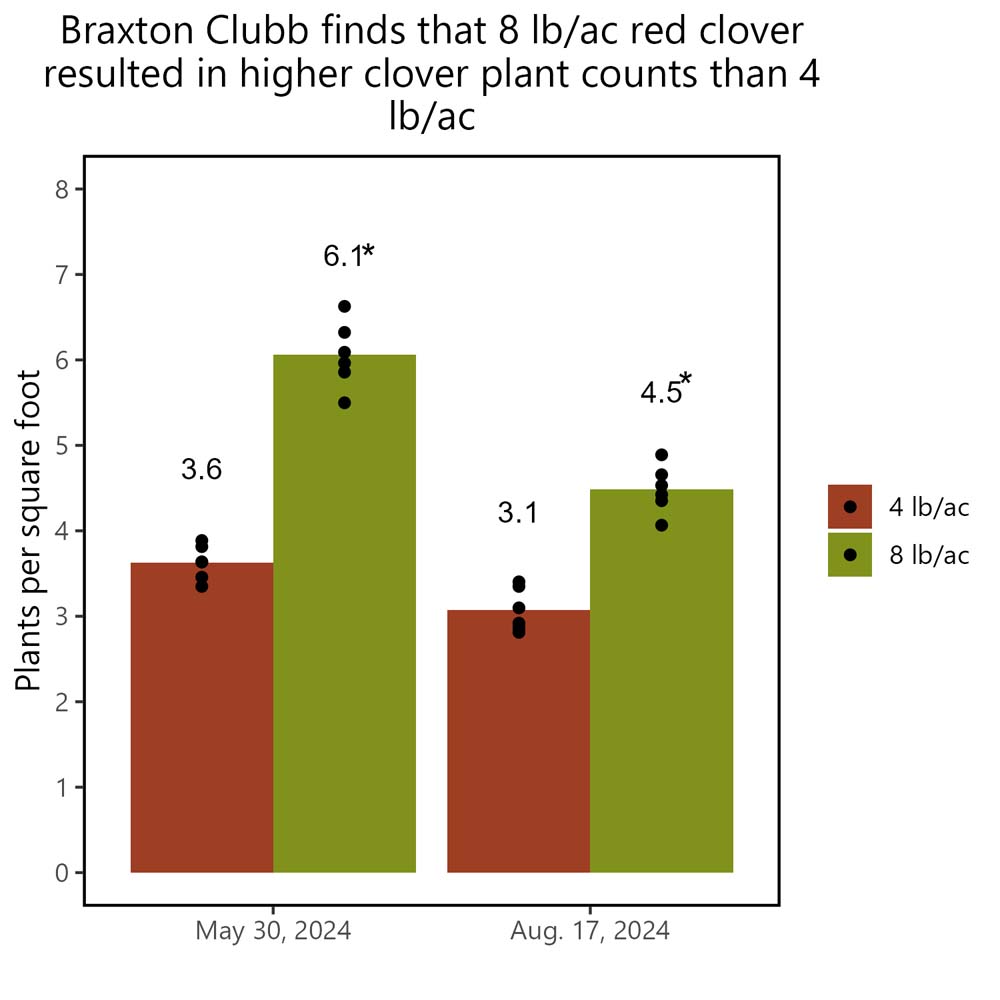
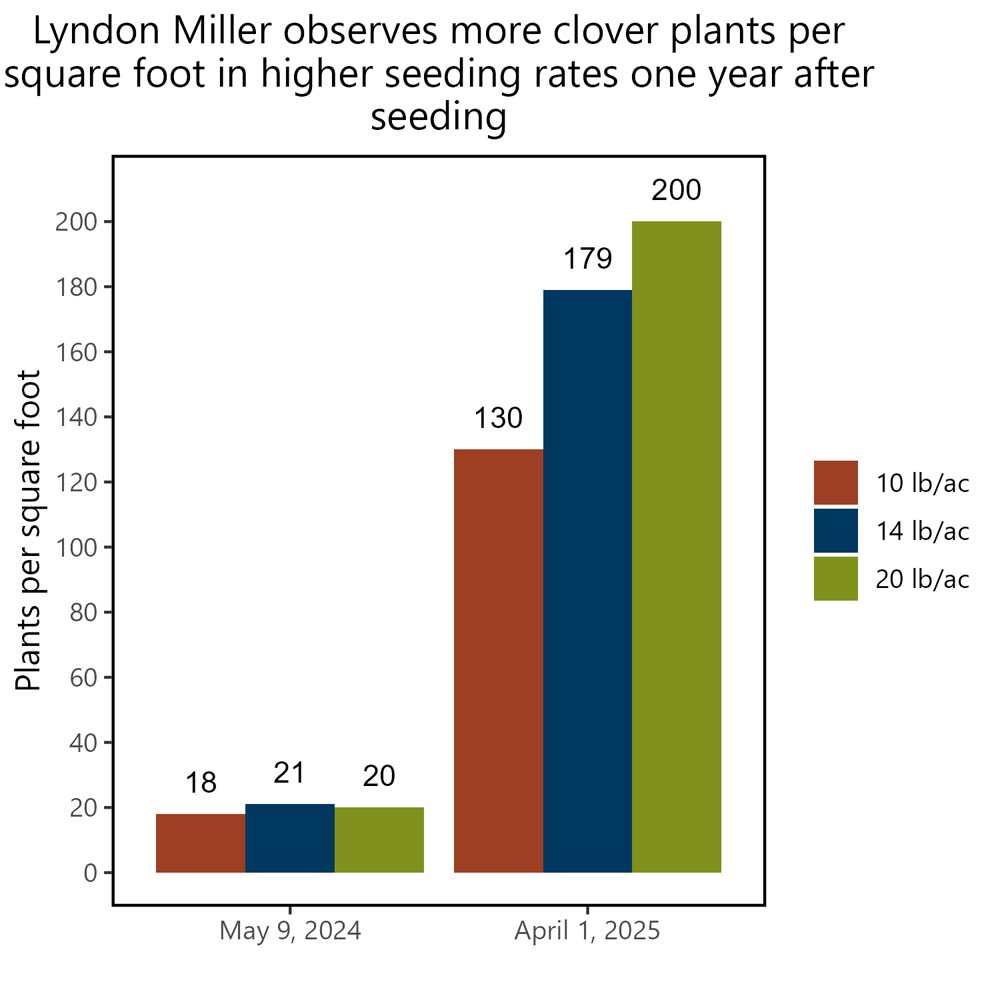
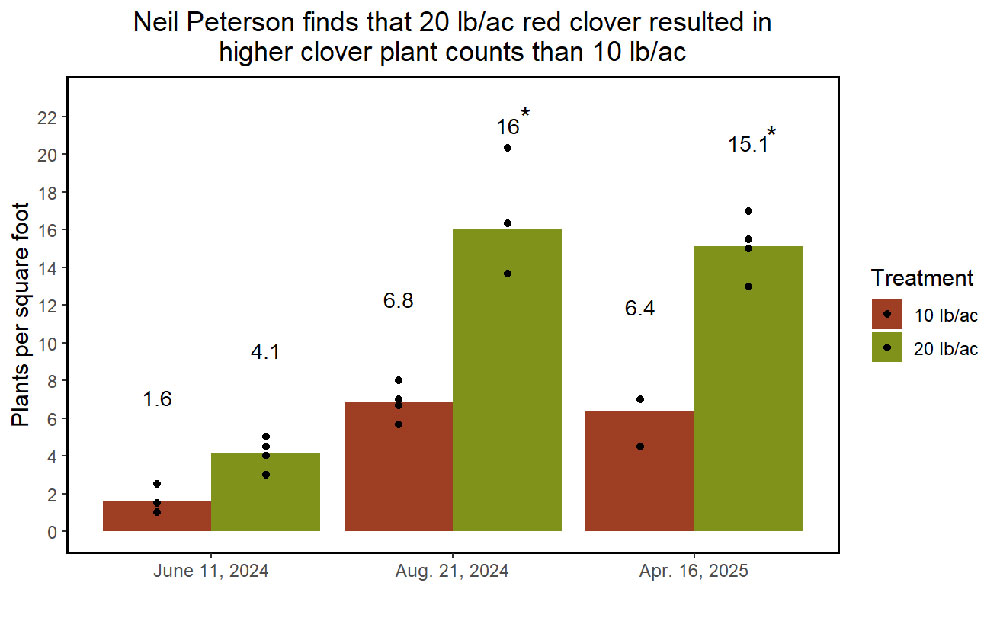
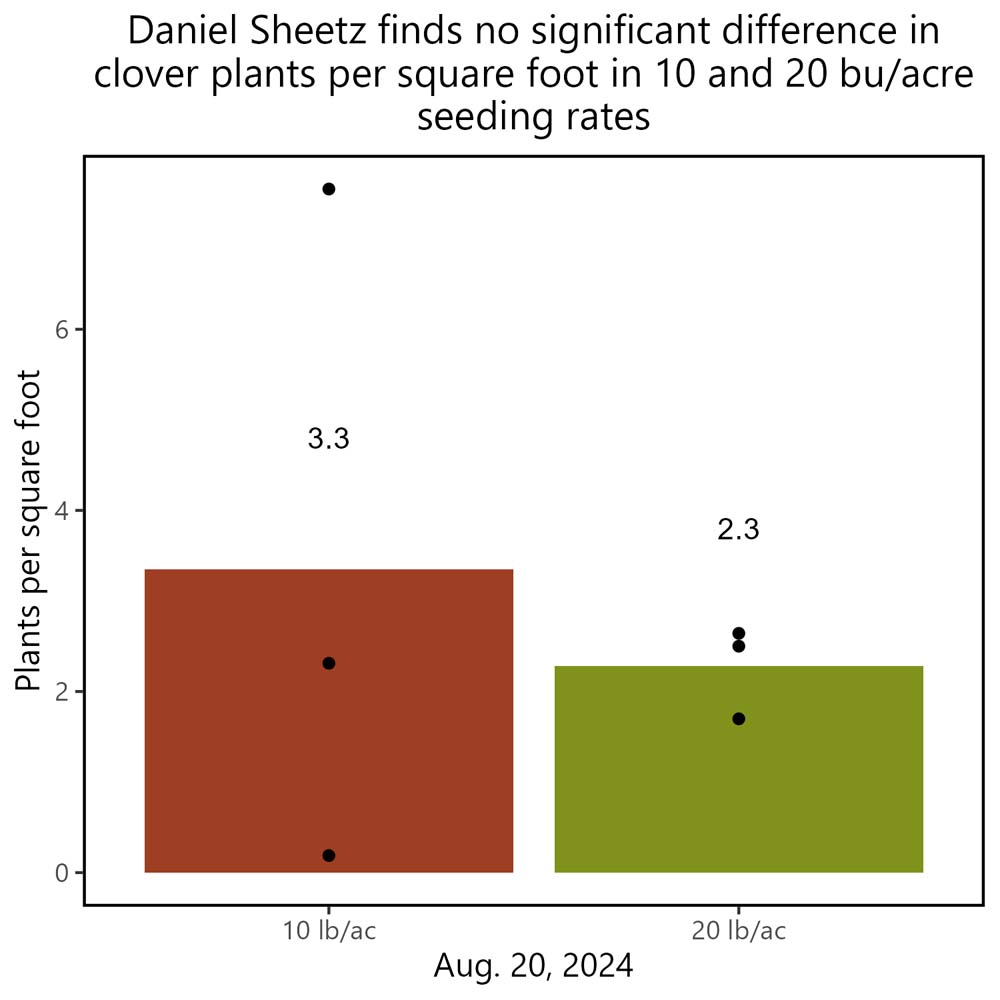
FIGURE 2. Clover biomass stand counts at Braxton Clubb’s, Lyndon Miller’s, Neil Peterson’s and Daniel Sheetz’s in May and August 2024 and April 2025. Columns represent the average clover stand count for each treatment. Points represent clover stand count from each individual plot. Asterisk (*) indicates a seeding rate that resulted in statistically greater stand count than another seeding rate on a particular observation date at the 90% confidence level. Click graphs to enlarge.
Conclusions and Next Steps
Clubb and Peterson were pleased with the performance of their higher clover seeding rate treatments and will plan to use these rates as seed cost considerations allow. In the future, Miller and Sheetz will drill clover into their small grains to ensure better germination. All of the farmers encourage others who grow small grains to consider an interseeded red clover cover crop for forage and N credit to the following year’s corn.

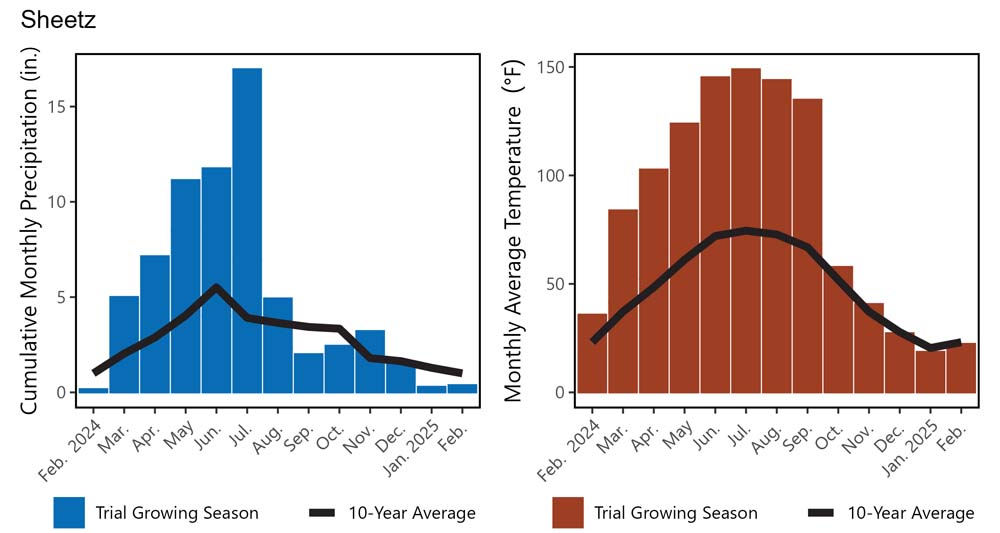
Appendix - Trial Design and Weather Conditions



Funding Acknowledgement
This work is supported by Agriculture and Food Research Initiative Competitive Grants Program Sustainable Agricultural Systems (SAS) grant no. F9000315202081 from the USDA National Institute of Food and Agriculture. Any opinions, findings, conclusions, or recommendations expressed in this publication are those of the author(s) and do not necessarily reflect the views of the U.S. Department of Agriculture. In addition, any reference to specific brands or types of products or services does not constitute or imply an endorsement by the U.S. Department of Agriculture for those products or services.
References
- “Intercropping Winter Cereal Grains and Red Clover,” Iowa State University Extension and Outreach, Mar. 2026. Accessed: Mar. 26, 2026. [Online]. Available: https://shop.iastate.edu/extension/farm-environment/crops-and-soils/agronomic-crops/pm2025.html
- O. B. Hesterman, T. S. Griffin, P. T. Williams, G. H. Harris, and D. r. Christenson, “Forage Legume-Small Grain Intercrops: Nitrogen Production and Response of Subsequent Corn,” J. Prod. Agric., vol. 5, no. 3, pp. 340–348, 1992, doi: 10.2134/jpa1992.0340.
- A. H. Sparks, “nasapower: A NASA POWER Global Meteorology, Surface Solar Energy and Climatology Data Client for R,” J. Open Source Softw., vol. 3, no. 30, p. 1035, Oct. 2018, doi: 10.21105/joss.01035.
- A. H. Sparks et al., nasapower: NASA POWER API Client. (May 18, 2024). Accessed: Sep. 11, 2024. [Online]. Available: https://cran.r-project.org/web/packages/nasapower/index.html