Project Findings
Catharine explains that exploring how communities are affected when livestock leave the farm initially seemed like a practical endeavor, given that livestock management has evolved alongside humans for thousands of years. But she discovered that almost every article she read referenced the lack of research on regenerative agriculture and rural integrity practices in relation to human well-being. “It became frustrating to not encounter literature that directly broached this subject,” Catharine says. “But it also sets the precedent for researchers in the agricultural sector. There is a hole we must work towards filling.” Despite the relative paucity of relevant literature, Catharine did find some pertinent study results. Combined with her other reading and research, she found that grazing and regenerative agriculture practices are linked with a host of benefits to both farmers and the land. Among her findings:- Regenerative agriculture mimics rather than dominates nature. It repairs the soil and has the ability to increase farmers' income stability.
- Regenerative-based livestock practices have the ability to increase farmers' income stability, while increasing the proportion of middle-class families in rural areas.
- The best species to graze marginal lands, often those unsuitable for crops, are ruminant livestock above any other species.
- Farmers who are strongly committed to local food markets attach greater importance to civic engagement.
- Grazing-based practices give farmers a renewed sense of stewardship of the land. Farmers who understand soil quality and ecosystem services undergo a shift in ethics and rediscover what it means to sustain a farm for generations to come.
- Regenerative grazing techniques allow for diversification of on-farm funds, diversity of workday tasks and overall improved farmer satisfaction.
- Public health is improved through our grazing-based livestock systems. These systems can mitigate climate change by keeping carbon in the ground and reducing greenhouse gas emissions.
- Grazing-based livestock systems reduce the need to use drugs that kill parasites (called anthelmintics) and antibiotics in animals, both of which have known impacts on human health.
- Grazing-based systems improve soil quality and dramatically decrease runoff into our water sources.
Solutions
The second part of Catharine's project involved brainstorming some ways to prevent the disintegration and rural decline that follows when livestock leave. The solutions she highlighted range from actions at the federal level to ongoing work that individuals and groups like PFI can continue to do. She notes:- As outlined in the U.S. farm bill, current federal and farm subsidies skew much more heavily toward supporting commodity production, without incentivizing regenerative agriculture practices. To improve assistance to farmers implementing regenerative practices, federal and state programs need to tailor their funding and consultation toward these interests.
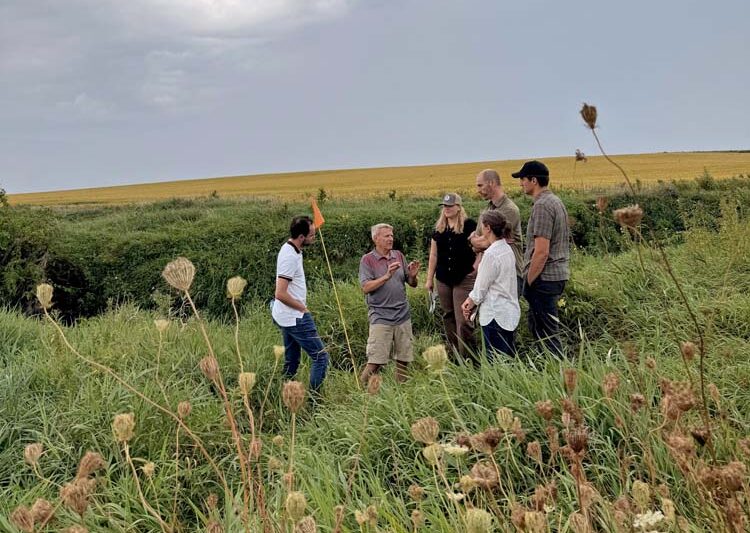
- Continue education efforts that can help encourage a change in the mindsets of federal and state granting organizations and farmers in the PFI region, such as community pasture walks and local hands-on demonstrations.
- Invest in educating younger generations about regenerative grazing based practices, including through National FFA Organization and 4-H.
- PFI should continue to freely share educational materials with prospective regenerative farmers. This could include input and output cost parameters, recommended seed varieties and pertinent native plant species for grazing.