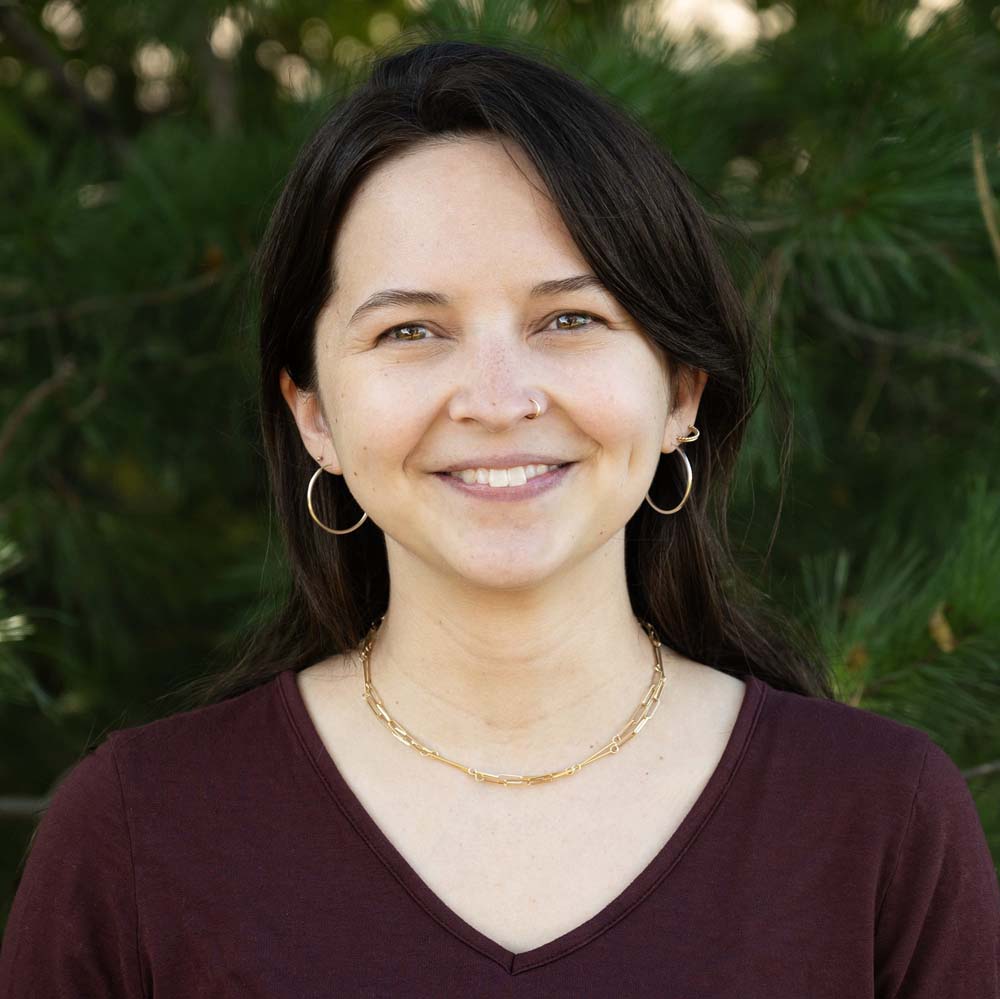
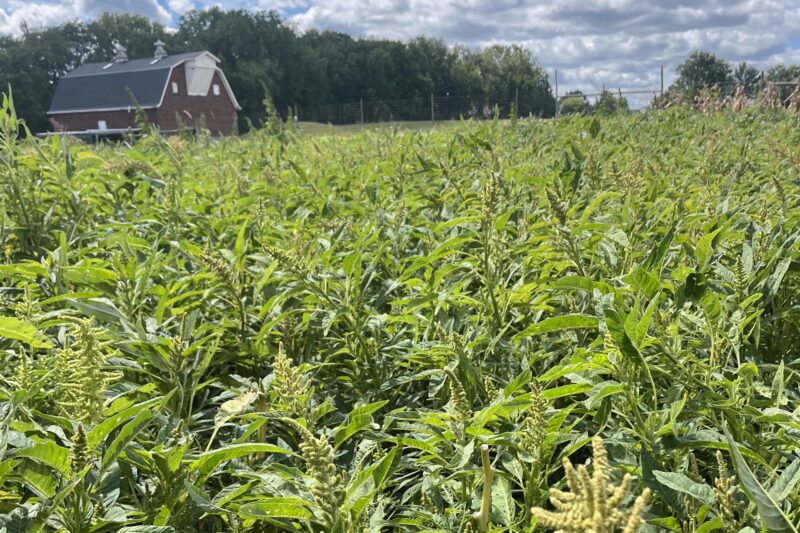
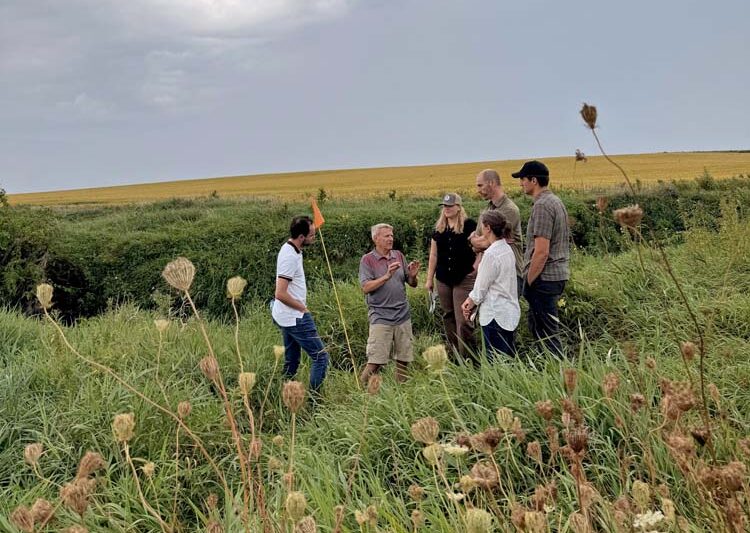
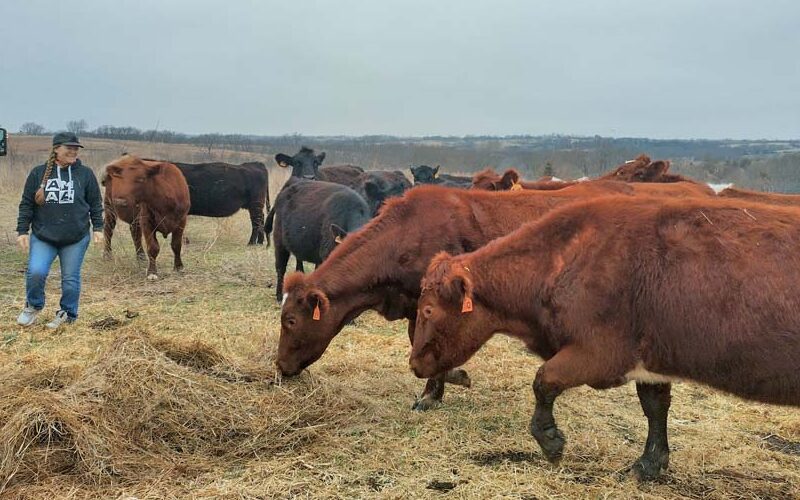
 Anne does the cover crop marketing, telling the story of what they do and why choosing cover crops is so important. She is also adding a pumpkin, sweet corn, and sunflower patch to the operation. Outside of the farm, she works at the Iowa Department of Public Health in early childhood home visitation and has a doctorate from Iowa State University in human development and family studies.
Cover crop beginnings
Landon always knew he wanted to farm, but he didn't jump in right away. After graduating from high school, he spent a year as an exchange student in Australia where he learned about other farming practices, specifically no-till and cover crops. The farms he observed were a stark contrast to the black dirt he was used to seeing around his home farm in Iowa. This sparked his curiosity. He returned to the family farm while attending college and helped his dad and uncle.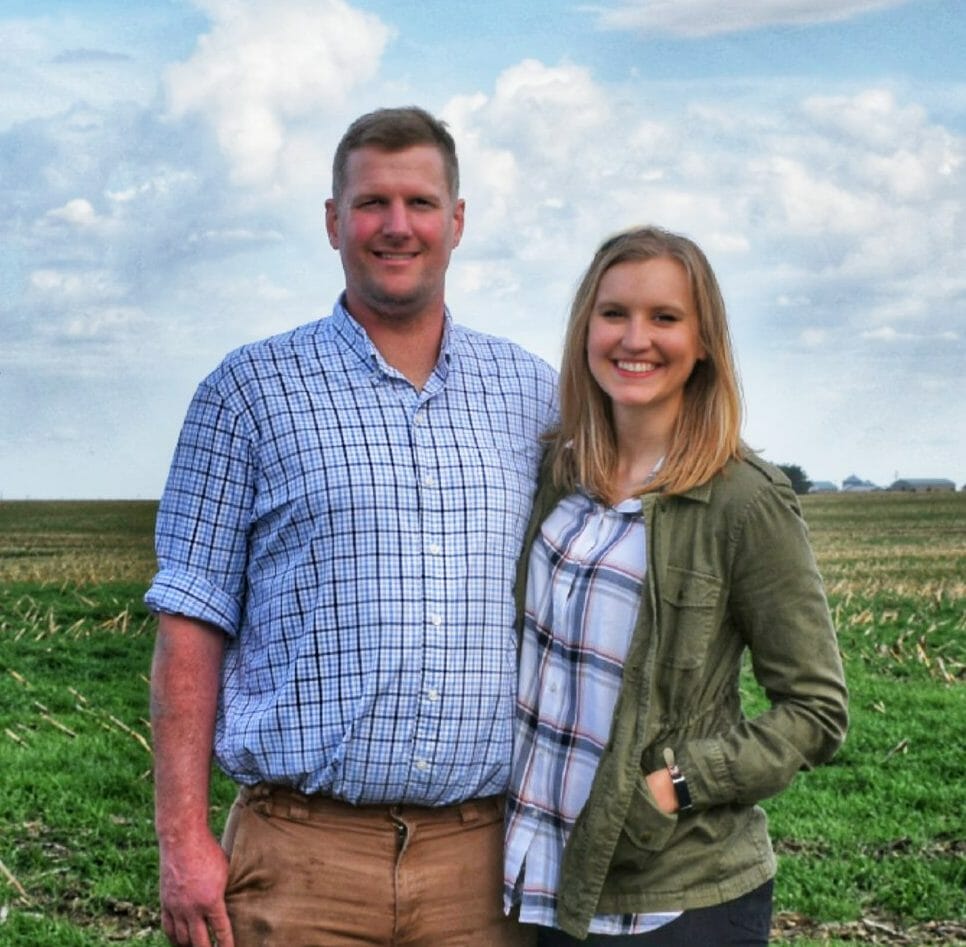
Venturing into small grains
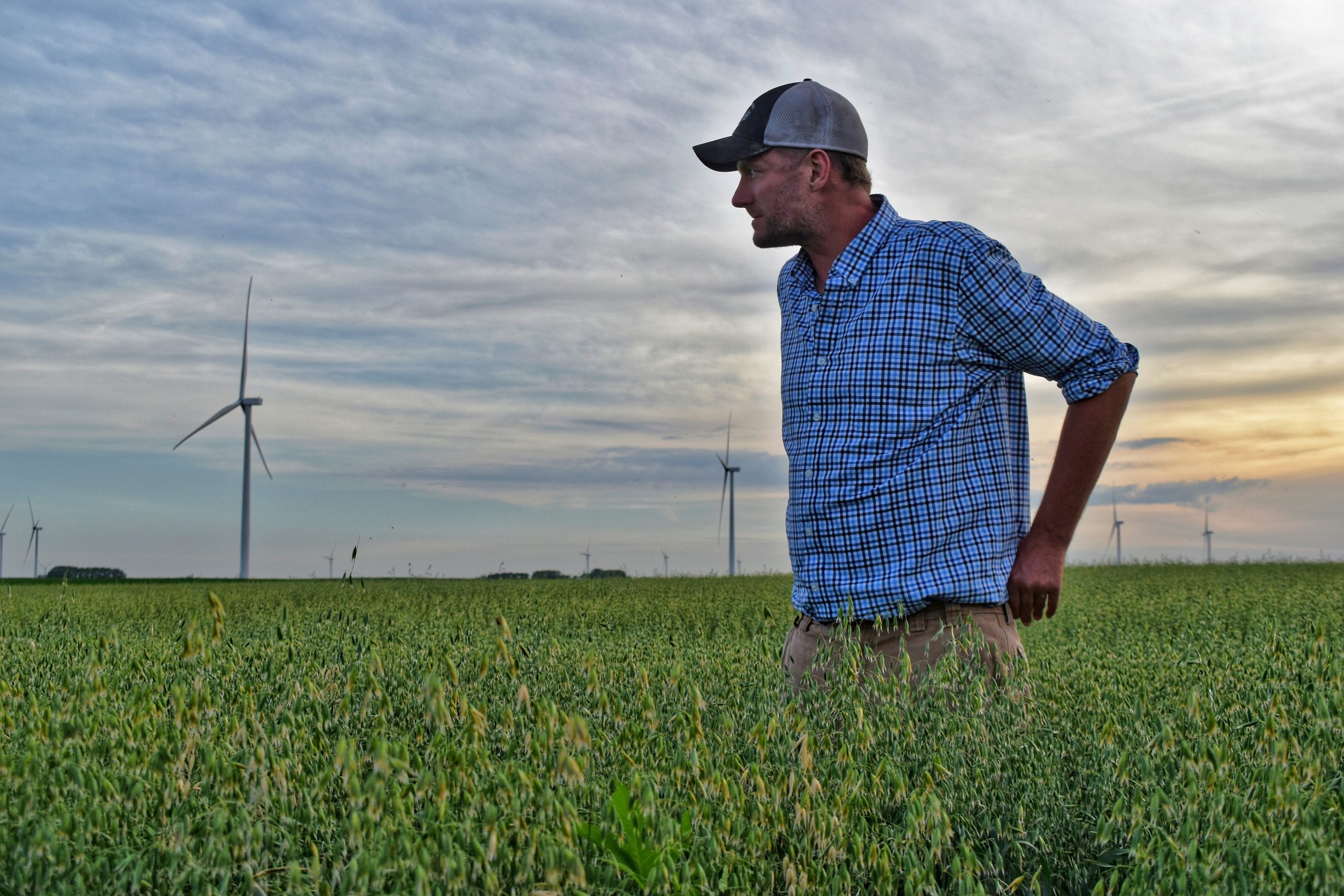
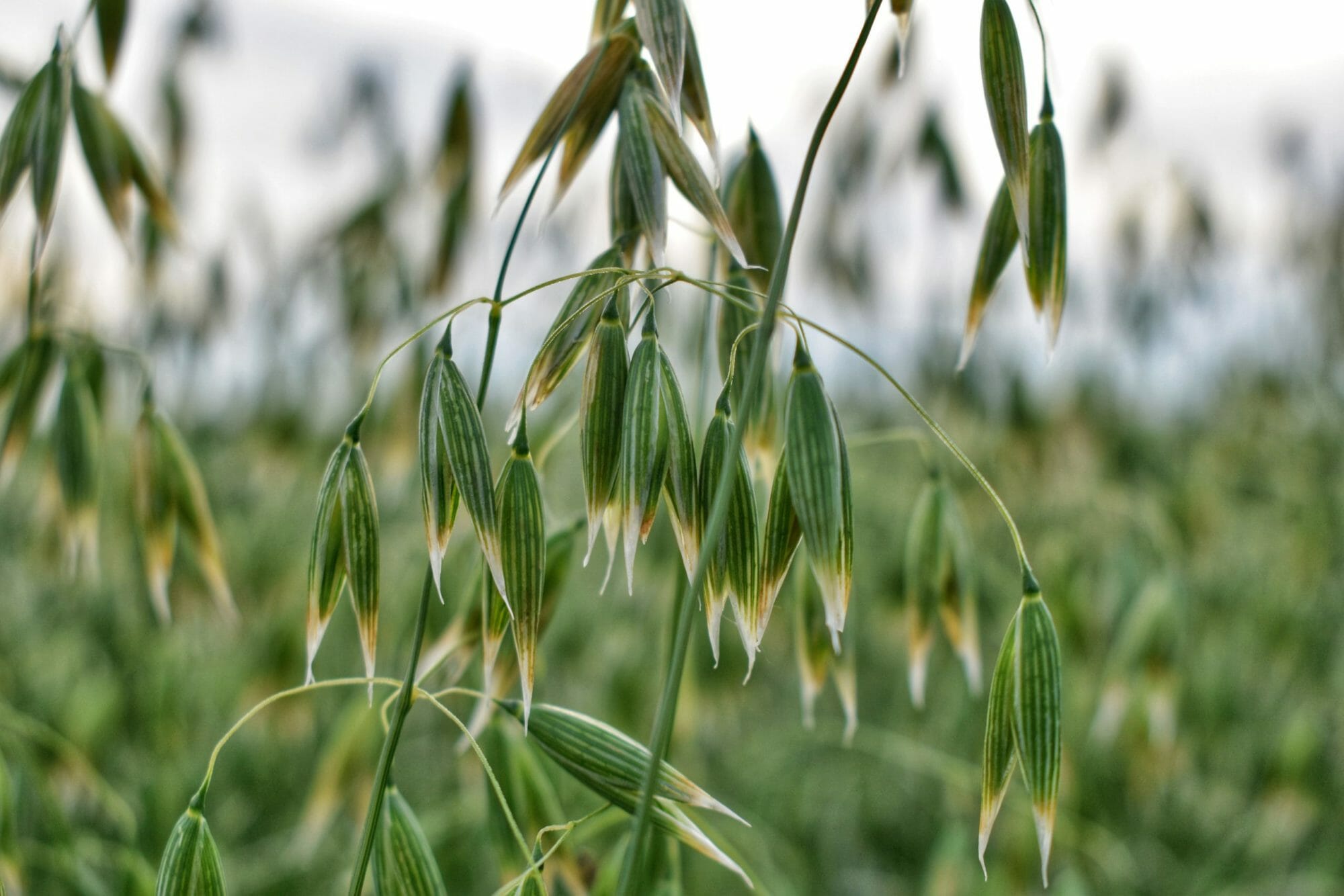
Three years ago, Landon decided to plant oats, primarily so he could install pattern tile to improve drainage in one of his fields. That year, seed oat prices were also remarkably high and he thought he could save some money growing them himself. He had never grown oats before, but his dad and uncle had and he remembers baling straw as a kid. “We should be able to grow oats here,” Landon says. “Just because no one is doing it, doesn't mean we can't.”
“We should be able to grow oats here. Just because no one is doing it, doesn't mean we can't.” – Landon Plagge“Small grains open up our labor window by spreading out the seasons,” Landon says, “and labor is really important to us. Plus, [with small grains] you get all the other benefits that are hard to put a dollar amount on but I know are helping the ground.” A prime example: The Plagges test the soil in each field every four years, and they have found that their soil organic matter is increasing each year on the acres where they've been using cover crops, no-till and small grains. Eventually, Landon hopes to put all his fields into a three-year rotation, but to do that the family will need to build more local markets for small grains.
Tying enterprises together
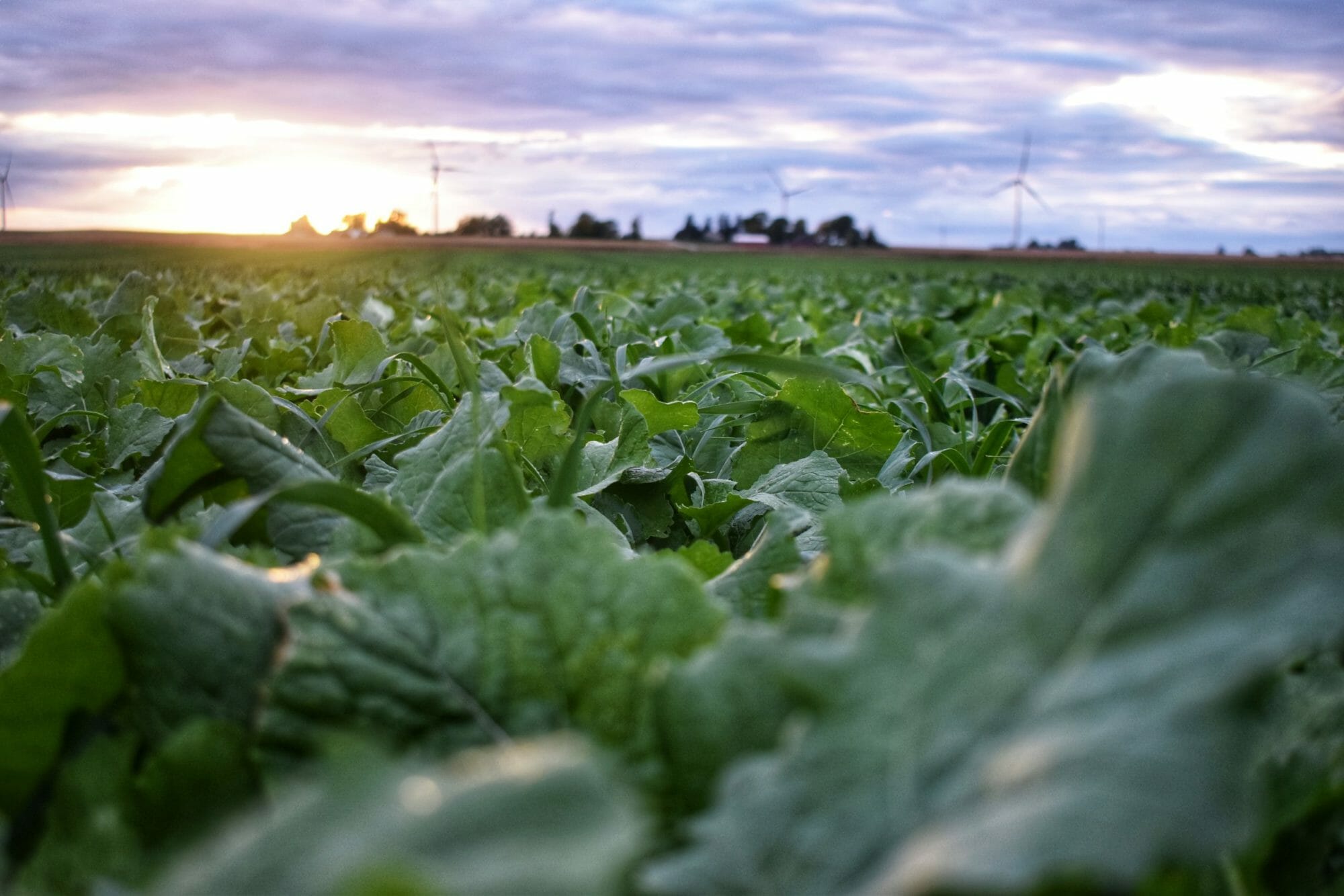
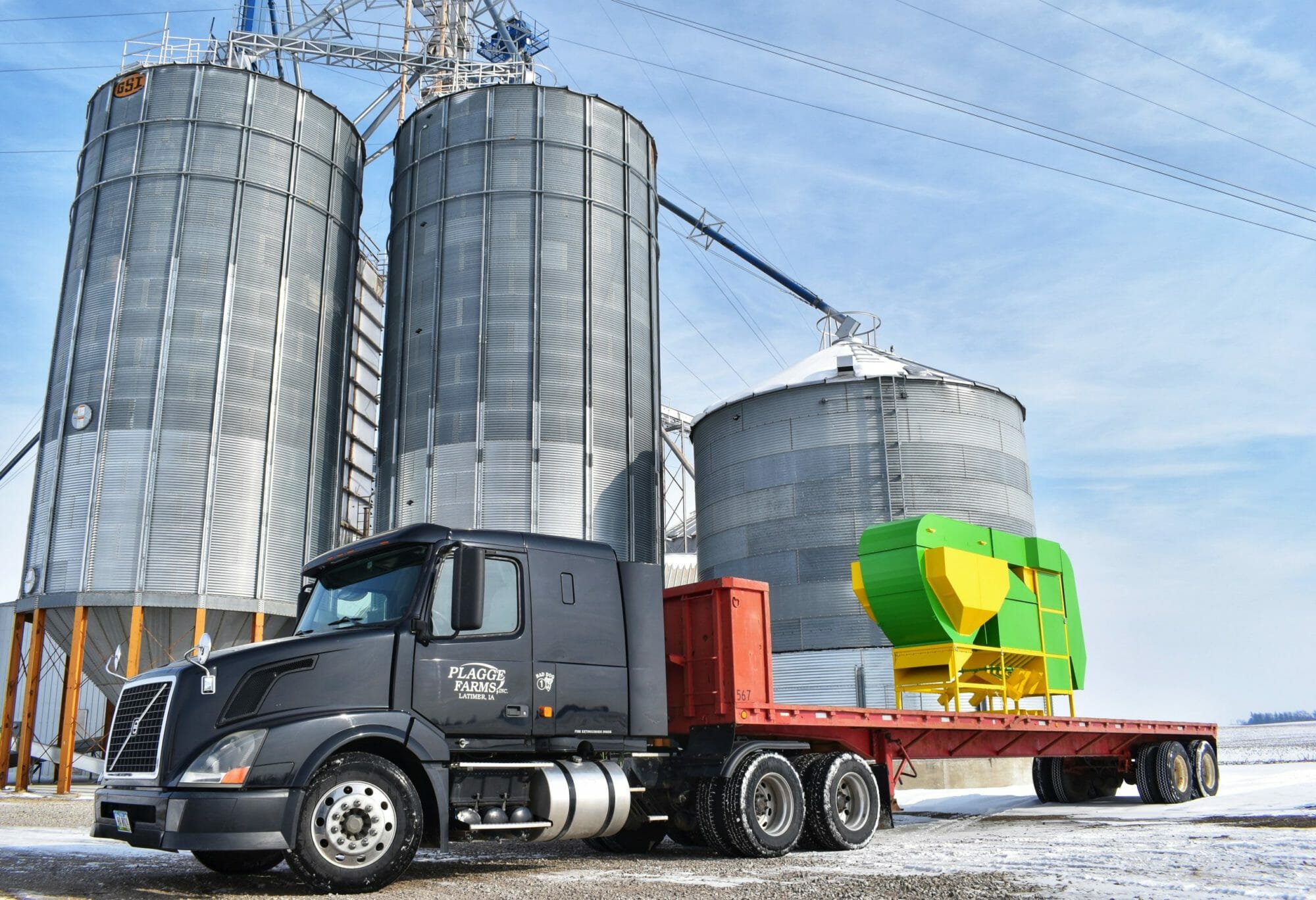
In addition to growing oats for milling, Landon is now growing oats and cereal rye for cover crop seed. “I can use the oats and rye seed on my farm,” he says, “but the hope is that I can also sell the seed to my neighbors for them to use as cover crops, and develop a local market.” Building a cover crop business does take investment. Landon recently purchased an air seeder, which will allow them to get more consistent stands of cover crops and small grains. For their cereal rye cover crop, especially, ensuring they get a consistent, thick stand will let him save costs elsewhere – such as cutting herbicides in his soybeans. This year, the Plagges also added a seed cleaning and grading facility to their operation. With the seed cleaner, they can separate out their heavy oats from their light oats. The heavy oats will continue on to the milling market, and the light oats, which still have good germination, can be used for cover crop seed.
“I want the infrastructure that we have invested on our own farm to be used by others. I want to make cover crop seed more accessible to the average person in our north-central Iowa area.” – Landon PlaggeTo help their business grow, last year the Plagges joined the Cover Crop Business Accelerator program, led by PFI and Iowa Soybean Association, to develop a business plan. “The program is a great opportunity to capitalize on skills that we may already have,” Anne says, “and it gives us information and support about how to run our business in the best possible way. We want future generations to keep farming and be successful, and we see cover crops as the way to make that happen.”
Building a community in Latimer
Anne and Landon's passion for taking care of their land and soil for future generations extends beyond the farm gate. They are taking care of their local community for future generations as well. The Plagges' home farm is down the road from another small town, which, back when Landon was growing up, had thriving businesses like a café, bank, library and gas station. Over time, however, those businesses left and the town now feels abandoned. Landon doesn't want Latimer to suffer the same fate.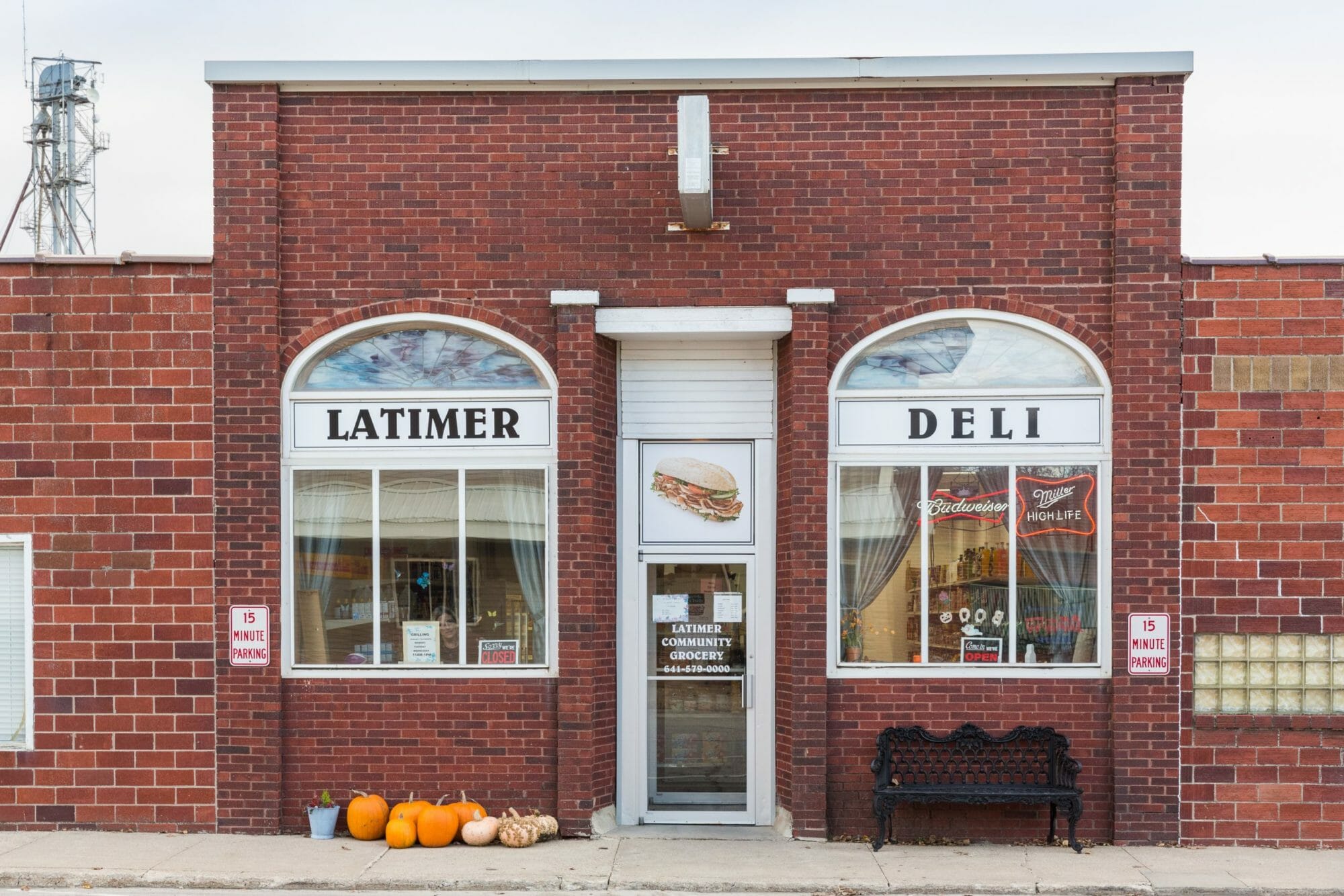
“Our general philosophy is that we want to make our community better than how we came to it and fulfill the potential of what it can be.” – Anne PlaggeAll said, the Plagges are staying busy. Landon and another local farmer co-own the community grocery store in town. After the previous owners closed shop, they didn't want to see Latimer without a place to congregate and buy food. Landon also owns some other local buildings, helping them get fixed up and used for new local businesses, and serves on the city council.