
Practical Cover Cropper: A Year in Review 2025
2025 was a great year for cover crop research and field days. Much gratitude to our farmers who are vital in furthering our mission. Here is a review of 2025!
February 2025: Ben and Bryanna Harner
Cover crop perspectives from Pennsylvania to Iowa
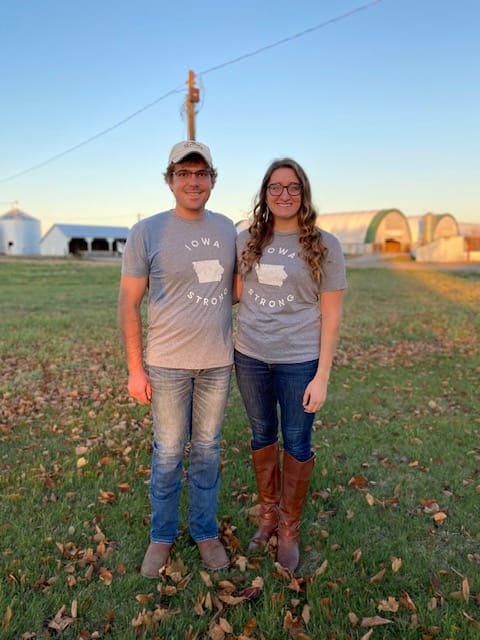 PFI members Ben and Bryanna Harner farm in Columbus Junction, Iowa, where they have a wean-to-finish swine operation for Niman Ranch. They produce 6500- 7000 hogs per year, and work with two other producers who custom feed to help them reach those numbers. Prior to their move to Iowa in 2019, the couple farmed in Pennsylvania where they planted 100 acres of cover crops.
Presently, the Harner’s plant a 75% rye and 25% crimson clover mix at a rate of 30-35 pounds per acre and apply it by drone at the beginning of September. They will do a burndown of the cover crop before planting corn this spring.
In the future, Ben wants to apply the cover crop right after harvest at a rate of 60- 90 pounds of rye per acre. Because they contract the drone, increasing the amount of flying time to increase the rate applied is cost prohibitive in addition to seed costs. Bryanna also wants to try different cover crop mixes in the future.
Ben and Bryanna farm fewer acres in Iowa than they did in Pennsylvania and reflect on some of the differences in cover crop adoption between the states. While farming in the Chesapeake Bay Watershed, there was a significant amount of funding and resources available to prevent erosion and runoff into the bay. Cover crop use was also more widespread, and they received more per acre in Pennsylvania’s cost-share programs. Bryanna says, “Ben and I have learned that farming is not a “one size fits all” approach, and we have found success stepping outside of our comfort zone.”
March 2025: Bill Frederick and James Holz
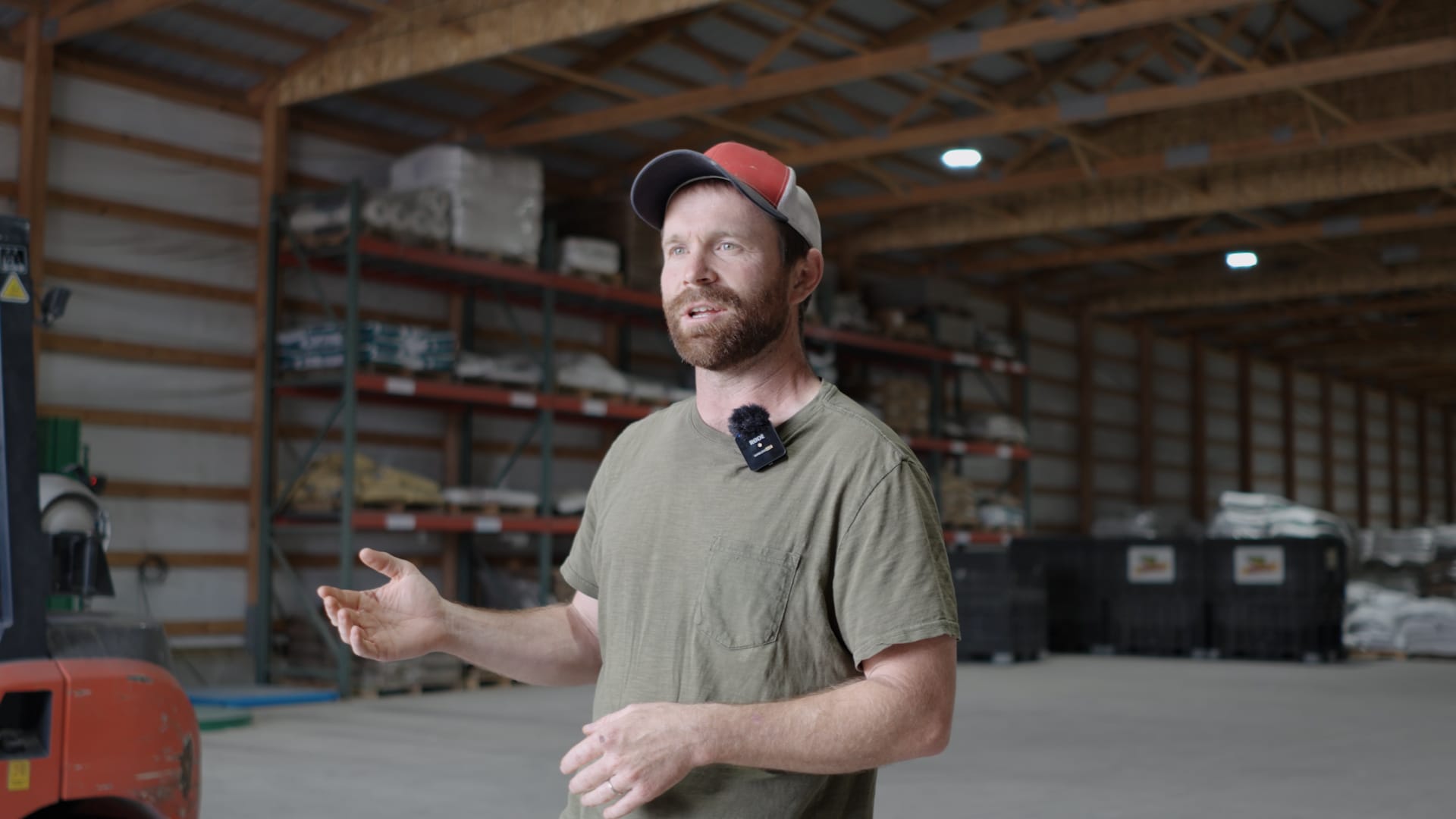 A new venture: Farmers Bill Frederick and James Holz started Iowa Cover Crop in 2014 with a goal of positively contributing to their local community and Iowa agriculture. Based in Jefferson, Iowa, Bill and James started by selling rye, oats and wheat. Iowa Cover Crop is now a full-service cover crop business offering cover crop seed and application, native seeds and grasses and a growing network of farmer seed dealers across Iowa and beyond. Hear about their experience starting the business.
Opportunity arises from disaster: In December 2021, a tornado razed the Greene County facilities they were renting for their cover crop business. In this video that includes footage from 2021 and 2024, Bill shares the story of how they embraced the opportunity to rebuild amidst the challenges following the storm. Watch how Iowa Cover Crop has recovered and rebuilt for resiliency.
April 2025: Kyle Nilsestuen
Exploring the cost benefits of cover crops
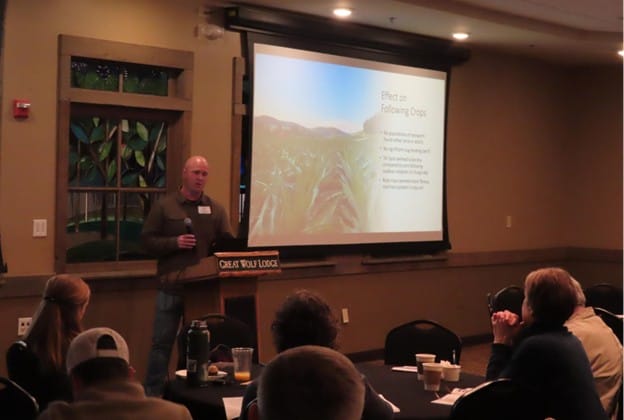 Kyle Nilsestuen, a farmer from Arcadia, Wisconsin, has been planting cover crops for nearly 10 years. He has been no-till since the late 90’s because of the rolling hill topography of his land. He recently extended his typical corn and soy rotations by adding a third crop of winter wheat. He spoke at PFI’s Midwest Covers and Grains Conference in March about the cost benefits of cover crops, sharing his data from the past two years.
After Kyle harvests his early summer wheat, he plants a clover mix. The clover is used to graze cattle and is later baled for feed. The vetch and clover in the mix will continue growing, overwintering and preventing erosion. With the value of the wheat and straw sold, savings on cattle feed, and the following corn or soybean yields, he averaged a net profit of $1,020 per acre per year.
When considering the profitability of cover crops, it is important to assess the often hidden benefits. Kyle did research on soil erosion across Wisconsin, and he found numbers for tonnage lost anywhere from 0.8 to six tons per acre. He estimated that two to four tons of soil erodes per acre each year, which is roughly the thickness of a piece of paper spread across the entire acre.
Cover crops have been found to prevent anywhere from 31% to 100% soil erosion depending on what cover crops you plant and other management practices. By Kyle’s estimation, cover crops could save him as much as $200 per acre every year by keeping his soil in place.
For Kyle, getting multiple uses from cover crops adds up to money saved and soil saved, which is a win-win situation.
May 2025: Laban and Lori Miller
Stewarding soil through relay cropping and cover crop interseeding
 PFI members Laban and Lori Miller are active participants in on-farm research, and this year, they will host a PFI field day at their farm in southern Iowa where no-till production is a normal practice. Laban hopes his field day will help his neighbors have a better understanding of his non-conventional practices.
After learning about relay cropping from a neighbor, the Millers began experimenting with it to farm in a way that is more beneficial to the land. Laban has seen visual improvements in his soil since starting this practice. He is also testing the soil, so he has the data to back up the benefits of the practice.
In 2024, the Millers participated in a trial on interseeding cover crops into 60-inch corn rows. Their cover crop mix included brown flax, Impact Forage Collards, Kentucky Pride Crimson Clover, Mancan Buckwheat, sunn hemp, Trophy Rapeseed and purple top turnips. The research report hasn’t been released yet, but Laban’s takeaways from the trial include liking the 60-inch corn rows and needing to work on finding a cover crop mix that works better with his herbicide regimen.
Laban says, “There are so many things to talk about and so many new things to try that I have not been able to do yet. God has definitely built an amazing world for us to live in, and our knowledge of His workmanship has only scratched the surface.”
June 2025: Al Schafbuch, Ticia Sanderson, Alec Amundson and Keaton Krueger
Cover crop economics from the field
PFI’s cover crop cost-share program annual survey from 2024 showed that 86% of over 2,000 respondents reported that cover crops had a “positive or very positive” impact on their farms’ financial goals. Farmers Al Schafbuch, Ticia Sanderson, Alec Amundson and Keaton Krueger shared more about their cost savings in a new blog.
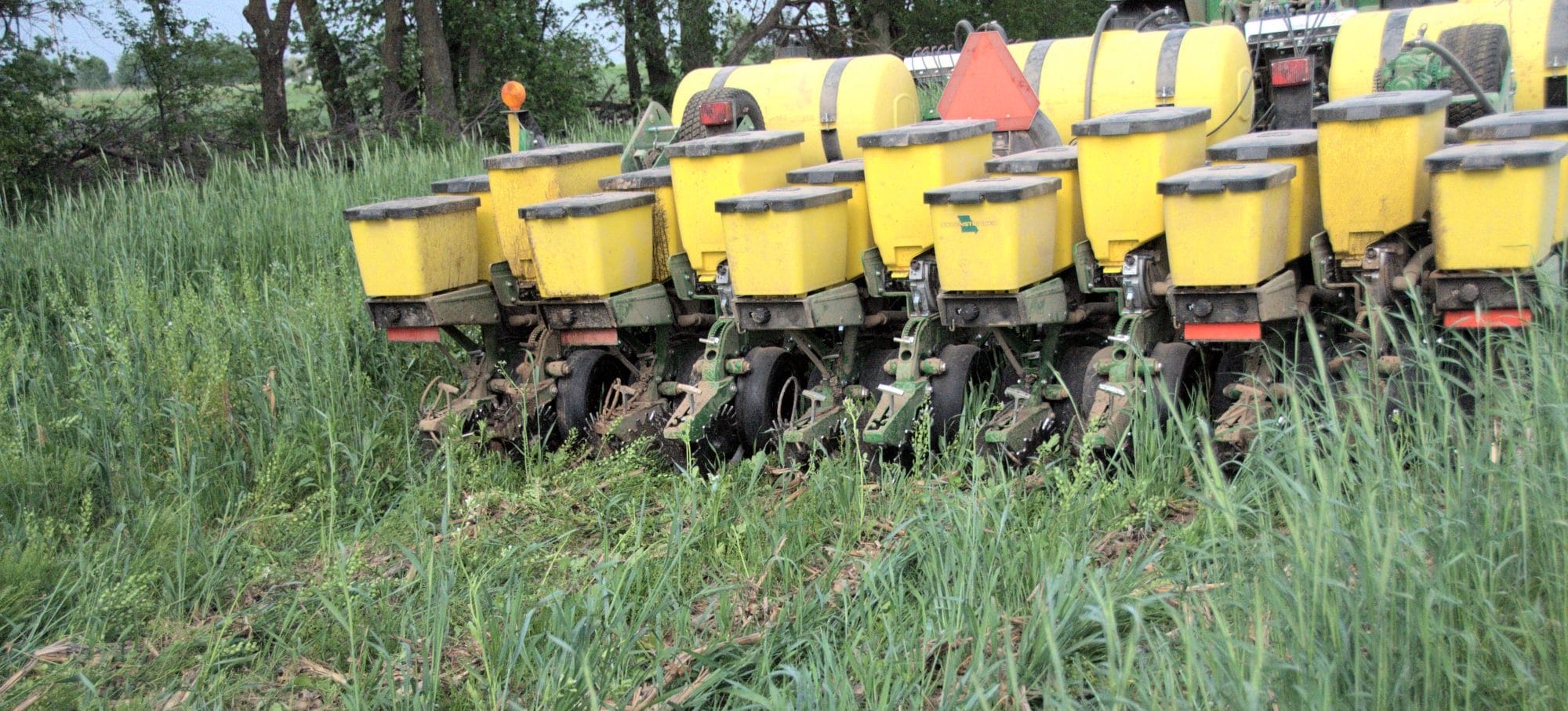
Corn is being planted into a field that has a mixture of hairy vetch, cereal rye and tillage radishes at the Goodwater Farm. From: SARE Cover Crop Image Library
For most farmers, savings came from reducing herbicide use. One common benefit of cover crops is the increased weed control provided by early spring competition and the layer of biomass after termination. This benefit directly correlated with the ability to reduce herbicide costs.
The consensus for Al, Ticia and Alec is that it takes three years or more to see the cost savings on inputs. Keaton, while waiting for direct financial return, says, “That cover crops are a generational strategy and improving the soil in the long term should improve profitability.” Read the full blog.
July 2025: Michael and Jason Murphy
Diversifying enterprises: Starting a cover crop seed business
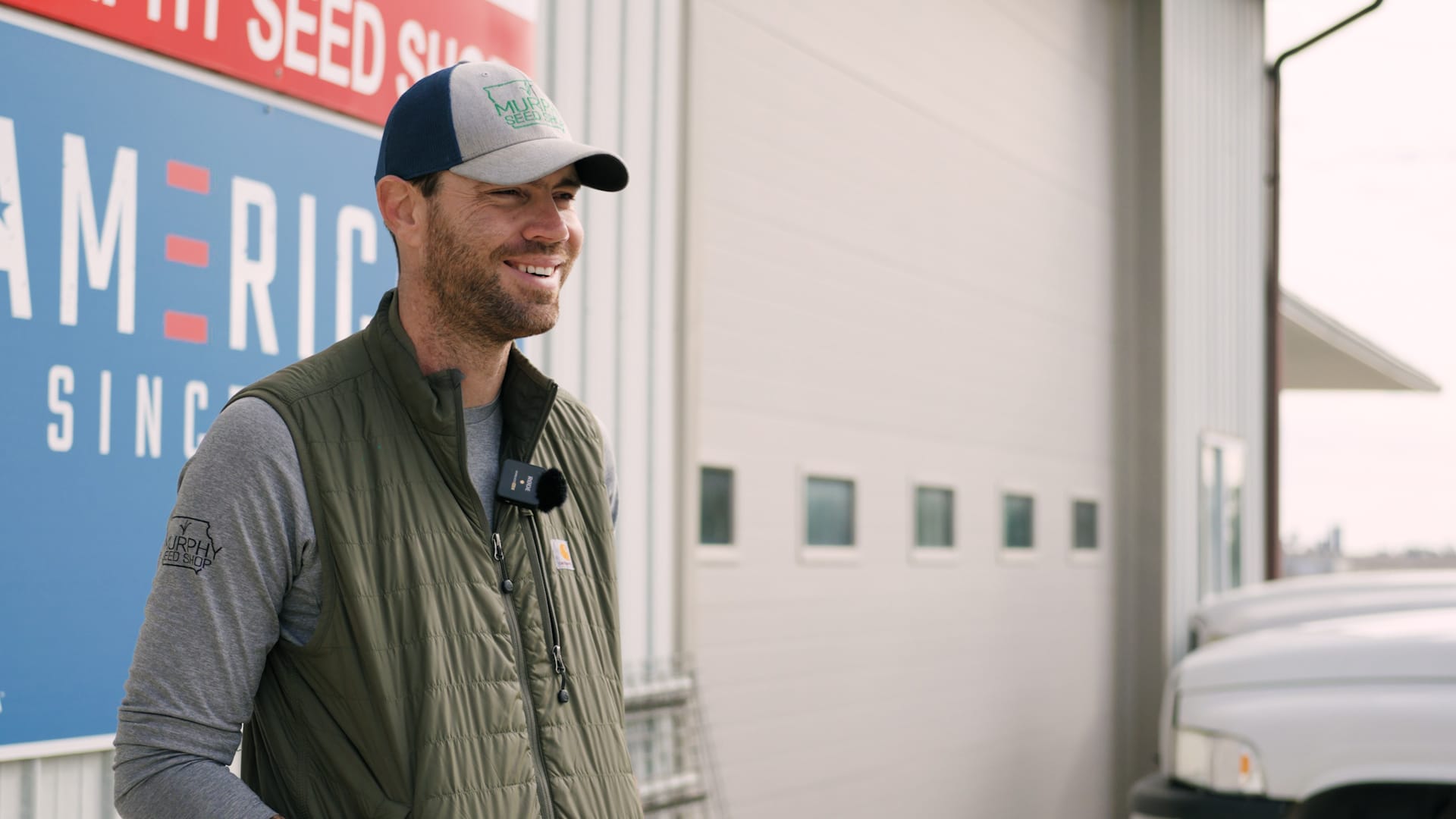 Michael and Jason Murphy are brothers and co-owners of Murphy Seed Shop in Dike, Iowa. They started their seed business in 2019 and added cover crops in 2020. In 2023, they participated in the Cover Crop Business Accelerator, a PFI program in partnership with the Iowa Soybean Association that supports cover crop seed and application businesses.
During the program, Michael realized adding application services would improve the business. They used the financial incentive from the program to help purchase a vertical tillage implement with an air seeder. The financial incentive from the program went towards the purchase of a vertical tillage implement with an air seeder. Now they can custom seed 3000 acres with the air seeder, and 2000 acres aerially. One challenge to the application side of the business is the travel time required.
Michael says if you have some equipment and shed space, the cost to start a cover crop seed business is relatively low. Having an existing farm operation can make the process easier. Marketing on Facebook has helped bump up their sales, and led to increased sales in their other products, such as a waterway mix or Conservation Reserve Program seed. Their focus on marketing and honing products and services for their audience will allow them to continue to grow their business. Watch our YouTube video to learn more about Murphy Seed Shop.
August 2025: Tracy Skaar and Tim Shellabarger
Research: Alternatives to rye cover crops
Last fall, six PFI Cooperators across Iowa planted an “Alternatives to Rye” cover crop trial. Their goals included diversifying their operations, avoiding rye allelopathy to corn or finding viable mixes for drone application. They planted cereal rye and one of the following alternatives of their choice: winter wheat, winter barley, triticale, hairy vetch or diverse, light mixes optimized for drone interseeding.
The plan was to measure cover crop biomass in the spring before termination and corn yield in the fall. However, come spring, most of them found that their alternative cover crops either hadn’t survived the winter or put on much biomass. Tim Shellabarger was the only farmer who had biomass worth measuring in his alternative treatment. He found that the winter wheat put on about half as much biomass as rye, 0.35 tons per acre verse 0.6 tons per acre).
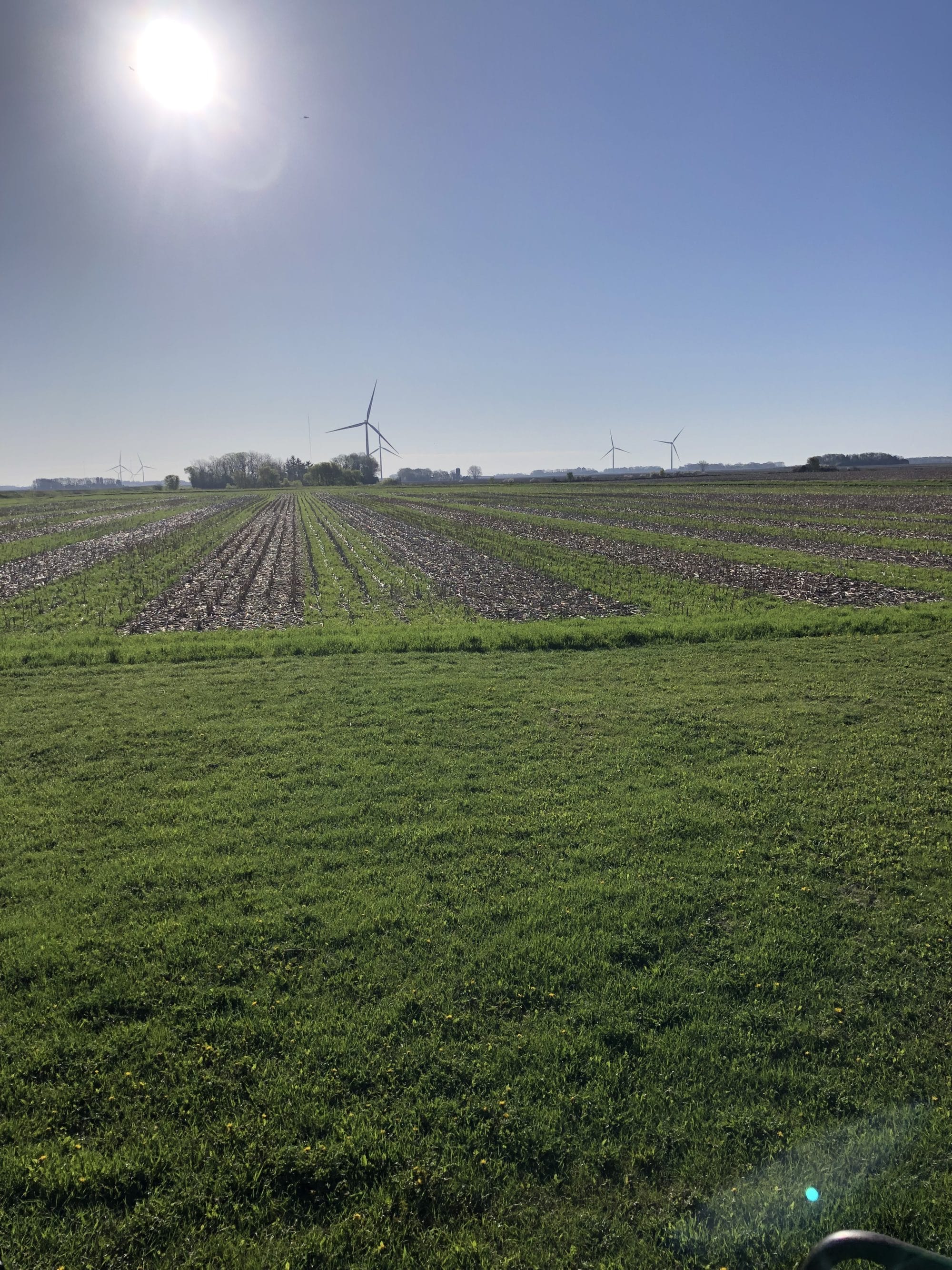
Tracy Skaar’s winter barley did not survive the winter. Green strips are winter rye treatments; brown strips are winter barley. Photo taken April 2025.
While their first attempt at using non-rye winter cover crops didn’t succeed, several farmers plan to attempt the trial again this fall. They hope to move their seeding date earlier to give the non-rye cover crops a better chance at establishment. Stay tuned for future reports detailing the results.
September 2025: Levi and Trent Lyle
Cover Cropping on an Organic No-Till Farm
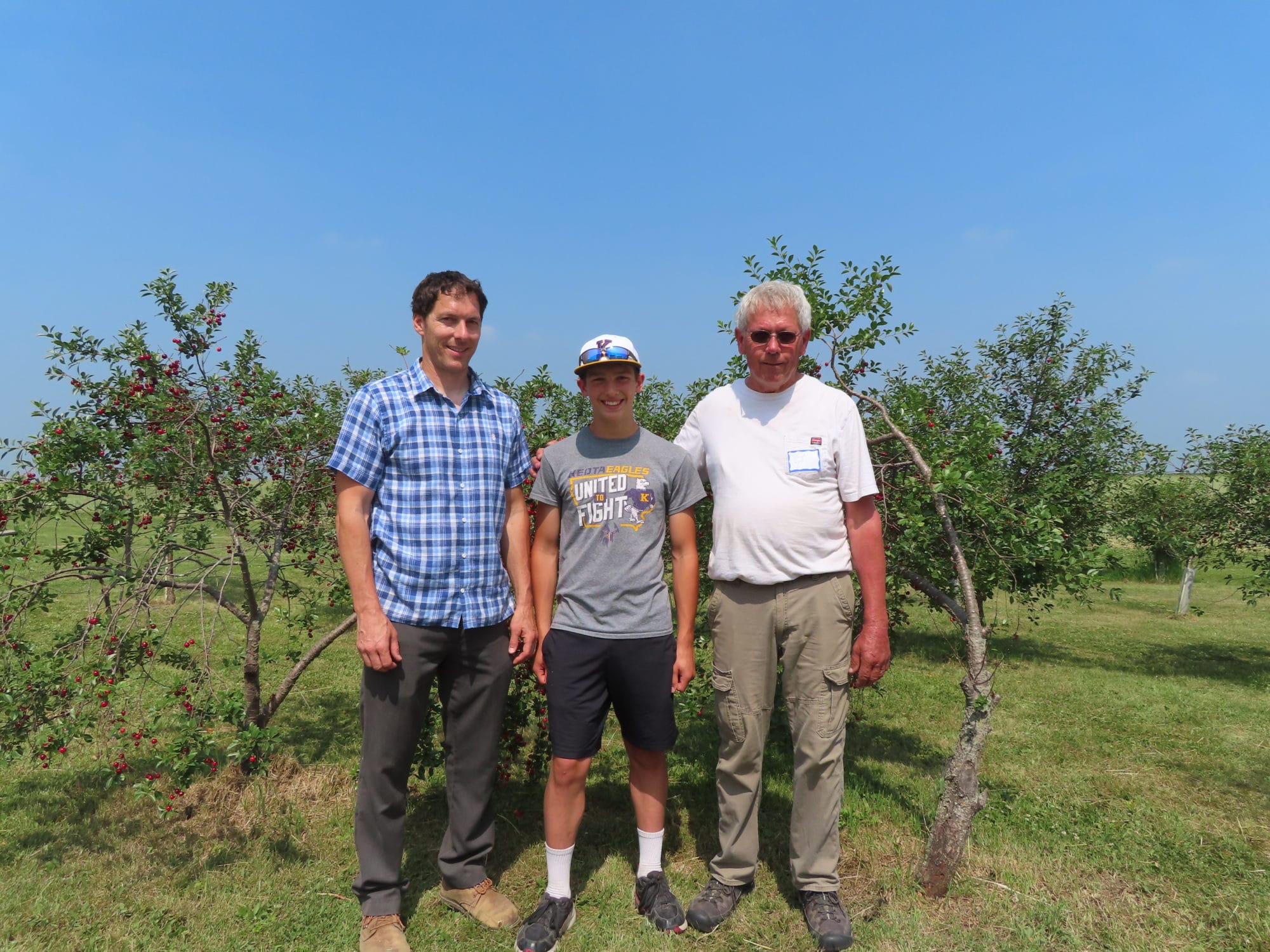
Levi Lyle farms alongside his dad, Trent Lyle, in Washington County, Iowa. They grow both organic and conventional corn and soybeans, as well as aronia berries, tart cherries and other fruits. Levi follows a holistic systems approach to agriculture, aiming to maintain an intimate connection to the land.
After transitioning some of their acres to organic, the Lyles had to find new methods for weed control. Our new blog explores the tools Levi shared at his 2025 field day and how he uses them to fight weeds on his organic acres as well as combat herbicide-resistant weeds on his conventional acres.
Read the blog to learn more about how Levi has integrated a roller-crimper and electric weed control into their farming practices.
October 2025: Jack, Ted and Nick Smith
Try seeding cover crops while you combine
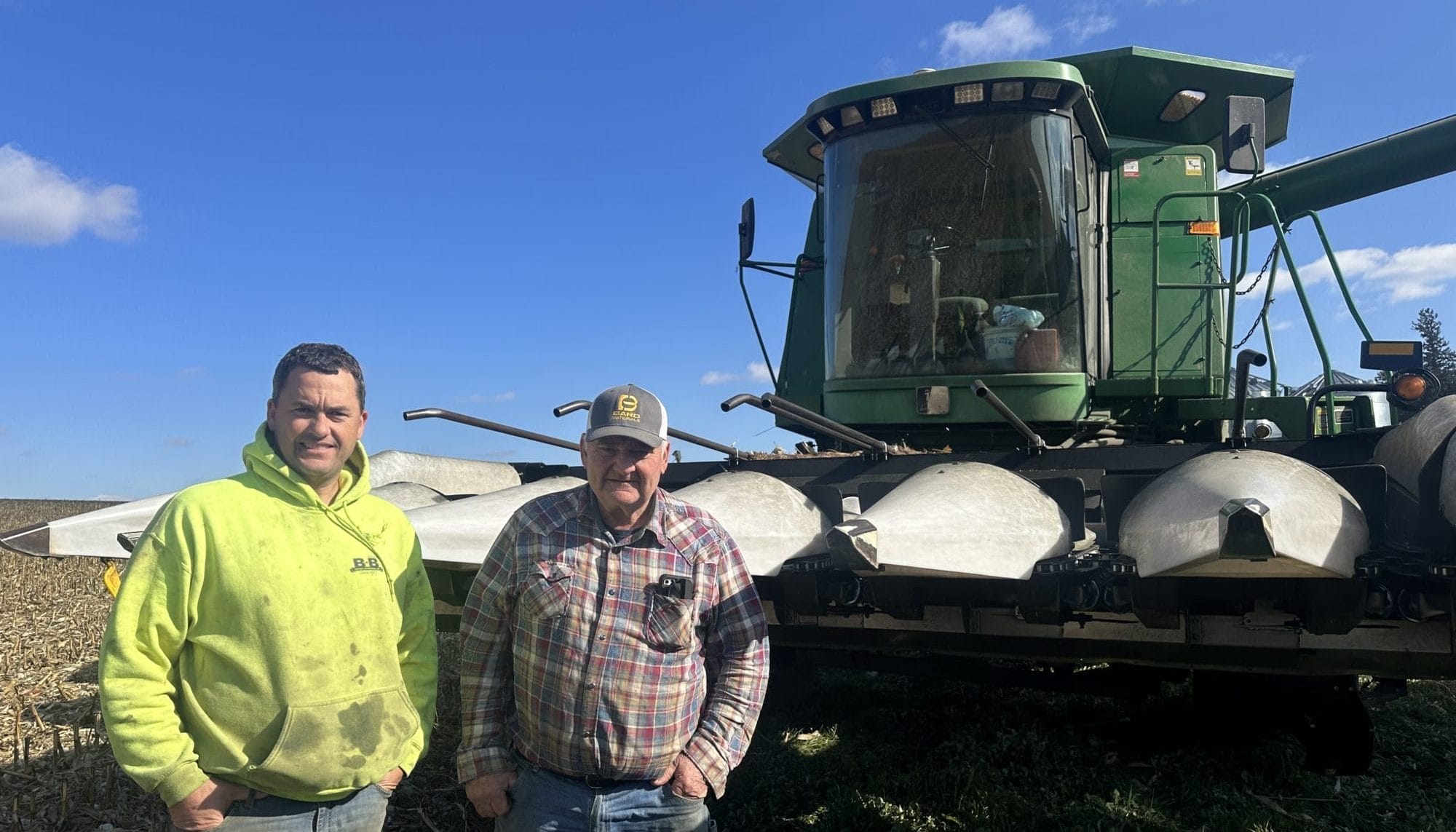 Jack, Ted and Nick Smith of Epworth, Iowa, found a way to reduce the time and the resources needed to seed cover crops post-harvest by building an air seeder on their combine.
A Practical Machine: To make this DIY machine, they mounted an air seeder on top of the discharge mount of their John Deere 9500. Then they installed plastic tubes with zip ties along the hydraulic hose on the side of the combine. They used this setup to plant one bushel per acre of cereal rye into corn rows ahead of the combine’s corn head. The location of the hopper works well, but because of the height, it takes two people to fill.
Seed to Soil Contact: The seed-to-soil contact with the air seeder planting method allows for better germination. Ted has seen their air-seeded cover crops catch up to the growth of some of the early-season aerial applications in the area.
Learn more:
- Read about their DIY air-seeding combine.
- Watch the “Practical Cover Cropper” video showcasing their combine.
November 2025: Grant and Aubrey Stuart
Learn about “Data-Driven Decisions for Cover Crop Success” from our video
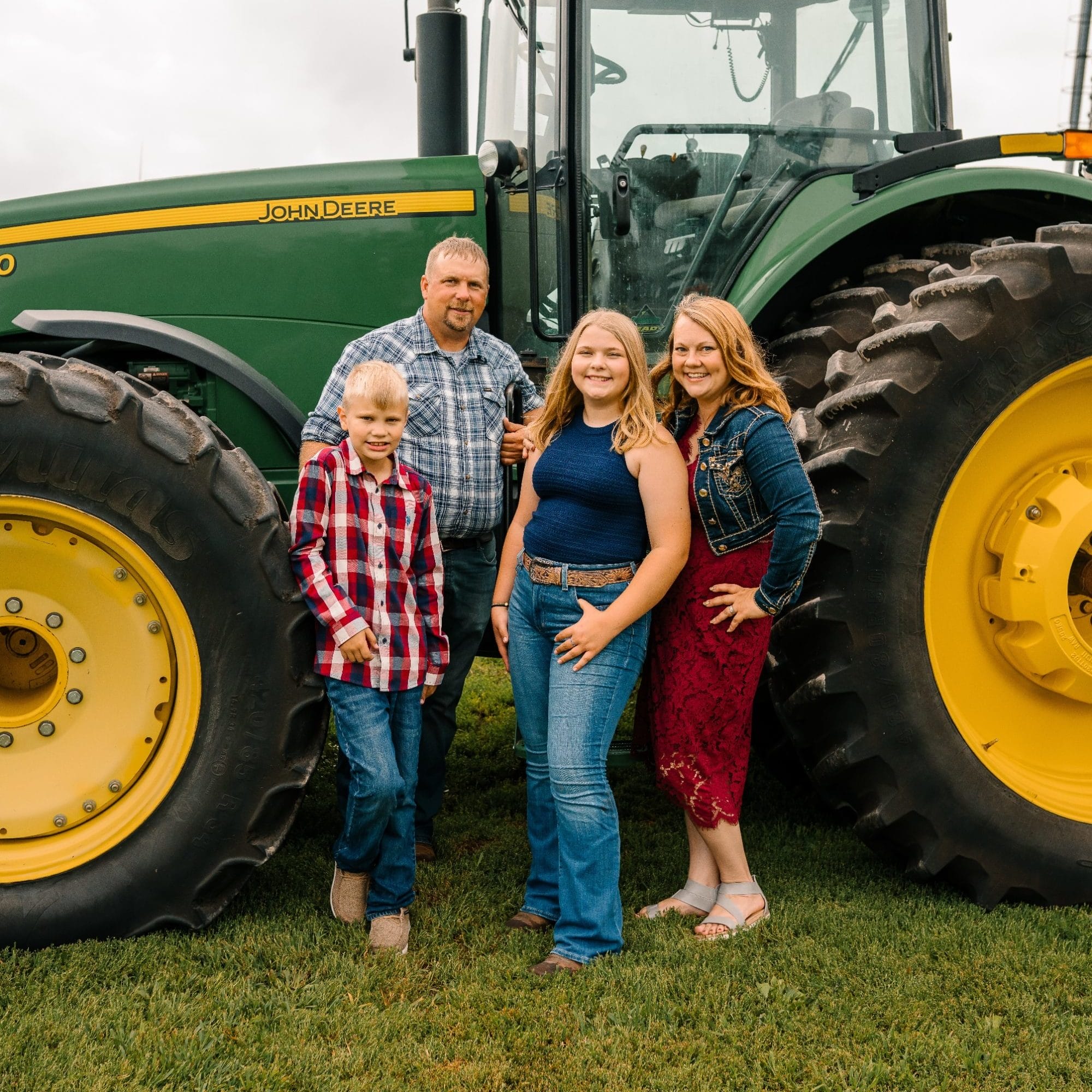 Grant and Aubrey Stuart plant cover crops on 1,400 acres near Walnut, Iowa. With a focus on soil health, they work closely with trusted consultants to use quality data to improve on-farm decisions.
Improving Soil Health
One of their consultants is Dan Hansen of Ag Decision Services. He has provided fertility recommendations for the past 10 years. With his input, the Stuarts started balancing lime and pH, as well as adding cover crops to their fields. They slowly increased their cover cropped acres over five years until they were using them on all of their acres.
Reducing Inputs
Improving soil health has allowed them to cut nitrogen inputs without experiencing a large yield drag. With multiple years of yield data, and the information they obtain from grid sampling each field every four years, they have been able to identify the most efficient use of nitrogen. Soil health practices like cover crops and continuous testing have allowed Grant to reduce his nitrogen application rates from 210 pounds per acre to 150 pounds per acre.
Watch the video recorded at their June 2025 field day to see how Grant teams up with Dan and uses data to manage fertility, reduce nitrogen, maintain yield and grow healthy crops.
December 2025: Steve Nelson, Dan Gengler and Brad Steege
Cover crop update from the field
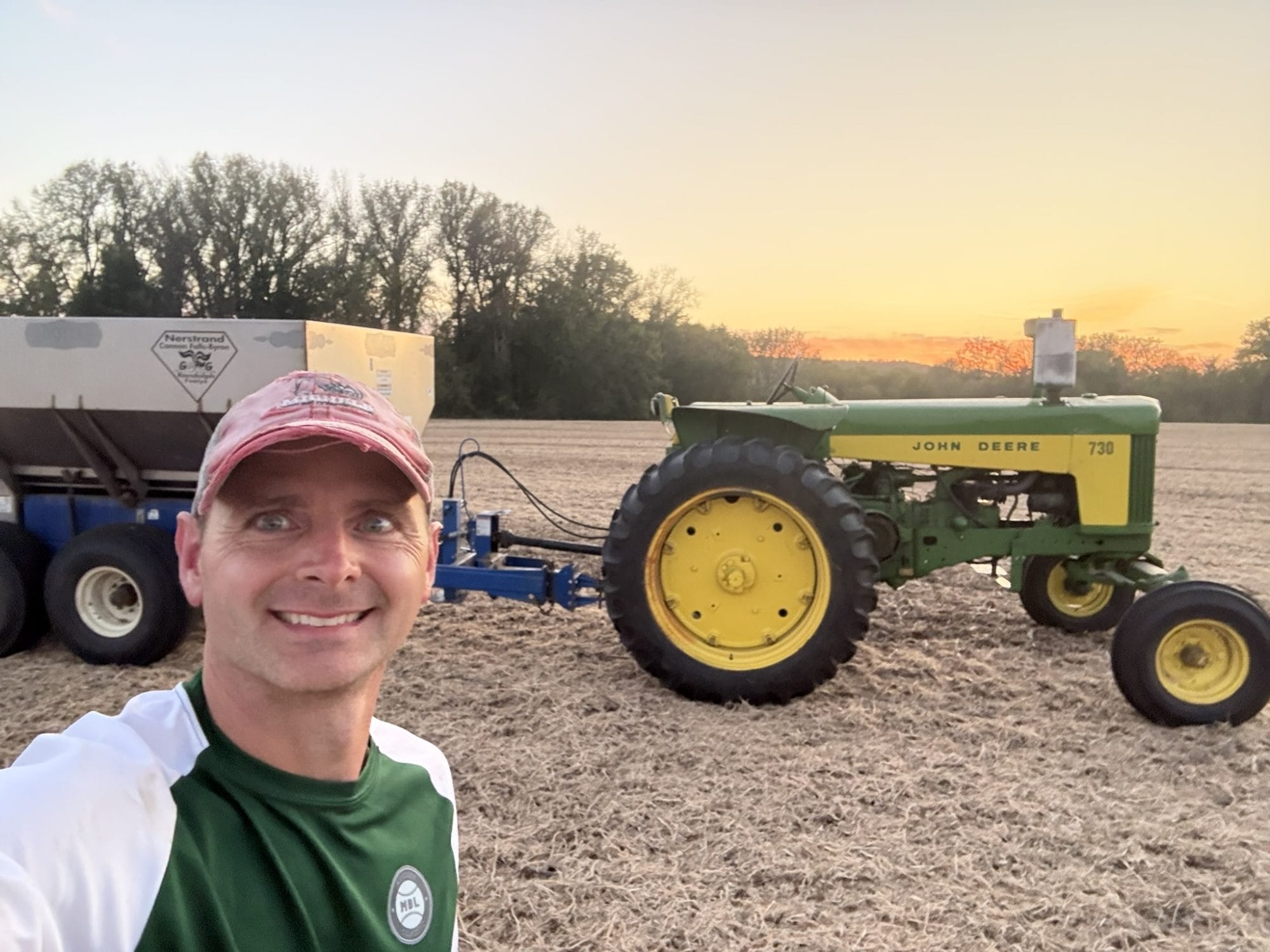 We reached out to three farmers to ask about their fall cover crop planting experience. All three farmers plant cereal rye strictly as a cover crop.
Steve Nelson of Cannon Falls, Minnesota, plants cover crops to improve soil health. This fall he planted 90-acres of rye using a broadcast seeder. He has used a no-till drill in the past but plans to keep broadcasting seed in the future because it has a lower cost and he has good results. He planted his cover crops on Sept. 29.
Dan Gengler of Remsen, IA plants cover crops to protect soil from water erosion, improve soil health and for weed control. This fall he used a no-till drill on 130 acres and a fertilizer spreader on 30 acres. He uses both methods to identify which method works best in his fields. This year he began planting cover crops on Oct. 12 and was done planting by Oct. 14.
Brad Steege from Fredericksburg, Iowa, plants cover crops to protect soil from wind and water erosion. He planted 520 acres with an Unverferth Cover Crop Seeder with a rolling harrow. Brad started planting cover crops this year on Oct. 1 and ended on Oct. 15.
Continue reading about their cover cropping experiences this fall.