
A Dream of Beavers
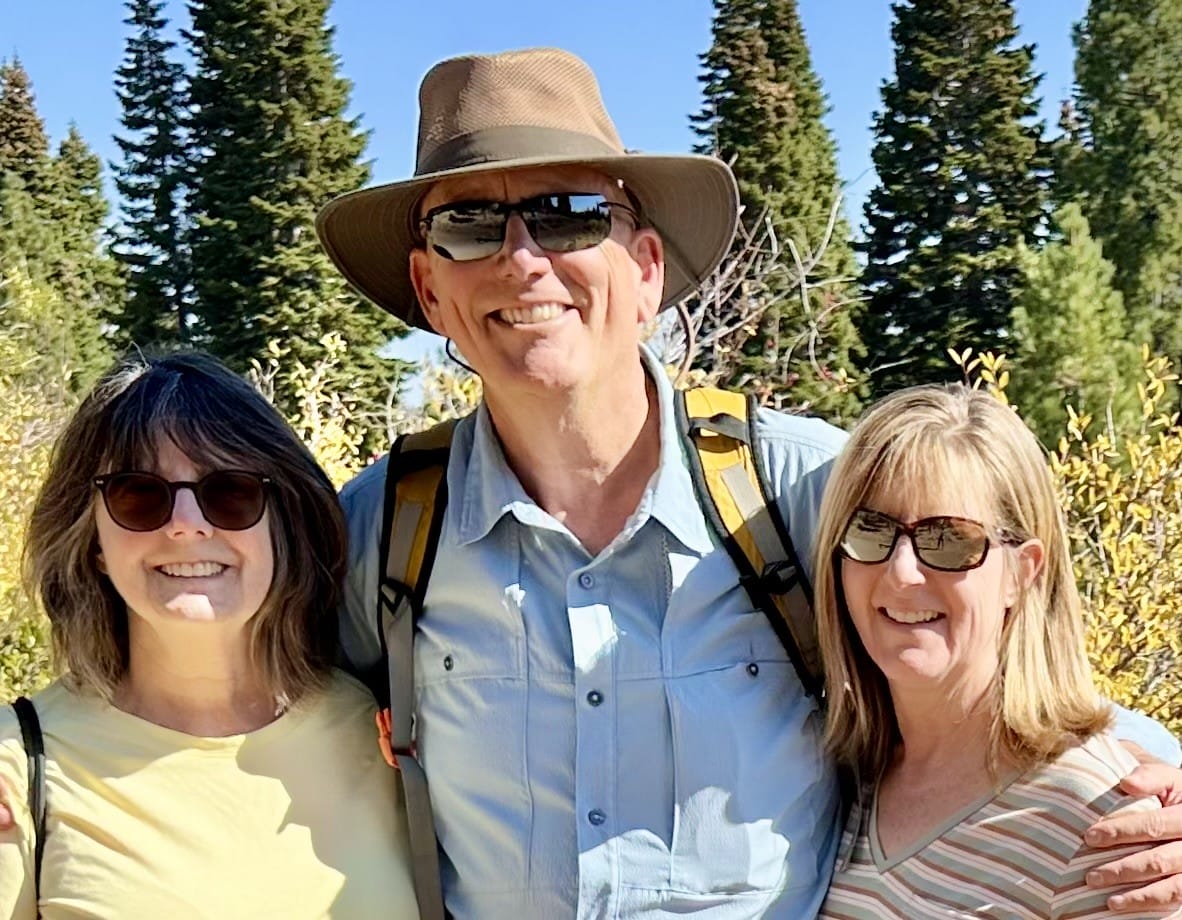
Beth, Bert and Jane Richards.
Beavers are ecological engineers par excellence. Landowner Beth Richards and her siblings are working to bring beavers back to several family farm properties to help with their broader restoration goals.
Another day is drawing to a close on one of landowner Beth Richards’ central Iowa farms. Gazing at a stream running through the property, she pauses to imagine the future:
It’s dusky twilight in early autumn. Across the still surface of a small but burgeoning wetland, a ripple spreads. At its helm, a beaver slips silently through the water, a branch clasped between strong teeth, before dipping under the surface towards the safety and shelter of its lodge.
For Beth and her siblings, Jane and Bert, the vision is more than a passing fancy – it’s an aspiration. As they work to steward and restore their family’s farmland, the return of beavers is closely tied to their hopes for the future of their land – and for deeply held conservation goals.
“My dream is to bring species such as beavers and bison back onto our land,” Beth says. “Not just for their own survival, but because as keystone species, they can restore land better, faster and cheaper than we humans can.”
The siblings’ farmland consists of about 1,200 diverse acres strewn between Boone, Hamilton and Hardin counties. Several of these farms have been in the family for four or five generations. Three other properties were purchased by their father “more for the wildlife habitat potential than for its farmland value,” Beth says.
She and her siblings grew up on the farm in Hamilton County, Iowa. While they all left Iowa to pursue careers and presently live out of state – Beth in New Mexico, Jane in Colorado and Bert in California – their dedication to the family farmland, and to caring for it, remains strong. “Our father had a deep love of nature and hunting, and a desire to restore wetlands and preserve wildlife habitat,” Beth says. After he died in 2012, the siblings started comanaging the farms, placing a heavy emphasis on soil health, restoring the land and creating more habitat for Iowa’s wildlife.
As part of her research on these topics, Beth read journalist Ben Goldfarb’s book “Eager: The Surprising, Secret Life of Beavers and Why They Matter.” The book opened her eyes to the importance of beavers – and ignited her determination to restore them on her family’s land. Their return, she says, would represent quiet proof that the land is healing.
Nature’s Engineers in Farm Country
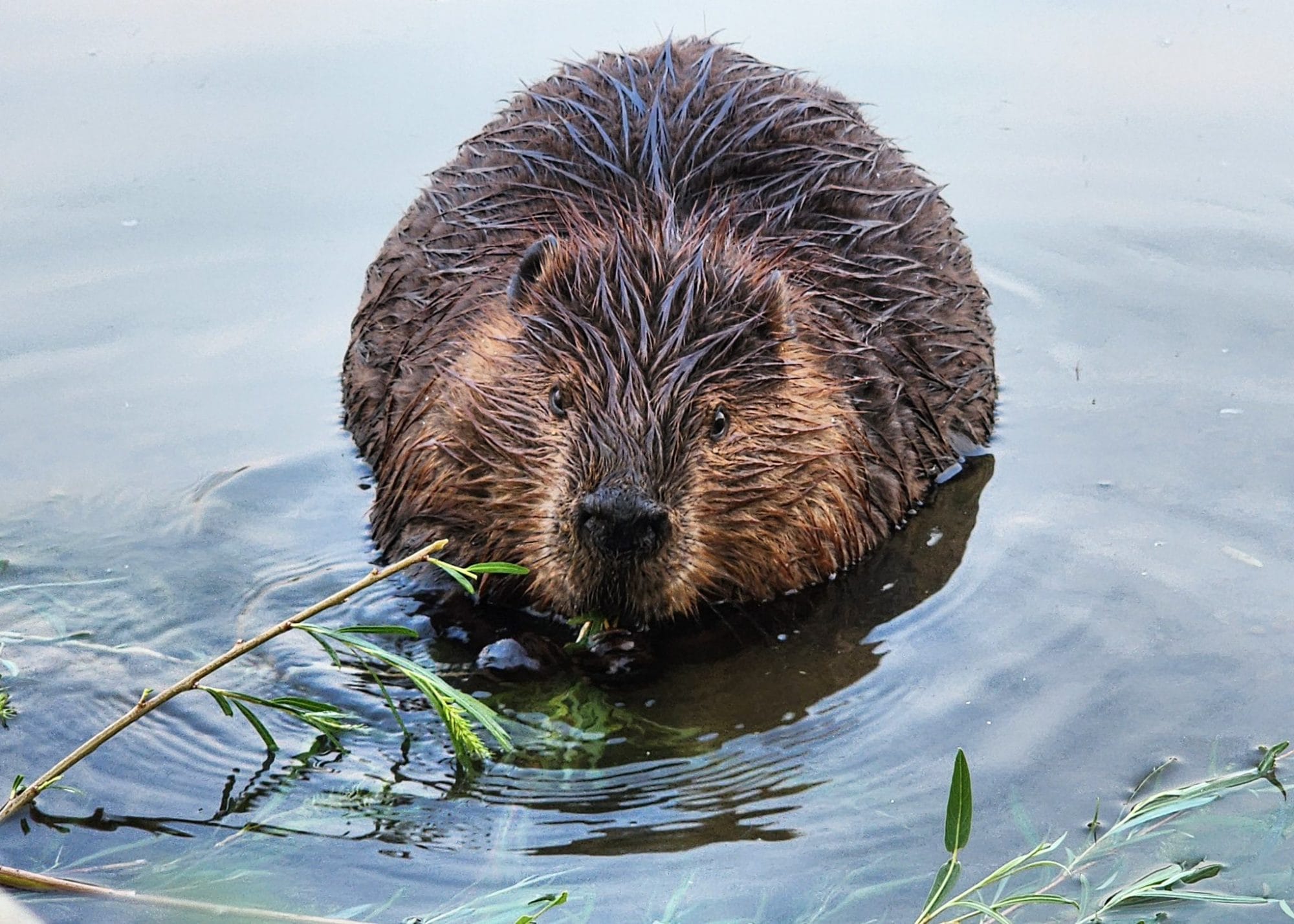
Photo courtesy of Mike Digout.
In Iowa, and across North America, beavers are a keystone species, meaning they support entire biological communities. Once abundant, beavers were nearly hunted to extinction due to high demand for their pelts in the 1800s and early 1900s. Settlers, viewing beavers as pests, killed them – and many farmers and landowners still perceive them as nuisances. Today, however, ecologists and others widely acknowledge what many Indigenous Peoples have long known: that beavers are a critical part of the natural landscape, and their absence is harmful in many ways.
And as it turns out, beavers actually benefit farmers and the broader farm landscape. A growing body of research is showing how beaver dams, for instance, improve water quality by trapping nutrients and sediment and keeping them out of downstream waters. In Iowa, a first-of-its-kind study by Iowa State University researchers recently found that a single beaver dam can reduce nitrates by 1 to 4 parts per million on average. In Rhode Island, researchers have found that beaver dams may be able to remove up to 45% of nitrogen from streams and creeks in rural agricultural watersheds.
How? The ponds that form behind beaver dams slow the water, trapping sediments and creating the right conditions for microbes that break nitrates down. The wetlands that form around these dams also create vital wildlife habitat while absorbing stormwater during heavy rainfall, reducing flooding downstream. But beaver-engineered landscapes also play a crucial role during drought. Beaver ponds store water for longer during dry times. They also raise the water table, keeping surrounding vegetation green – a boon for grazing livestock.
Inspired by this bounty of benefits – and hoping to entice beavers to their own land – Beth and Jane set out to create attractive spaces for beavers in key areas.
Building for Beavers
They started by seeking technical assistance for beaver restoration work from a variety of sources, including the U.S. Fish and Wildlife Service.
On one Hardin County property – a prairie remnant with a stream running through it – the sisters and their partners at FWS have been testing beaver dam analogs. These human-made structures are designed to mimic the work of real beavers. Built from fallen brush, logs and sometimes sheet piling, they slow water flow through eroded areas, encouraging sediment to settle and native plants to return. The structures are often used to jumpstart restoration and can eventually lure beavers to return. “We’ve seen water spread out and soak in instead of rushing through and worsening deep narrow cuts,” Beth says. “You can tell the land is responding.”
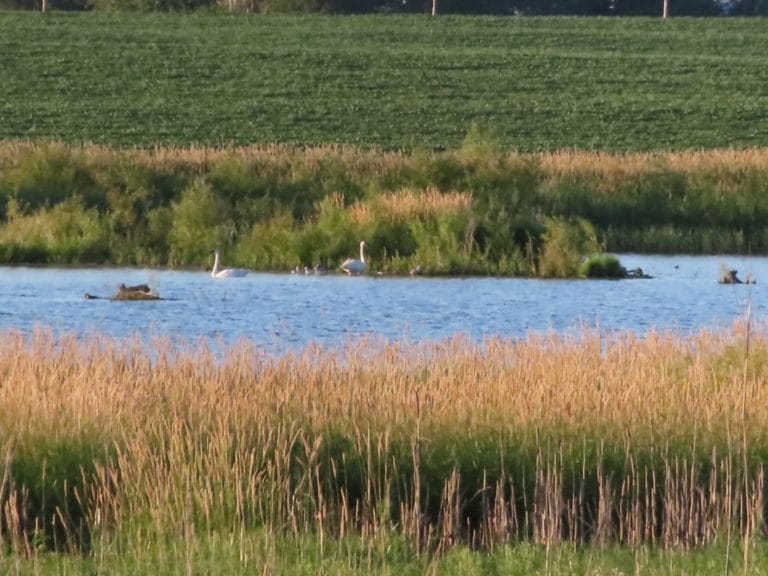
That farm parcel also has a 40-acre remnant sedge meadow with wet areas and old oxbows. With guidance from FWS, the siblings have introduced targeted grazing as a management tool. Cattle are rotated through smaller, select paddocks on the sedge meadow where they consume invasive reed canary grass. This gives sedges and other native plants a chance to reestablish. “There are beavers in the adjacent river, and we hope they will venture into the sedge meadow and revive one or more of the degraded oxbows more effectively and much less expensively than we could do ourselves,” Beth says.
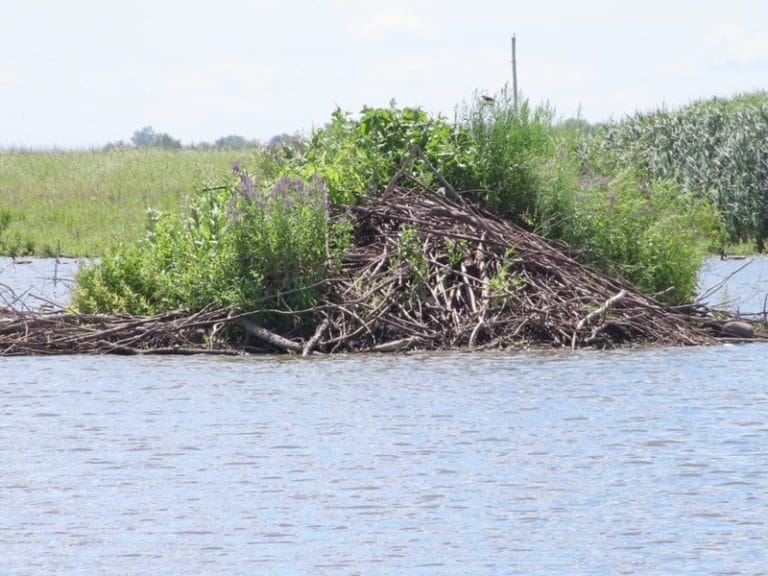
On yet another farm property, Beth, Jane and Bert installed several earthen dams to slow erosion in gullies and provide water for livestock, habitat and recreation. Beth says they recently spotted beavers near one of the ponds. “We’re excited that a beaver family has apparently moved in and will improve the dams and maintain the ponds.”
Despite these promising signs, some neighbors remain skeptical, worried that beavers might flood cropland, consume crops or block drainage systems. Others, seeing beavers as pests or trophies, trap or shoot them. These social pressures add tension. But the siblings remain considerate of their neighbors’ concerns as they strive to balance conservation and community. Beth says, “We explain our overarching goal is reaching a balance between farming and nature.”
 View image
 View image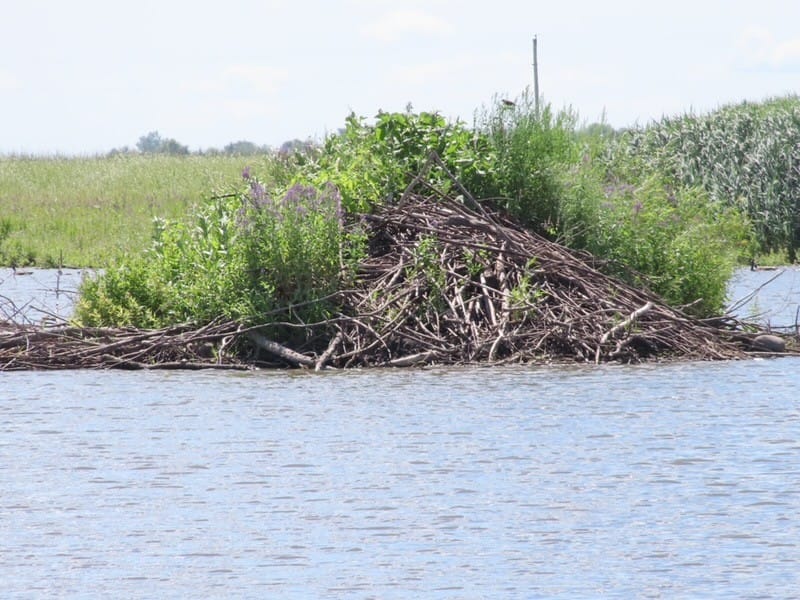
 View image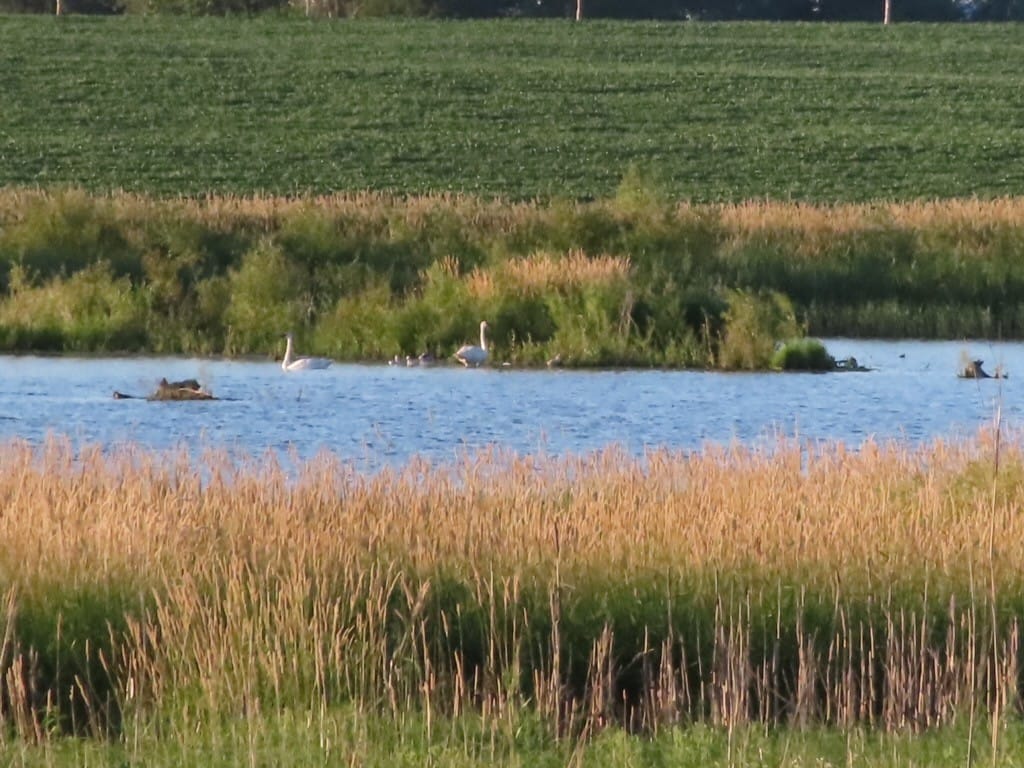
 View image
Sowing the Future
Other conservation projects haven’t focused explicitly on beavers – such as enrolling much of their marginal farmland into the Conservation Reserve Program. This has helped stabilize the Richardses’ income while letting the soil rest. But in some cases, these efforts have been beaver boons anyway.
For instance, one 80-acre farm they own in Hamilton County has a preexisting wetland. The siblings jointly manage it via a CRP contract on the cropland, which tends to be too wet to farm profitably, and a partnership with FWS to improve the rest. Beth says the project has already attracted beavers – who have wasted no time improving the wetland and helping to control invasive willow.
On a Boone County property, they placed about 70 acres in one of the state’s earliest Conservation Reserve Enhancement Program wetland projects. The work involved converting a difficult-to-farm stream corridor into habitat and providing downstream water quality benefits. Back in Hardin County, the siblings converted the 60 cropped acres above the sedge meadow to CRP. Resting the land will let the degraded soil recover and reduce erosion and runoff to the sedge meadow.
“CRP payments give us a base stream of revenue and help us focus on the land itself instead of chasing yields on degraded or inherently marginal farmland,” Beth says.
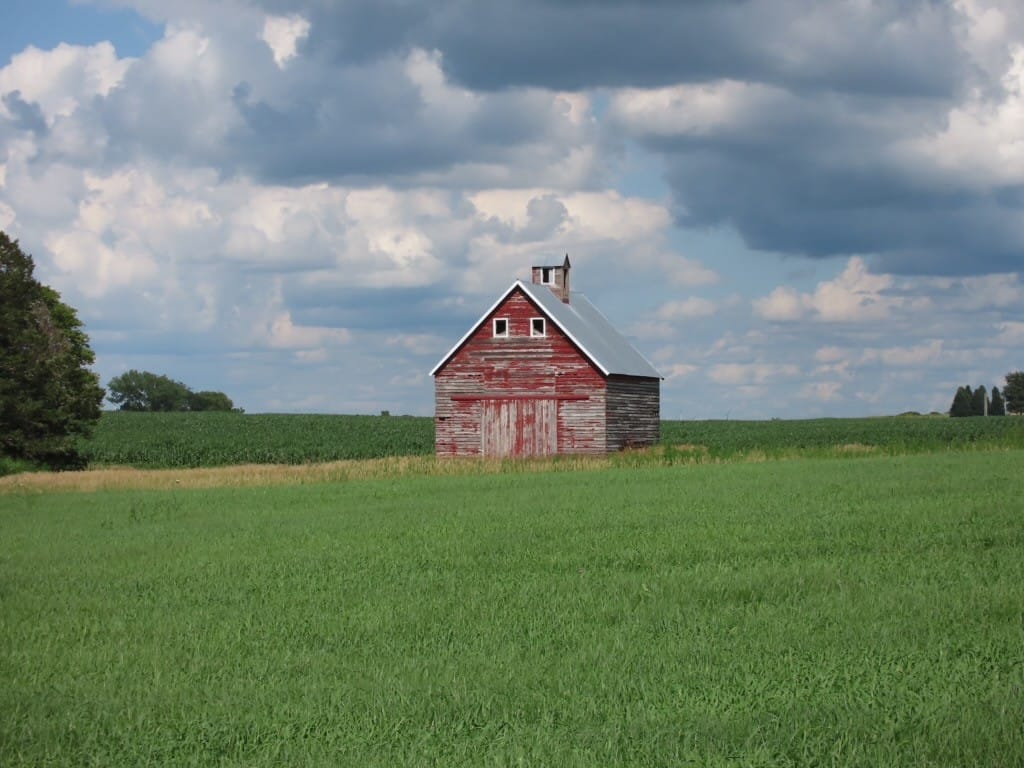
A barn on Beth’s Hardin County farm.
Now in their 60s, Beth and her siblings are planning for the future. With PFI training in farm transition and guidance from organizations like the Iowa Natural Heritage Foundation, they hope to permanently preserve their land.
“If we can leave the farms in better shape than we found them,” Beth says, “that’s the real legacy.”
Learn More
Visit Iowa Learning Farms Beaver Resources for infographics and an archived virtual field day and webinar.