
Of Covers and Cowpies
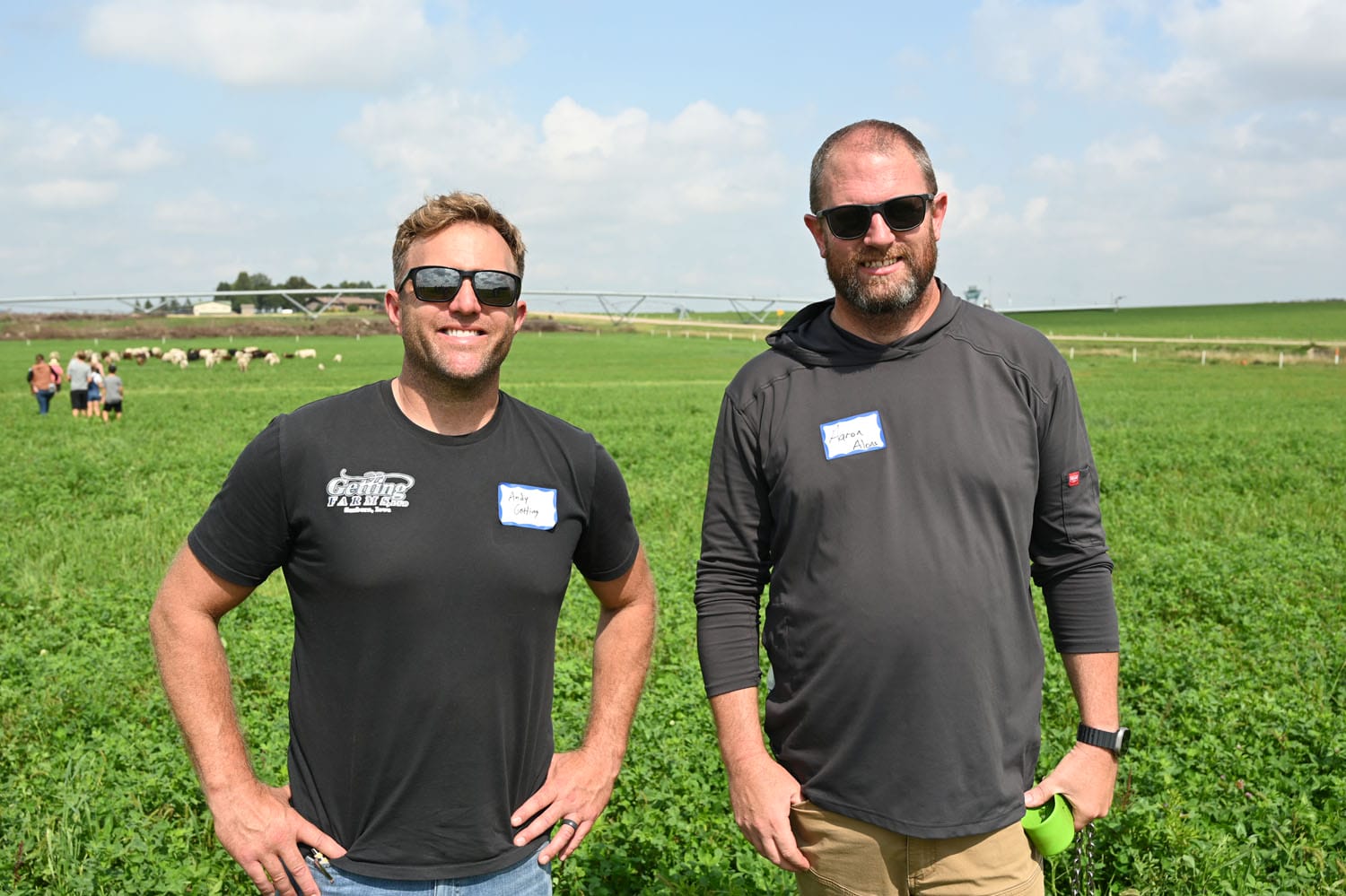
Andy Getting and Aaron Alons
For several farms, grazing cover crops has helped cut costs and expand opportunity. But the practice has also revealed deeper webs of partnership and possibility.
In August 2020, Andy Getting received a call from his neighbor, Aaron Alons. Though the O’Brien County, Iowa, neighbors had known of each other for decades, they hadn’t interacted much. The last call Andy received from Aaron was 10 years prior when Aaron had gotten his pickup truck stuck in a field.
Andy thought his neighbor might again be in a fix. But this time, Aaron had a proposition – one that could have long-term benefits for both farmers and the broader landscape.
“’Hey, interesting deal,” Aaron recalls saying to Andy. “Somebody wants to purchase some ground, has a vision of what they want to happen and just needs someone to implement. Would you be willing to visit with me about it?’”
It turned out Aaron had met a couple who planned to purchase land nearby and were looking for farmers to bring regenerative farming practices to it. Aaron was already raising grass-fed, grass-finished cattle on his farm – and he knew that Andy raised organic row crops. What if they combined their know-how to farm this couple’s land?
“We visited, came up with a business plan and the rest is history,” Aaron says.
A Partnership Begins
The arrangement the two neighbors worked out, with the support of their new landlords and a Sustainable Agriculture Research and Education grant, involved Andy farming the land organically using practices such as cover cropping that were already familiar to him. Then Aaron would bring in his cattle to graze the cover crops in the fall.
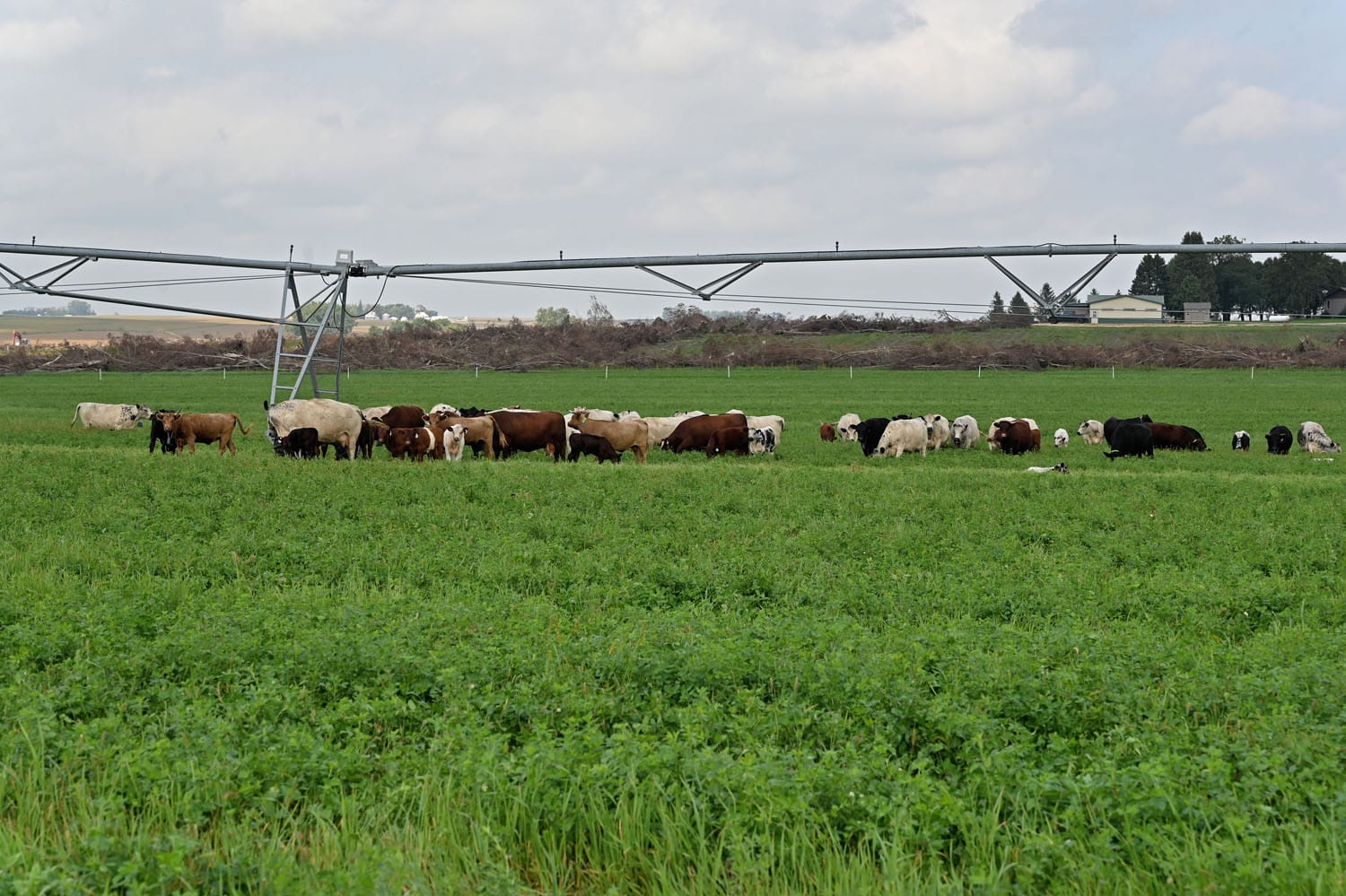
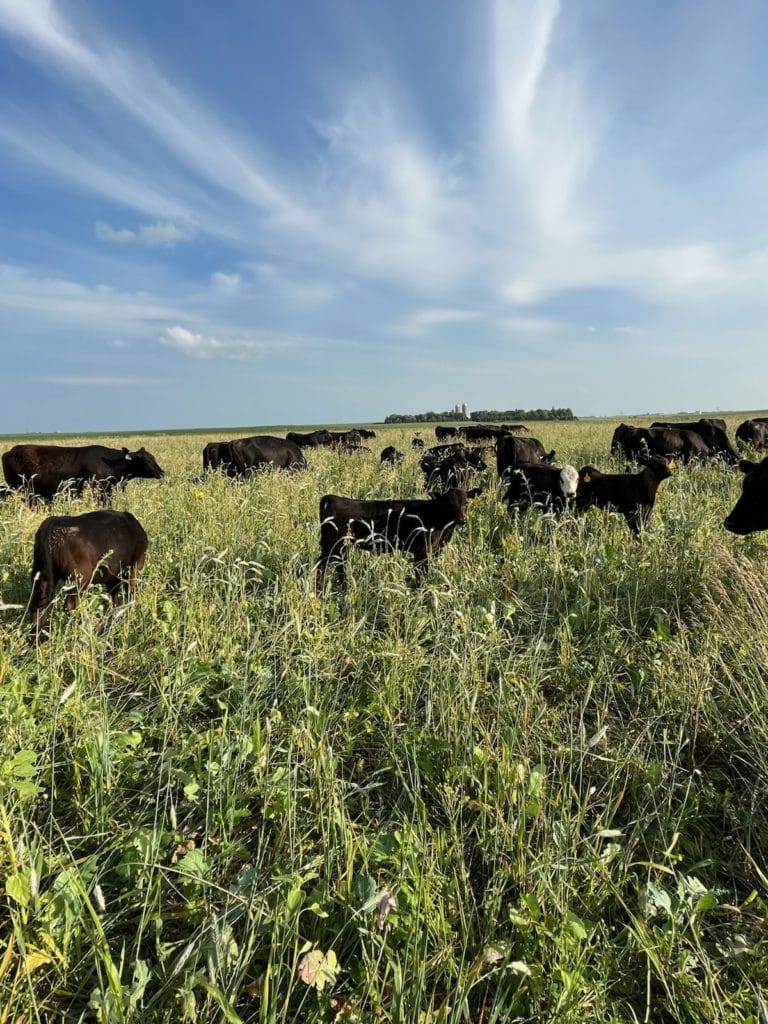
The summer cover crop Andy Getting planted offers sustenance for his neighbor Aaron Alons’ hungry herd of cattle.
Five years have now passed and both farmers are reaping the benefits of this partnership. Through farming the nearby land together, Aaron and Andy realized they could extend the partnership to their own farms. Andy was already trying to find ways to make his organic farming practices more regenerative, and livestock integration is a core principle of that approach.
“Having his cattle involved with my cover crops just made a lot of sense,” Andy says.
It works like this: In early spring following soybean harvest the previous fall, Andy plants oats interseeded with a cover crop mix of alfalfa, medium red clover and berseem clover. He harvests the oats in July and Aaron’s cattle rotationally graze the cover crop mix as it continues to grow. “Andy wants every cow I have from August until the first of November,” Aaron says. “That’s really good for me, because it’s free food for my cows.”
Each element in this chain forms part of a beneficial cycle. As the cattle munch the cover crop, the plants are prompted to regrow, producing sugars that feed the soil microbes. The manure, spread by the cattle, fertilizes the legume cover crop – which fixes atmospheric nitrogen in the soil for the next cash crop. Once winter arrives, Aaron’s cattle return to his home farm, and Andy’s cover crop protects the field until corn planting the next spring.
Cover Crops to the Rescue

Dawn and Mark Madison
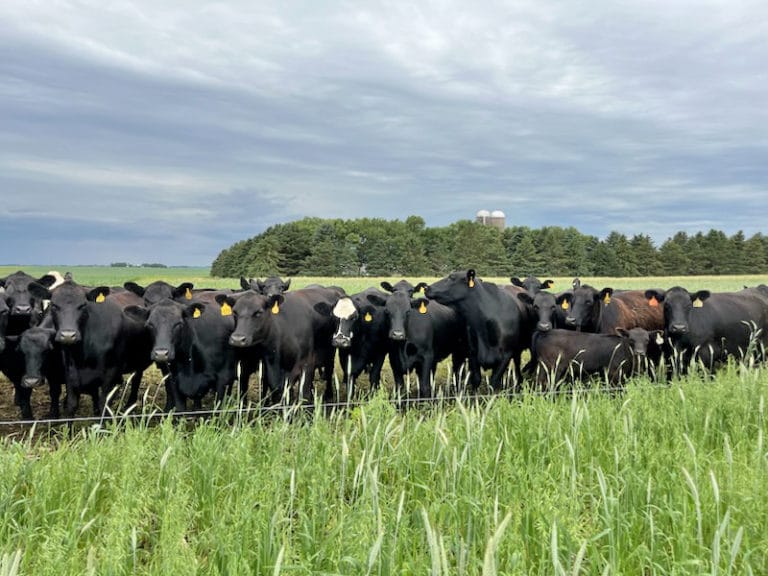
Just an hour’s drive away, near Adrian, Minnesota, Mark and Dawn Madison graze their own cover crop acres as third-generation farmers on Mark’s family farm. For 30 years, the farm was a conventional dairy that continually grazed its pastures. Mark and his father started incorporating cover crops in 2012 and began dabbling in no-till and strip-till a few years later. Then in 2019, Mark and Dawn chose to end their dairy operation and switch to raising Angus beef cattle.
Their decision soon after to start grazing their cover crops came out of necessity. “I brought in more cows than I had pasture for,” Mark says. Dawn had first learned about cover crops through her work with the Natural Resources Conservation Service years before bringing the practice to the farm. When they ran out of pasture, she knew grazing the cover crops could be a viable option.
Today, the Madisons grow cereal rye in multiple fields. They save the best-looking field for harvesting, which takes place in July, and graze the rest as a cover crop from spring until soybean planting in June. After the rye harvest, they plant a multispecies cover crop mix that includes a variety of legumes, brassicas and grasses destined for grazing, ideally at a ratio of one cow to one acre.
The plant diversity helps in many ways. Legumes capture nitrogen while brassicas like radishes and turnips can combat compaction – a risk cattle can pose to soil over time. “We always err towards more things in our fields than less when it comes to covers,” Dawn says. “We provide a big-variety salad bar and every day [the cattle] choose what they need. That gives them the opportunity to balance their own diet and biome.”
Poop Power
One of the big contributions livestock make to row crop operations is their poop. As they graze covers, cows leave their manure across the field, which is an excellent source of crop nutrition. Andy had wondered about improving fertility for his organic farm even before getting cattle on his cover crops. Aaron’s cows are now a source of natural fertilizer.
Dawn has found that ensuring the right nitrogen balance can be trickier than one would expect, given the presence of both legumes and manure – which supplies nitrogen, phosphorus and potassium to the soil. It can be easy, she says, to assume you’ll have plentiful nitrogen for the next crop. “One of the challenges when you have clover and livestock in your fields is how to calculate the amount of
nitrogen you’re going to actually need and how much to give credit to the clover. I think initially we gave too much credit to the clover.”
The Madisons and Andy have both used soil testing to better understand the real nutrient content of their soil and plan for future crops. Aaron and Andy believe that grazing cover crops has saved them $30 to $40 per acre in fertilizer inputs.
Reciprocity in the Field
But there’s a deeper cycle of reciprocity that emerges from grazing cover crops. Cattle, crops, land and people all benefit. The crops are nourished by the manure while cattle have fresh food for longer. Aaron has increased his herd size to 75 cows and calves, and he uses less hay. In 2020, he had six cows and a bull and was finished grazing by Labor Day, “Now this year, I’m hoping to have implemented a system that gets me to Christmas [before feeding hay],” he says. “That’s a major step forward!”
At an even deeper level are the supportive human relationships buttressing the practice. Dawn notes that she and Mark wouldn’t have jumped into grazing covers if other farmers had been unwilling to share their knowledge.
“We really couldn’t do this without the ability to talk to others that are just so far ahead of us,” Dawn says.
Aaron agrees. “If there’s anything that runs through this whole story as a thread, it’s partnership. It’s about getting to know people and telling your story. And it’s those partnerships that weave through everything, that give you opportunities.”
 View image
 View image
 View image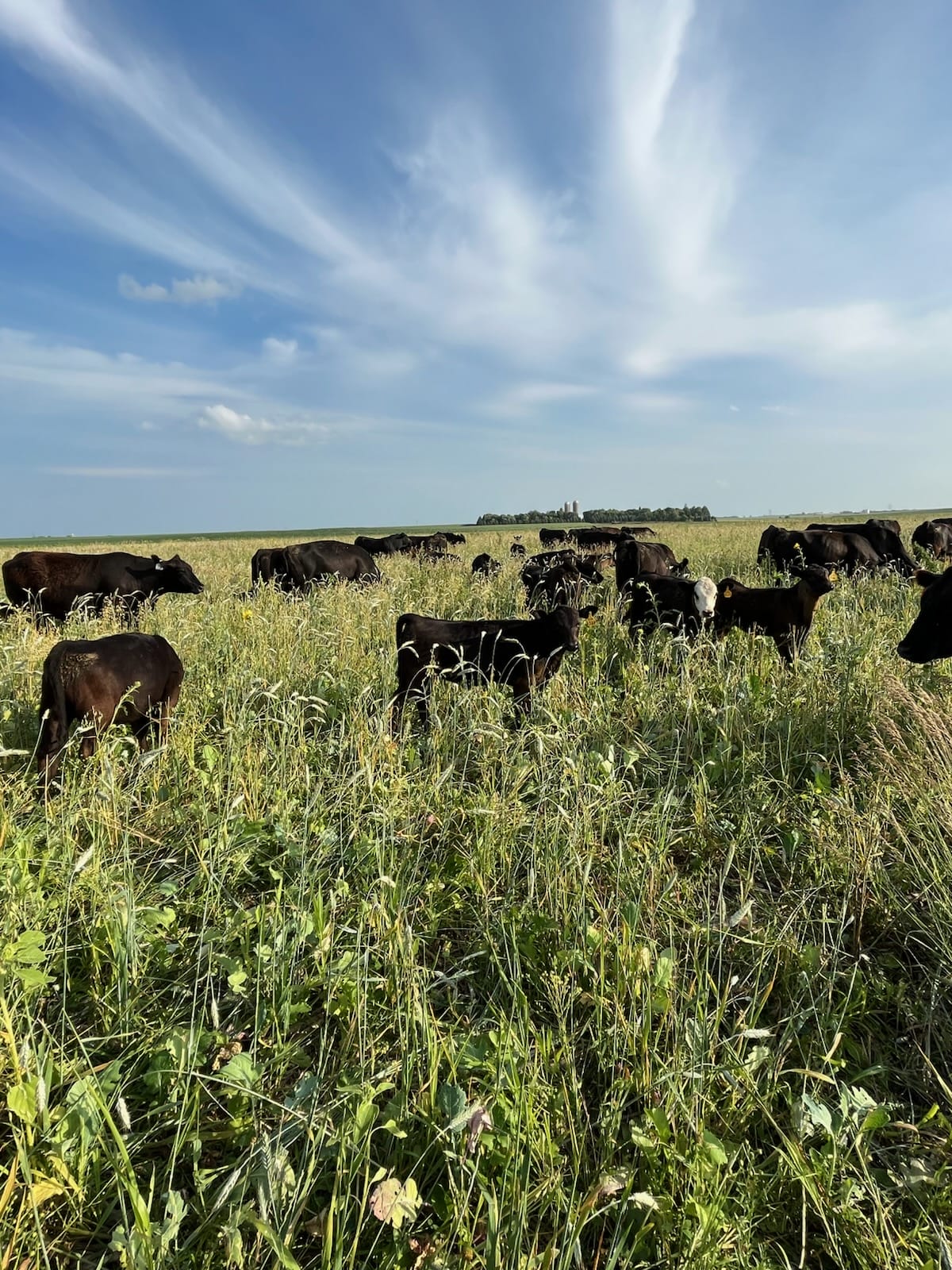
 View image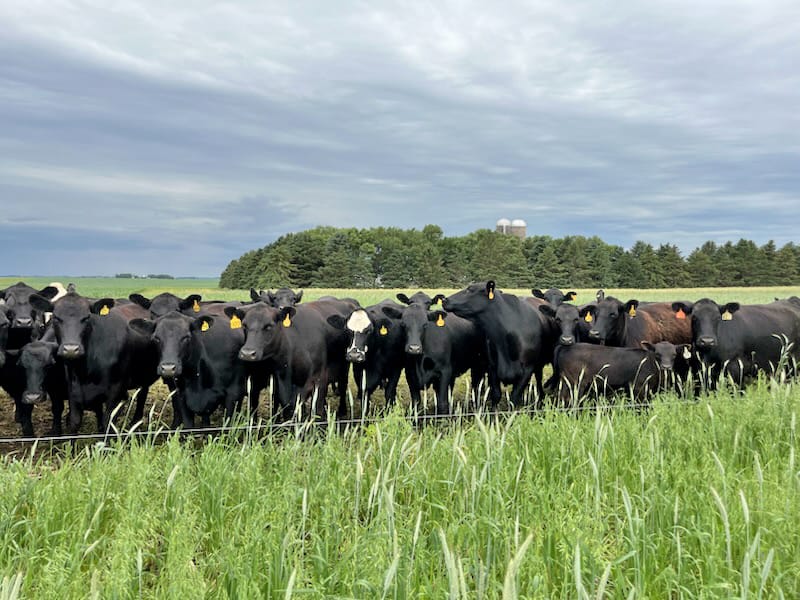
All photos except the field day image are courtesy of the Madisons.