Review of Amy Halloran’s “The New Bread Basket”
Reviewed by Vickie Renick
Reading Amy Halloran’s book “The New Bread Basket” felt like driving through the U.S. with fresh flour in the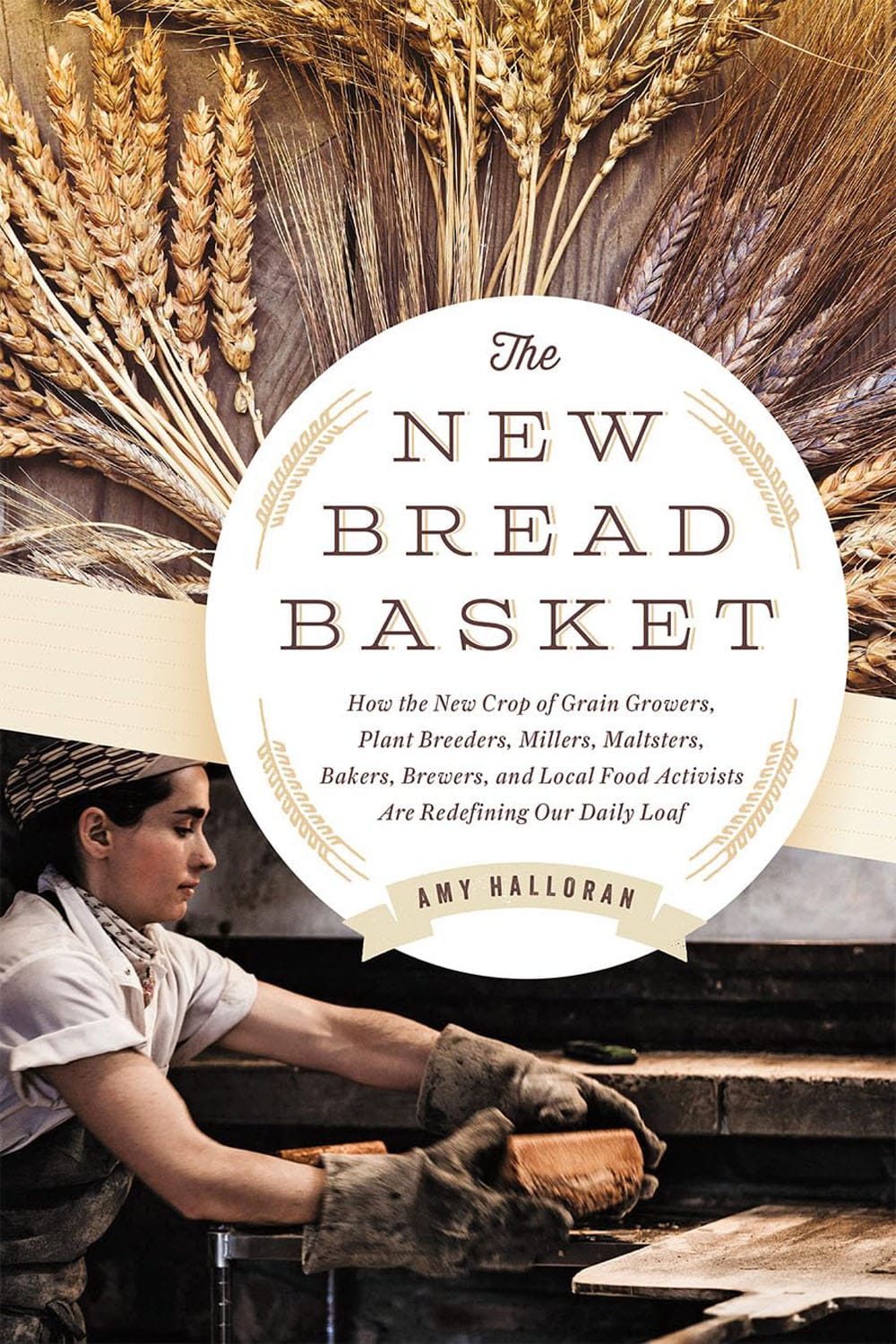 trunk and a bakery on the horizon.
Over the course of 13 chapters, the book, published in 2015, captures the revival of a regional grain-chain system just starting to evolve. Less familiar than (but similar to) the local foods movement, the grain-chain movement seeks to build and strengthen local and regional grain economies that connect farmers, millers, bakers, brewers and consumers. Throughout the book, Amy warmly and clearly spotlights farmers, bakers and brewers who are building the new grain chain, reshaping how we think about bread.
As a beginning small-grain farmer in the Midwest, I enjoyed seeing my journey reflected in the pages. Her coverage of the Maine Grains Kneading Conference, which I attended this year, highlighted the interconnectedness of growers, millers, bakers and activists working together to build a more resilient and transparent grain chain. The conference is held each July in Skowhegan, Maine – a lovely little city with a great grain company, Maine Grains, leading the way.
Amy devotes a chapter in the book to the owner of Maine Grains, Amber Lambke, who is doing stellar work building a viable grain system from the ground up. I see a lot of parallels between this and the grain movement in the Midwest. I’m aware of two mills in this region working on organic artisan grains (though there may be others) – Janie’s Mill in Ashkum, Illinois, and Meadowlark Farm & Mill in Ridgeway, Wisconsin. The book also highlights how far we still have to go in the Midwest to create stronger local grain chains.
For instance, Amy writes about some interesting connections in Oregon that are helping build the networks needed to distribute locally milled flour. The partnership between Camas Country Mill and Hummingbird Wholesale is one example. Hummingbird Wholesale helped launch the mill in 2011 (the first regional grain mill to operate in the Willamette Valley in 80 years), and coined the term “distributor-supported agriculture” to describe their approach to supporting regional food systems. The model is similar to community-supported agriculture, but with the distributor sharing in the financial risk. This is something I don’t see in the Midwest.
What stood out most for me in “The New Bread Basket” was the emphasis on quality – how value-added products made from fresh-milled flour used to make sourdough bread are an expression of place and care. This book shows how grains are not just commodities traded on exchanges by speculators who probably do not even take possession of the bushels they profit from, but also about the people building sustainable communities and adding true value to grains.
It’s clear there are still gaps in the local-grain processing system, and each region holds valuable information to put the puzzle together. It’s fun to read in Amy’s book about what each part of the country is up to in the local-grain movement. I believe we are all connected, and I like seeing the way local grains show those connections. Especially since they are edible! Amy’s book does a great job showing what’s going on and highlighting those connections.
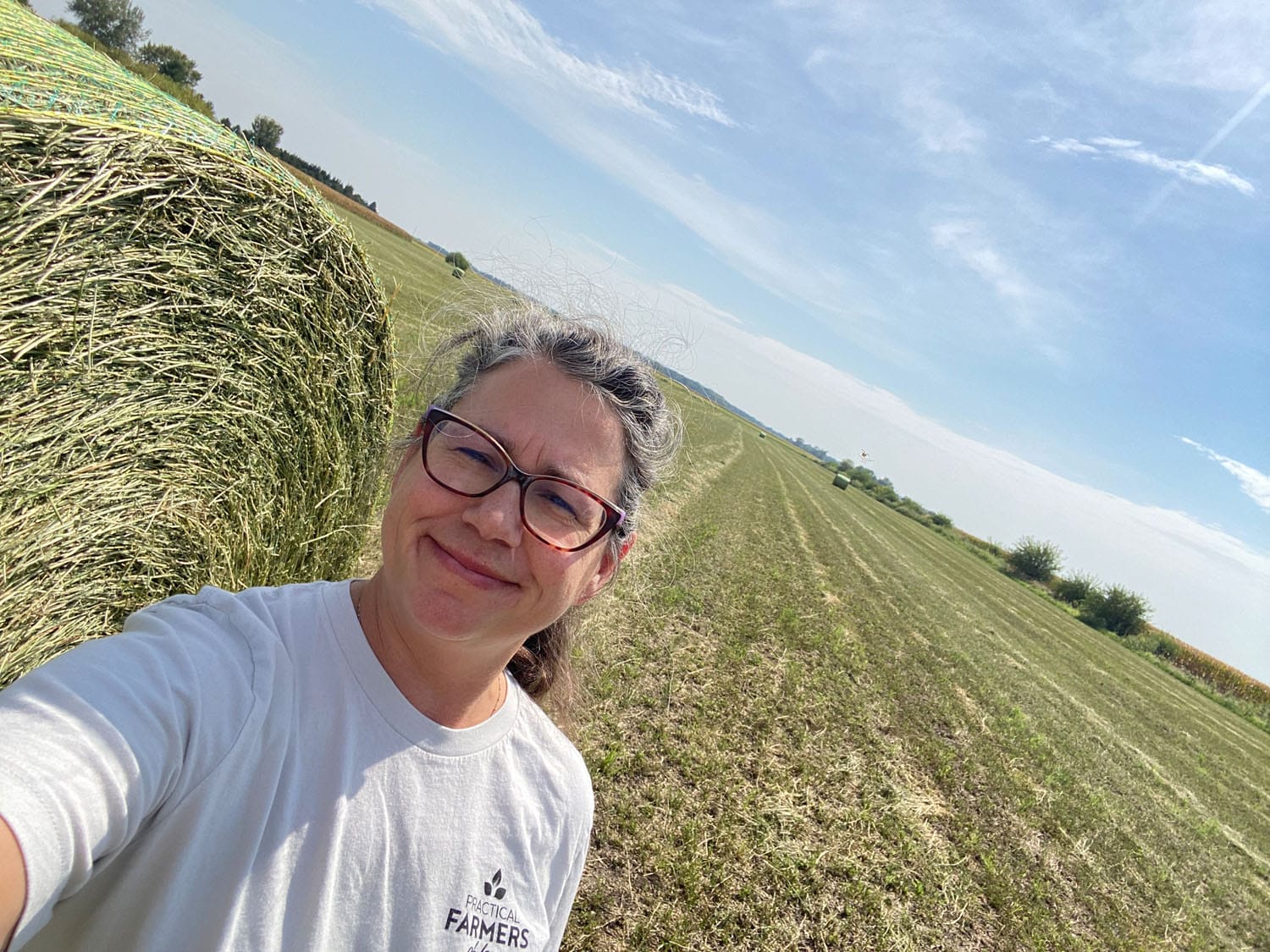 Vickie Renick is a beginning farmer in La Grange, Illinois, with a passion for food whose curiosity has led her to farming. She is currently transitioning 15 acres to organic. Her alfalfa is in Year 3 of the process, and slated for organic certification by the U.S. Department of Agriculture in 2026. In fall 2026, Vickie intends to plant a winter grain, including a legume, as
a field border. Her hope is to have nutritionally dense small grains for harvest in 2027.