
A Taste of the Tropical: Growing Ginger in the Midwest
With the aid of season extension, some farmers are growing ginger to push boundaries, expand palates and delight customers.
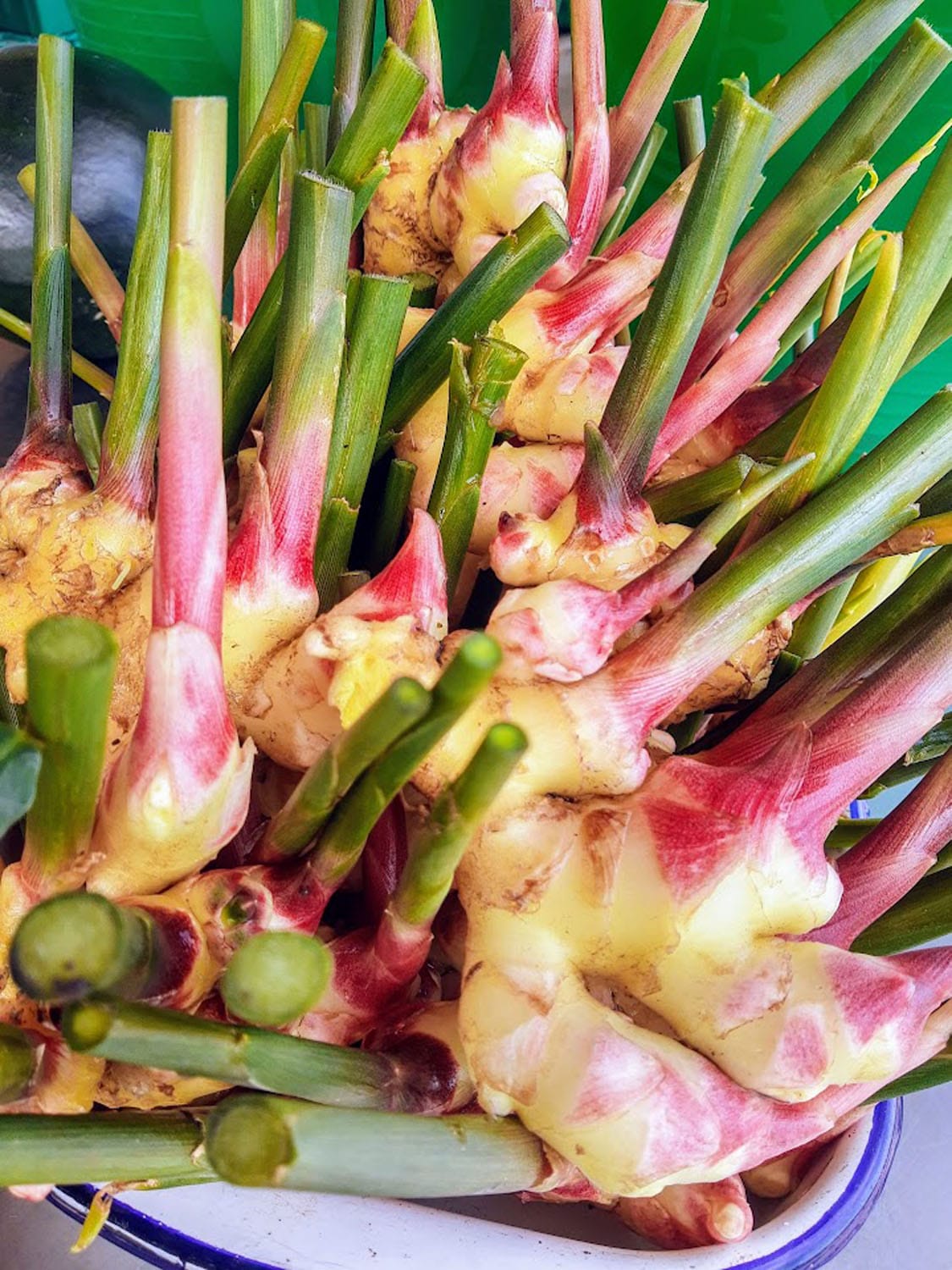
Ginger cut, cleaned and ready for customers.
From curries to cookies, soups to stir fries, beverages to bonbons, you know it when you taste it: the warm, fragrant zing of ginger, with its peppery kick alongside notes of citrus. This beloved rhizome is the underground stem of Zingiber officinale, a tropical plant native to Southeast Asia that’s been cultivated for thousands of years for its pungent yellow flesh.
Highly prized for both its culinary and medicinal uses – which range from digestive and immune support to pain-relieving and anti-inflammatory properties – ginger was eagerly embraced as it made its way around the ancient world along trade routes. For medieval Europeans, ginger’s appeal was rivalled only by other costly spices like pepper, saffron and cloves. Their zeal for exotic spices fueled voyages of exploration and conquest that profoundly shaped the course of history.
Today, ginger remains one of the most popular spices in the world. As a tropical plant, ginger thrives in humid, warm climates. India, Nigeria and China are currently the top three ginger-producing countries.
But on some vegetable farms across Iowa and the region, you can find the waxy, bright green leaves of this reedy crop growing next to rows of trellised tomatoes and cucumbers.
By testing ways to grow ginger in a four-season climate, these farmers are expanding local-food options and pushing the boundaries about what kinds of crops Midwestern farmers can successfully raise.
“I want to challenge what you can grow in Iowa a little bit, and also challenge people’s palates,” says Kate Solko of Root to Rise farm in Ames, Iowa.
She grows a range of less common crops and varieties on her 5-acre farm and has been growing ginger for the past five years. So far, Kate has found the crop to be a rewarding challenge.
A Unique Midwestern Crop
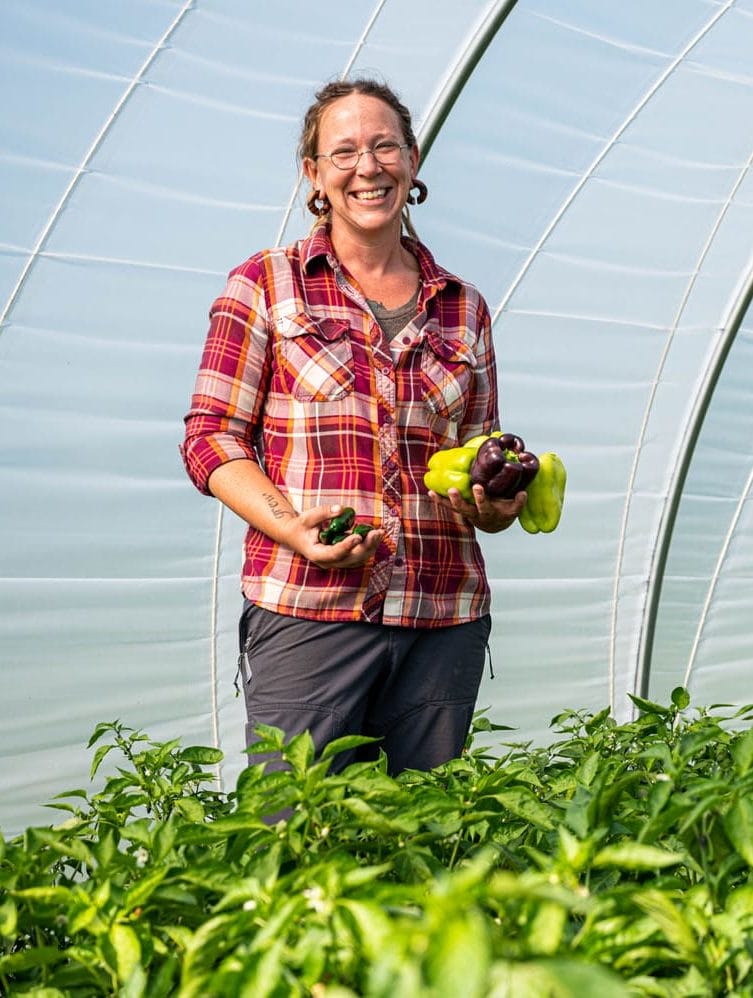
Kate Solko
Kate’s venture started with an intern, curious to take what he had learned about growing ginger at his university and put it into practice. That first ginger crop was successful, and Root to Rise quickly found that it fit their market niche.
Because ginger isn’t commonly raised in Iowa, there’s no standard playbook for growing it here. While Iowa’s growing season may seem long and humid in the midst of July, ginger needs several months of sustained humidity to mature. So Kate and her team have developed their own protocols, refining a set of practices that work well for them.
Beginning in mid-February they buy organic ginger and cut it into small pieces, about 1 inch to 1½ inches in size, which they plant into pots. Eventually, these pieces will sprout into individual ginger plants. Once potted, Kate and her team place the plants on heat mats indoors set to around 90 degrees Fahrenheit. Throughout the late winter and spring, they keep the sprouting ginger warm and moist to mimic its natural environment.
When it’s warm enough outside, typically in June, the team transplants the young ginger into caterpillar tunnels where the plants live until they’re harvested. Kate points out that consistent moisture is needed in the tunnels to ensure a good harvest.
Kate predominately sells her ginger at the Ames Main Street Farmer’s Market. The unique crop, she says, draws people to her stall. The rest she sells to Alluvial Brewing in Ames, which uses the ginger in its ginger beer, Root to Rhizome – a name that pays homage to the brew’s key ingredient and its farm of origin.
Ginger also plays a soil health role on Kate’s farm. She uses the caterpillar tunnel to grow ginger and other tropical crops, like lemongrass. This “tropical tunnel,” as she calls it, is part of a three-year crop rotation that helps break up the planting cycle and reduces disease pressure between solanaceous crops, like tomatoes, peppers and potatoes, and cucurbit crops like melons, cucumbers and squash.
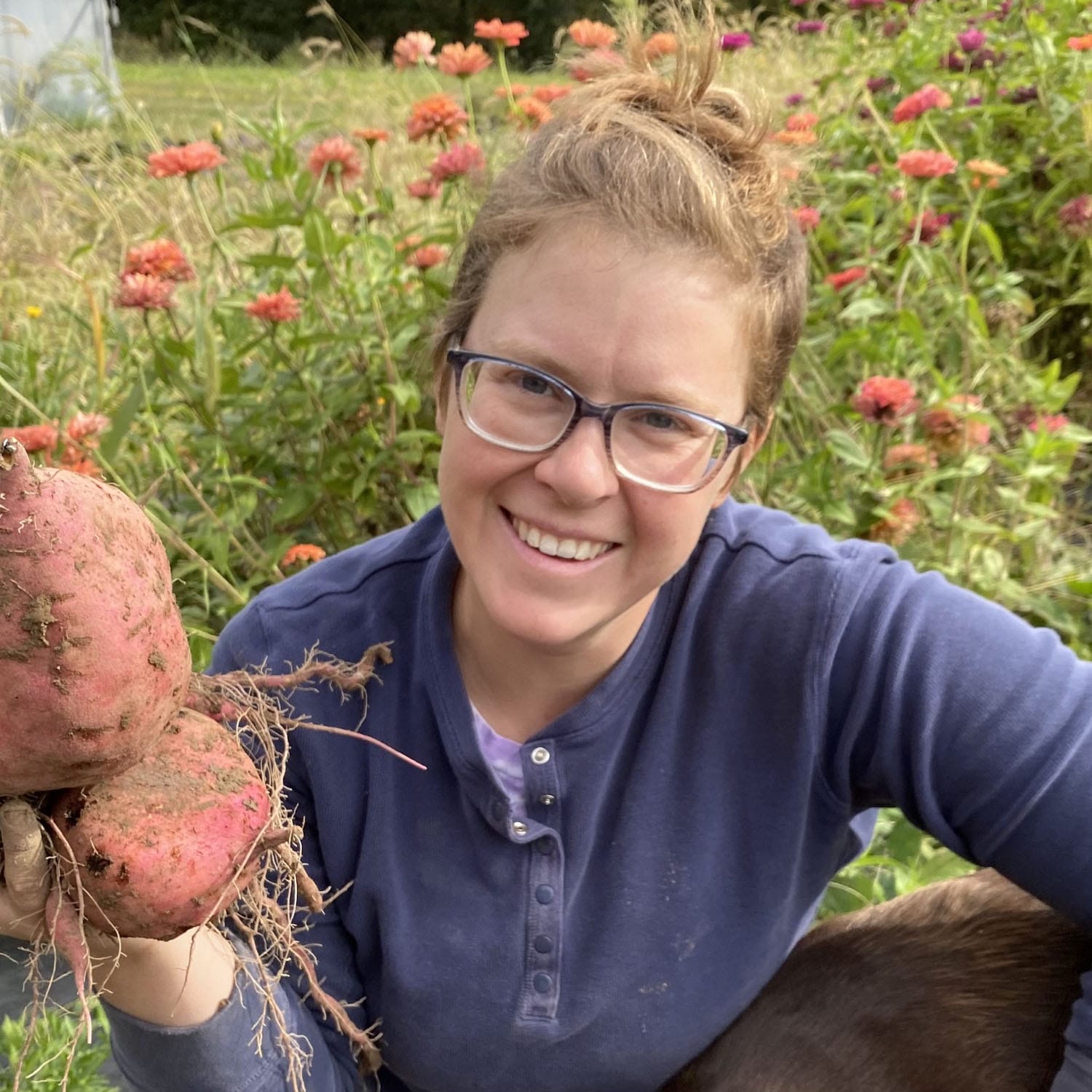
Nicki Morgan
Other PFI members also have ginger as part of their plant repertoire. Nicki Morgan, who uses the pronoun they, grew ginger at HartBeet Farm near Eolia, Missouri, until taking a break from farming in 2022.
In 2025, Nicki moved to a new farm, HartWood, in Riverside, Iowa. Like Kate, Nicki found ginger delighted customers and drew more people to their booth at the local farmers market.
“I also think that once people realized we had it, there was a lot of demand for it,” Nicki says. But they add that customers needed education on how to store and use young ginger. “When you’re harvesting it [younger], it’s not cured and it doesn’t have that thick skin on it. So it needs to be stored in a refrigerator instead of just on the counter or it’ll dry out too fast.”
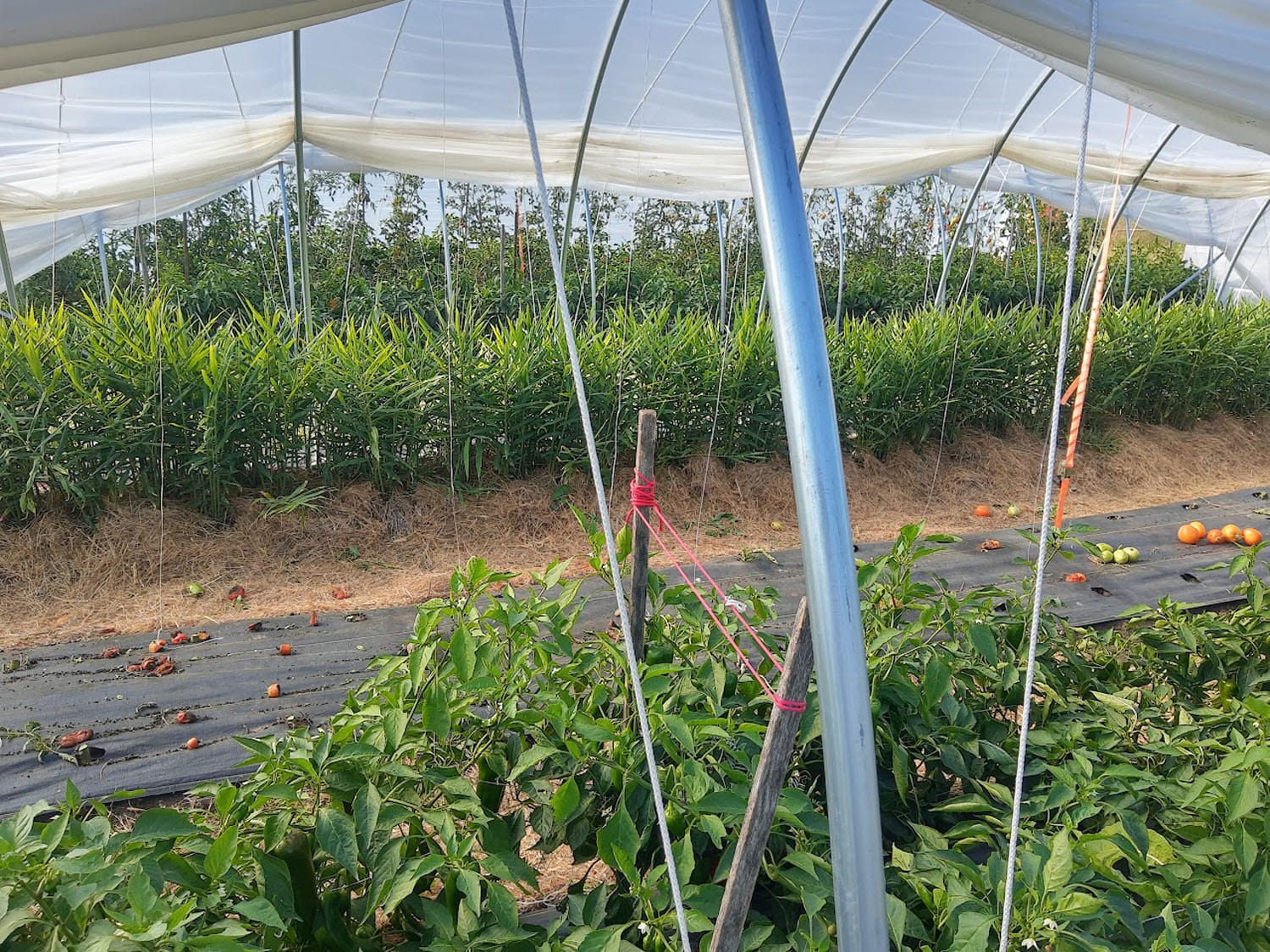
Ginger growing at Nicki Morgan’s previous farm in Missouri.
This is a key difference from the mature ginger typically sold at grocery stores. In its natural habitat, ginger typically takes eight months to a year to fully mature. In Iowa and the Midwest, the growing season for ginger is much shorter, leading to it being harvested when the plant is much younger.
For this and other logistical reasons, ginger grown in the region is known as “baby ginger.” This just means it’s younger ginger that hasn’t been cured, or dried, and thus lacks the tougher skin of mature ginger. On the flip side, young ginger is milder, more tender and a bit sweeter than mature ginger. Because the skin is more delicate, baby ginger has a shorter shelf life. But Kate says it freezes well, and she often grates it directly from frozen for cooking.
A Warming Spice for Frosty Climes
Like Kate, Carmen and Maja Black of Sundog Farm also grow ginger in a tunnel on their farm near Solon, Iowa, starting the plants in their home or in a greenhouse. They use a high tunnel, which is a more permanent structure, whereas the caterpillar tunnel Kate uses has a simpler design that lacks some of the hardware that adds durability to high tunnels.
But while Kate purchases organic ginger from the store to start her ginger plants, Carmen prefers to import disease-tested rhizomes from Hawaii. Since Sundog Farm’s high tunnel is used to grow tropical plants year after year (she also grows turmeric, which is similar to ginger), Carmen says having disease-free plants is more important for long-term crop viability. Carmen learned these ginger-growing practices from longtime PFI member (and past board president) Ann Franzenberg, who raises a diverse mix of crops at Pheasant Run Farm near Van Horne, Iowa.
Carmen and Maja market directly to customers through their community-supported agriculture enterprise, Local Harvest CSA. The first year they started growing ginger, in 2022, Carmen says members were surprised to see it in their CSA shares. Unsure the ginger experiment would be successful, Carmen and Maja had kept it a secret. But their first harvest was a success, and customers enjoyed it. Now, customers look forward to ginger in their fall CSA shares, Carmen says. “If you give it the week after the first frost, people want warming ginger and medicinal turmeric. It’s been a real delight to the customers.”
Presentation-wise, Carmen and Maja do something different with the ginger in their CSA. Whenever possible, they provide the ginger rhizomes with the leaves still attached. “We encourage people to try eating the leaves,” Carmen says. “They have a completely different smell and flavor.”
She describes the leaves as having a milder peppery flavor, reminiscent of the rhizome but less intense. They can be eaten fresh as a garnish or used in cooking as added flavoring – yet another way these farmers are subtly expanding customers’ local-food horizons.
All ginger photos courtesy of Nicki Morgan.
Learn More
In 2020, a few PFI members took part in an on-farm research project – “Ginger Variety Trial in Cover and Uncovered Beds” – comparing ginger varieties and growing methods.