| Farmer | Planting method and acres covered | Cover crop and rate | Cover crop planting dates | Main goals for planting cover crops |
| Dan Gengler, Remsen, Iowa | No-till drill on 130 acres; Fertilizer spreader on 30 acres | Cereal rye at 56 pounds per acre | Oct. 12-14 | Protect soil from water erosion, improve soil health and weed control |
| Steve Nelson, Cannon Falls, Minnesota | Broadcast seeder; 90 acres | Cereal rye at 92.2 pounds per acre | Sept. 29 | Improve soil health: Aerating the soil, building organic matter and benefits to soil microorganisms |
| Brad Steege, Fredericksburg, Iowa | Unverferth cover crop seeder with rolling harrow; 520 acres | Cereal rye at 54 pounds per acre | Oct. 1-15 | Protect soil from wind and water erosion |
Dan Gengler: No-till drill
Dan Gengler farms corn and soybeans and has planted cover crops for 15 years. He first planted them on low ground and along waterways and creeks with an old John Deere Van Brunt grain drill. In the spring, Dan will terminate the covers in those fields going to corn prior to planting. For his soybean fields, he will plant into the cover crops while they are still green and then terminate the covers post plant. Dan noted he has good germination on cover crops spread on corn stubble, but not soybean stubble. He uses both methods, drilling and spreading, to research which method works best in his fields. This year he began planting cover crops on Oct. 12 and was done planting by Oct. 14.Steve Nelson: Broadcast seeder
Steve Nelson has planted cover crops for five years. The field he cover cropped with cereal rye this fall will be planted to corn next spring. He broadcasts the seed because it's faster and cheaper than other methods and he gets good results. He used a no-till drill in the past but will stick with broadcast seeding because of the lower cost. Steve has previously planted radish and turnips but stopped after he realized there was a low likelihood of germination if they were planted after Oct 1. He has also planted clover in the past but found it harder to terminate than rye. He planted his cover crops on Sept. 29.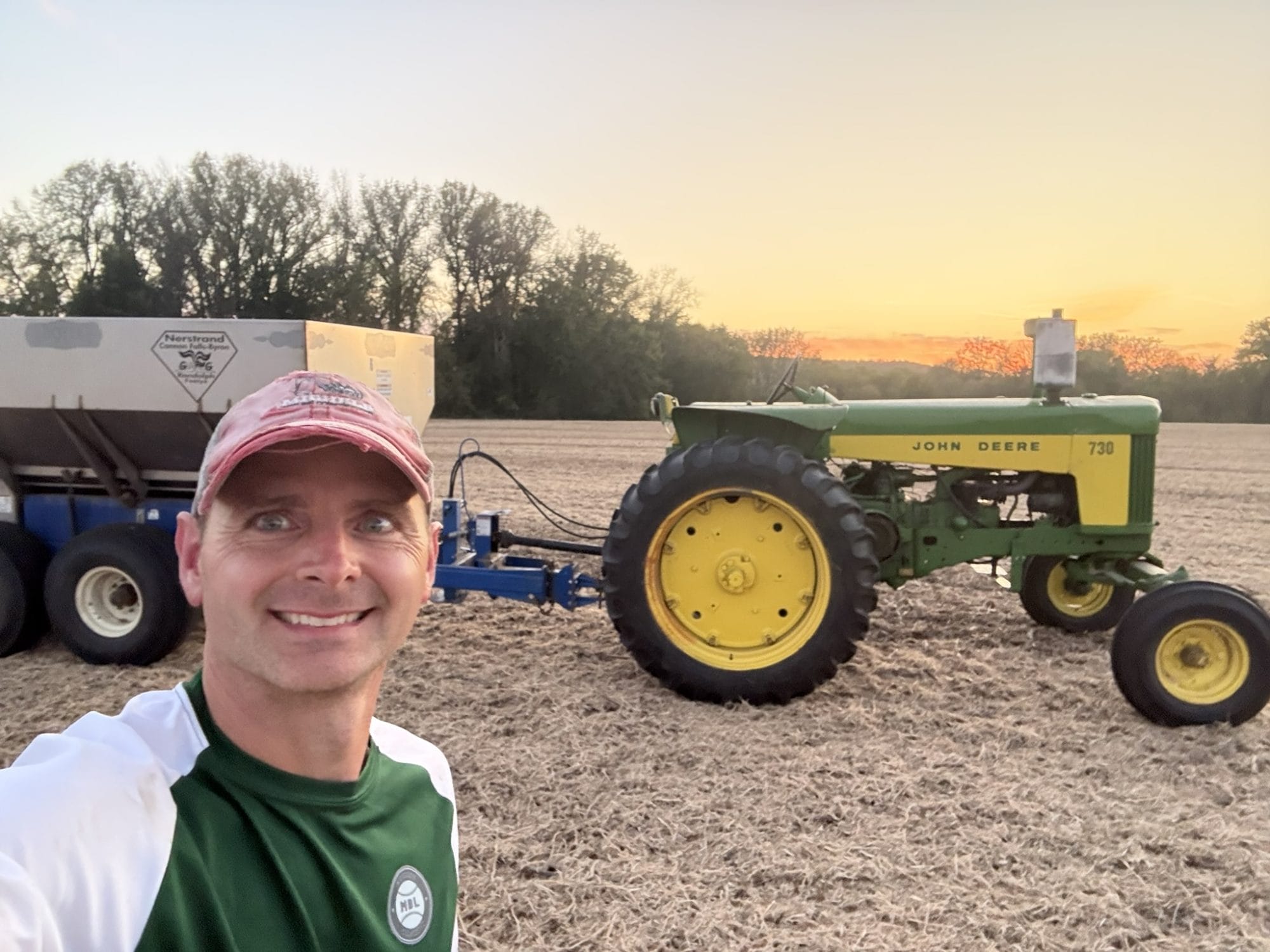
Brad Steege: Air seeder
Brad Steege has planted cover crops for eight years and his fields are in a corn-soybean rotation. After he plants cover crops with his air seeder, he will strip till his fields. This creates a dark strip for him to plant into in the spring when the rest of the field is green with cover crops. Brad says the organic matter in his fields has gone up and the fields have a higher water infiltration rate since planting cover crops. He has always used his air seeder to plant cover crops and is happy with the results. Brad started planting cover crops this year on Oct. 1 and ended on Oct. 15.