Farmers across Iowa are growing a range of leafy greens to provide their communities with healthy food – and a taste of home
When Chie Fred Awumah left home – the village of Kedjom Ketinguh in northwest Cameroon – for study and work abroad, he never expected to find njama njama, a leafy green native to the region that he grew up eating.
“My village is known for its njama njama production,” Awumah says. Through his travels, first living in Dubai and then in Germany, he never saw the plant.
That changed unexpectedly in 2017, when Awumah arrived in Des Moines to begin a new job with Corteva Agriscience in nearby Johnston. A friend took him to the Downtown Farmers’ Market, and to his surprise, he found njama njama.
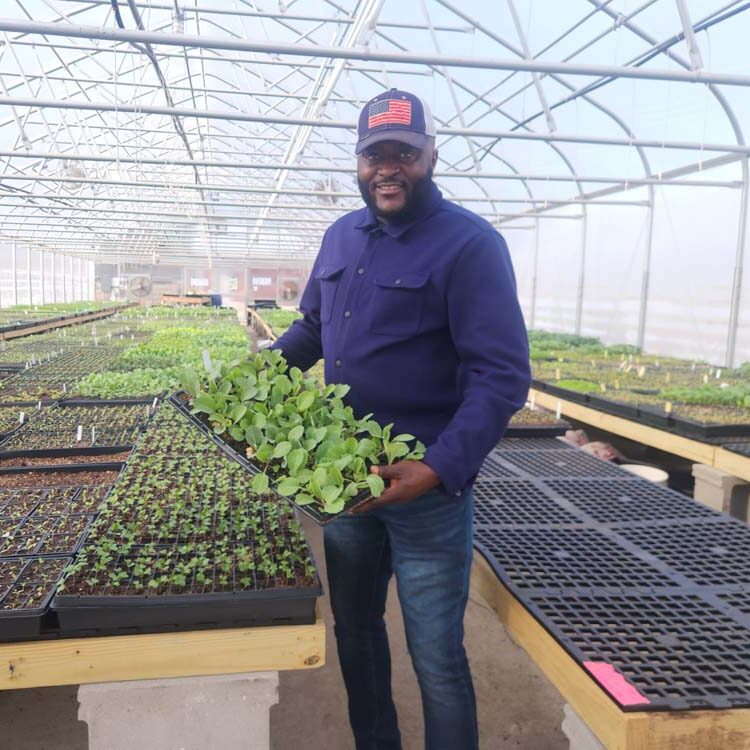
“I was shocked,” he says. He was staying in a hotel at the time and had no way to cook the plant. But he used the opportunity to start building his community and got the name and number of the grower.
African Greens in Iowa
Now, almost a decade later, Awumah is the one providing African leafy greens to his community. In 2023, he started his farm business, AGCRUNCH LLC, growing specialty vegetables along with culturally relevant crops from across the African continent.
His goal is to bring a little taste of home to the community he has cultivated in central Iowa. Many of these are greens Awumah once thought were uncommon outside of West Africa – including waterleaf, bitter leaf and njama njama, the three staple leafy greens he grows.
That term, “leafy greens,” refers informally to any plant eaten specifically for its leaves. Around the world, people are eating all sorts of leaves in all sorts of ways as part of a balanced diet. Many of these plants are highly nutritious.
Across Iowa, farmers are growing a variety of these dietary mainstays, from the well-known lettuces, kales and arugulas to lesser-known greens that are quietly feeding communities around the state while offering something just as important as nutrition: a taste of home.
For Awumah, encountering njama njama in Des Moines was the start of a process of discovery. Over the years, he’s been learning new names for the leafy greens he grew up with, along with new markets.
Njama njama, also known as garden huckleberry, is a member of the nightshade family like tomatoes and eggplants (hence another of its names, African nightshade). But instead of growing it for its fruit, njama njama is cultivated for its leaves, which are bitter until cooked. In Cameroon, njama njama leaves are traditionally paired with fufu corn, a dough-like side dish, or other starches.
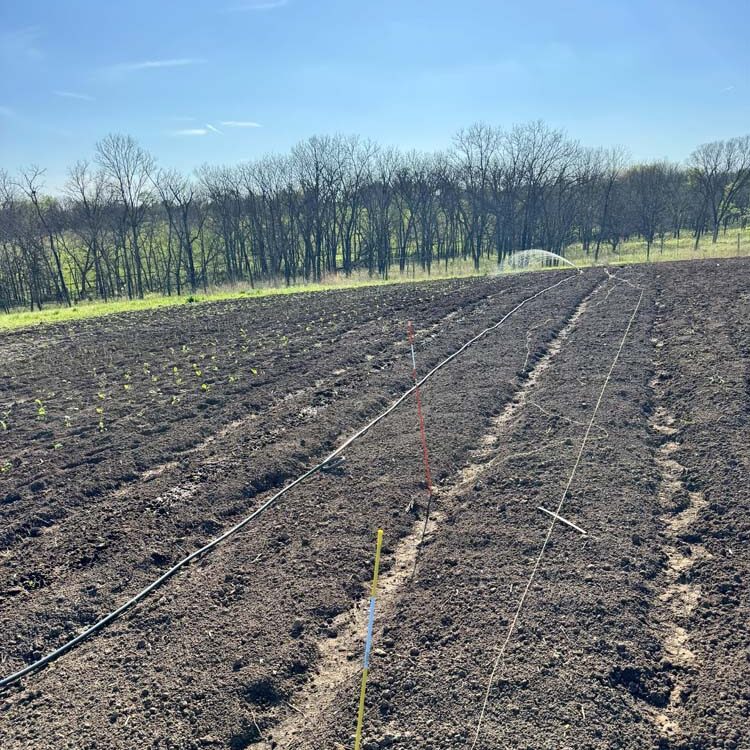
As a tropical plant, njama njama, grows well in Iowa’s hot and humid summers. “In Iowa, the crop has a compressed growth cycle, starting slowly in spring, growing quickly in summer and ending with the first fall frost,” Awumah says. It also typically requires irrigation and soil amendments in Iowa, he says. But if weeds are controlled early in the growing season, it’s relatively easy to grow.
For Awumah, the biggest challenge is getting good seeds each year and finding space to grow more. He says he enjoys growing food for his community and hopes he “can expand my market to include more Iowans.”
Currently, Awumah sells his produce at the farmers market and is happy to share recipes and educate people who may not be familiar with his offerings. He encourages people to give these plants a try and is currently looking for ways to work with local chefs. His vision is to create unique African-Iowan dishes that can introduce more people to the flavors of his homeland.
Cabbage: An Unexpected Leaf
At Scattergood Friends School near West Branch, Iowa, farm manager Mark Quee oversees the entire spectrum of food production for the school – including ensuring that students eat their greens throughout the year.
One of those plants is cabbage, a large group of plants in the brassica family, which also includes broccoli, kale and many other leafy greens. While many types of cabbage are grown across the world, the forms commonly found in the U.S. include red, green and savoy, which can all come in a range of varieties. Some Chinese cabbages, a closely related species that includes napa cabbage and bok choy, are also widely available here.

While it may not be the first plant we picture when thinking of leafy greens, cabbages are essentially clusters of leaves that grow as heads or on stalks. Mark grows multiple cabbage varieties throughout the year – some outdoors in the summer, others in high tunnels through the winter. “It’s a nice proletariat vegetable,” Mark says. “There’s nothing flashy about it.”
Some cabbage varieties, particularly red and green varieties that form a tight head, store well. In late March, the school’s chefs are still pulling cabbage harvested in the fall out of their walk-in coolers. Meanwhile, Mark tends to napa cabbage in a high tunnel, which protects it from low outdoor temperatures and wind; he harvests these near the end of April. Mark advises would-be cabbage growers to look for varieties resistant to black rot – especially if you plan to grow them with other brassicas – and use fertile soil.
Southern Greens
In Waterloo, Iowa, Shaffer Ridgeway has been growing vegetables since 2019 at Southern Goods Farm. As the name suggests, his focus is on Southern produce. He grows the things he grew up eating on his family’s farm in Alabama, including purple hull peas, mustard greens, turnip greens and collard greens alongside other crops like tomatoes and cucumbers.
Collard greens are a staple of Southern cooking. Known for their dark green leaves and high nutritional value (they’re an excellent source of vitamins A, C and K), they are typically boiled or sautéed until soft. Shaffer’s favorite way to cook them of late is by sautéing them in bacon grease.
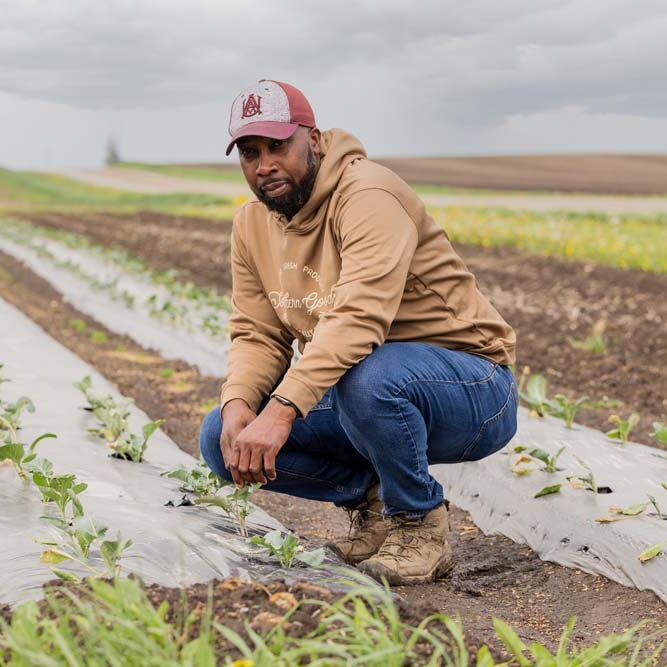
“Most of the people that I knew growing up overcooked them,” says Shaffer, who also serves on PFI’s board of directors. “Part of the challenge now is trying to get people to not overcook them, to realize that we need those vitamins.” He grows collard greens outdoors and sells them all season long. They’re relatively easy to maintain, he adds, though as with many leafy vegetables he often battles flea beetles.
Black and African American residents make up around 17% of Waterloo’s population, according to 2024 data from the U.S. Census Bureau’s American Community Survey – the highest percentage of any community in Iowa. For Shaffer, this means he’s never had trouble finding a market for his produce.
“I still deal with a lot of people who grew up in Mississippi, and so they grew up eating collard greens and purple hull peas,” he says. “When they see us have them, they’re like, ‘What? I can’t believe that somebody in Waterloo has these. I’ve been looking for some of these.’ That is a great feeling.”
He sells produce at his local farmers markets, as well as wholesale. One of those accounts is the local food bank. A couple of years ago, Shaffer delivered 300 pounds of greens there each week. He learned they were running out of his greens within two days – a disclosure that shocked him and stirred mixed feelings.
“That means we have a lot of hungry people in our community, a lot of people using those services,” Shaffer says. “But it also made me feel good to know that those people were getting some high-quality fruits and vegetables.”
PFI's Savings Incentive Program
In 2025, Awumah joined PFI’s Savings Incentive Program as part of the Class of 2026. The two-year program offers mentorship, business support from PFI staff and a dollar-for-dollar savings match up to $4,000 after successfully finishing the program. Participants make valuable connections with other farmers that can help them further nurture their farm’s growth.
Awumah says he wanted to join SIP for the financial support and mentorship – and to access “resources and guidance needed to improve my farming practices and expand my market reach.”
To learn more about SIP, contact Amber Mohr at (515) 232-5661 or gro.sremraflacitcarp@rhom.rebma.