Shanen Ebersole helped transform her farm’s future by investing in herself
The gavel at the auction rang out three times and the direction of Shanen Ebersole’s life changed.
It was 2006, and Shanen sat alone in the sale barn gripped by anxiety, trying to calculate if the cattle she’d raised from birth had brought enough to cover the payments on the house and farm.
It was the first time she’d been to the sale barn herself, and she didn’t know all the rules. Her Maine-Anjou cattle were separated into two groups that day: those who were all black, and those that had white markings on their flanks.
The first group sold for full price, but the second group were labeled as Holstiens and sold for half what their siblings did. Because premium prices at the sale barn are based on Black Angus cattle, niche breeds like Maine-Anjou can be misunderstood, mislabeled and underpriced.
“I didn’t know that you could say, ’No sale, we’ll take them home if you’re going to devalue them.’ That’s when I started deciding there’s got to be a way to do it differently,” Shanen says. “I just wanted to control my destiny a little bit more. I felt as though I had absolutely no control. None.”
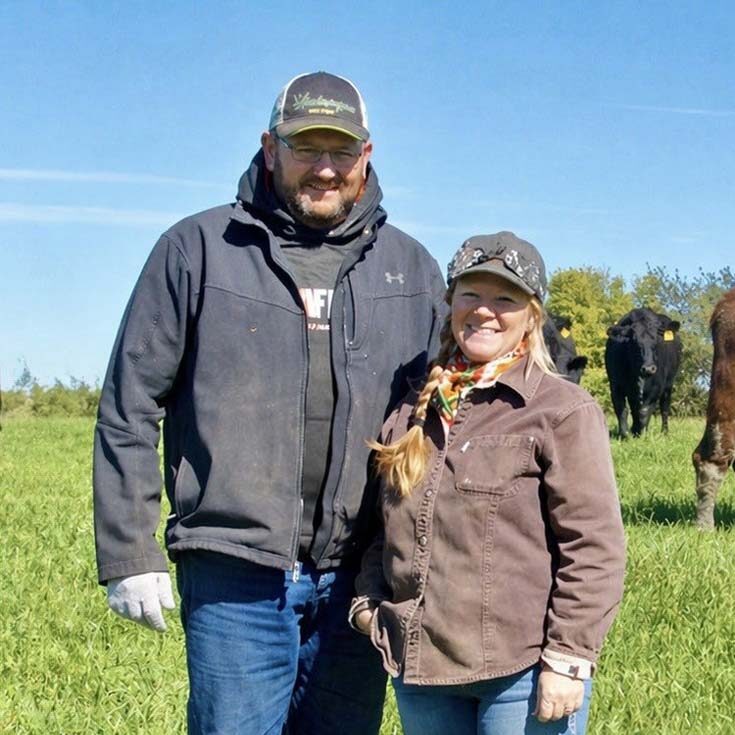
That’s how the story starts. But it’s not how it ends. Today, Shanen and her family – including her husband, Beau, and their three children – raise pastured and grass-fed beef at Ebersole Cattle Company, her family’s farm nestled amidst the rolling hills outside Kellerton, Iowa.
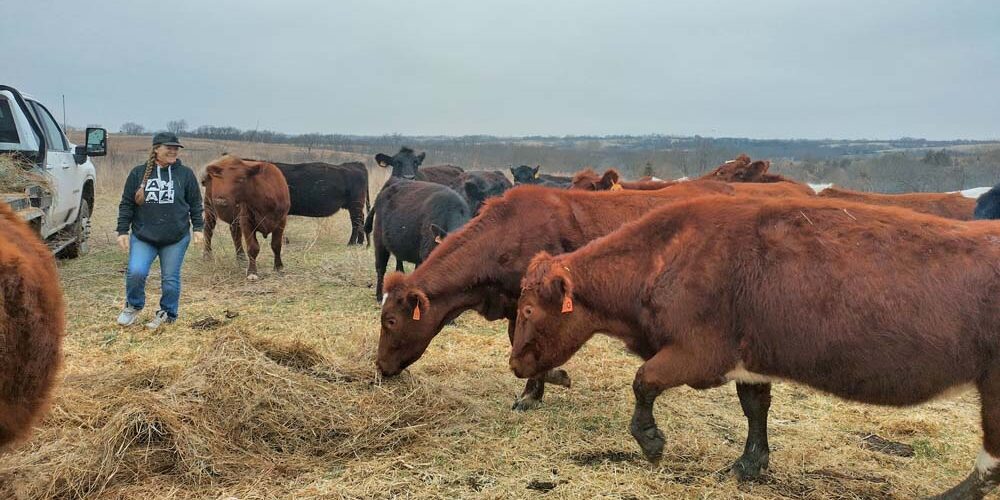
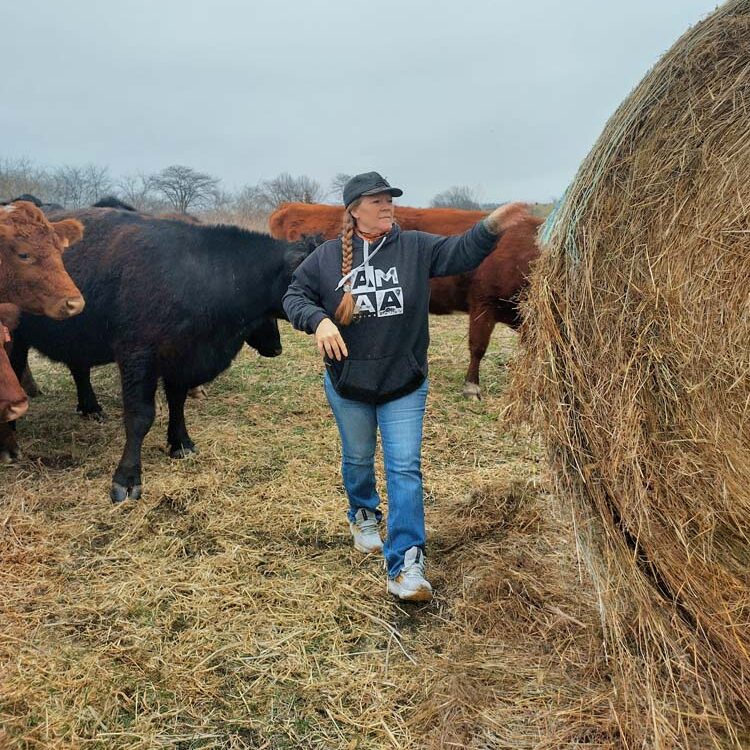
On a recent spring day, Shanen sat in her truck gazing out at the fields as gray rain slowly fell. Cattle meandered across the pasture to meet her for the promise of new, unrolled bales of hay. As she watched, her phone dinged in a steady stream of notifications. It was subscription renewal day for her customers.
“All my basic bills are paid because of today,” Shanen says. “That’s peace. It’s allowing me to drive out and just look at my cows, just sit and breathe in that thankfulness and know that I am taken care of.
Discovery
Shanen’s journey from sale barn anguish to rainy day contentment hinged, she says, on investing in herself through education. “In the beginning, it was free field days and seminars because that’s what I could afford at the time.” It was at a PFI annual conference where she started to learn more about grass-fed beef, direct marketing and the importance of knowing her numbers.
“One of the biggest things I learned was from [longtime PFI farmer] Tom Cory. He says that sustainability has to include financial sustainability,” Shanen says. “All the marketing in the world doesn’t do any good if you don’t have a good-enough profit margin.”
In 2020, the coronavirus pandemic boosted demand for local food. Shanen happily leaned into that increase. But she also knew she couldn’t rest on this unexpected boost. “I saw that after this bump there was going to be a downhill slide. So, I decided I need to learn more about marketing.”
Shanen took an online course from a farm business consulting company called Farm Rebel. She learned that she needed to really “know” her customer. That meant figuring out what her ideal customer would be like based on a blend of her best existing customers. Shanen gave this imaginary person the nickname “Healing Yourself Kathy.” From Shanen’s experience, this Kathy is concerned with what goes into her food and how it was raised.
Now, when working on content for marketing, Shanen envisions speaking directly to Kathy. “Now it’s kind of second nature, because I know who she is. But starting out, I had to actively think: ‘Who is she? How am I helping her? What problems am I solving for her?’”
Connecting
Finding ways to reach and connect with more potential “Kathys” posed the next learning opportunity. Driving traffic to the farm’s website is one way to connect with a target audience. But it takes a consistent and multipronged approach. “It’s not a build-it-and-they-will-come thing,” Shanen says. She decided to start by posting on social media, doing “tons and tons and tons of organic posts.”
Shanen made a rule for herself that every time she opened Facebook, TikTok or any other social media app, she had to make a new post for Ebersole Cattle Company before she let herself scroll. The posts don’t have to be homeruns every time, Shanen is quick to say. “Done is better than perfect. Do it crappy. You’ve got to at least do it crappy, because then the next time you’ll do it a little better, or you’ll at least learn something.”
Eventually, Shanen learned that she loves to write newsletter emails because it’s where she can let her storytelling voice loose. But even in a medium she’s comfortable in, she’s surprised with which posts resonate most. One email that led to the most sales was a “raw, horrible, crying post” about the grief of losing a calf, then sitting beside and tending to the mother cow in the aftermath.
“I thought it was a bad email about a bad day,” Shanen says. But the honesty reinforced people’s idea of Shanen as someone they can trust to care deeply for her animals and the quality of life they live.
Being honest is central to how Shanen tells stories and builds her farm’s brand. “In an AI [artificial intelligence] world, people want authenticity right now. So just be you,” Shanen says. “If you’re marketing and pretending to be someone else, it’s not going to come across as genuine.” She’s found that if she tries too hard to develop a script, it comes across as “salesy.” But if she just imagines speaking directly to her “Kathy,” then the words flow more naturally.
Showing your customers who you are is vital when direct-marketing, Shanen says. This transparency is what distinguishes her from a grocery store.
“People aren’t buying beef. They’re buying my ranch,” she says. “They’re buying my story, my details, because they believe in the story.”
Failure to make this distinction can lead to low sales, Shanen says. “The reason you’re not selling is because customers don’t see you as any different than a grocery store. You need a face, you need a name, you need a story.”
It’s clear that Shanen’s story resonates with people. Her sales have continued to rise since the pandemic surge. She likes to frame her success by the number of families fed. Last she counted, it was 480.
Shanen currently sells more beef than she can raise on the farm – which is why she’s working with partners to develop Beefmaps.com. It’s a website that maps and links to farms across the globe that sell directly to consumers. And her email list has risen to 25,000 subscribers.
Growing
For Shanen, arriving at this success with marketing grew out of her efforts to find a new path for her farm. Along the way, she discovered she enjoys telling her farm’s story. But Shanen recognizes that not everyone thrives in marketing. She offers a couple of thoughts that might help. “We get into this business because we like farming, we like feeding people,” Shanen says. “But none of that happens if we don’t market ourselves.”
She points out that not all marketing is easy for her either, and there are still elements she doesn’t enjoy. But she tries to lean into those difficulties. Her current challenge is to learn to use the Facebook ads system. As she grapples with it, she reminds herself that it’s important to her bigger goal. “We don’t get to do what we love,” she says, “if we don’t do the marketing work that needs to be done.”
Shanen also says that it’s okay to work with outside help to get your marketing system off the ground. She recommends finding people and resources that can make the process easier – and investing in them. Working with marketing experts is an opportunity to learn and improve your own skills at the same time.
Finally, be creative. Marketing comes in many forms, Shanen says. She regularly speaks in front of community groups, educating them about farming and healthy eating.
She also donates meat and eggs to community fridges and offers customers the chance to contribute. This kind of personal engagement with the local community builds networks and counts as marketing. And it fits seamlessly into Shanen’s philosophy. “I believe marketing is nothing less than serving my customers,” she says.
So where does Shanen’s farm story end? There’s no way to know. For now, it’s still going and growing. There’s always work to be done on the farm, and there’s always marketing to be done to keep the farm going. But Shanen embraces the work for these moments on a rainy day – when she can just sit and watch the cows. “This is my happy place.”