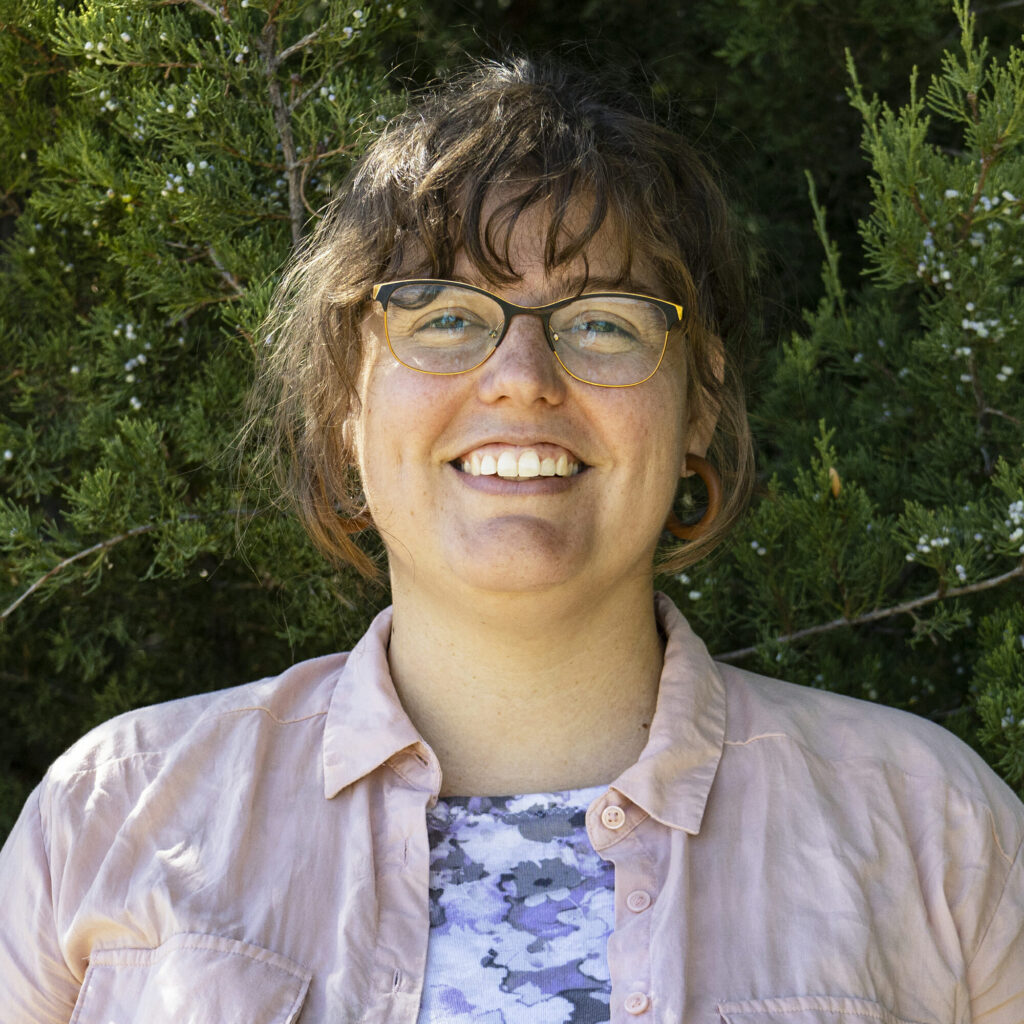
Through her farm, Esta Minani is building community while connecting to her culture
Esta Minani was born in the east-central African country of Burundi and started her farming journey after her family fled to a refugee camp in Congo when she was 6 years old.
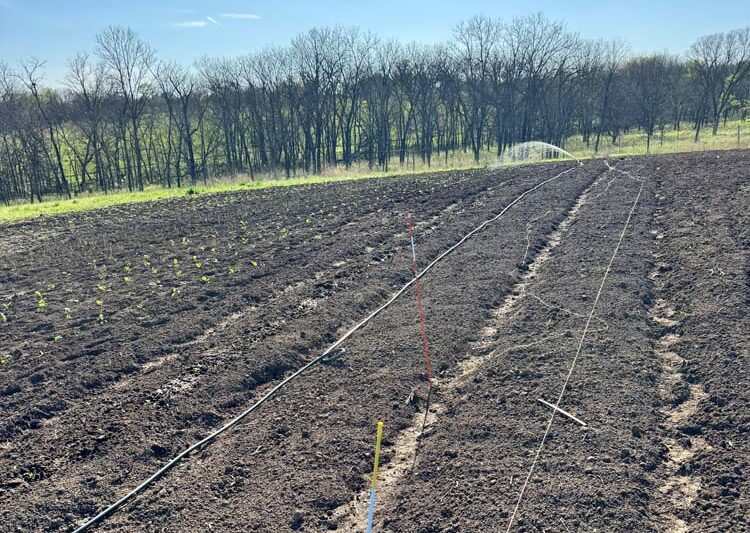
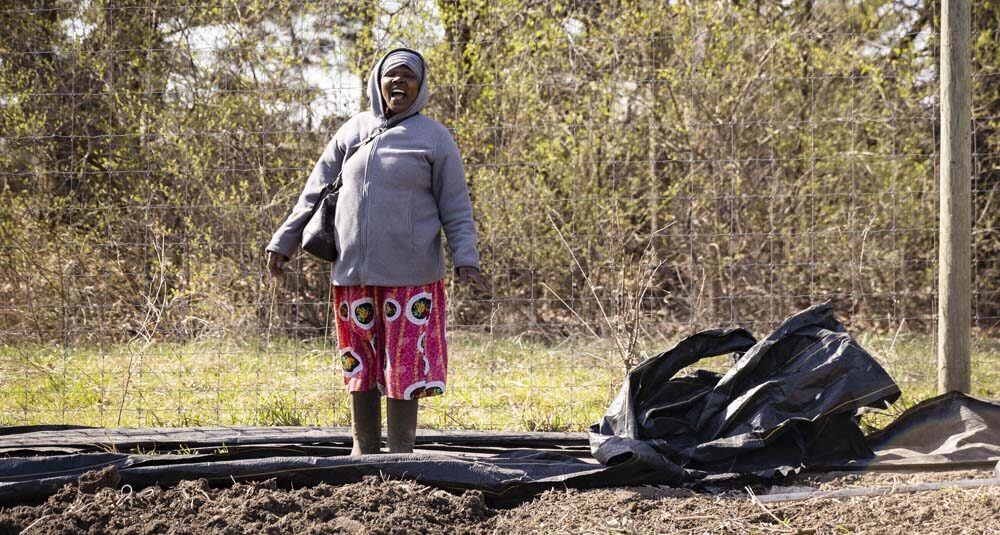
She later farmed with her husband in Tanzania, resettled in Vermont in 2008 and in 2014 moved to Iowa. There, in Des Moines, she started Lenga Lenga Farm, a 2-acre operation growing amaranth greens, also known as lenga lenga, tomatoes, squash, beans, eggplant and more.

“I grew up on a farm,” Esta says. “My parents made a living selling produce. That’s how we paid for school, clothes – everything. I started farming on my own at 16. I still helped my family, but I wanted to support myself.”
Esta has been part of the Practical Farmers of Iowa community for nearly 10 years. She’s easy to remember: warm, energetic and quick to connect. At the 2026 PFI Annual Conference, Esta led a session on growing culturally relevant crops, presenting in her first language, Kirundi. Her session required attendees to wear headsets broadcasting her words interpreted into English. Esta helped the audience understand that language doesn’t have to be a barrier. Rather, it can be a way to connect.
“We all farm, we all contribute to feeding each other,” she says. “Now I grow to feed my family healthy, organic food. But also, to build my own business. The community loves my vegetables – they keep coming back.”
Connecting to Culture
Farming is more than income. It’s wrapped up in Esta’s identity. “Farming is my culture,” she says. “It won’t leave me. I saw my parents farm, and I’ve taught my children. That’s how we remember where we come from, and how we guide our future.” All of Esta’s children grew up helping on the farm. One of her daughters now grows African vegetables in Davenport.
“She’s lucky. Her kids eat them,” Esta says of her daughter, pointedly smiling at her interpreter, Fermin Ntkizame. “Mine won’t,” Fermin confirms, a bit exasperated.
Fermin works with Global Greens, a program of Lutheran Services in Iowa that supports farmers who came to Iowa as immigrants and refugees with land, equipment, training and market access. He also has farming experience and interprets into six languages. “We have a strong support system,” Esta says. “I’ve taken classes to learn what crops grow well here and how to grow them.” That knowledge matters. Some of Esta’s crops need special care to succeed in Iowa’s climate.
“The African eggplant is in the greenhouse now,” Esta says. “I learned I must start it early in a warm space. Otherwise, I lose most of the crop.”
Esta has always farmed organically. That hasn’t changed. “In Africa, many farmers grow this way,” she says. “But here, there are new pests and diseases.” Some crops, like lenga lenga, grow easily. Others take more work. “Potatoes and eggplant have a lot of pests,” she says.
Through Global Greens, Esta gets technical support to manage those challenges without changing her organic practices. She’s also focused on soil health. “Once I learned about cover crops, I couldn’t go back,” she says. “Now I plant into rye. It’s a good neighbor, and I can terminate it by hand.”

Culturally relevant food, and Esta’s access to it, played a critical role in carving her path. When her family first arrived in Vermont, they were served chicken, bread, apples and other American standards. “I asked my husband, ‘Where is the lenga lenga? Where is the eggplant?’” she says. “How do we eat without our vegetables?”
Esta missed the nutrient-dense greens and medicinal plants she grew up with. So, she decided she would start growing them again. With help from the resettlement agency, she found land, but demand quickly outpaced what she could produce. “That’s one reason we moved to Iowa,” she says. “We heard people were farming here.” After she left, the Vermont program expanded its own farming efforts – something Esta helped spark.
For Esta, vegetables do more than nourish. “They prevent disease,” she says. “Green eggplant helps with blood sugar. In Africa, doctors would prescribe lenga lenga for anemia.”
Expanding Access
Some flavors can surprise new customers. One Global Greens staff member tried a particularly sour leaf and still jokes about it. “That’s healthy,” Fermin says, laughing. “It kills bad germs in your body.” These crops are popular and often sell out quickly. Esta wants to grow more – especially medicinal plants – but access to seed is a challenge.
“We don’t always have the seeds we need,” she says. Even when seeds are available, saving them can be difficult. Cross-pollination with nearby plants can alter the next season’s crop. “One farmer saved African corn seed,” Esta says. “The next year, it was completely different because it crossed with American corn.”
Despite the challenges, Esta continues to expand her market. She sells through the Global Greens CSA, directly to community members and at the Global Greens International Market in Des Moines each Friday during the summer.
She also grows some familiar crops to reach more customers. “I grow American vegetables too,” she says. “And we help people learn how to cook our foods. Global Greens shares recipes at the market.”
Looking ahead, Esta is focused on growth. She and a neighbor are exploring buying a tractor together, and she hopes to access more land. Still, she’s clear about what matters most. “I don’t need to go back to Africa now,” she says. “Because what I had there, I have here – a community, a farm. I feel at home.”
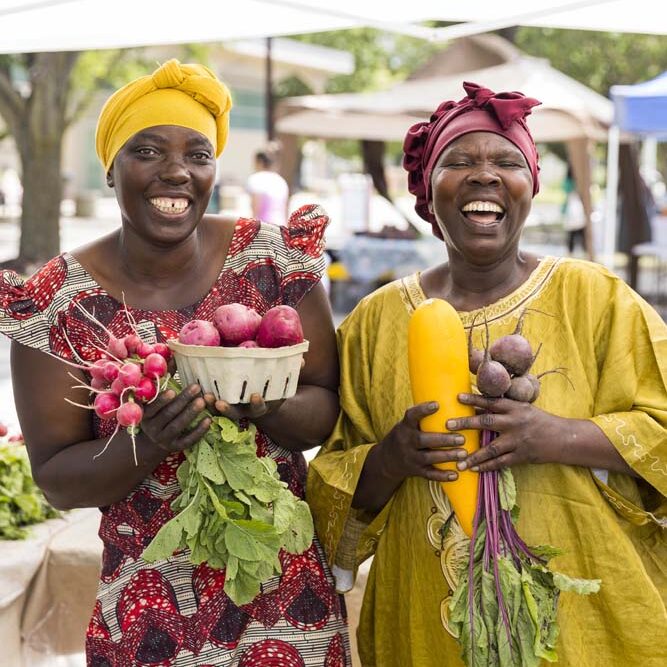
From right to left: Esta and her fellow farmer, Bugenia, selling at the Global Greens Farmers Market in Des Moines, Iowa.