A growing group of Minnesota farmers is banding together to prove the viability of raising a third crop in rotation at scale
When Kevin Connelly decided to plant 20 acres of oats in the spring of 2020, it was the first time the crop had been raised on the Byron, Minnesota, dairy farm in two decades. His father, now retired from farming, was not pleased when he caught wind of this plan. Kevin recounts how his dad told him, “You can't grow oats. Where are you going to sell them?”
Undeterred, Kevin forged ahead. “People see oats as old-school,” he explains. “They think they can't make any money on it.”
Down the road a few miles, Martin Larsen was also seeding his very first oat crop that year. He and Kevin were both passionate about water quality and curious about stacking another practice on their farm in addition to cover crops and no-till. Corn and soybeans prices in 2020 continued to trend on the low end, so the idea of raising a crop with few input requirements – and therefore lower up-front costs – appealed to them.
“Oats spread my workload and my marketing risk,” Martin says. “They lowered the amount of money I needed to spend on other crops.”
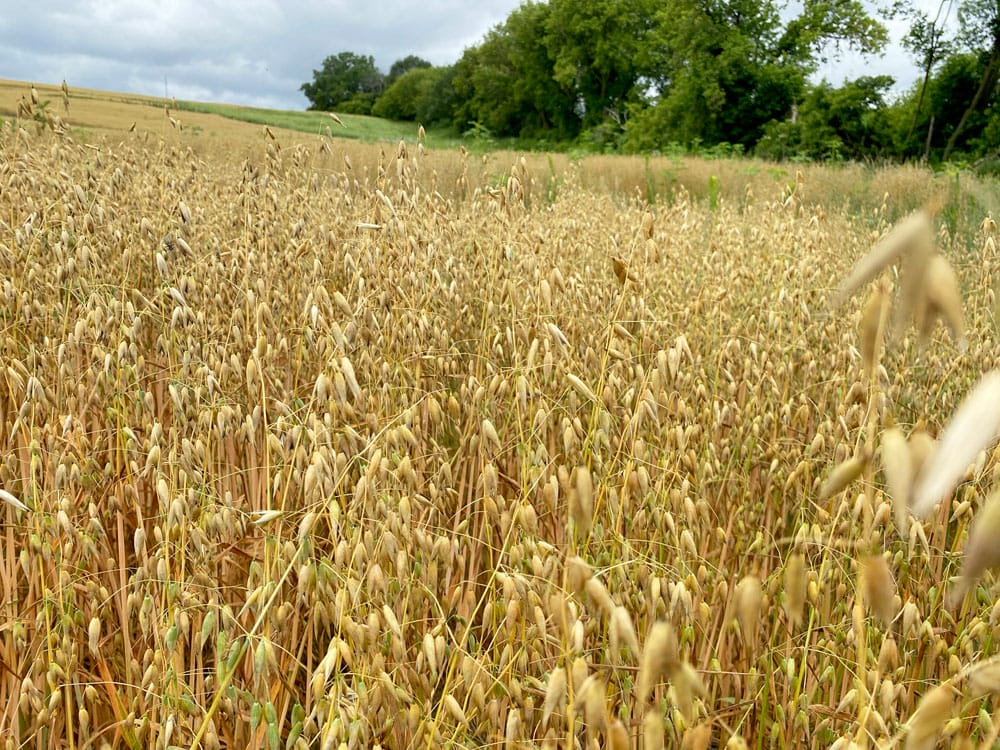
Kevin, Martin and neighbor Tom Pyffereon, who all subsequently became PFI members, collectively seeded a couple hundred acres of oats that spring – unaware they were starting a bigger movement for the region.
An Oat Collective Emerges
The following spring, Martin's neighbor, Paul Kyllo, decided to plant oats too.
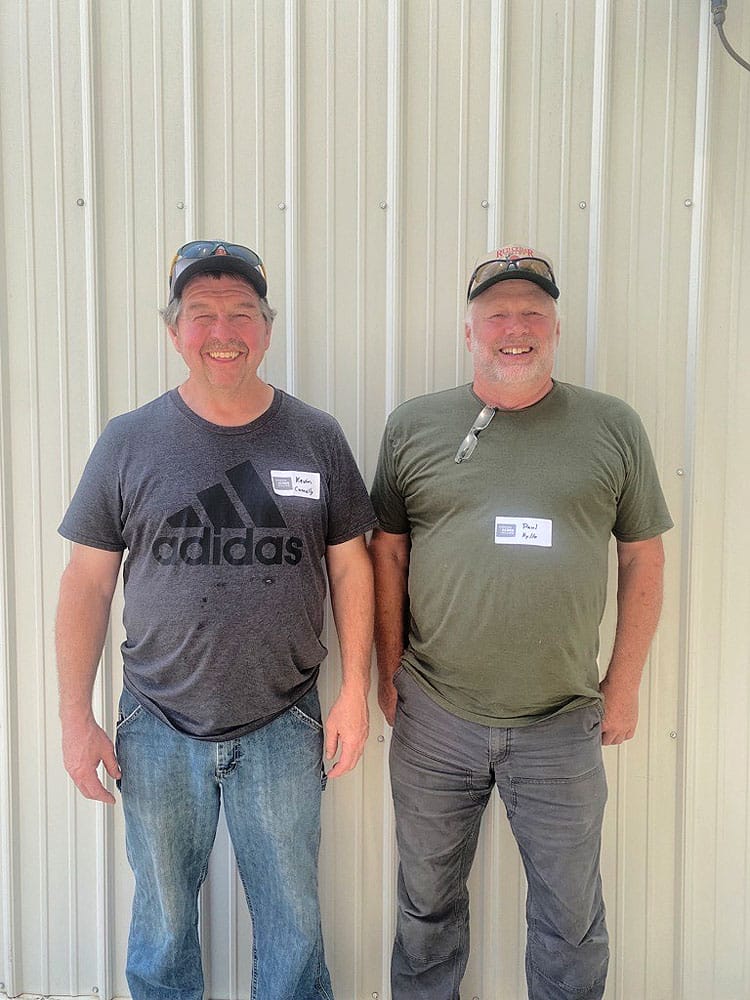
“I liked the idea of oats in my rotation, especially because I could grow clover,” says Paul, a PFI member who also farms in Byron. “You don't need to convince a dairy farmer of the value of corn following a legume in rotation.” His initial experience was a bit rocky, but also informative. “My first year growing oats I had a very good crop. The second year I did the exact same thing and it was a disaster,” Paul says. “This was good from a learning perspective about what not to do.”
The four Byron-area farmers grew oats and gained experience for a couple of years. Then, in 2022, a few factors converged that made other farmers take notice.
A consumer-packaged goods company interested in sourcing from the region approached Martin with an attractive oat bid: $7.30 per bushel. This was higher than any competing offers and quickly caught farmers' attention. The company, which asked not to be named because of the sensitivity surrounding financial investments it's made in various pilot testing programs, also purchased a Grain Cleaning Solutions cleaner for area farmers to use on their oats post-harvest.
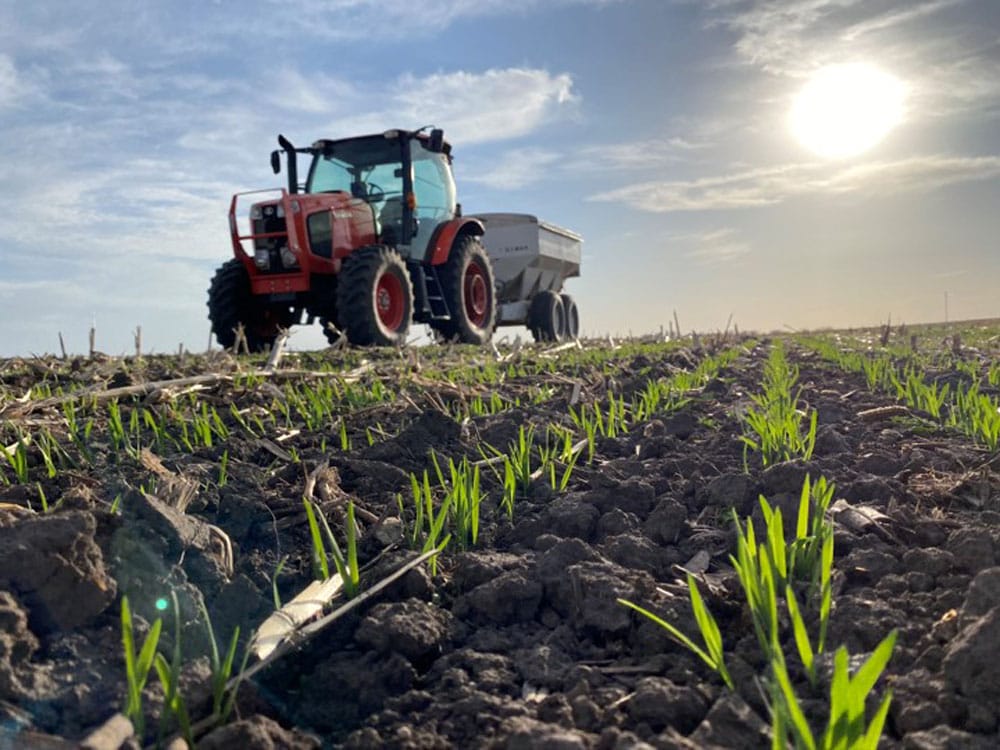
Since test weight, the heft of the grain, is make-or-break for the marketability of oats destined for the food-grade sector, the grain cleaner allowed farmers to separate their high-quality, heavy grain, from anything light or unmarketable.
“The cleaner took stress off farmers,” says Martin, who houses and operates the cleaner on his farm. “They were more comfortable growing oats since they had that ‘insurance program' for their test weight.” The competitive grain price, coupled with the assurance the crop could be marketed due to the grain cleaner, attracted another 10 local farmers. Collectively, they raised over 1,000 acres of oats that year.
Unfortunately, private investment in the region was short-lived. In 2023, the lucrative market opportunity fizzled, threatening to cut off any budding interest in raising oats.
However, as oat prices went back down, a local cost-share opportunity emerged to make up the difference. Olmsted County Soil and Water Conservation Distinct, where Martin also works as a soil conservation technician, launched a program aimed at lowering nitrates in their groundwater, which is the drinking water source for the area.
The new program reimbursed farmers $100 per acre to put in clover after oats. While the oats themselves wouldn't sell at a high price, the impressive cost-share payment, coupled with high nitrogen prices that year, meant oats and clover continued to pique the interest of a growing number of local producers.
The group, Byron Area Farmers, snowballed.
Collective Support
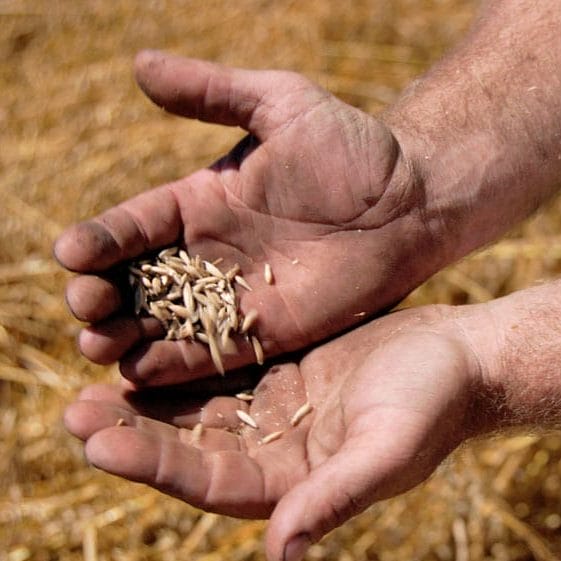
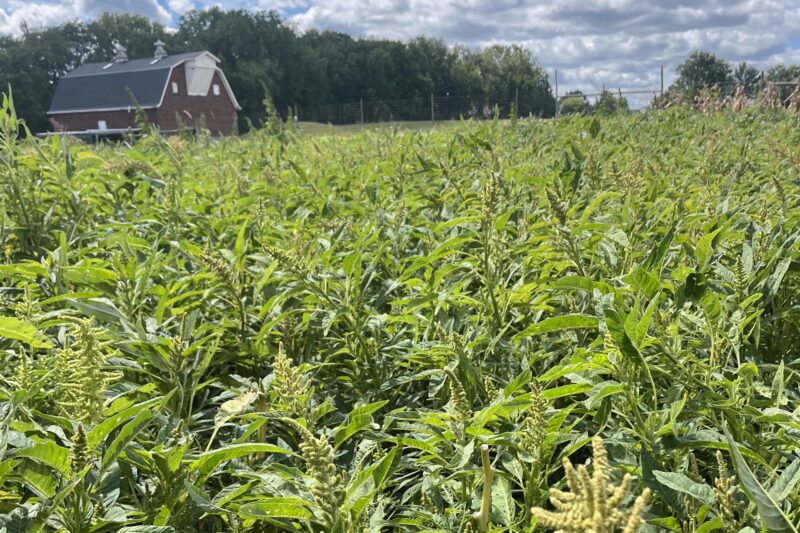
Seeing the challenges individual farmers faced marketing oats, Martin decided that the rapidly growing group of farmers should pool their bushels and collectively market their grain, which theoretically could give them better bargaining power. By the summer of 2023, Byron Area Farmers, now comprising 35 farms, had raised 350,000 bushels of oats to sell. But marketing a crop with few buyers still proved challenging at the group level.
“[In 2023] all our oats got marketed right at harvest, which created a lot of stress for me beforehand,” says Martin, who took on all the marketing himself. Despite the stress, he's adamant the group will continue to stick together going forward. He anticipates they'll collectively market nearly 600,000 bushels in 2024, enough to fill up 400 semi-loads.
To ensure the farmers are marketing a high-quality, consistent product, anyone who joins Byron Area Farmers must follow the same agronomic guidance. That means agreeing to use recommended seeding rates, varieties, crop inputs and harvest settings. Standardizing management practices ensures farmers are growing a reliable product that won't be rejected due to a small amount of contamination.
The guidelines also help new oat growers get started by providing a playbook of best practices. “I think the fact that there's a core group of us farmers that have raised oats successfully gives others confidence to try out it too,” Paul says.
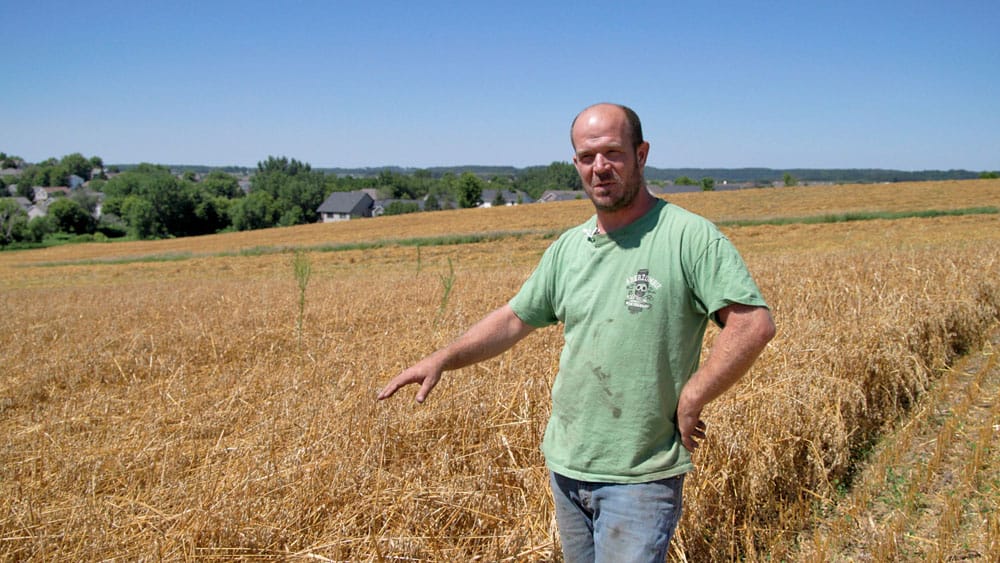
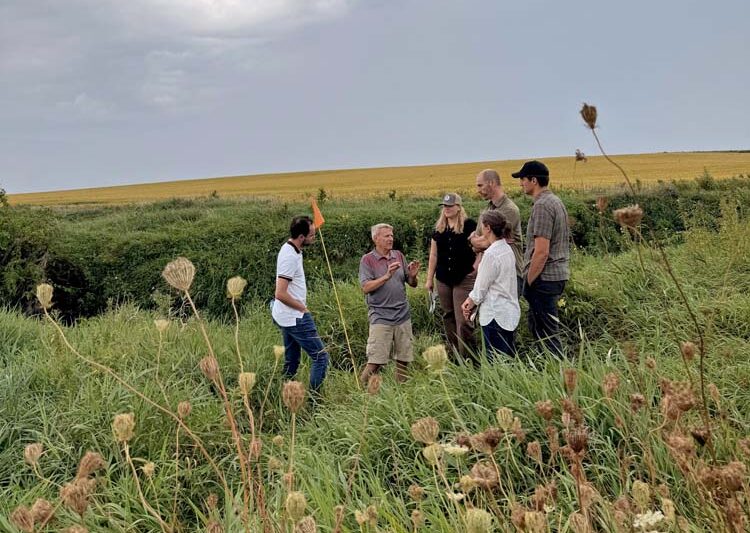
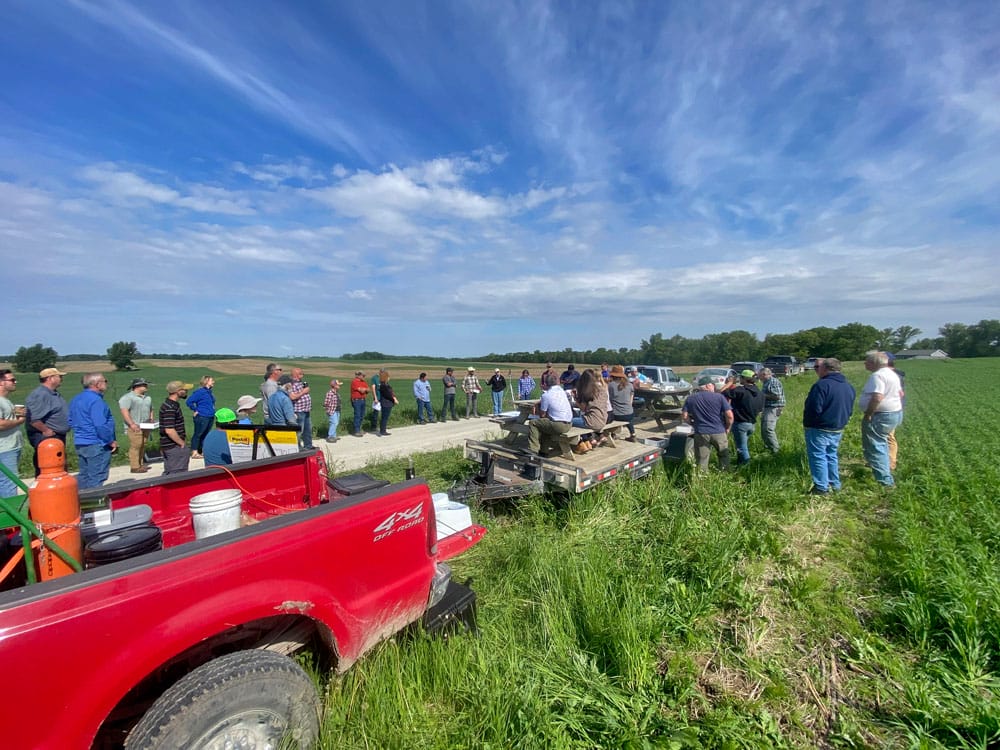
Martin intentionally brings the group together a few times a year to share information, prepare for the upcoming season and discuss challenges. With solid agronomy and a community of practice, their oats have performed well. In 2023, the group averaged a yield of 105 bushels per acre, which is over 20 bushels per acre higher than the U.S. Department of Agriculture's 2023 average for Olmsted County.
“We had to treat these oats like a cash crop,” Kevin says. “Once we started doing that, the results were clear.”
For Martin, building a local community of farmers growing oats and pooling their resources is a way to bring back access to markets that have disappeared from the region. “We need to stop producing ‘random acts of oats,' ” he says. “Companies need to see we can reliably raise their product.”
But the infrastructure needed to develop new supply chains is costly and the convenience of using existing market channels keeps the system entrenched. Companies remain slow to commit to sourcing from the region, despite growing farmer interest in raising oats, and despite plans already in the works for a farmer-owned grain mill to be built in Minnesota in the coming years.
“We have a story to tell,” Paul says. “Everyone wants a story but they [companies that buy oats] are all a little hesitant to pay.”
This isn't stopping the Minnesota farmers' resolve. Despite the perpetual challenges of keeping oats competitive in a corn-soybean environment and slow buy-in from companies, the group's leaders – Martin, Kevin, Paul and Tom – are steadfastly committed to (and pleasantly surprised at) what they've built.
“This [group] is what I wanted, but I never knew it would come together as successfully as it has,” Martin says. “We are going to keep growing and not stop anytime soon. We are stubbornly invested in this work.”

Learn More
In this video from our "Practical Cover Croppers" series, filmed in 2022, Martin discusses what it costs to raise oats, and potential revenue, for farmers to compare with raising corn. He describes how including oats in the rotation changes the overall profitability of his rotation, including reduced applied nitrogen in the corn year and increased yield in corn and soybean years. Martin also explains how rural economies are impacted by farmers staying profitable with extended rotations.