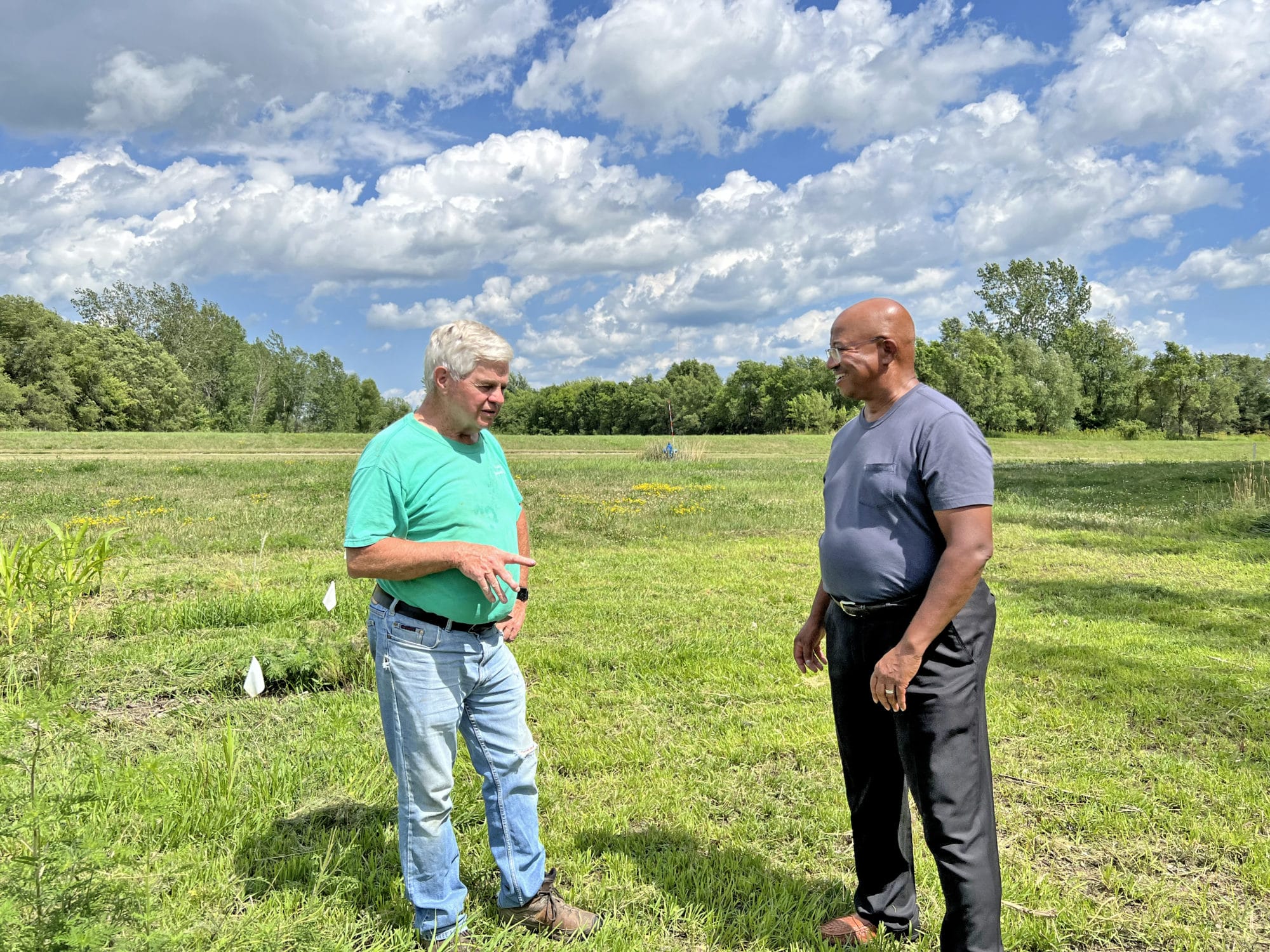
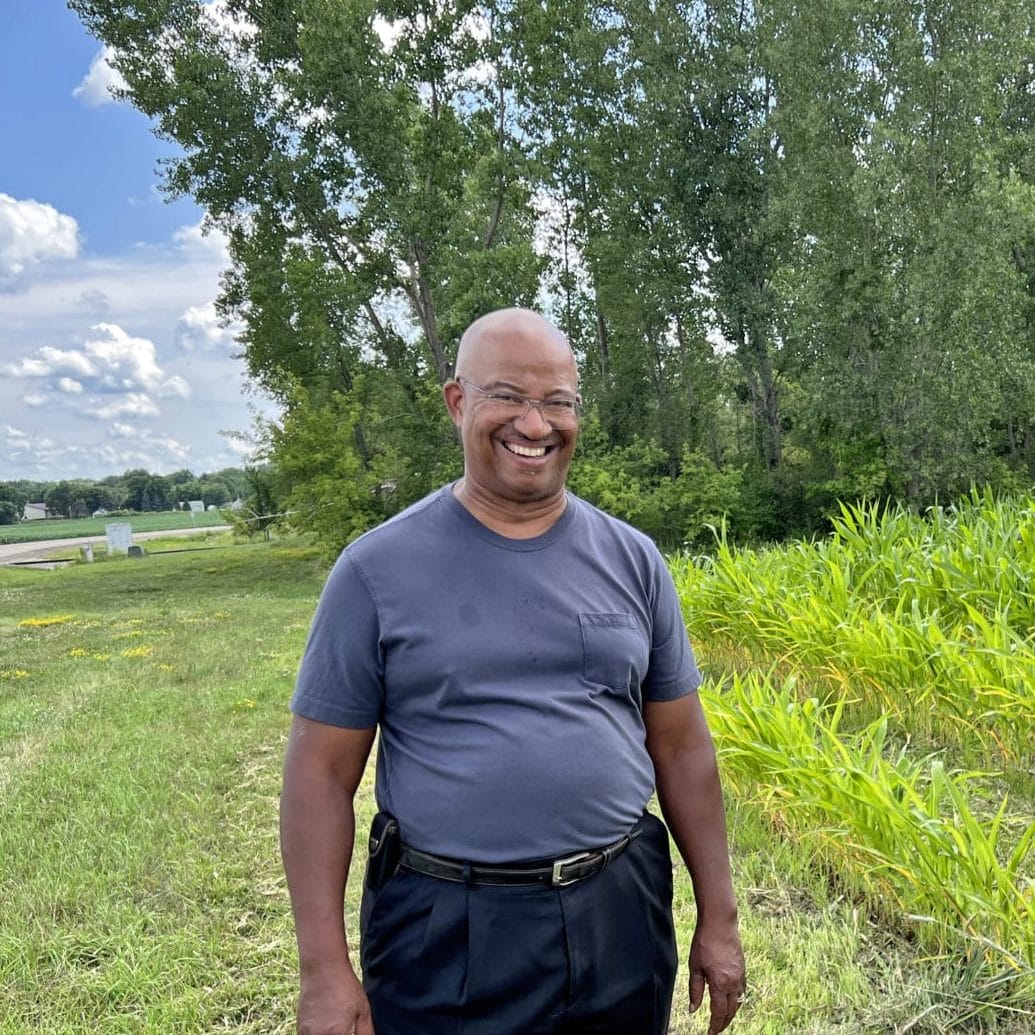
 Since the 1980s, Mike Cook and his family have worked to build a profitable business growing row crops, fruits and vegetables on a patchwork of smaller plots.
Engineer and farmer Mike Cook has taken his career to immense heights but has always stayed grounded in the soils of Black Hawk County, Iowa.
A third-generation farmer, Mike's grandfather, McKinley Cook, moved to Waterloo in 1925 and farmed in addition to working for the Illinois Central Railroad for 50 years. Around 1950, he sold about 10 acres to Mike's dad, Mack, which Mack farmed on the side while working as a machinist for John Deere in Waterloo.
Mike's path first took him to Baton Rouge, Louisiana, where he received his bachelor's degree in mechanical engineering from Southern University and A&M College, a historically Black land-grant university, in 1980. He later went on to receive his master's degree in industrial technology at the University of Northern Iowa. In the early 1990s, while working on his master's degree, Mike also published research on hazardous waste disposal as part of a NASA fellowship he received.
Like his dad, Mike's career then led him to John Deere, where he worked as an engineer for the first 15 years and then rose through the company. When he retired after 30 years, he held an upper management position and he holds three patents from his time there. But farming was never far away.
Since the 1980s, Mike Cook and his family have worked to build a profitable business growing row crops, fruits and vegetables on a patchwork of smaller plots.
Engineer and farmer Mike Cook has taken his career to immense heights but has always stayed grounded in the soils of Black Hawk County, Iowa.
A third-generation farmer, Mike's grandfather, McKinley Cook, moved to Waterloo in 1925 and farmed in addition to working for the Illinois Central Railroad for 50 years. Around 1950, he sold about 10 acres to Mike's dad, Mack, which Mack farmed on the side while working as a machinist for John Deere in Waterloo.
Mike's path first took him to Baton Rouge, Louisiana, where he received his bachelor's degree in mechanical engineering from Southern University and A&M College, a historically Black land-grant university, in 1980. He later went on to receive his master's degree in industrial technology at the University of Northern Iowa. In the early 1990s, while working on his master's degree, Mike also published research on hazardous waste disposal as part of a NASA fellowship he received.
Like his dad, Mike's career then led him to John Deere, where he worked as an engineer for the first 15 years and then rose through the company. When he retired after 30 years, he held an upper management position and he holds three patents from his time there. But farming was never far away.
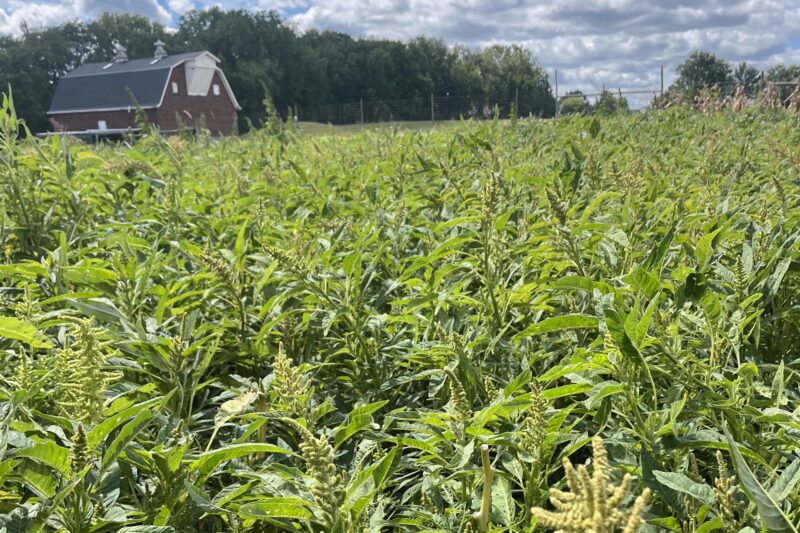
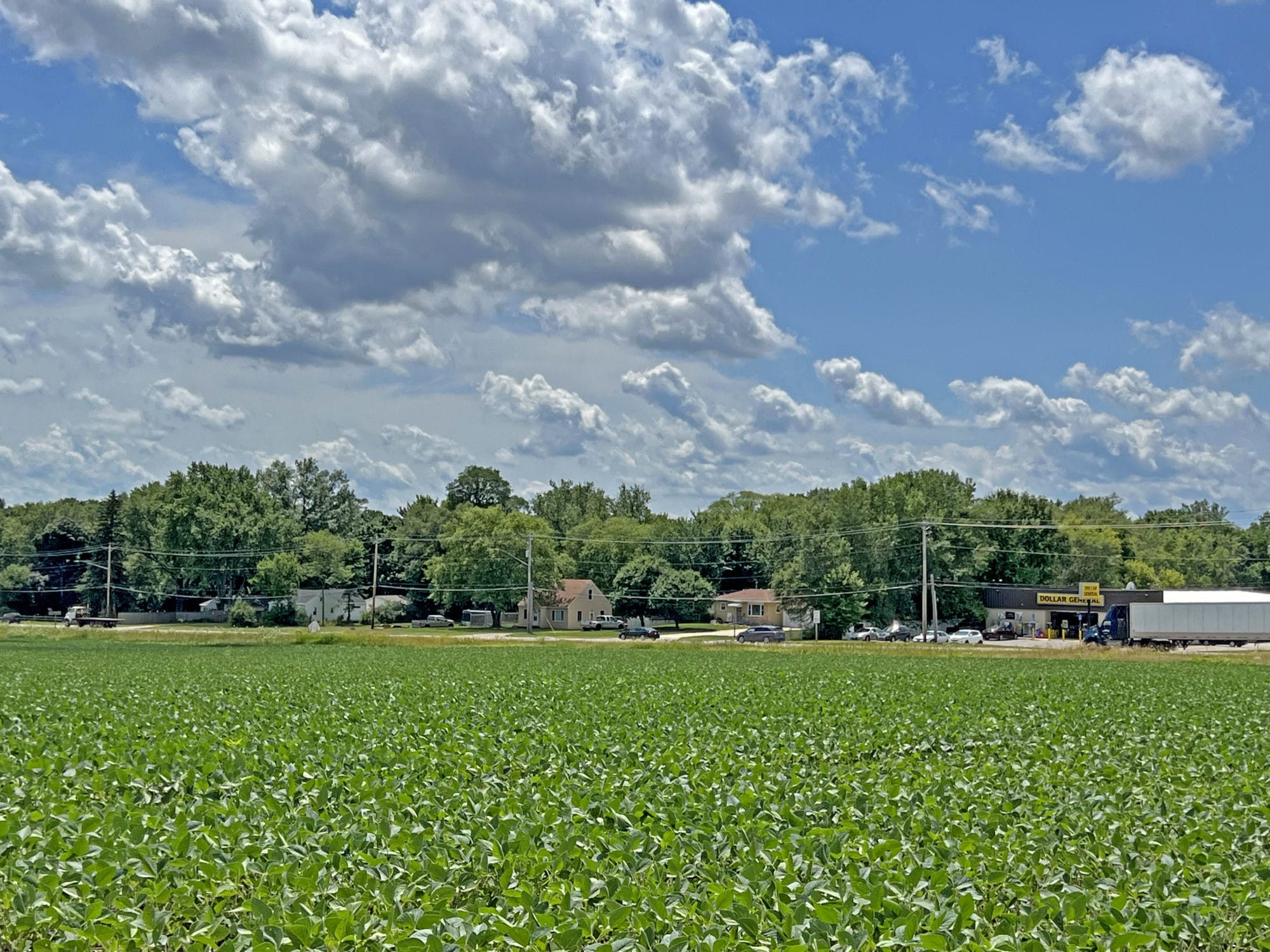
“Farming is dynamic,” Mike says. “There is always such variation in what you are going to be doing. There is always something to learn.”Mike planted his first sweet corn in 1985, adding other produce that he and his family – including his wife, Liz Cook, and daughters Nicole and Kristina – sold locally. When his dad was looking to stop farming in the mid-1980s, Mike was just thinking of expanding. He took over his dad's acres and continued to farm both row crops and produce on the side throughout his engineering career. In 2008, Mike retired from John Deere and began teaching (he currently teaches an advanced manufacturing course on the TechWorks Campus in Waterloo). Mike now operates a highly diversified farm on 120 acres at Cook Family Farm, where he raises corn and soybeans along with a wide variety of fruit and vegetable crops. The farm is spread over 14 tracts of land across the Waterloo area. Some are parcels Mike's grandfather and father bought, but many are new additions he and Liz have purchased. Managing many small plots requires good record-keeping, but Mike isn't phased. Instead, he sees them as land access opportunities. “That's the thing,” he says. “Your average farmer isn't going to want to get out here with all these trees, or farm in town with the Dollar General right across the street.”
Building the Business
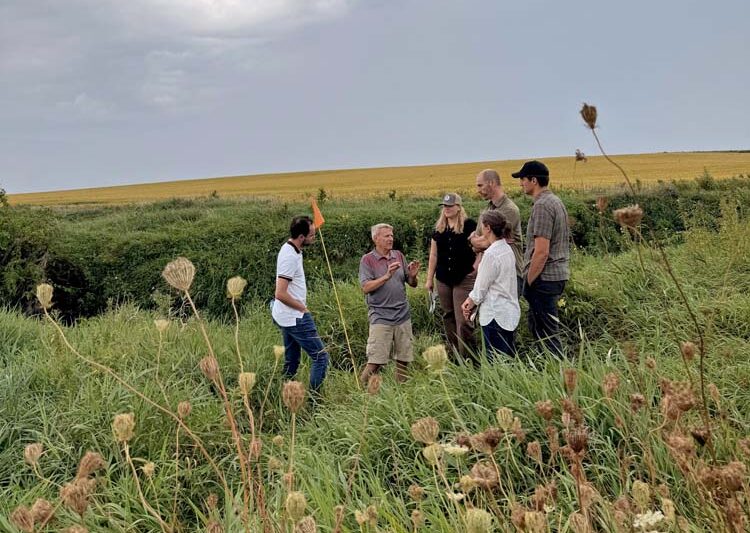
When Mike first got back into farming, he says the business was not initially profitable. But now he and Liz have learned more and are always evaluating how their farm enterprises are performing. Liz is the farm's accountant, and Mike credits her with keeping the business profitable and advising business decisions. Of all his farm enterprises, his stand at the Waterloo Urban Farmers Market is one of his favorites. “I call it the ATM because the more vegetables you pick, the more they continue to bear,” Mike says. “You have to work for it.” He sells everything from green tomatoes, potatoes and zucchini to tender greens, okra and Crenshaw melons. The market stand is so popular, Mike often sells out of produce. A crowd favorite is Cook Family Farm's early-maturity ‘Silver Queen' sweet corn. In addition to standard summer vegetables, the Cooks also sell apples, pears, plums and their Concord grapes straight from the vine. Corn is Mike's favorite crop to grow, but he says he's had to learn about growing row crops. One challenge has been finding people he could trust to advise him on inputs and pricing. In the past, Mike says businesses pushed extra fertilizer, hiked the prices and did not have his best interest in mind. Now, thanks to relationships with neighbors, who often drive by and check on his crops, and farmers like Shaffer Ridgeway, who farms with his family at Southern Goods and Grazin' Cattle in Waterloo (and also serves on PFI's board of directors), Mike is in a better place. “If it were not for Shaffer, I would not be farming,” Mike says. “He recommended an agronomist that helped cut my inputs by 40%." He also credits Bob Recker, a longtime friend, farmer and fellow former John Deere engineer. “You can't be afraid to ask how to make it [as a farmer],” Mike says. “I've asked the people I farm with, point-blank, how they are making money.” He has also learned valuable lessons about how to wisely spend money. “Early on, I bought cheap seed,” Mike recounts. ‘When I talked to my neighbor, he said don't save money on seed. Save it somewhere else, because you get what you paid for.”