In a Nutshell:
- Most field crops farmers in the Upper Midwest who use cover crops use winter cereal rye. However, there are other grain and non-grain species that could potentially be used as cover crops.
- A group of PFI farmers decided to trial alternative cover crop species to cereal rye in the 2024-2025 season.
- Farmers were each motivated to conduct the trial for different reasons. Some wondered if an alternative to rye might compete less with following cash crops or harbor less disease. Others were looking for alternative forage sources or covers that could be more easily seeded via drone.
Key Findings:
- Five farmers trialed fall-planted cover crops of their choice including winter barley, triticale, winter wheat, triticale and a mix of rapeseed, turnip, kale and cameline. They compared survival and biomass production to cereal rye.
- Tim Shellabarger was the only farmer whose alternative cover, winter wheat, successfully overwintered. It grew significantly less biomass than cereal rye, but Shellabarger thinks it would grow more if he planted it earlier in the fall.
- After their alternative cover crops winter killed, Tracy Skaar and Josh Hiemstra each conducted trials on how cover crop vs. no cover crop treatments affected their cash crop yield. They found that cereal rye cover crop modestly decreased their yield.
Background
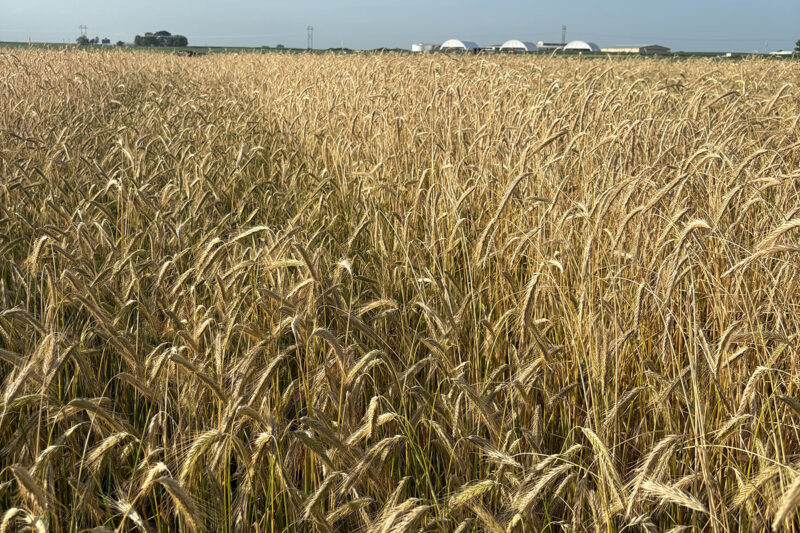
Most field crops farmers in the Upper Midwest who use cover crops use winter cereal rye. Cereal rye reliably establishes after late fall planting and overwinters well throughout the upper Midwest. Depending on planting and termination timing, cereal rye can produce adequate biomass to decrease nitrate runoff, prevent erosion and even suppress weeds [1], [2]. Despite cereal rye’s reliability, some farmers are interested in alternative cover crops, especially before corn. One primary reason is that farmers and researchers have observed that corn yields can sometimes decrease a bit when corn follows a cereal rye cover crop, especially when planting green [3], [4], [5]. Proper cover crop management, including terminating the cover crop 10-14 days before planting, can minimize yield effects, but in most cases that means terminating the cereal rye before it has amassed enough biomass to suppress weeds.
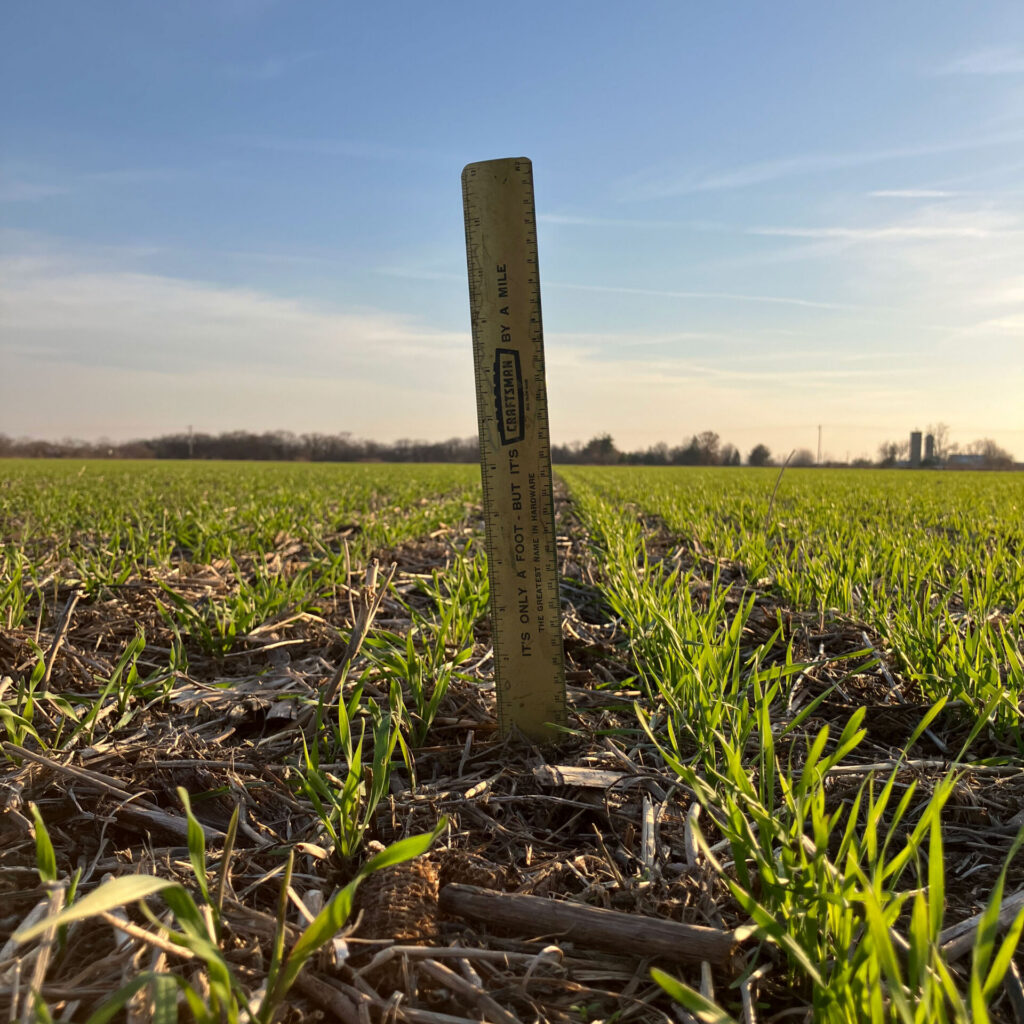
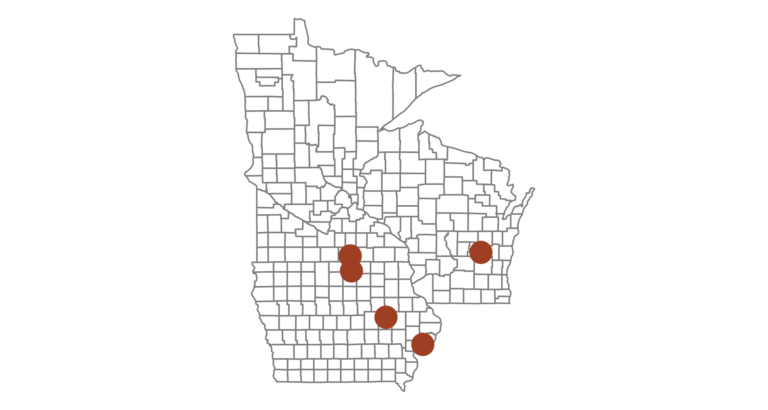
There are many grain and non-grain species that could potentially be used as alternative cover crops before corn. To assess these potential alternatives, farmers need to determine whether they can successfully establish the species as a cover crop after corn or soybean harvest, whether it overwinters, and whether it produces significant biomass. To these ends, five PFI farmers decided to plant replicated strip trials comparing a rye and non-rye cover crop in fall of 2024.
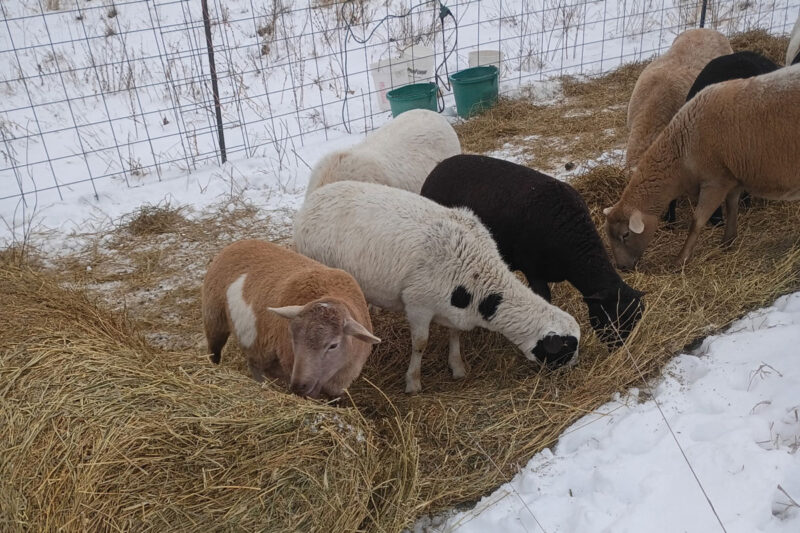
The farmers had diverse reasons for participating in the trial. Josh Hiemstra, Tim Shellabarger and Tracy Skaar are all interested in growing alternative cover crops before corn. As Skaar said, they wanted “to see if cover crops other than rye provide less competition.” Additionally, Shellabarger has been looking for different combinations of cover crops and cash crops that fit well in his rotation to add some diversity to his farm. Braxton Clubb often grazes his cattle on cover crops and was interested in rye alternatives for quality cattle feed. And Joe Rowe’s main goal was to “find cover crops that are viable for aerial seeding - specifically drone seeding.”
Methods
Design
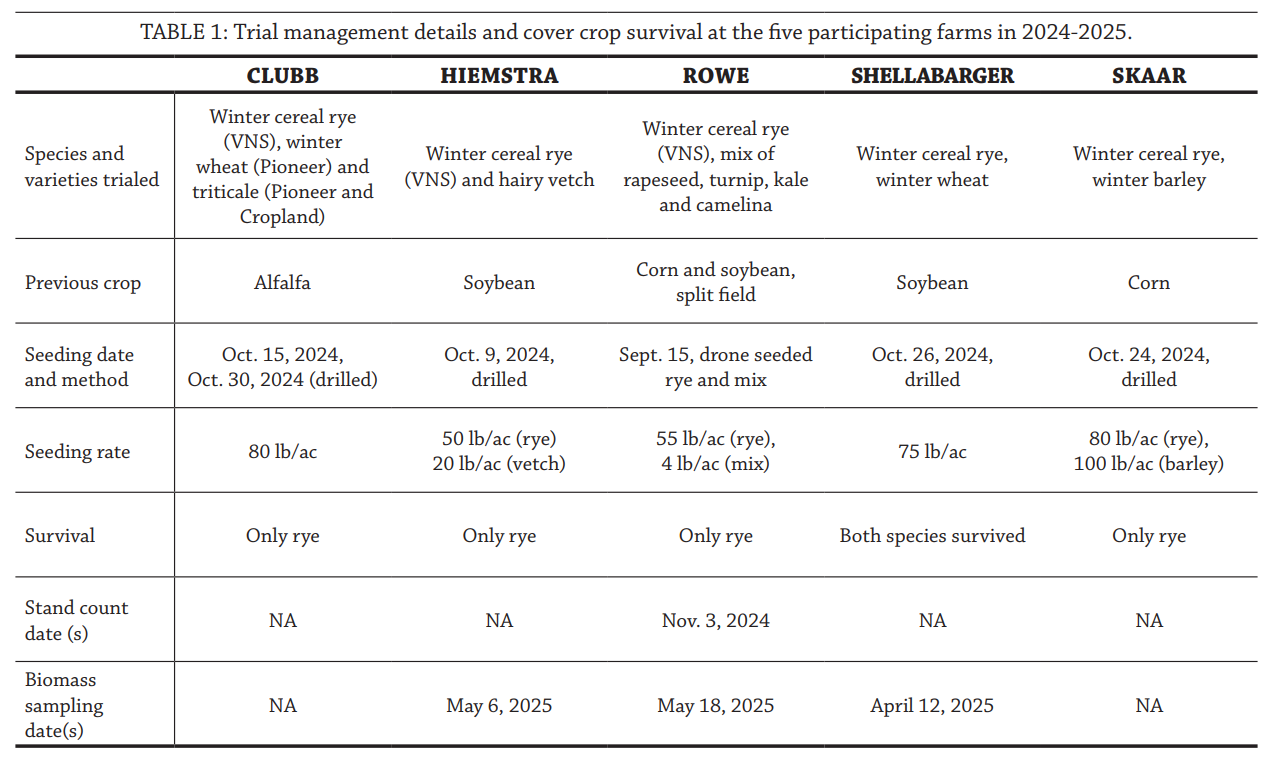
In fall 2024, cooperators planted four replicates of each of their rye and non-rye cover crop treatments in randomized, paired strips (Figure A1). Species trialed and planting and management details on each farm are presented in Table 1.
After their alternative cover crops winter-killed, Hiemstra and Skaar each continued their trial as a rye cover crop vs. no-cover trial and assessed cereal rye’s impacts on their corn and soybean yield, respectively. Hiemstra terminated his cover crop on May 6, 2025, using vertical tillage and planted his corn on June 7, 2025, into tilled ground on 30-in. rows. He harvested on Oct. 16. Tracy no-till planted his soybeans in 30-in. rows on May 13, 2025, and terminated his cover crop with his first weed management pass of Enlist/Roundup on June 1. He followed with another weed management treatment of Liberty on July 3.
Measurements
Rowe took stand counts of his established cover crops by measuring the number of cover crop plants in two 5.25 ft2 areas in each replicate. Hiemstra, Rowe and Shellabarger similarly measured cover crop biomass production by cutting biomass at the ground surface from 2 locations of known area per replicate, drying the biomass, and weighing it. They collected biomass from any surviving cover crop just before spring termination. Skaar and Hiemstra each harvested corn from each of their rye cover and no-cover strips and reported crop yields and grain moisture content for each strip.
Data Analysis
We used an ANOVA (Analysis of Variance) at a 95% confidence level to determine if there were significant differences in cover crop biomass between rye and non-rye treatments or corn yield between rye and no cover-crop treatments. This means that any treatments we declare statistically different would be expected to occur 95 times out of 100 under the same conditions. We can perform this analysis because the cooperators had completely randomized and replicated experimental designs (Figure A1).
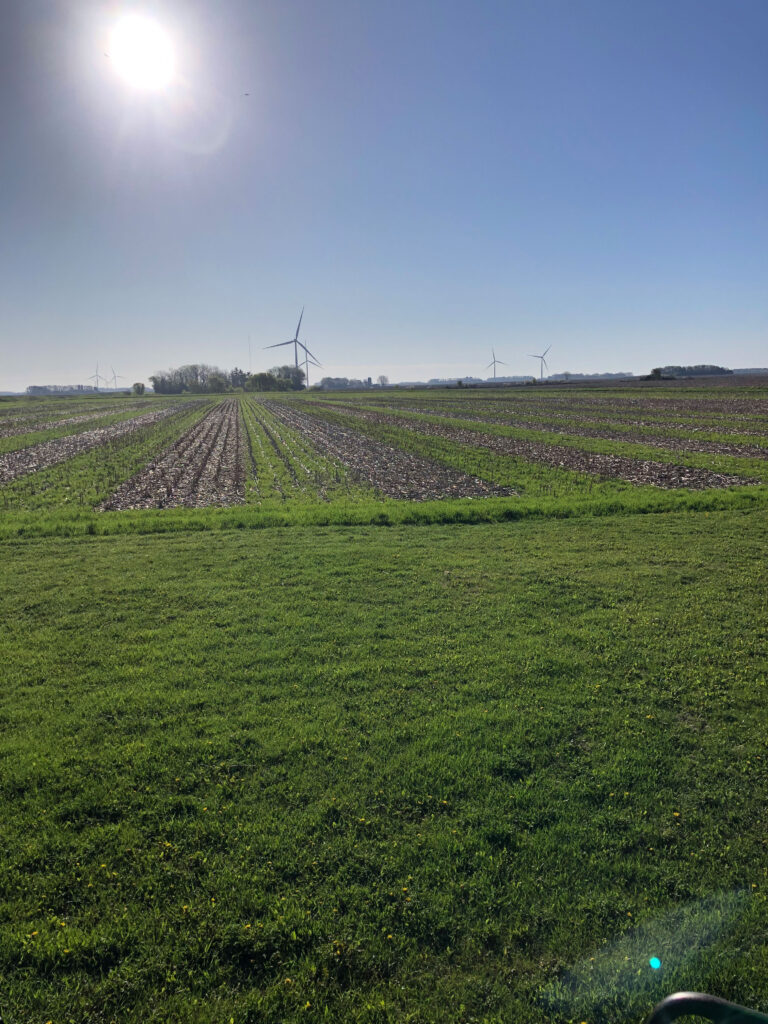
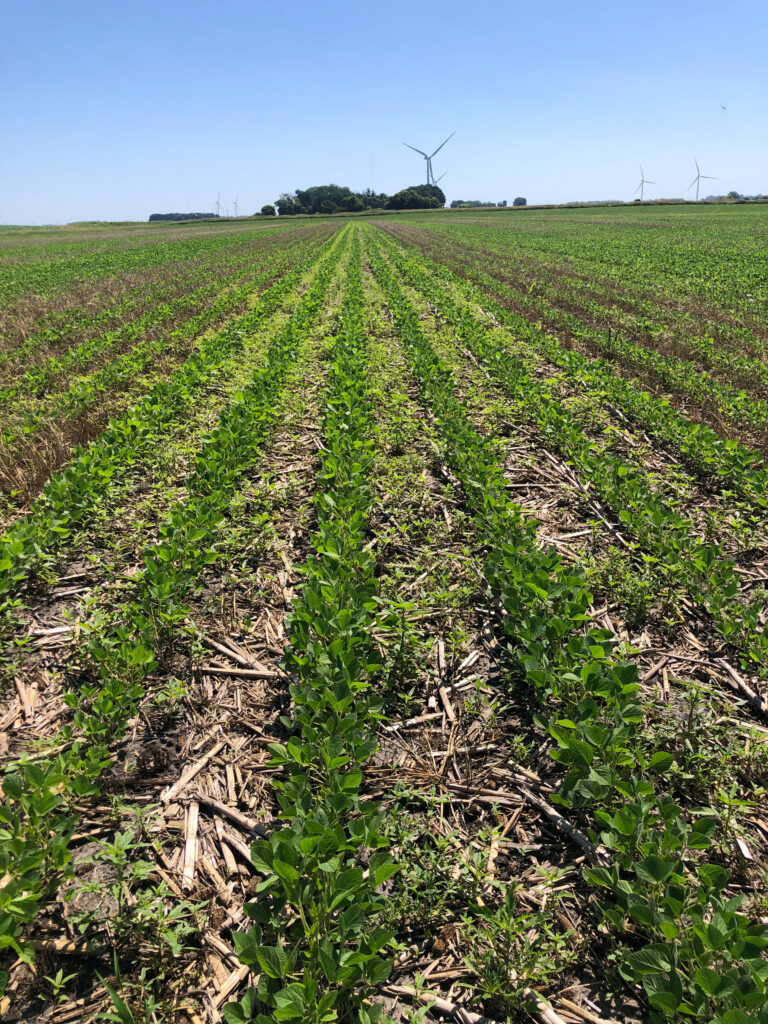
Winter barley winterkilled on Tracy Skaar’s southern MN farm, but winter cereal rye cover crop was green and growing in April 2025 (left). Skaar then conducted a rye cover vs. no cover trial and by July 3, he noticed significantly more weeds in his no-cover strips (right photo, center) than his cover strips.
Results and Discussion
Shellabarger was the only participant whose alternative to rye cover crop overwintered successfully and produced significant biomass. He found that his winter wheat germinated and grew well but only produced about half the biomass as his cereal rye before he terminated it on May 18 (Figure 1). He plans to try the trial again with an earlier planting date and thinks that the wheat growth will improve with more establishment time before winter.
In contrast, Clubb, Hiemstra and Skaar all had nearly 100% winter kill of their alternative species (triticale and winter barley, hairy vetch, and winter barley, respectively). Clubb thinks that his other species would have survived if he planted them earlier but also does not know if earlier planting is feasible in his rotation. Hiemstra noted that while he planted the vetch early enough, it took a while to germinate and probably was planted too deep. Alternative cover crops to rye that must be planted earlier than rye to ensure germination and to survive the winter might not be a good fit for farmers with busy harvest schedules or for those who do not want to take a risk with an unsuccessful cover crop.
Rowe’s mix also mostly winter killed but that was expected given the species in the mix (Table 1). He was more disappointed that he did not see much germination or growth from the mix going into the winter, meaning the diverse plants did not provide much agronomic or environmental benefit. On his Nov. 3, 2024 plant count, he counted on average only 0.4 plants/ft2 in his mix compared to 1.6 plants/ft2 in his rye plots. On May 18, 2025, he found that the surviving camelina did not have enough biomass to cut for biomass measurements, compared to 0.2 tons/acre of biomass in his drone-applied rye treatment.
After their alternative cover crops winter killed, Hiemstra and Skaar pivoted to a cereal rye cover crop vs. no cover crop trial. They found that the cover crop significantly decreased their corn and soybean yields, respectively (Figure 2). Hiemstra reports that he believes that covers will positively impact his farm economics in the long term. “I will sacrifice a little yield knowing that when considering soil health and crop quality and health there is still ROI with rye ahead of corn.” In the future, he will increase his N rate a little bit in corn following rye, especially in cold or wet springs. Similarly, Skaar was not discouraged to see a little yield decrease in his cover cropped fields. “Prior trials I have done would suggest that I waited too long to terminate the rye in this trial, which reduced the yield. However, weed pressure was definitely reduced where rye cover crop was used.
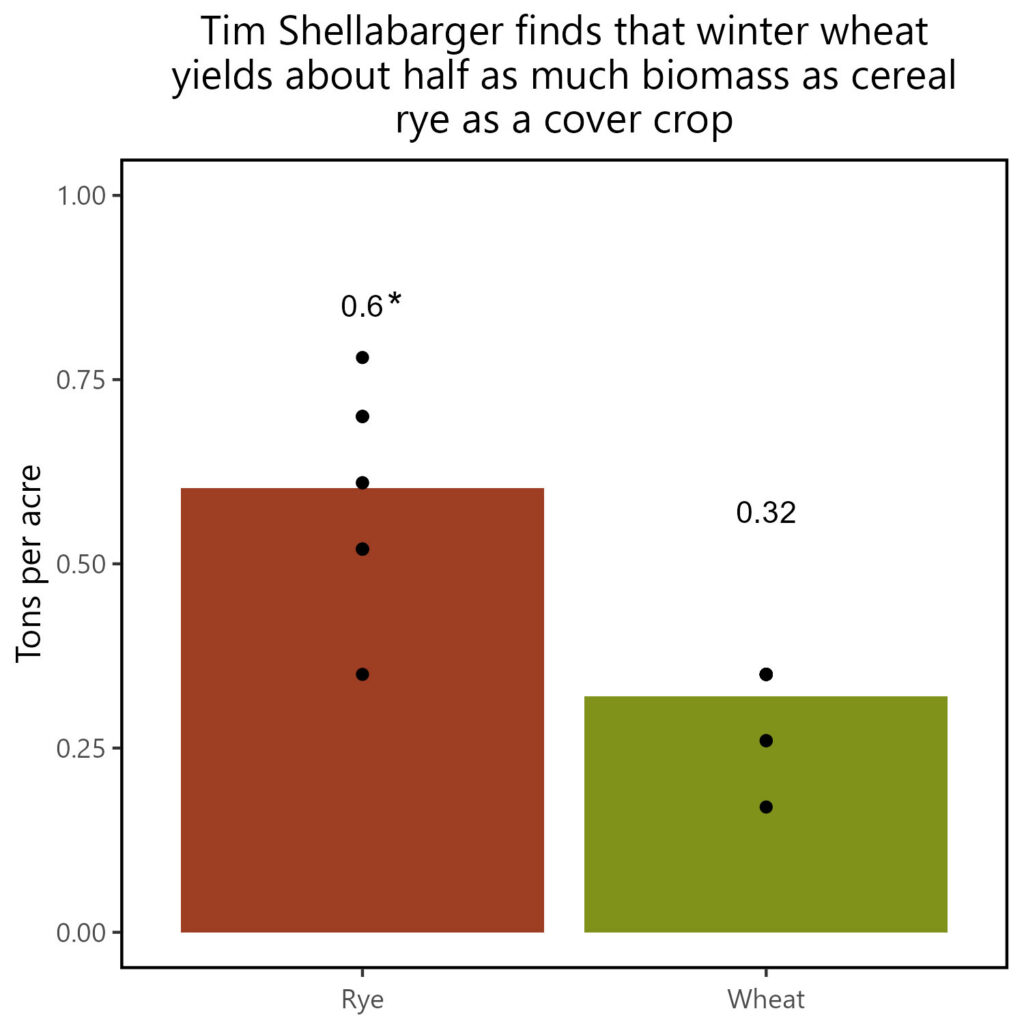
April 12, 2025. Columns represent the average cover crop biomass for each treatment.
Points represent biomass from each individual plot. Asterisk (*) indicates cereal
produced statistically greater biomass than winter wheat at the 95% confidence level. Click to enlarge.
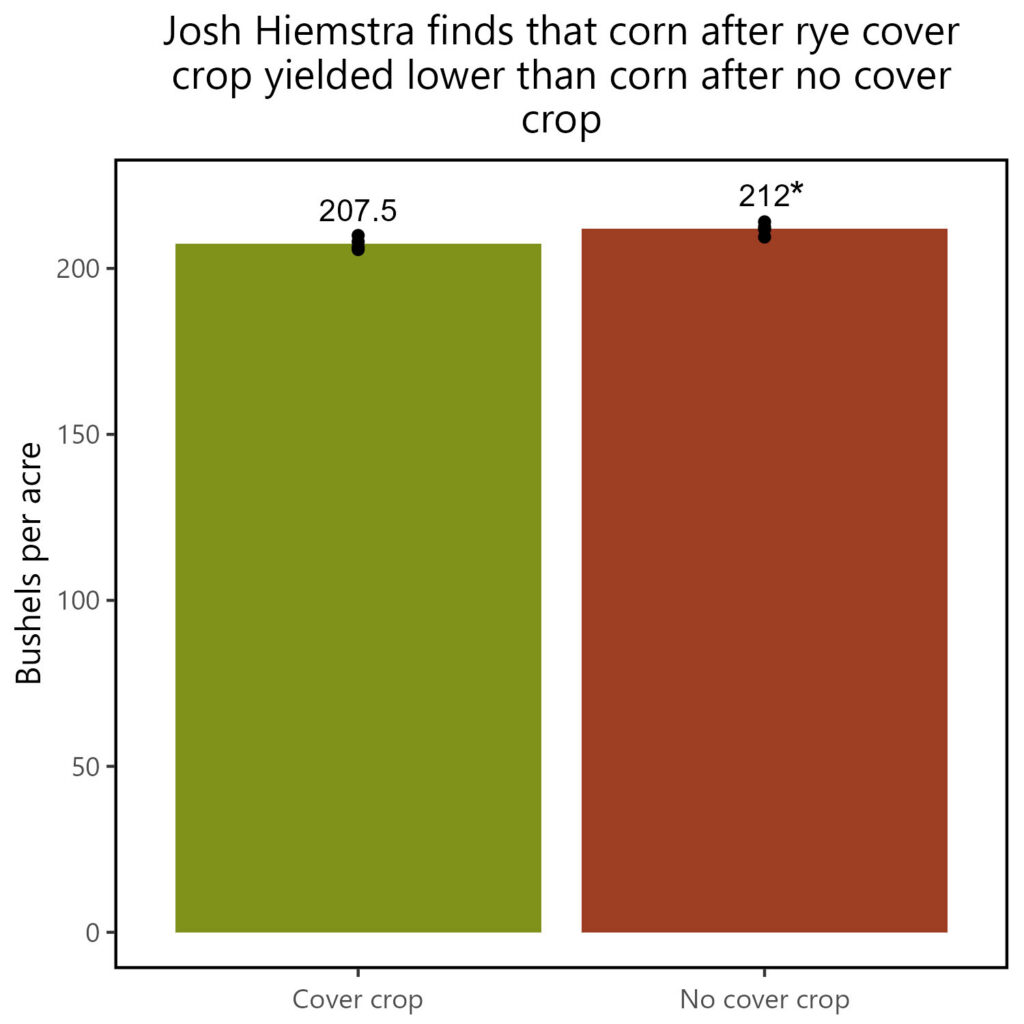
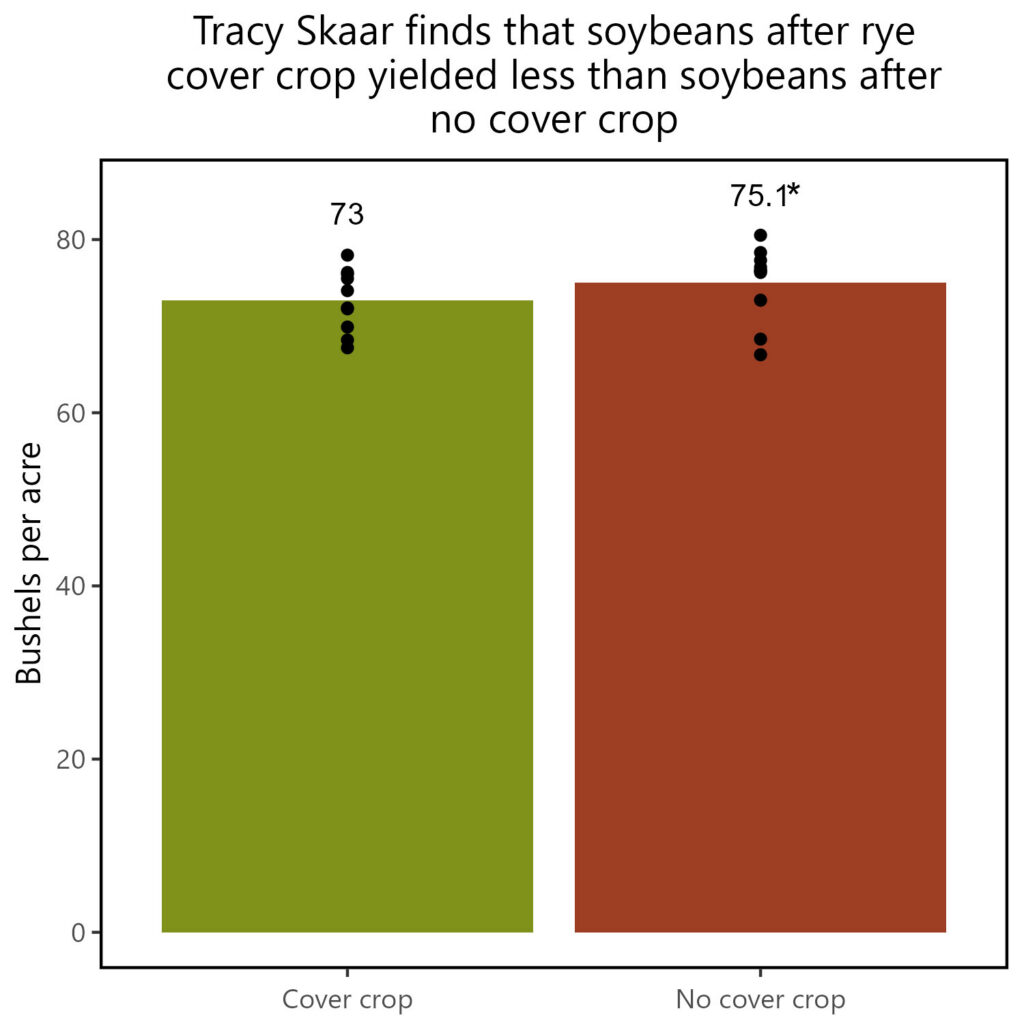
in their cover crop vs. no cover crop trials. Columns represent the average crop yield for each
treatment. Points represent yields from each individual plot. Asterisk (*) indicates that plots
without cover crop yielded significantly higher at the 95% confidence level. Click to enlarge.
Conclusions and Next Steps
After this initial trial, some participating farmers think that they will just stick with growing winter rye as a cover crop. Others, however, are willing to try again. Shellabarger and Clubb are conducting follow-up trials in the 2025-2026 growing season and plan to assess cover crop impact on corn yield. With increasing interest in growing a cover crop before corn, PFI farmers will likely continue to experiment with non-rye cover crops that may improve their soil without affecting corn yield.
Appendix - Trial Design and Weather Conditions

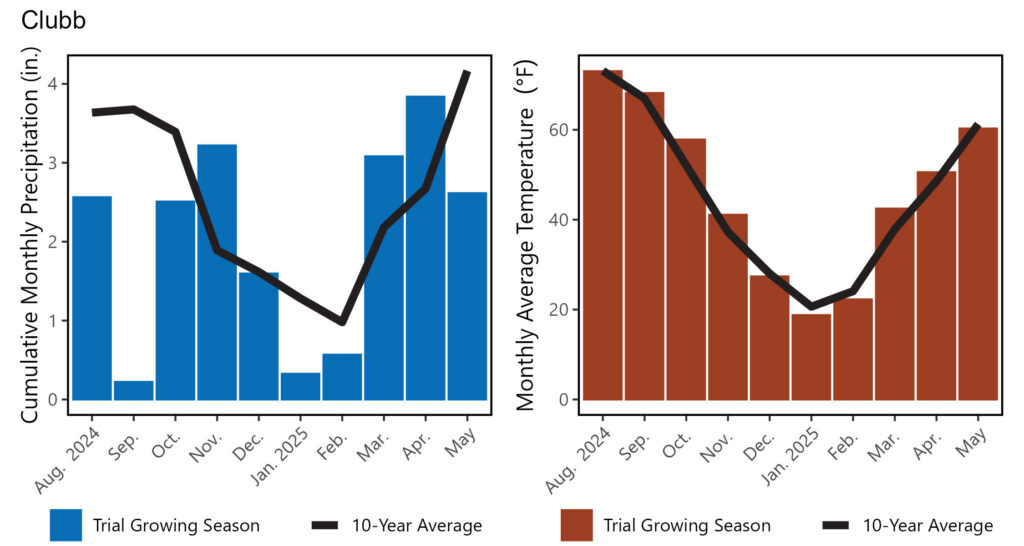
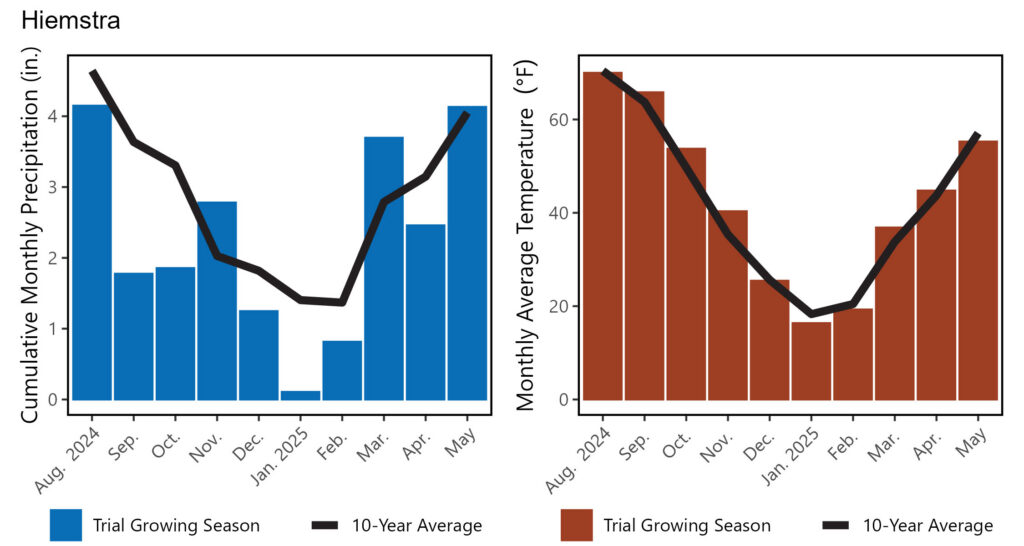
ten-year historic averages. Data is from the NasaPOWER climate dataset. [6], [7]. Click to enlarge.
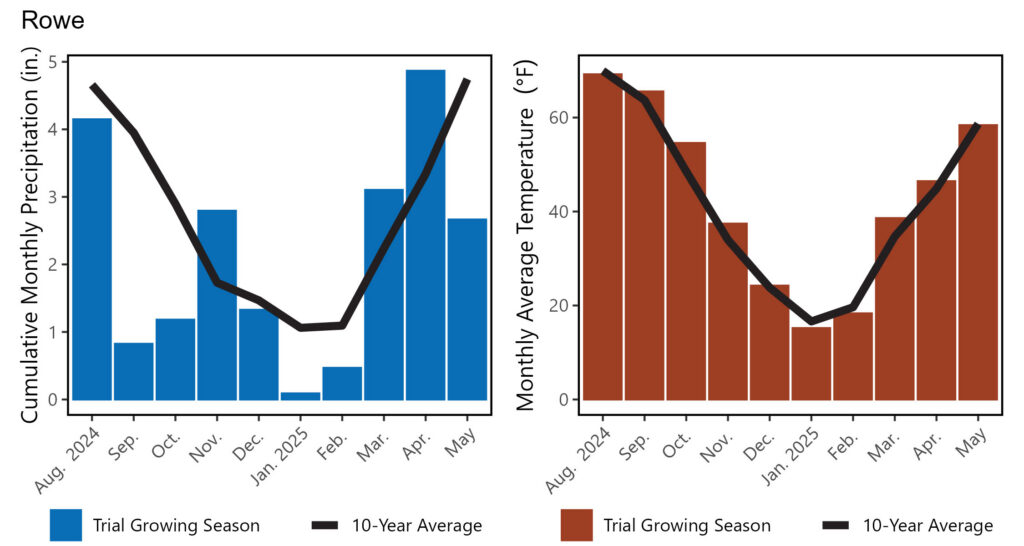
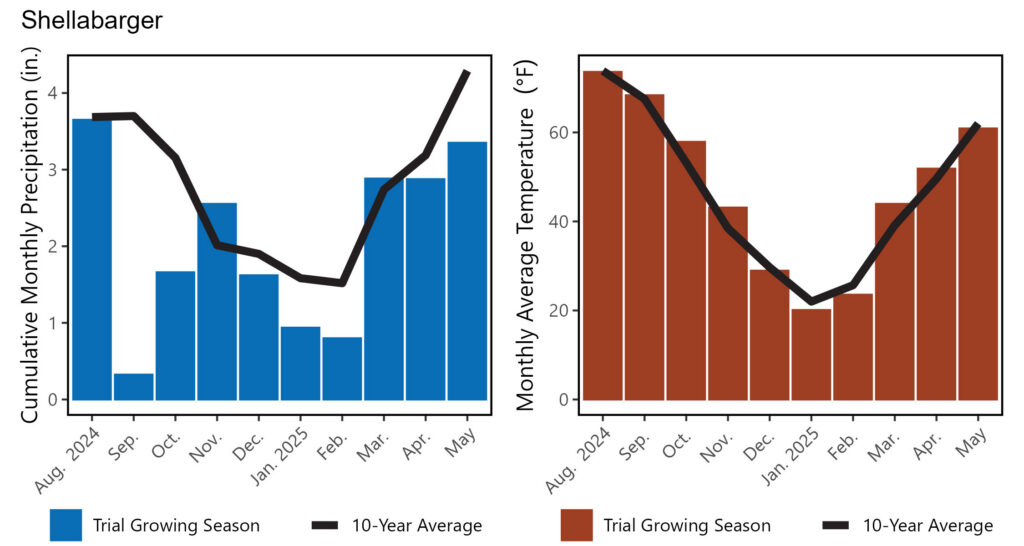
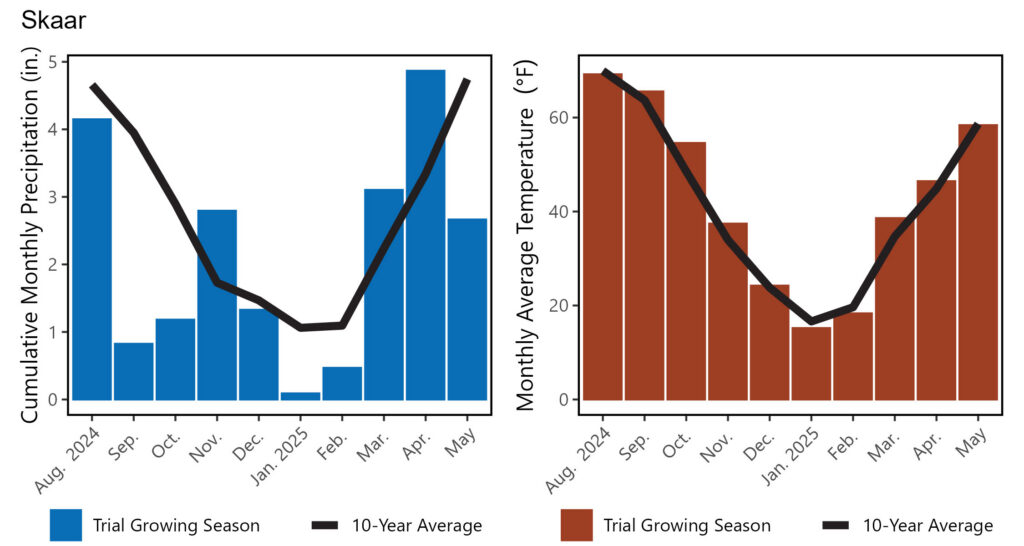
ten-year historic averages. Data is from the NasaPOWER climate dataset. [6], [7]. Click to enlarge.
References
- V. Nichols, R. Martinez-Feria, D. Weisberger, S. Carlson, B. Basso, and A. Basche, “Cover crops and weed suppression in the U.S. Midwest: A meta-analysis and modeling study,” Agric. Environ. Lett., vol. 5, no. 1, p. e20022, 2020, doi: 10.1002/ael2.20022.
- D. Elmquist et al., “Biomass Thresholds for Cereal Rye Cover Crop Goals,” Crops and Soils. Accessed: Jul. 13, 2026. [Online]. Available: https://cropsandsoils.extension.wisc.edu/articles/biomass-thresholds-for-cereal-rye-cover-crop-goals/
- S. Gailans, “Winter Cereal Rye Cover Crop Effect of Cash Crop Yield - Year 10 - Practical Farmers of Iowa,” PFI, 2019. Accessed: Jul. 14, 2026. [Online]. Available: https://practicalfarmers.org/resources/research-reports/winter-cereal-rye-cover-crop-effect-of-cash-crop-yield-year-10/
- S. Gailans, “Effect of Planting Green on Corn Seedling Disease, Stalk Rot and Yield – Year 2 - Practical Farmers of Iowa,” PFI, 2022. Accessed: Jul. 14, 2026. [Online]. Available: https://practicalfarmers.org/resources/research-reports/effect-of-planting-green-on-corn-seedling-disease-stalk-rot-and-yield-year-2/
- “Reducing the Risk of Corn Seedling Disease, Yield Loss After Cereal Rye Cover Crop,” Integrated Crop Management. Accessed: Jul. 13, 2026. [Online]. Available: https://crops.extension.iastate.edu/cropnews/2016/12/reducing-risk-corn-seedling-disease-yield-loss-after-cereal-rye-cover-crop
- A. Sparks, nasapower: NASA-POWER Data from R. (2024). [Online]. Available: https://CRAN.R-project.org/package=nasapower
- A. H. Sparks, “nasapower: A NASA POWER Global Meteorology, Surface Solar Energy and Climatology Data Client for R,” J. Open Source Softw., vol. 3, no. 30, p. 1035, Oct. 2018, doi: 10.21105/joss.01035.