In a Nutshell:
- In recent years, Dick Sloan has been evaluating his use of insecticide (neonicotinoid) seed treatments for soybeans in on-farm trials and has found no improvement in yield or financial returns compared with untreated soybean seeds.
- Sloan now focused his attention on corn seed treatments and compared seeds treated with fungicide only; fungicide and insecticide; and a humic acid product which did not include fungicide or insecticide.
Key Findings:
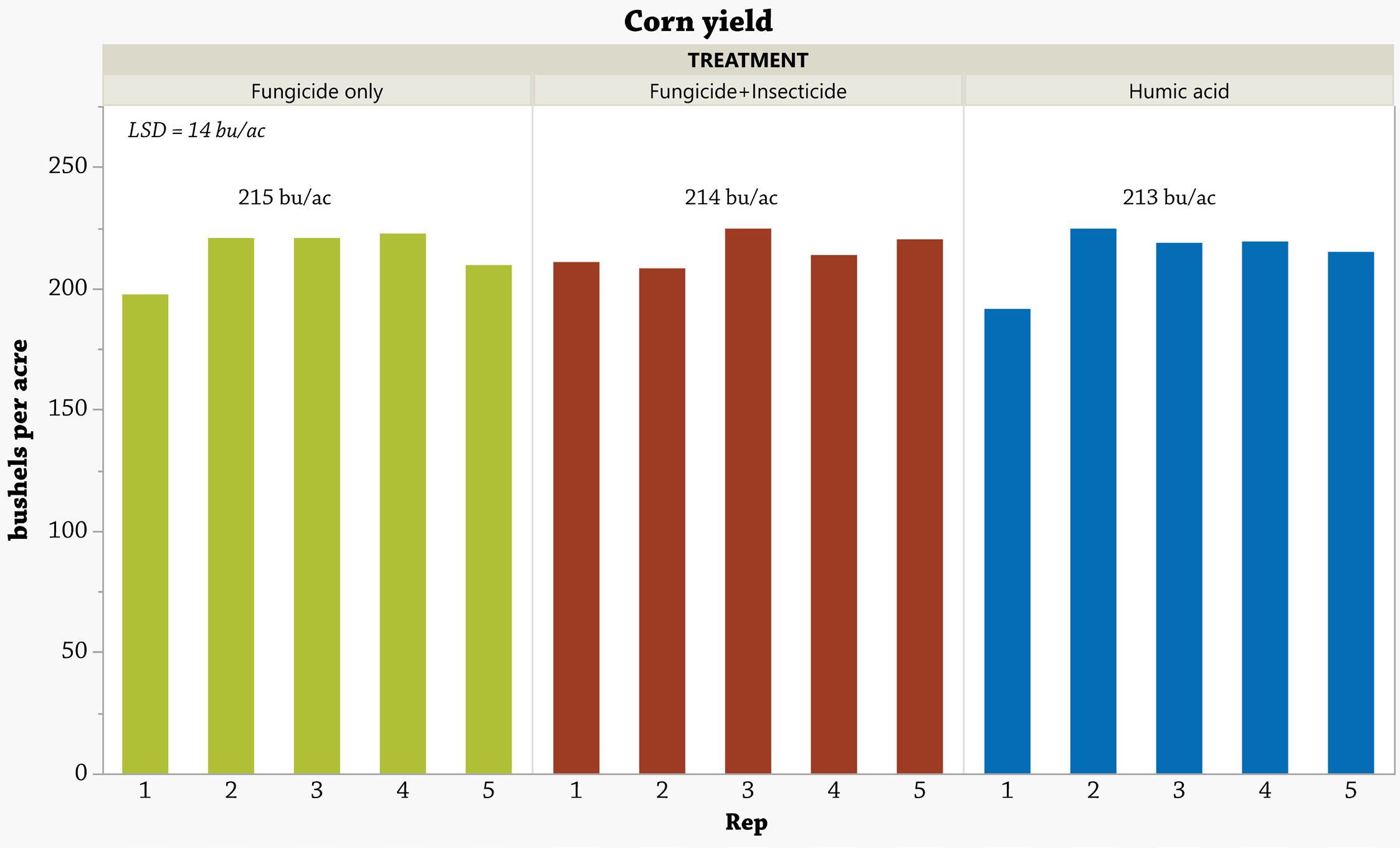
- Seed treatment had no effect on corn yield; average yield across all treatments was 214 bu/ac.
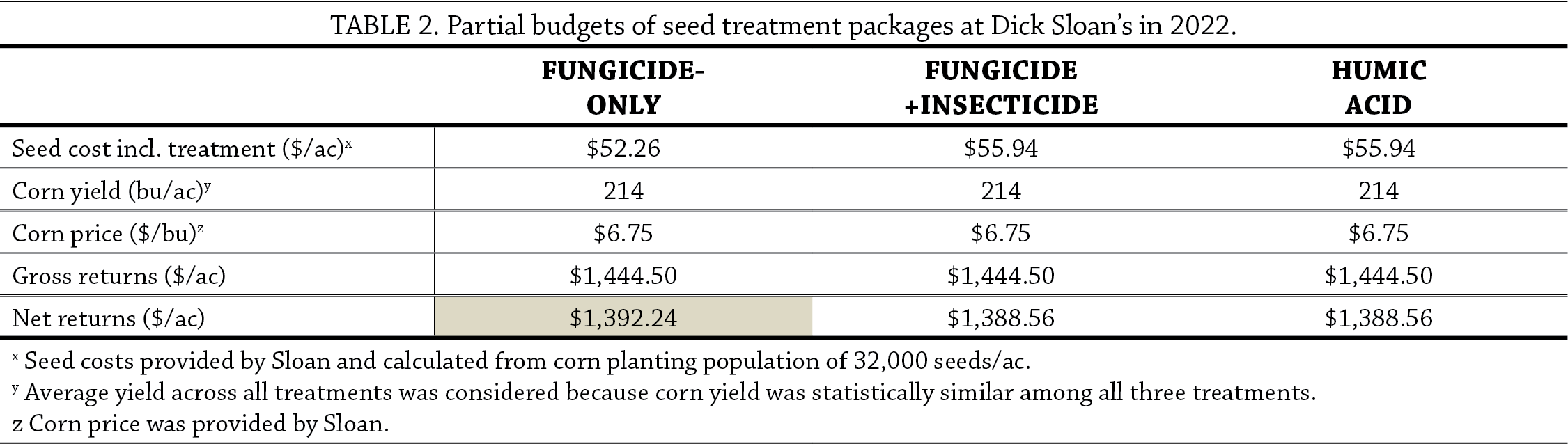
- The Fungicide-only treatment, the least expensive among the three trialed, provided top net returns over the other two treatments by nearly $4/ac.
Methods
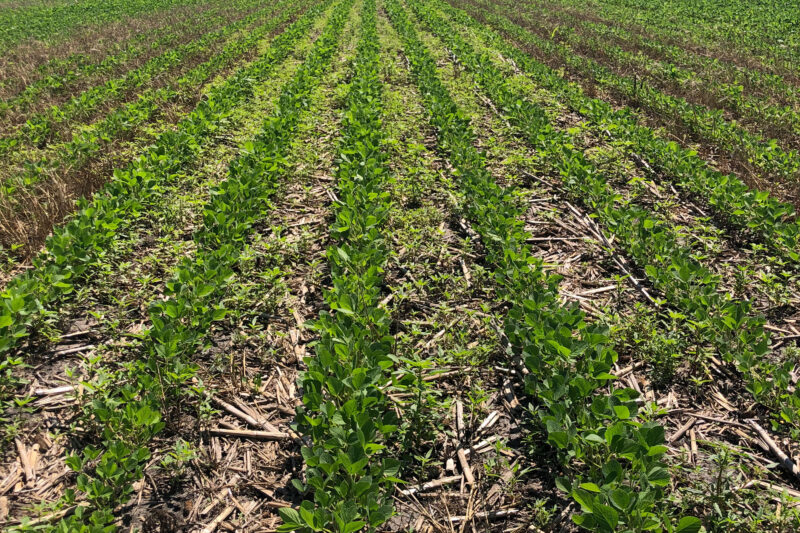
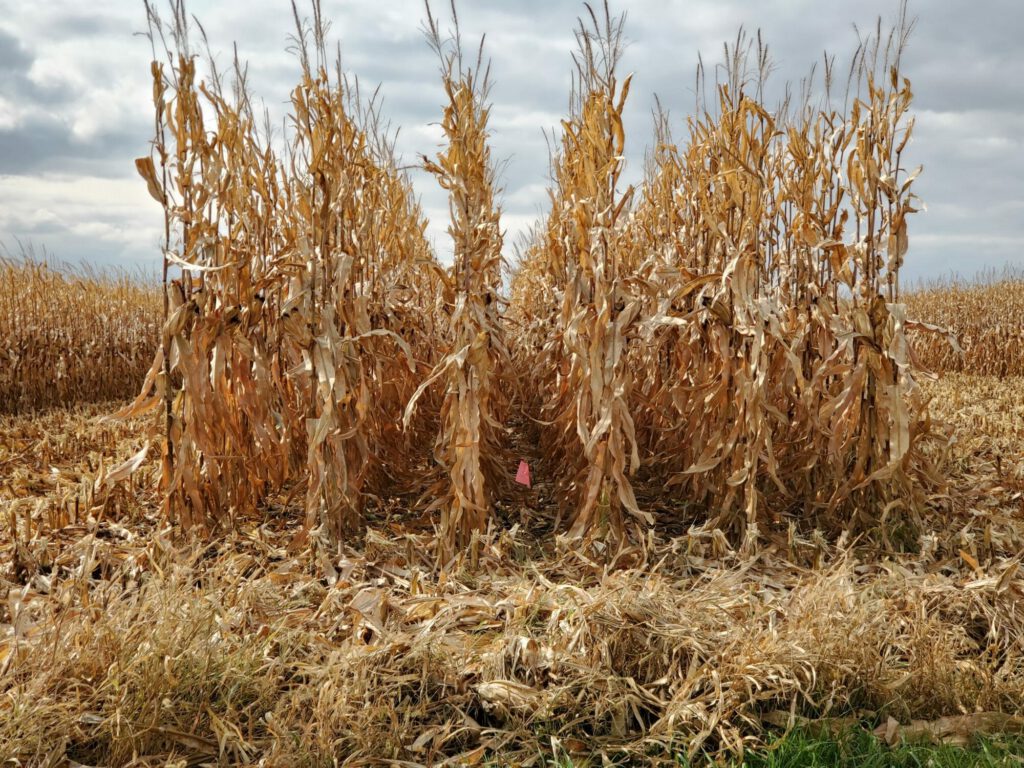
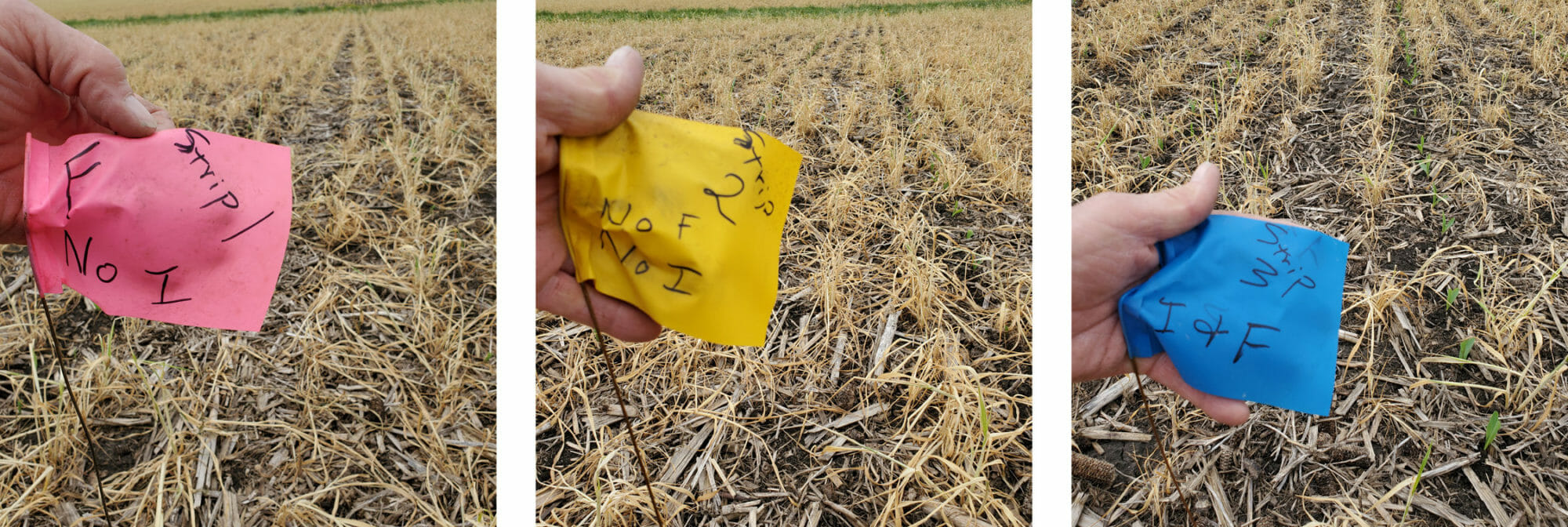
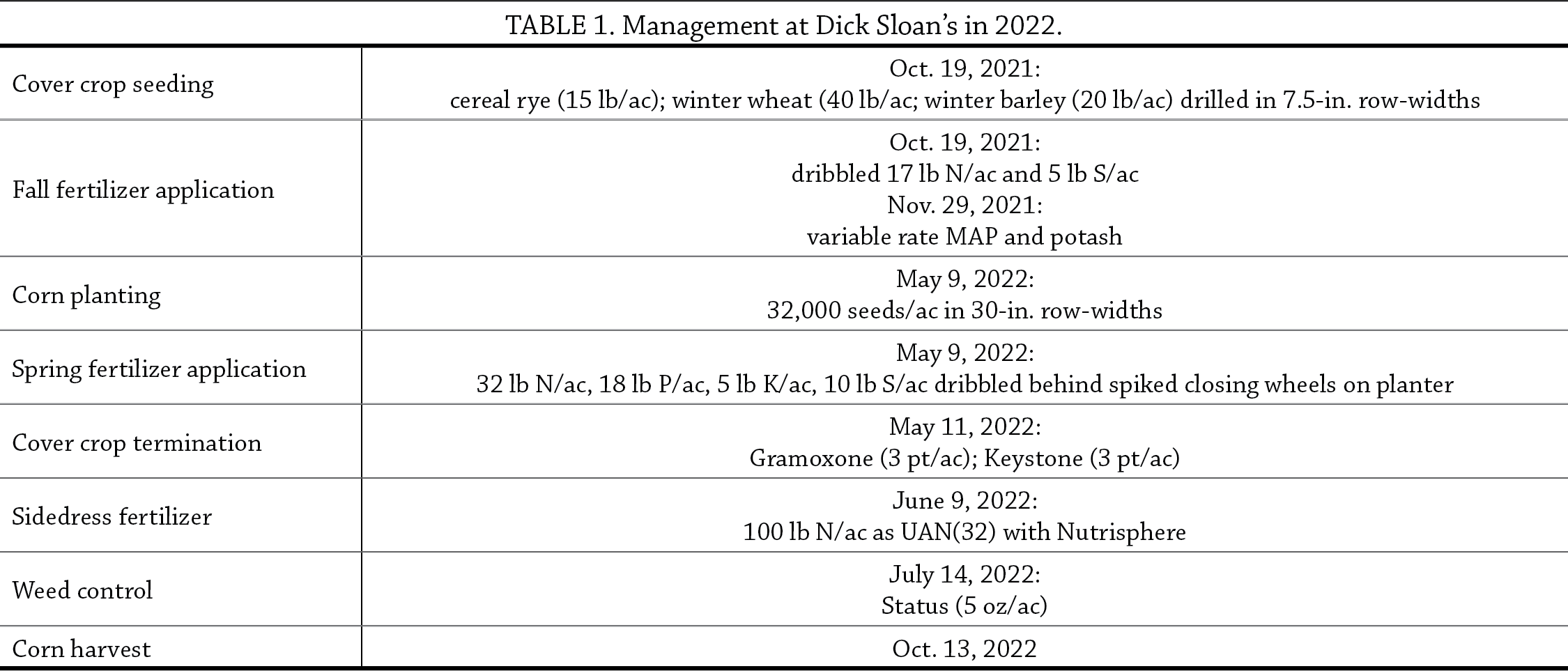
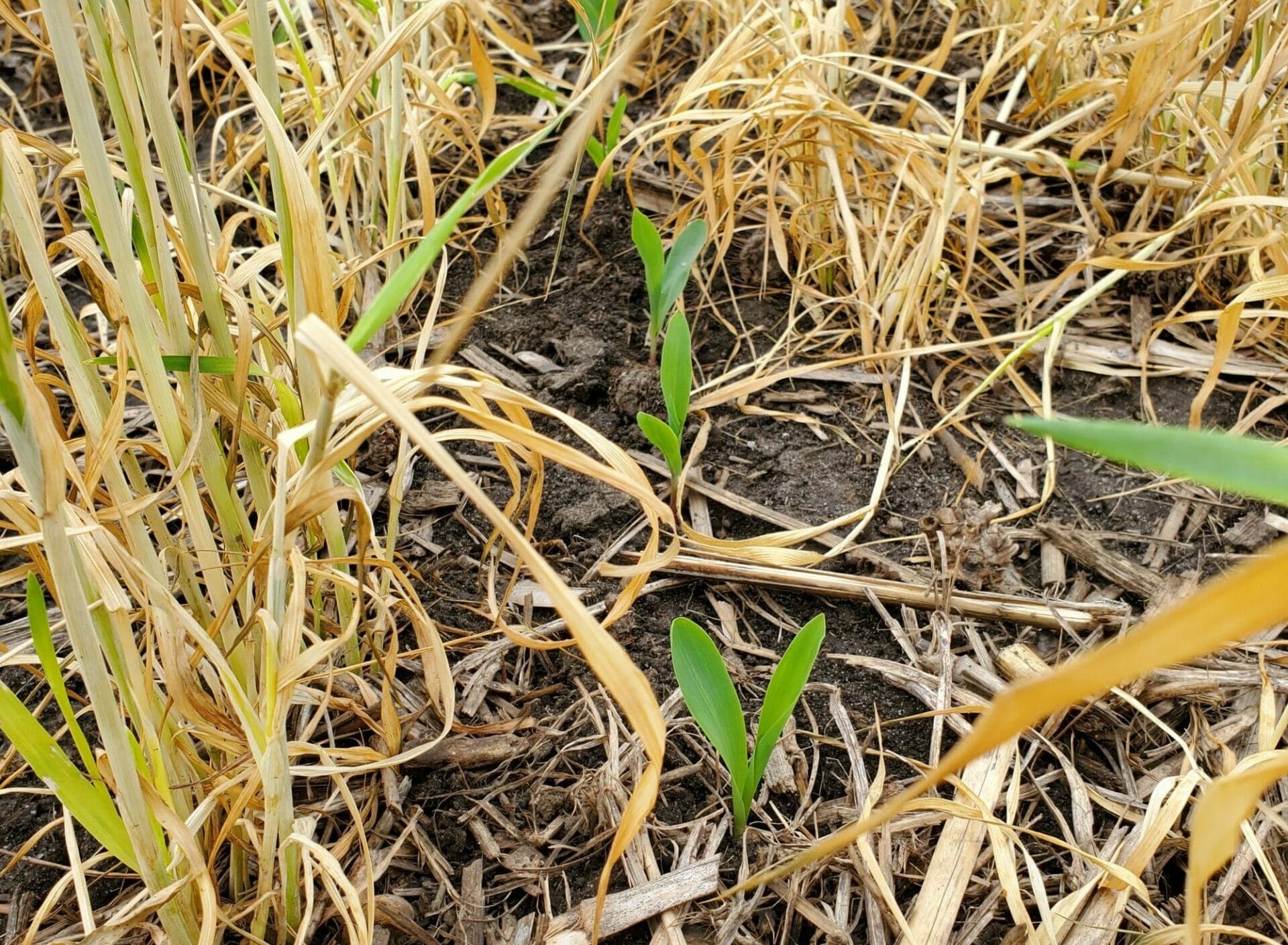
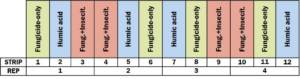
DesignOn May 9, 2022, Sloan planted corn in 30-in. row-widths at a population of 32,000 seeds per acre into a field previously in soybeans and seeded to a cover crop of cereal rye, winter wheat and winter barley in fall 2021. He compared three seed treatment packages: 1. Fungicide-only:
- Fungicide = Vibrance Cinco (Azoxystrobin, Mefenoxam, Fludioxonil, Sedaxane, Thiabendazole);
- SabrEx root inoculant (Trichoderma microbial); Excellorate (biological stimulant).
2. Fungicide+Insecticide:
- Fungicide = Vibrance Cinco (Azoxystrobin, Mefenoxam, Fludioxonil, Sedaxane, Thiabendazole);
- Insecticide = Cruiser 5FS (Thiamethoxam);
- SabrEx root inoculant (Trichoderma microbial); Excellorate (biological stimulant).
3. Humic acid (no fungicide, no insecticide):
- Humic = Organic 1r (derived from Leonardite);
- SabrEX root inoculant (Trichoderma microbial).
Results and Discussion
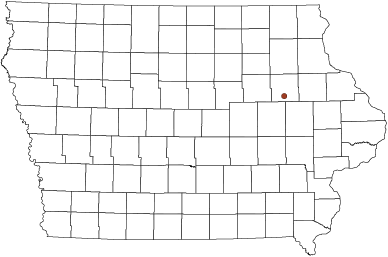
Corn yield was not affected by seed treatment (Figure 1). In other words, the Humic acid treatment, which did not contain a fungicide or insecticide, produced yields equal to seeds treated with fungicide and insecticide or fungicide only. Across all treatments, the average yield was 214 bu/ac which is just above the five-year average for Buchanan County (209 bu/ac) where Sloan farms.[1]
Conclusions and Next Steps
Sloan conducted this trial on corn seed treatments because he questioned the use of preventative insecticide applications for corn planted after soybeans in rotation. “I want to reduce unnecessary insecticides in the soil health environment,” he said at the onset. Sloan’s results showed that forgoing insecticide seed treatment did not reduce yields and improved net returns through reduced costs. Forgoing both the insecticide and fungicides in the Humic acid treatment did not reduce yields either (though, it turned out to be just as costly as the Fungicide+Insecticide treatment). “Now I'm less convinced that we have a routine need for fungicides as well,” Sloan said. “Not getting a response from the fungicides on seed really makes me wonder if they are interfering with the healthy fungi I am trying to develop in my soil. Are we buying pesticides as a form of insurance, to alleviate some perceived risk which may not be all that likely? I don't want to poison soil health with needless applications of pesticides.”
Appendix – Trial Design and Weather Conditions
References
- US Department of Agriculture-National Agricultural Statistics Service. Quick stats. USDA-National Agricultural Statistics Service. https://quickstats.nass.usda.gov/ (accessed October 2022).
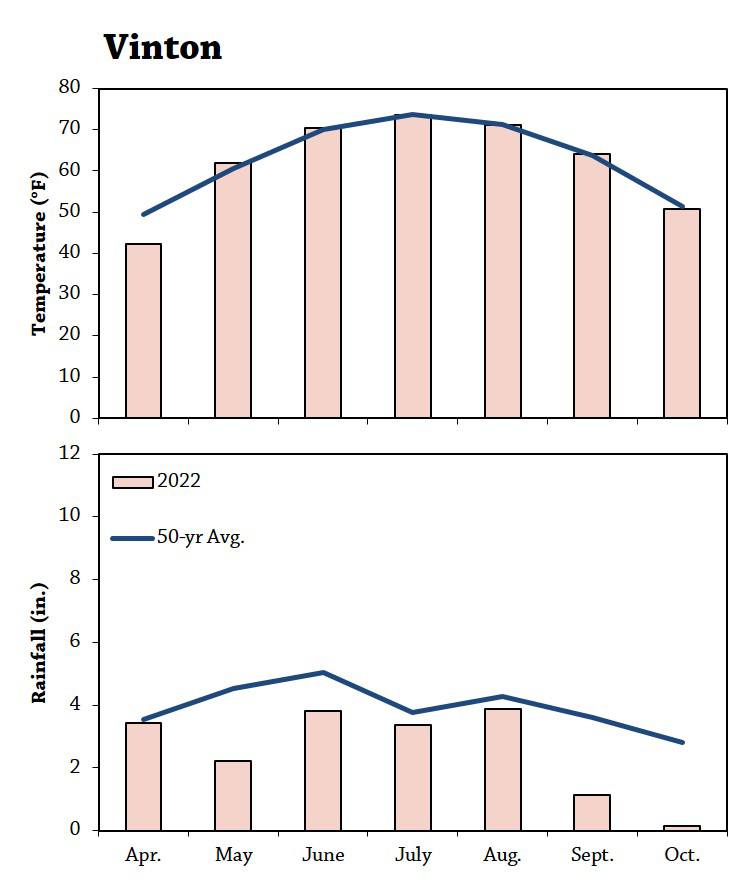
- Iowa Environmental Mesonet. 2022. Climodat Reports. Iowa State University. http://mesonet.agron.iastate.edu/climodat/ (accessed October 2022).