In a Nutshell:
- Vegetable farm rotations often result in a few beds sitting empty in the summer. For example, broccoli beds harvested in early summer may sit empty until they are planted with garlic in October.
- Farmers often want to squeeze a fast-growing, heat-loving cover crop into these fallow periods. Many have questions about which species or mixes will perform well.
- In 2025, four vegetable farmers tested progressively more diverse summer cover crop mixes: Buckwheat (B), buckwheat + oats + peas (BOP), and buckwheat + oats + peas + cowpea + millet (BOPCM). They measured total biomass production in each mix.
Key Findings:
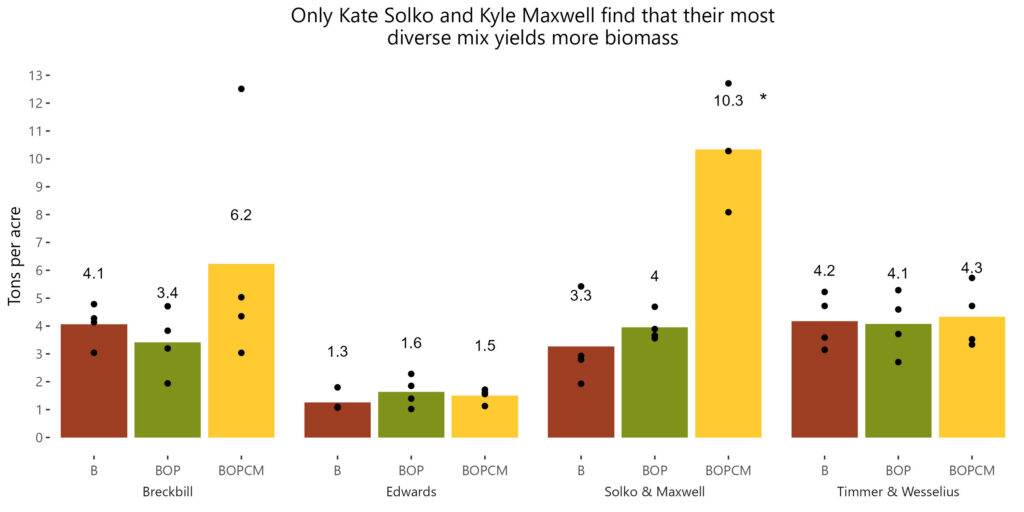
- Kate Solko & Kyle Maxwell were the only farmers who found that the most diverse mix (BOPCM) produced more biomass than the less diverse mixes (B and BOP).
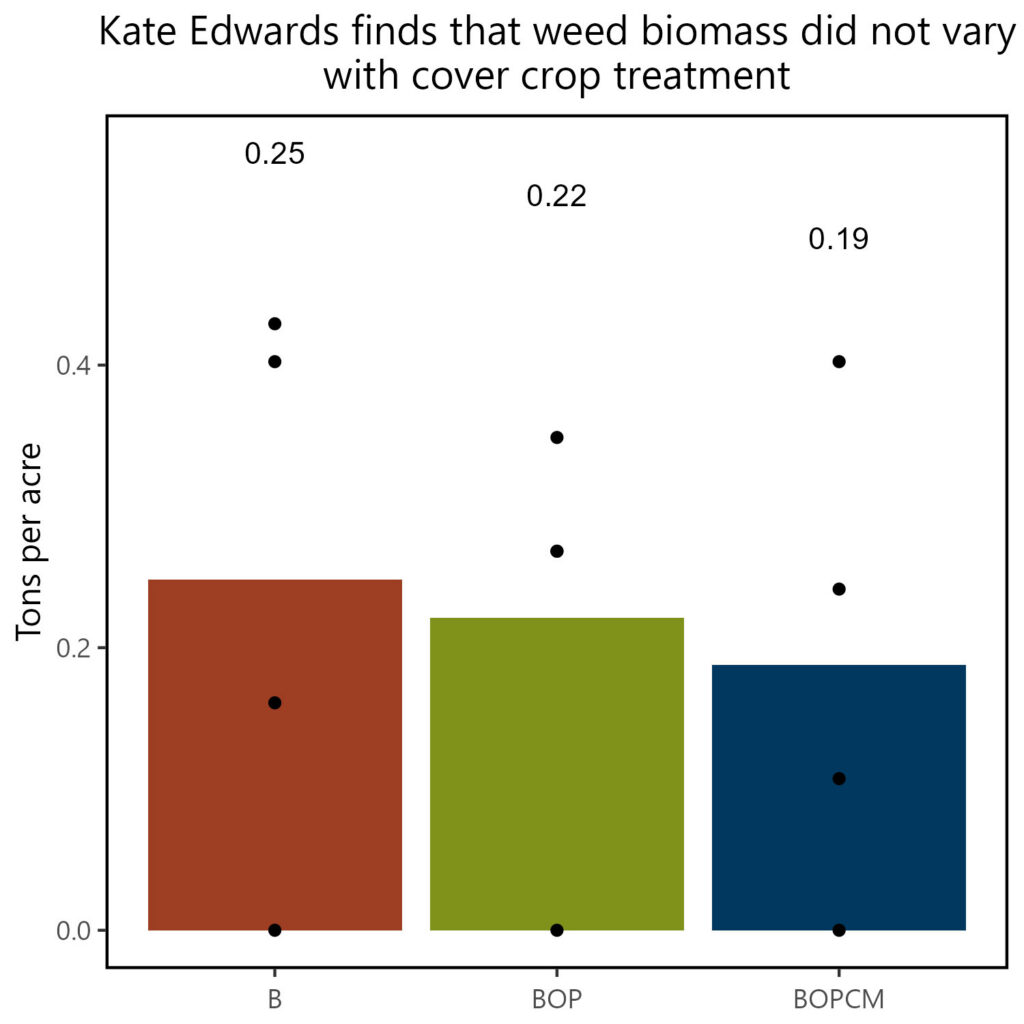
- Kate Edwards found the same amount of weed biomass in all three of her treatments. Other farmers did not measure weed biomass separately from cover crop biomass because it proved difficult to separate the two.
- All farmers were glad to gain experience with summer cover crops and new-to-them cover crop species.
Background
Vegetable farmers frequently have beds that sit empty for a few months in the summer after spring and early summer crops are harvested but before fall successions are planted. Since empty fields are likely to develop weed and soil erosion issues, farmers are often interested in planting a cover crop during this window of time. There is a wide range of species that can be grown as cover crops in the midwestern summer including buckwheat, cowpea, oats, oilseed radish, yellow mustard, and sorghum-sudangrass [1]. Each of these species produces biomass to suppress weeds and build soil organic matter, and some species also fix nitrogen (ex. cowpeas) and provide food for pollinators (ex. buckwheat, radish, mustard).
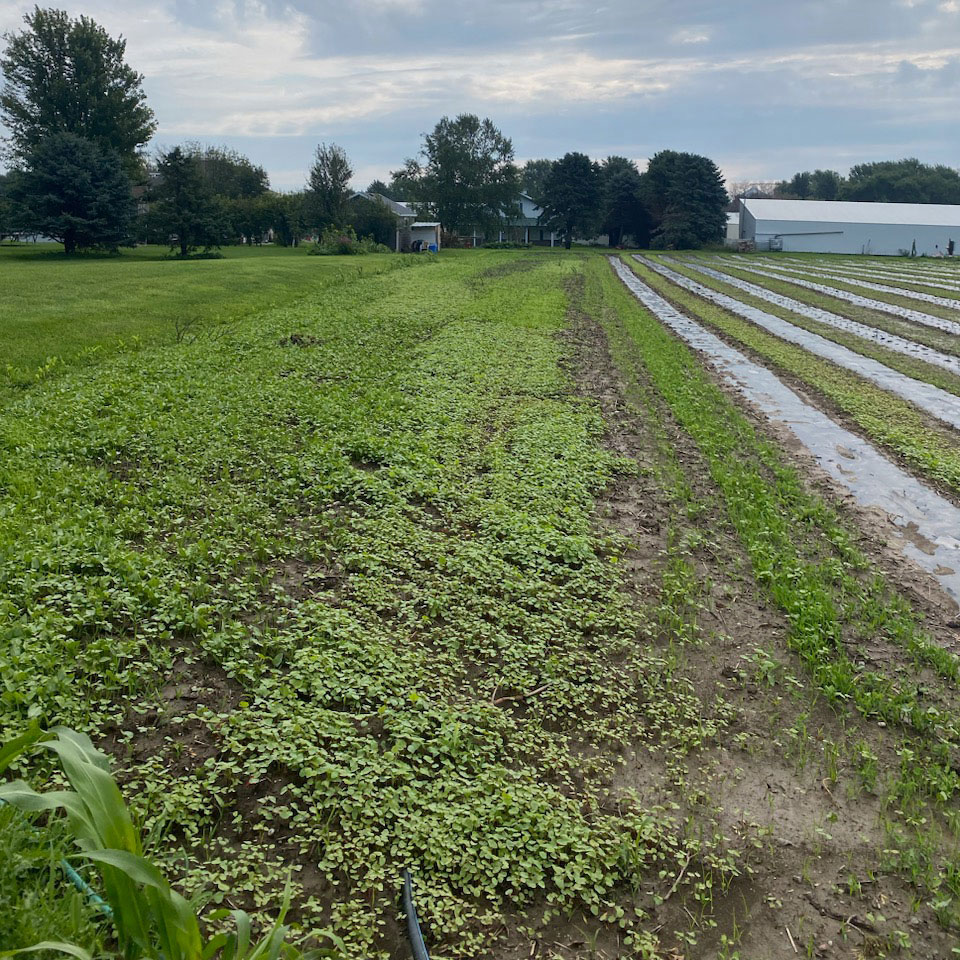
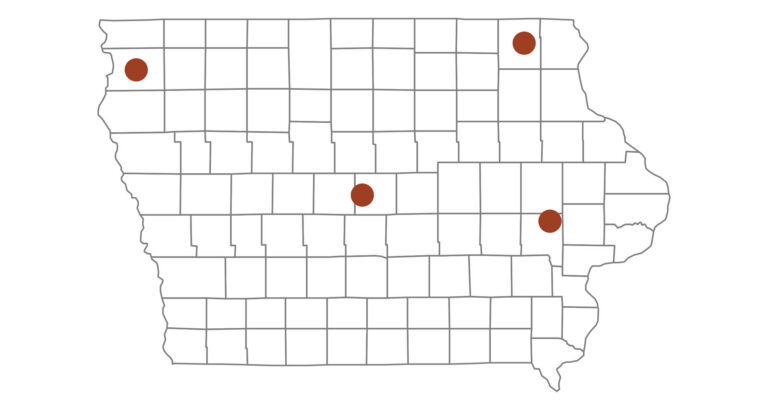
Hannah Breckbill, Kate Edwards, Kate Solko & Kyle Maxwell and Ana Timmer & John Wesselius have long been interested in using summer cover crops on their vegetable farms but were not sure which species to use. Many of these farmers have previously used quick-growing buckwheat in a variety of cover crop applications but wondered if a cover crop mix would produce more biomass and provide more benefits in the late summer window. As a group, they decided to investigate the biomass production of three progressively more diverse summer cover crop mixes: Buckwheat (B), Buckwheat + oats + peas (BOP), and buckwheat + oats + peas + cowpea + millet (BOPCM).
Breckbill said she was motivated to conduct the trial because “it'll show me whether the effort it takes in sourcing/creating a more diverse cover crop mix is worthwhile.” Many of the participating farmers noted that they have long been interested in growing summer cover crops but don’t end up planting them in the business of mid-summer vegetable production. Before the trial Edwards said that she was excited to be “actually planting a summer cover!”
Methods
Design
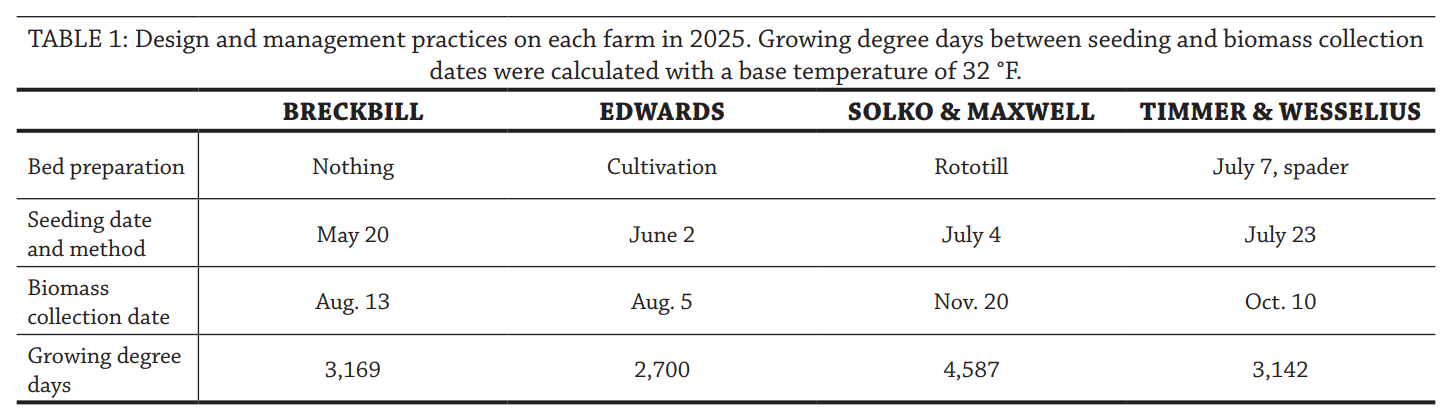
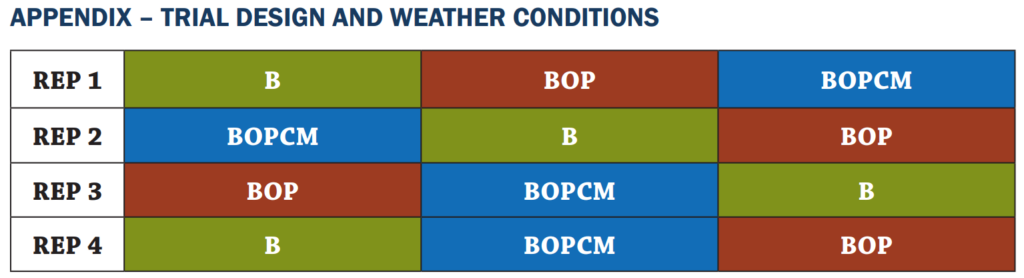
Farmers planted four replicates of each treatment within a randomized block trial design as shown in Figure A1. Each farmer planted the three mix treatments by hand broadcasting seed. Breckbill, Solko & Maxwell and Timmer & Wesselius used a standard seeding rate of 1 seed/in2 in each treatment, with an equal number of seeds of each variety in the mixes. Edwards seeded 1 seed/ in2 of each species in each mix, which resulted in her applying a lot more seed in her diverse mixes. Planting and harvest dates are shown in Table 1.
Measurements
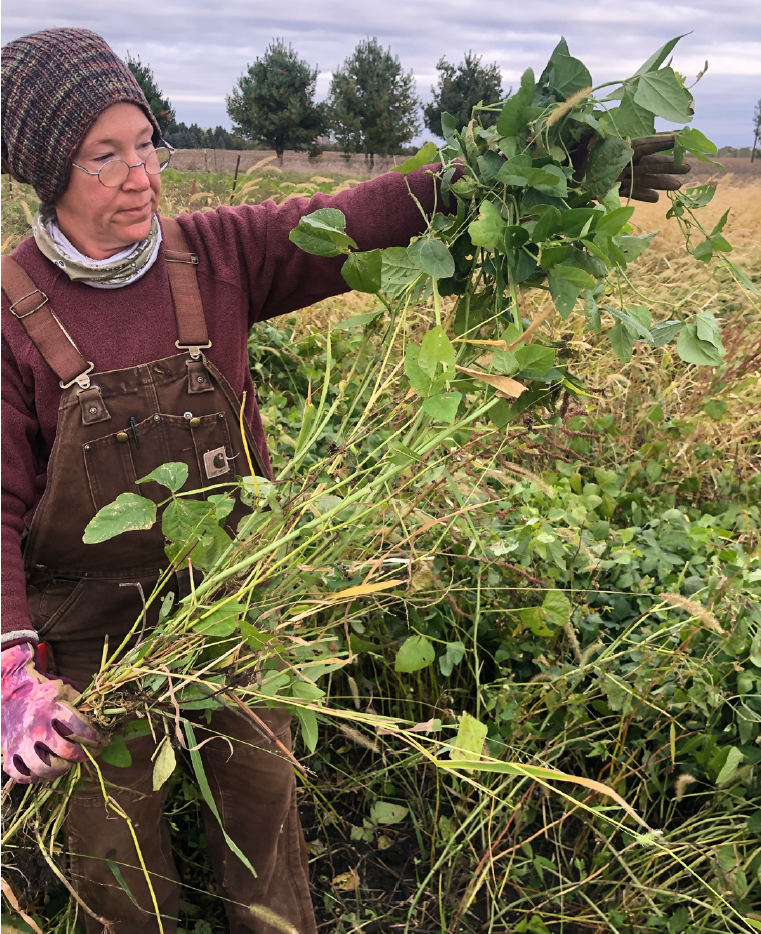
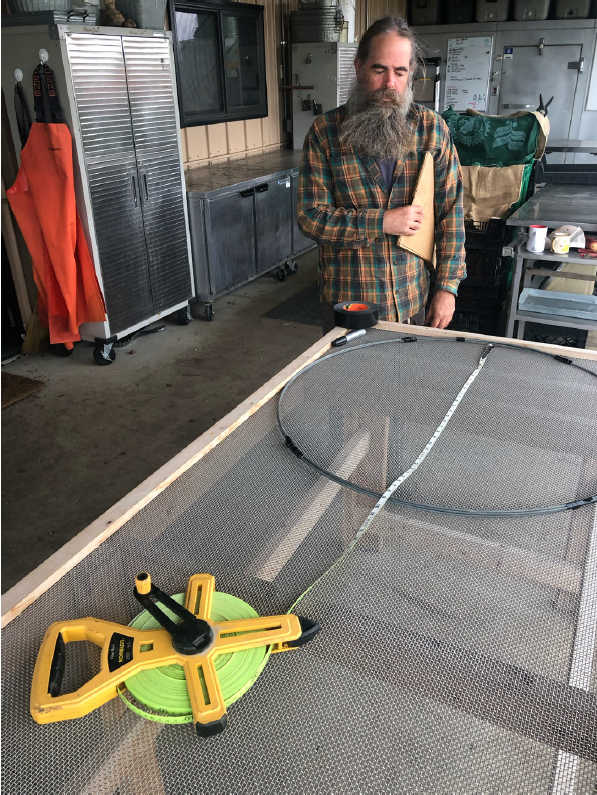
Just before terminating their cover crops, farmers collected two biomass samples from areas of a known size within each replicate. They air dried the biomass in a paper bag and weighed it when dry. While the farmers originally planned to separate cover crop biomass from weed biomass and weigh the two separately, Breckbill and Timmer & Wesselius found this to be impractical as most of the biomass was weeds. Edwards separated, dried and weighed cover crops and weeds separately, and Solko & Maxwell estimated what percent of biomass was cover crops vs. weeds.
Data Analysis
We used an ANOVA (Analysis of Variance) at a 90% confidence level to determine whether there were significant differences in cover crop biomass between treatments at each farm and weed biomass at Edwards’. The models accounted for whether cover crop mix and/or replication contributed to differences in biomass (2-way ANOVA). The 90% confidence level means any effects we declare statistically significant would be expected to occur at least 9 times out of 10 if the experiments were carried out in identical conditions. We could perform statistical analysis because each farm had replicated and randomized experimental designs (Figure A1).
Results and Discussion
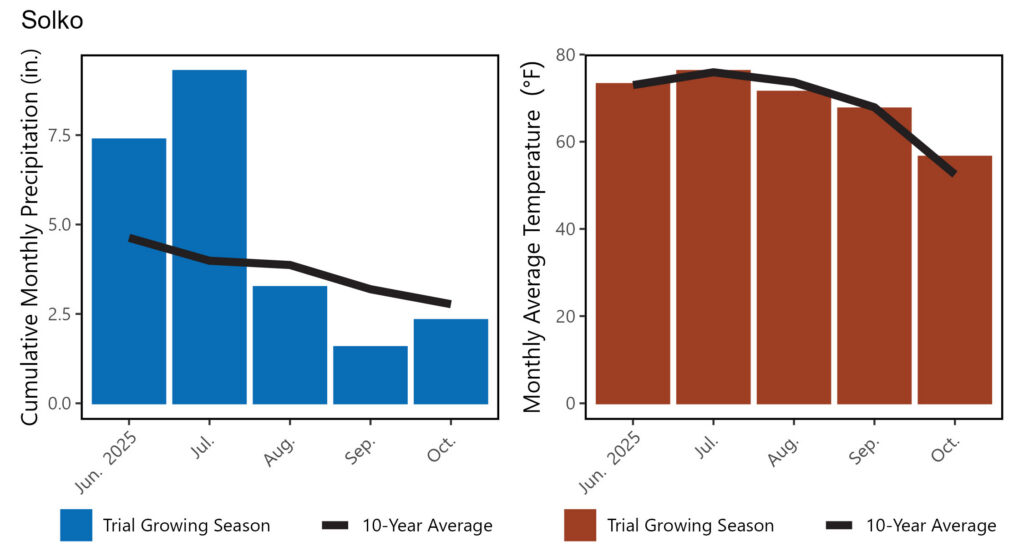
Solko & Maxwell were the only farmers who found that there were statistically significant differences in biomass between their treatments (Figure 1). They left their cover crop in for much longer than the other participating farmers and as a result their cowpeas grew significantly more than at other farms (Table 1). They observed that their most diverse mix, BOPCM, produced significantly more biomass (10 tons/acre) than either B (3 tons/acre) or BOP (4 tons/acre) treatments. Maxwell thinks that the BOPCM mix actually produced too much biomass, to the point that “it was a crazy tangle of biomass, difficult to terminate and to weigh.” The biomass produced by the BOPCM treatment would have been helpful if Maxwell had been able to terminate it, so he quips that “if I had a flail mower for termination, I might sing a different tune.” But as is, he prefers the Buckwheat-only (B) treatment because it did a decent job of suppressing weeds, the seed was cheap, and he only needed to buy and store one type of seed.
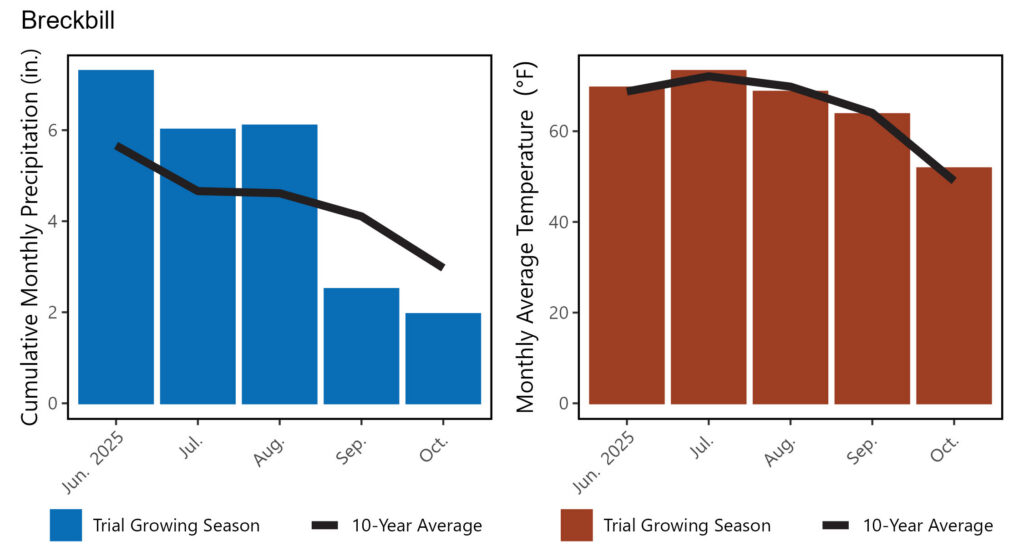
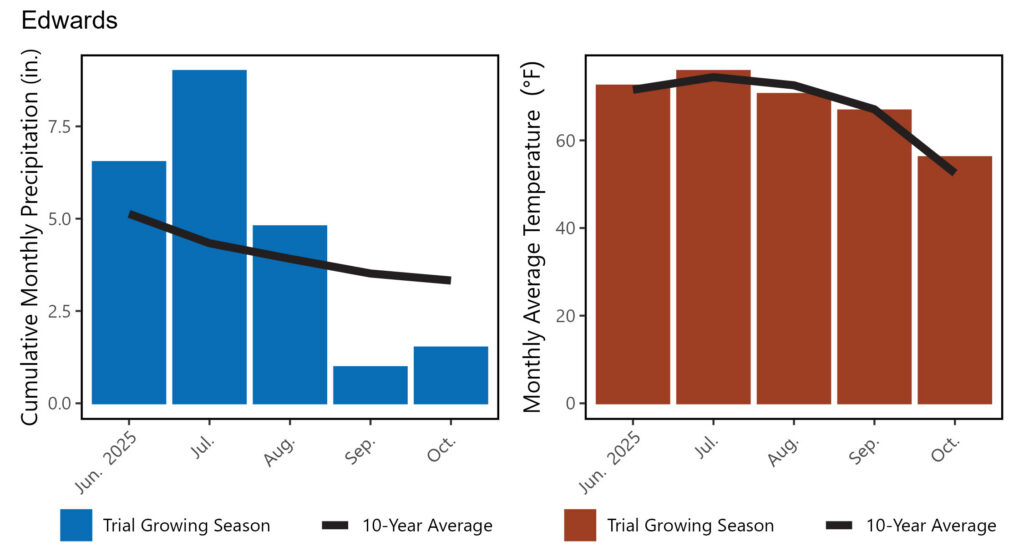
Edwards was the only farmer who separated and weighed separately the cover crop and weed biomass in her treatments. She found no significant differences in weed biomass between the three treatments (Figure 2), and she felt that all of the treatments were much weedier than she would have liked and dominated by buckwheat. Not only did she observe the buckwheat outcompeting all of the other cover crops in the mixes except for the cowpeas, but she also thinks that the buckwheat contributed to the weediness. “I think that the buckwheat broke the soil surface and gave a place for the larger seeds to germinate. Next summer I want to try a buckwheat vs. no buckwheat mix.” Breckbill similarly felt that all of their treatments did a poor job of weed suppression, but they attributed the poor performance to the fact that they did not do any bed preparation before broadcasting the seed and there was no precipitation in the weeks after planting. Their main takeaway was “learning a little bit about how not to plant summer cover crops.”
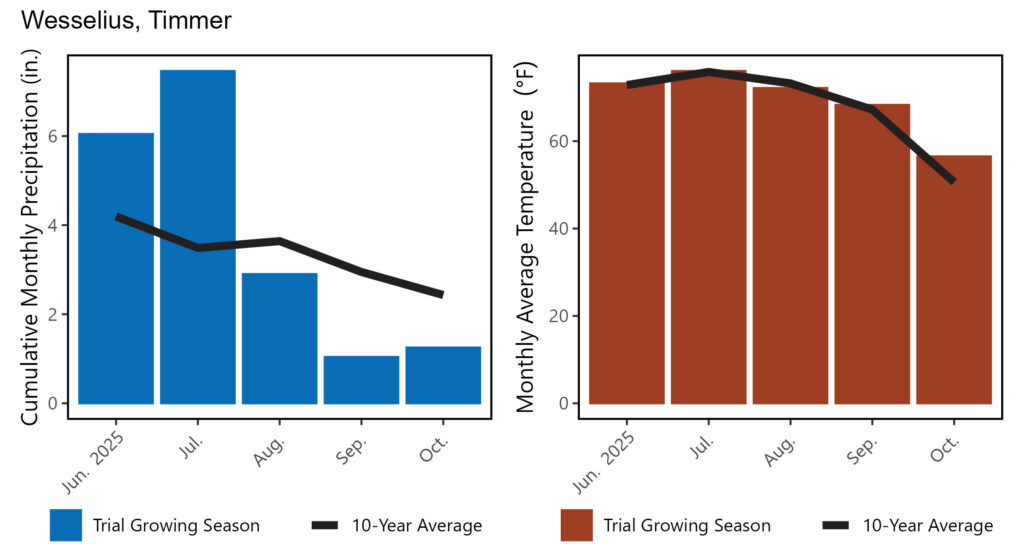
Other participating farmers had positive experiences with the cover crop mixes’ weed control during this trial. Anecdotally, Solko & Maxwell estimated that their B treatment was 20% weed coverage, BOP was 10% weed coverage and BOPCM was 5% weeds. However, they were happy enough with the B treatment’s weed control performance. Timmer & Wesselius reported that they were impressed with the weed suppression of all three of their mixes provided. They reported that they used a historically weedy field with poor soil for the trial and observed fewer weeds than usual throughout the trial.
Conclusions and Next Steps
Participating farmers learned valuable information about the performance of different species in a summer-planted cover crop mix through this trial. They each had slightly different takeaways from the trials. Maxwell reports that they will stick to buckwheat alone in the future because it is cheap, simple, and reliably produces a manageable amount of biomass. Edwards, in contrast, wants to investigate mixes that do not include buckwheat because the buckwheat’s early flowering forced early cover crop termination and she observed the buckwheat encouraging weed growth. Timmer reports that she would consider using the cover crop mixes she tested again in specific circumstances and might incorporate some of the new-to-her species into her farm’s living pathways. Finally, Breckbill felt that the cover crops in their trial did not perform well because of management mistakes. They want to continue honing their summer cover crop planting methods to produce a more reliable, weed-free cover.
Appendix - Trial Design and Weather Conditions
References
- A. Nair, Summer Cover Crops for Fall Vegetable Production. Accessed: Jul. 24, 2026. [Online Video]. Available: https://www.extension.iastate.edu/vegetablelab/summer-cover-crops-fall-vegetable-production
- A. H. Sparks, “nasapower: A NASA POWER Global Meteorology, Surface Solar Energy and Climatology Data Client for R,” J. Open Source Softw., vol. 3, no. 30, p. 1035, Oct. 2018, doi: 10.21105/joss.01035.
- A. H. Sparks et al., nasapower: NASA POWER API Client. (May 18, 2024). Accessed: Sep. 11, 2024. [Online]. Available: https://cran.r-project.org/web/packages/nasapower/index.html