In a Nutshell:
- Biostimulants are products that intend to introduce beneficial microbes to crops, to harness the microbes’ biological processes to boost plant performance.
- The aims of this project were to determine whether biostimulant products 1) improve corn yield; 2) can possibly reduce N fertilizer rate; and 3) are cost-effective.
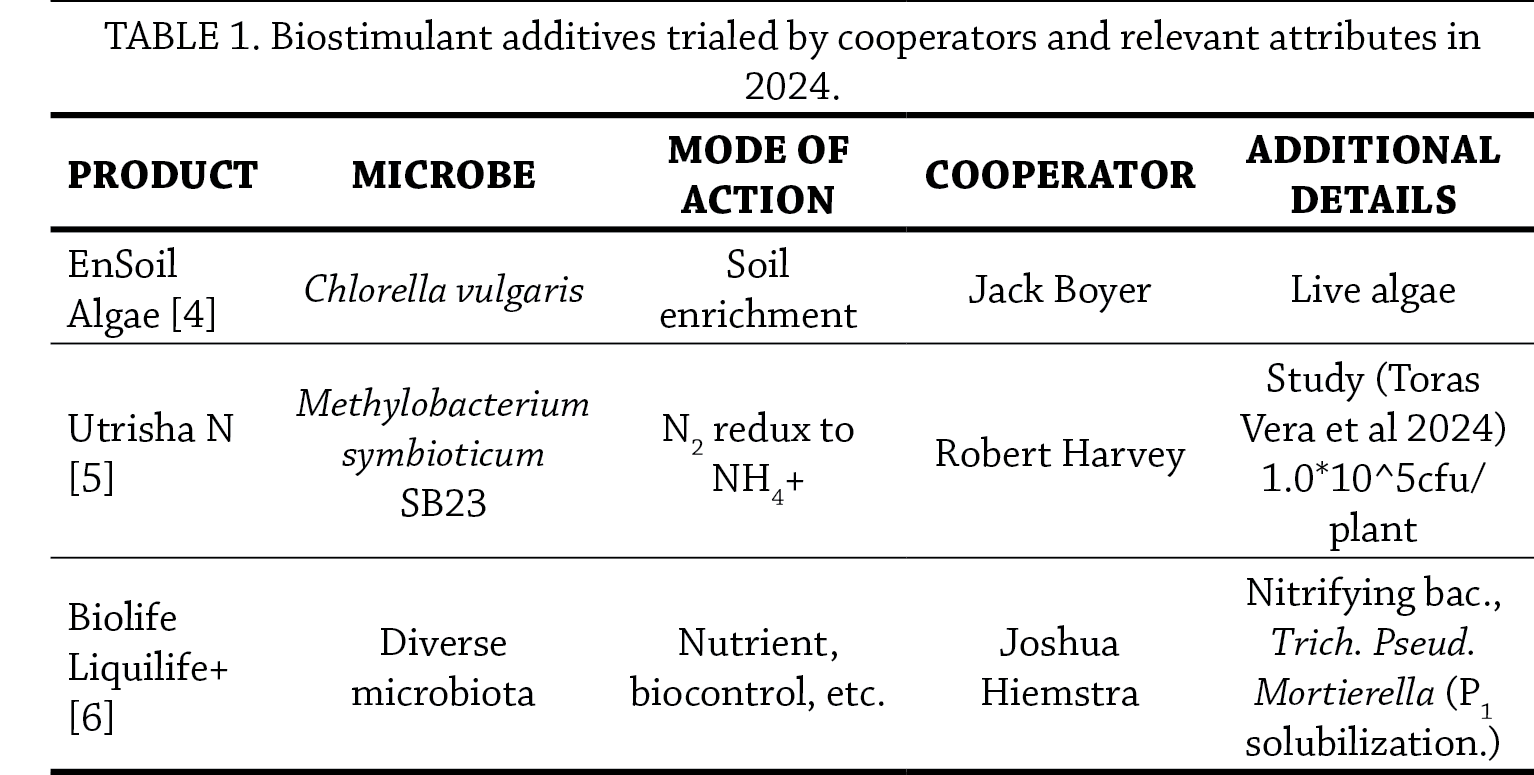
- The three products studied in this project were EnSoil Algae on Jack Boyer’s farm; Utrisha N on Robert Harvey’s farm; and Biolife Liquilife+ on Josh Hiemstra’s farm.
Key Findings:
- Boyer performed two trials. He saw a significant, 49%, increase in his corn yield in one trial with EnSoil Algae, but no significant change in the other.
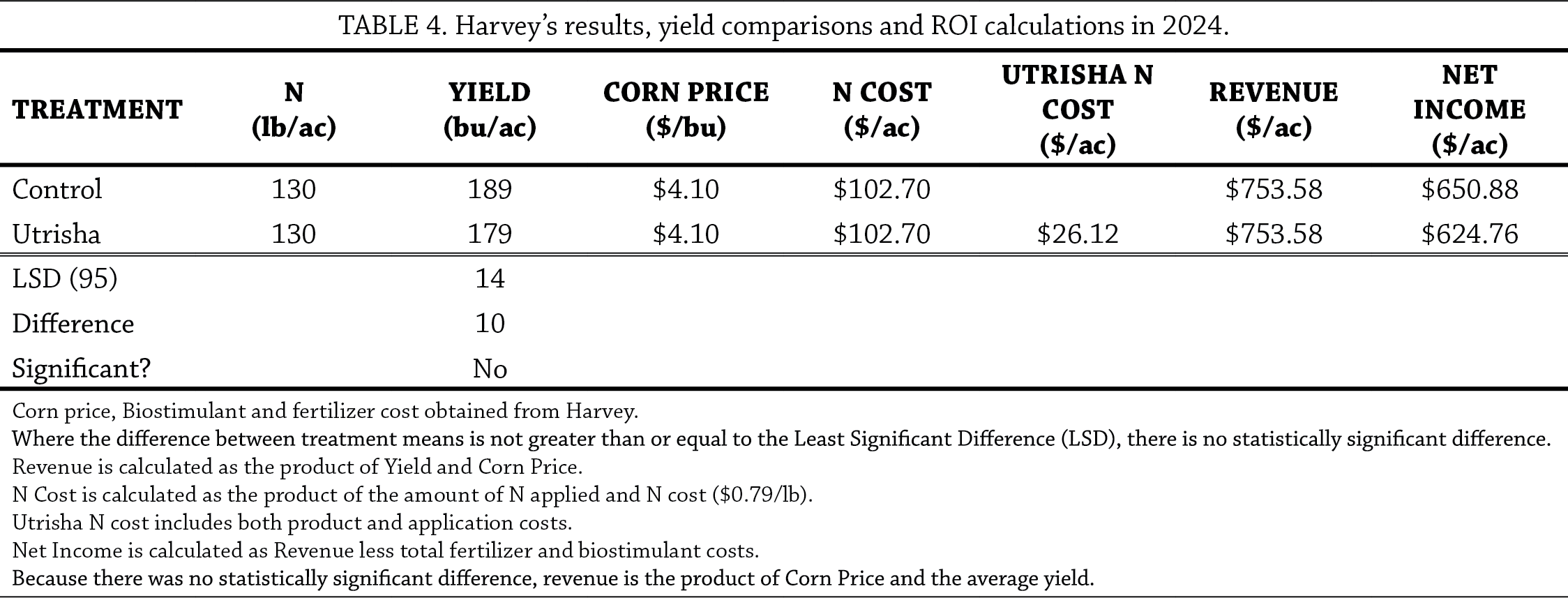
- Harvey saw no significant yield differences between Utrisha and control treatments.
- Hiemstra saw a significant, 4%, yield decrease with his combined treatment of Liquilife+ and reduced N-fertilization rate, compared to control.

Background
The soil in which plants grow is home to an enormous variety of microbes, which drive the nutrient cycles which enable plant growth. Numerous commercial products have been developed to try to leverage these microbes to boost plant performance. Previous PFI trials have examined biostimulants for corn production [1], [2]. None have found the biostimulants to have had significant effects. But the claimed benefits of the products — healthier soil, healthier plants, and free nutrients — motivated cooperators to try again this year. There may be a high degree of specificity in matching the right microbe to the right conditions. Bacteria that are found to be beneficial to a certain plant in a certain set of circumstances will change their strategy if the circumstances change. For example, the nitrogen fixation rates of the rhizobium bacteria in soybean root nodules decreases when soybeans are artificially N fertilized, because the plant invests less energy (in the form of sugars exuded from the root) in the relationship [3]. Nitrogen fixation is one of the most valuable ecosystem services provided by soil bacteria that many commercial products claim to tap into, activate, or boost. Nitrogen fixation results from the chemical reduction of atmospheric nitrogen (N2) into ammonium (NH4+) which the plant can readily take up and use to build amino acids. Atmospheric nitrogen thus converted and taken up is as free as air, displacing artificial fertilizer inputs and saving farmers money. Different products have different strategies for leveraging this ability, and each cooperator sourced a different biostimulant to test for this project. Boyer hoped to find a way to significantly reduce commercial N inputs and improve profitability, as well as improve soil health. Hiemstra hoped to improve yields with less inputs. The trial was designed to enable return on investment (ROI) calculations on their chosen biostimulant product. Harvey hoped to learn “whether or not some of these products actually work”.Methods
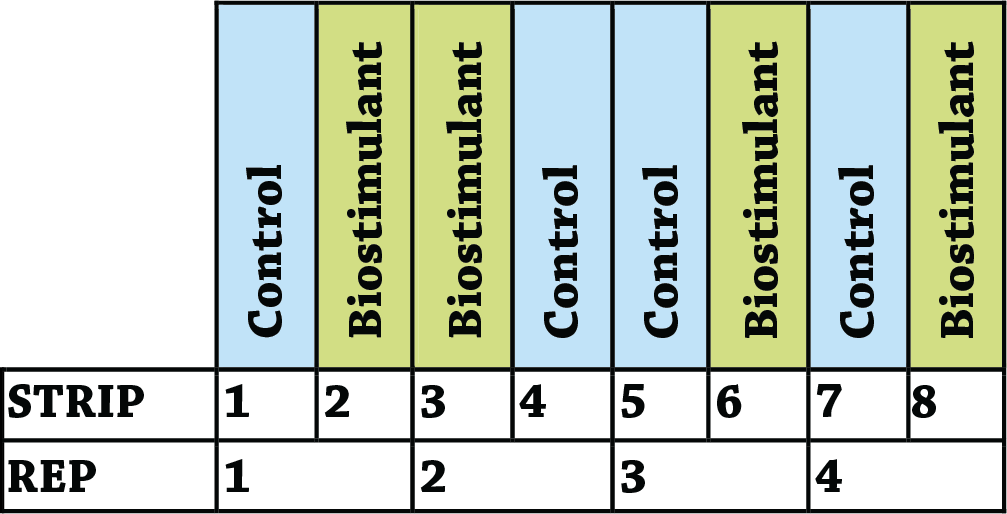
Design To determine the effectiveness of their respective biostimulants (Table 1), the cooperators compared corn yields under a combination of the following treatments:- Control: Cooperator’s typical practice rate of manure/fertilizer applied.
- Biostimulant: Cooperator’s typical practice rate of manure/ fertilizer applied. Biostimulant applied as directed by manufacturer.
- Biostimulant with reduced N: Reduced applied N paired with biostimulant application.


Results and Discussion
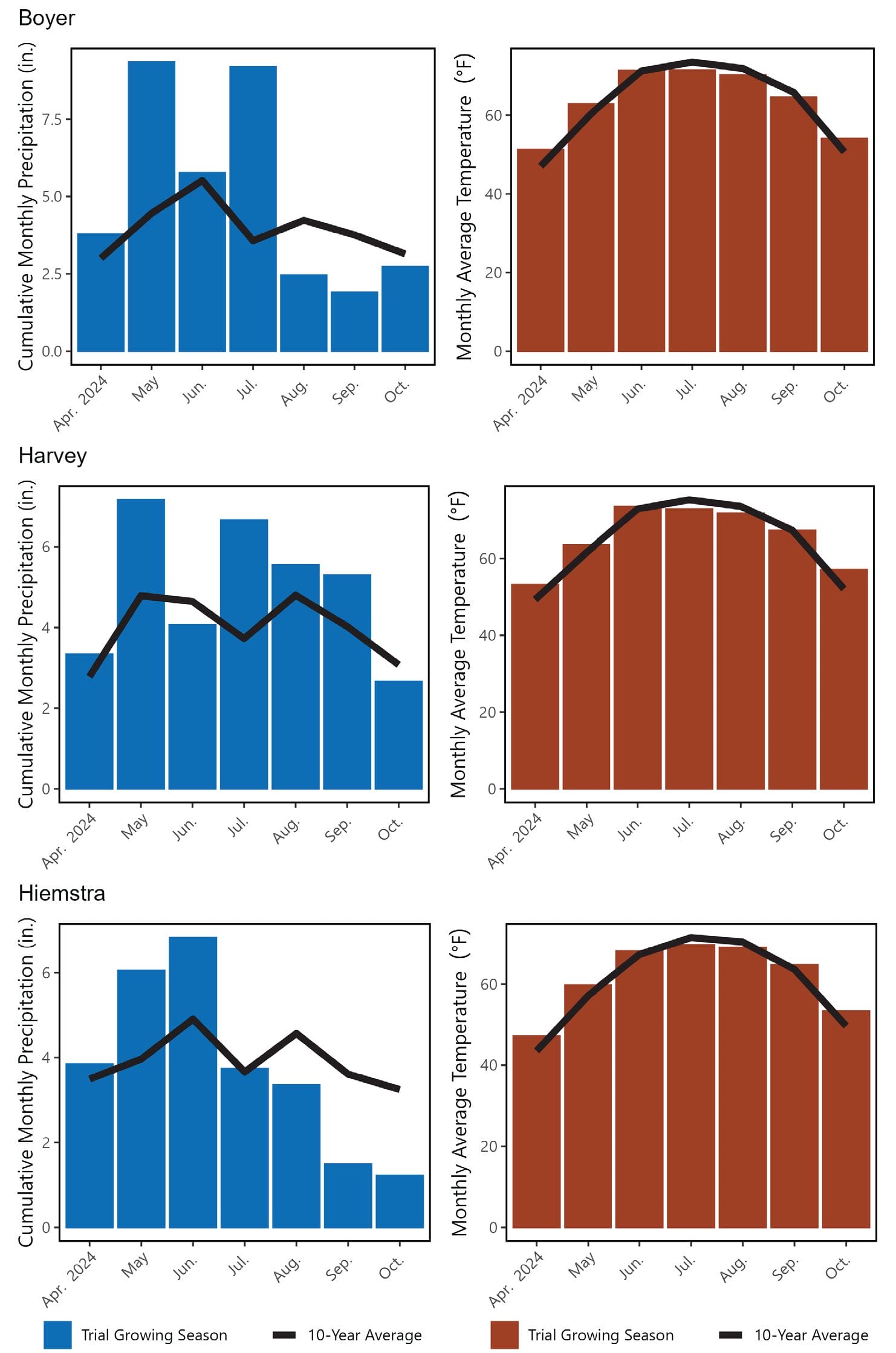
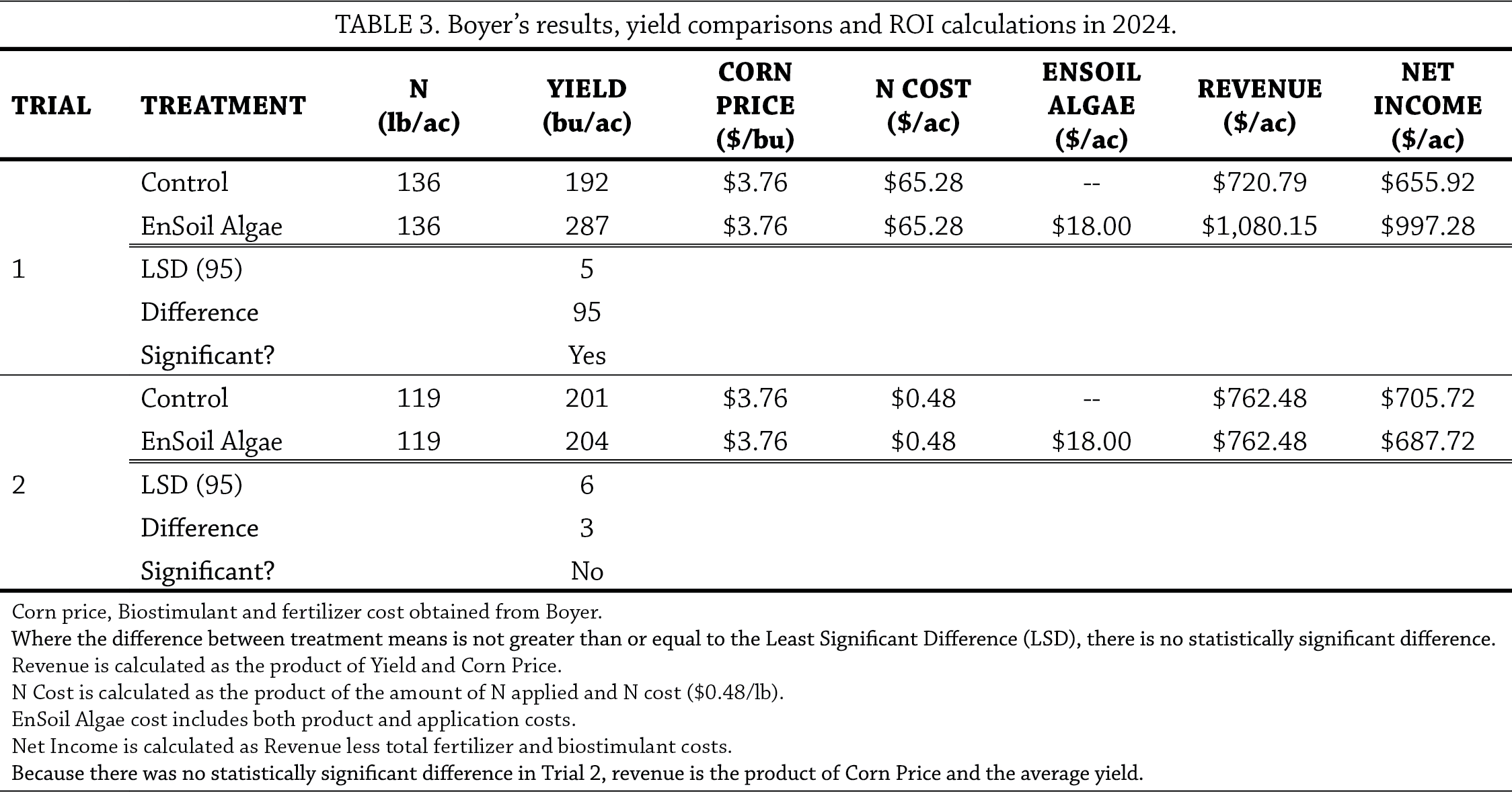
Boyer saw large, significant increases in yield in the strips treated with EnSoil Algae in his first trial, which was fertilized at a higher level than his second trial (Table 3). Boyer observed that the corn in the EnSoil Algae-treated strips were much taller and greener than the control strips. In his second trial, in a separate field from the first trial, no significant difference was found between the control and biostimulant treatments (Table 3). The field with the lower nitrogen fertilizer rate was less well drained and suffered from water pooling during the wet months of spring and early summer (Figure A2). Although the yield of the EnSoil Algae-treated strips were not significantly higher than the control in his second trial, Boyer remarked that the treatment plants looked greener. Boyer saw large increases in revenue from his EnSoil Algae-treated strips in trial 1, which outweighed the increased cost of the biostimulant.

Conclusions and Next Steps
Plant microbiomes include a vast array of bacteria and fungi that live on, in, and around plants. Some of these are harmful, some are beneficial, and many have no clear effect on the plant. Furthermore, none of these relationships are fixed, with microbes’ roles shifting depending on the conditions for each party. Overall, Jack Boyer was pleased with the effect that he saw from EnSoil algae in his field, even though he thought “there were environmental issues that confounded the results”. Hiemstra said, “I've tried this product in the past with better results. It does give me questions about weather and yield, and we need more variable years to determine if it's giving ROI in poor weather years or just good ones.” This trial will be repeated in 2025, as we continue to explore the relationships among crops, biostimulants, management practices and weather.Appendix – Trial Design and Weather Conditions