In a Nutshell:
- Jack Boyer and Dick Sloan have found success for years using winter small grains like cereal rye and winter wheat as cover crops when seeded in the fall.
- Both wanted to determine if interseeding a cover crop when corn reaches V5 stage in early summer can be a reliable method for establishing and overwintering a more diverse cover crop suite compared to seeding a winter small-grain cover crop post-harvest in the fall.
Key Findings:
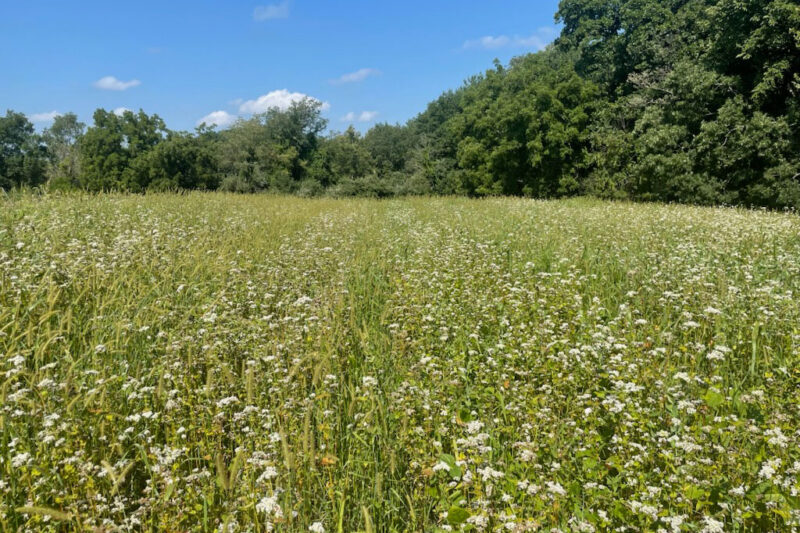
- Only Sloan had success with interseeding: The mix he seeded to corn in 2021 overwintered and by spring 2022 produced just as much biomass as the cereal rye, winter wheat and winter barley cover crops he seeded in fall 2021. The mix that Boyer interseeded failed to overwinter.
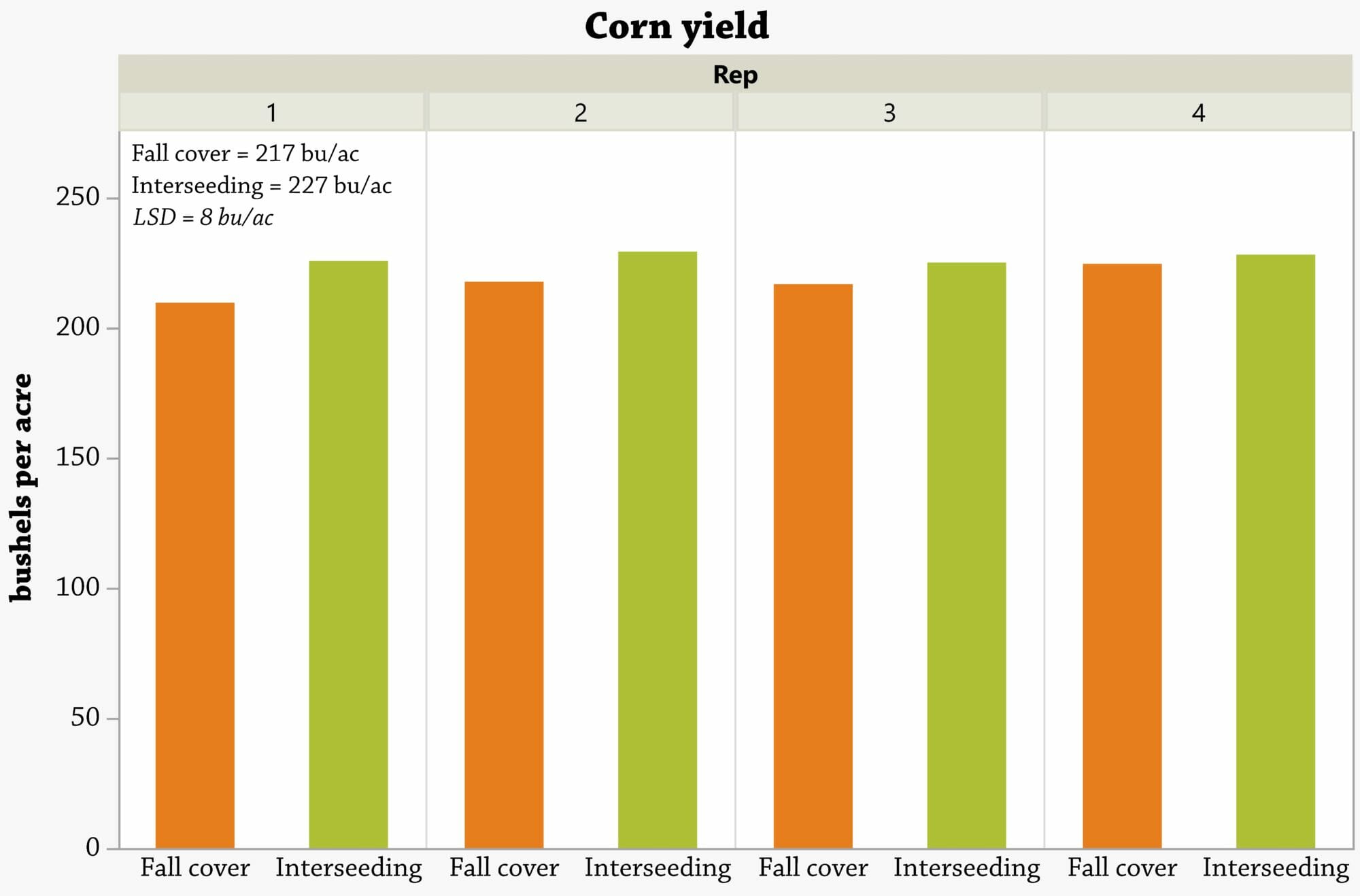
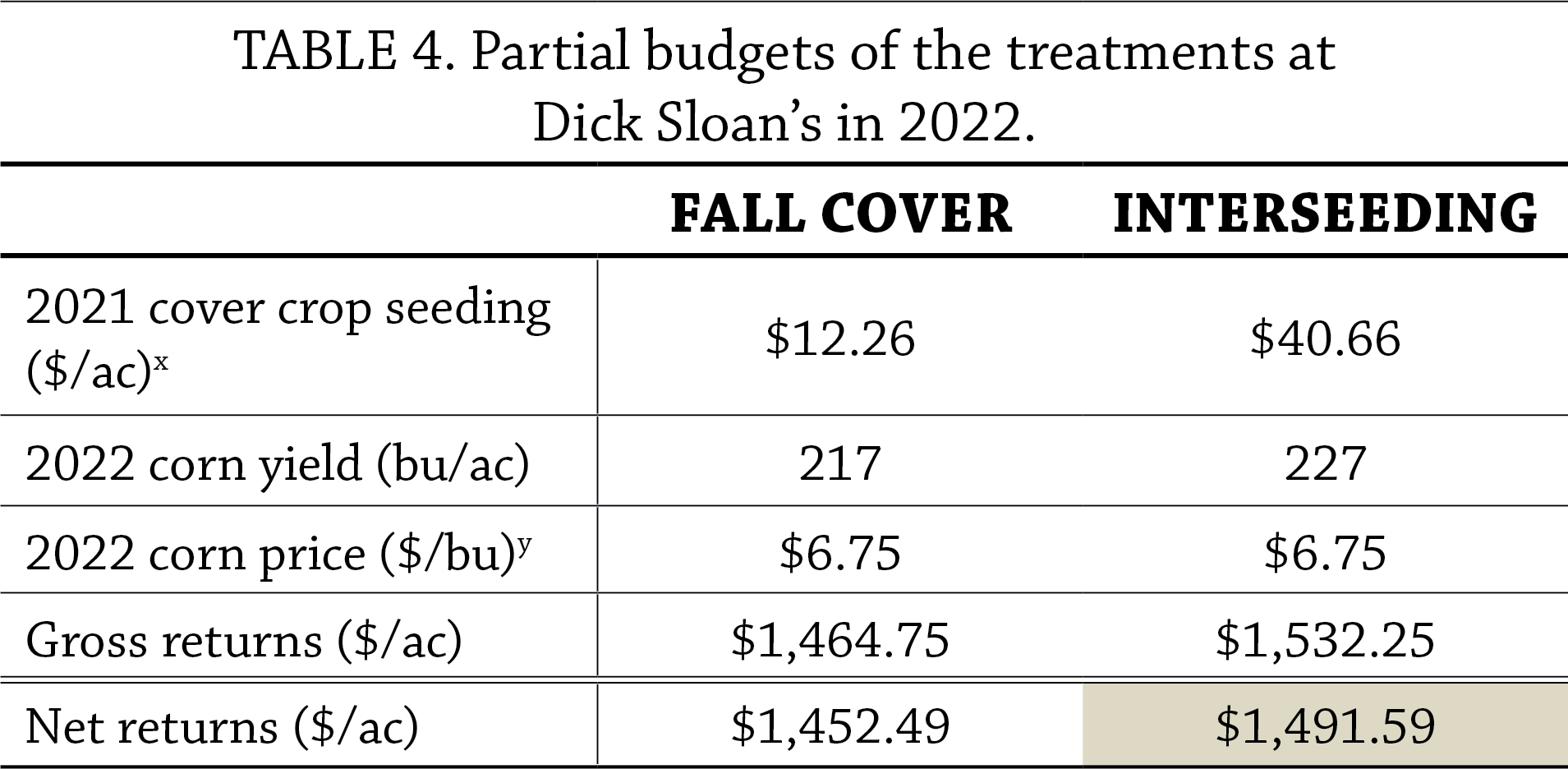
- At Sloan’s, corn following the interseeded mix in 2022 produced better yields and net returns ($39/ac) than corn following the winter small-grain cover crops.
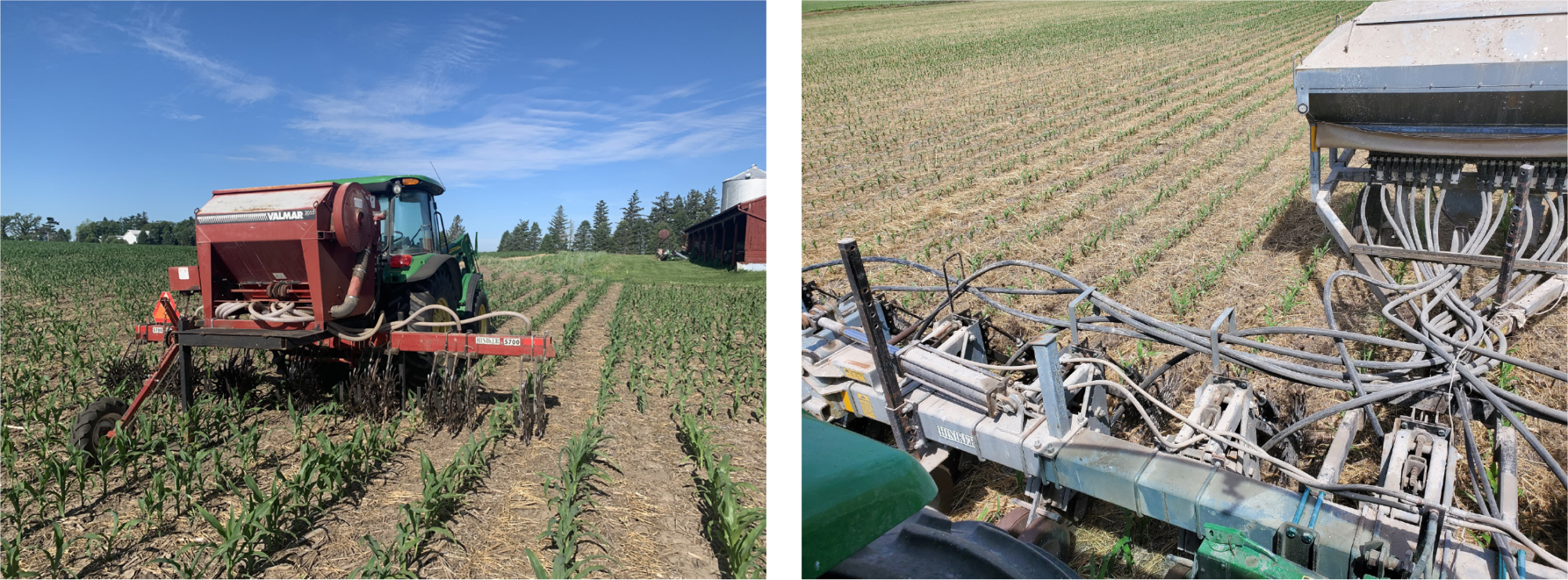
Methods
DesignBoth Boyer and Sloan planted corn in 2021 following soybeans. In June 2021, they both established two treatments:
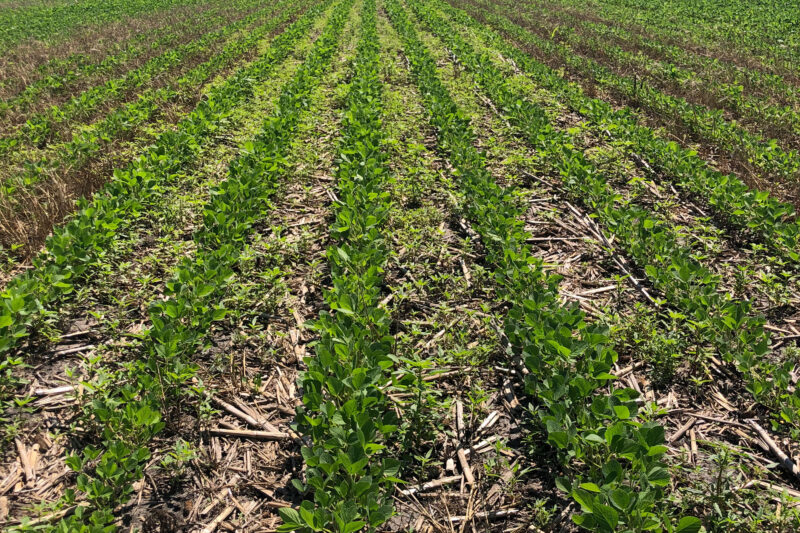
- Interseeding – mix of cover crops interseeded to corn at ~V5 stage.
- Fall cover – winter small-grain cover crop drilled after corn harvest in fall.
Both cooperators wished to learn how the cover crop treatments affected corn in 2021 and the succeeding cash crop in their rotations in 2022; soybeans for Boyer and corn for Sloan. However, only Sloan assessed the effect of the cover crop treatments on the 2022 cash crop because the interseeded mix at Boyer’s failed to overwinter (more below).
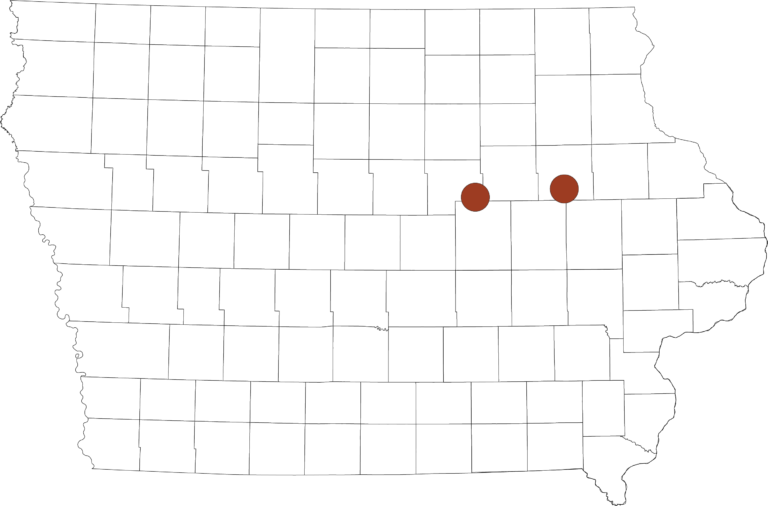
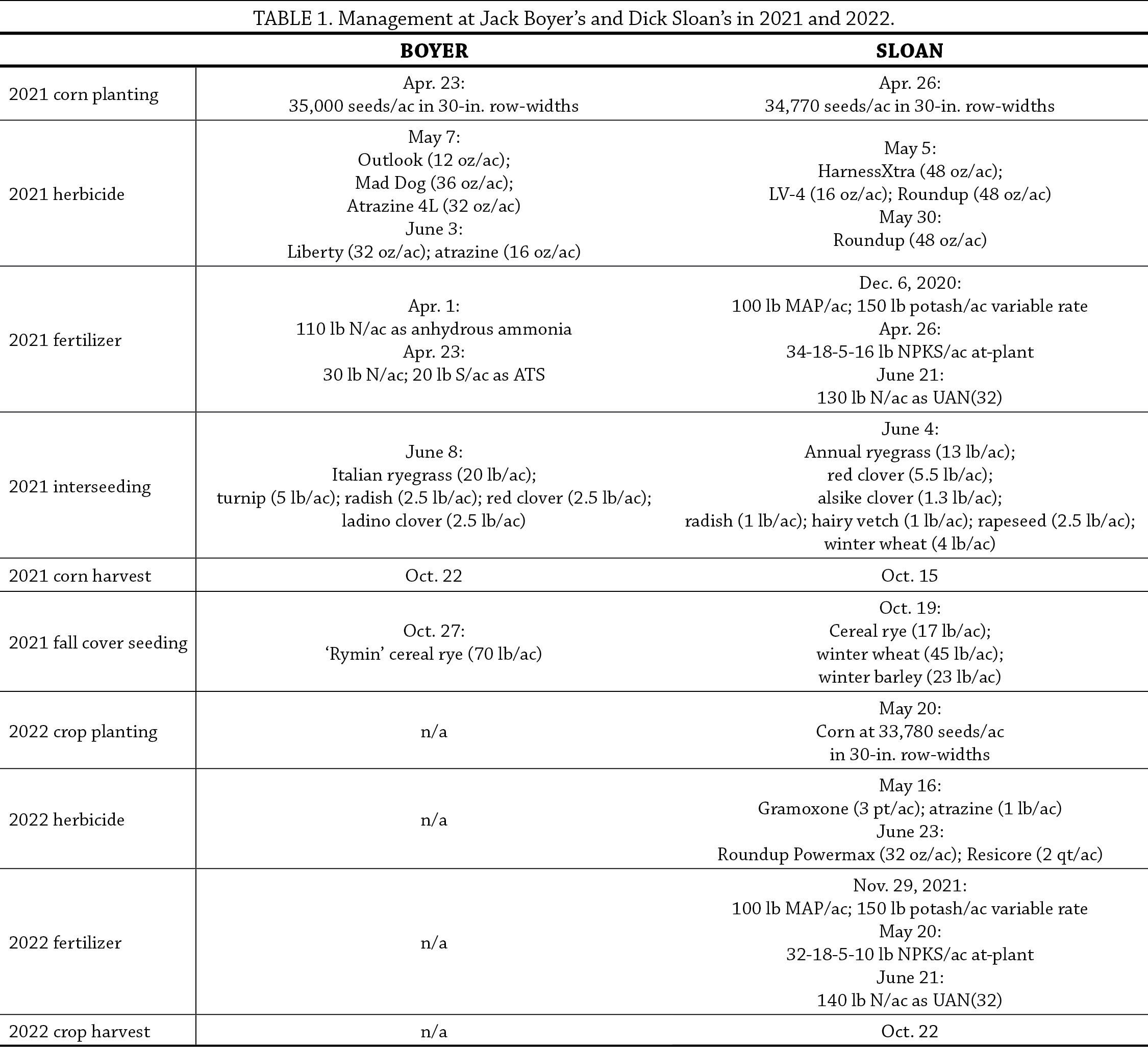
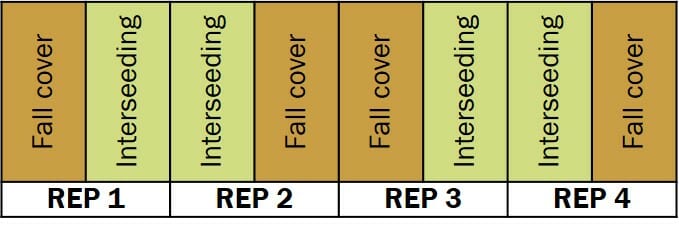
Boyer implemented four replications of the two treatments (Figure A1) in strips measuring 30 ft wide by 1,600 ft long. Sloan implemented four replications of his two treatments (Figure A1) in strips measuring 30 ft wide by 2,400 ft long. Field management at both farms is presented in Table 1.
Results and Discussion
2021 cover crop biomass
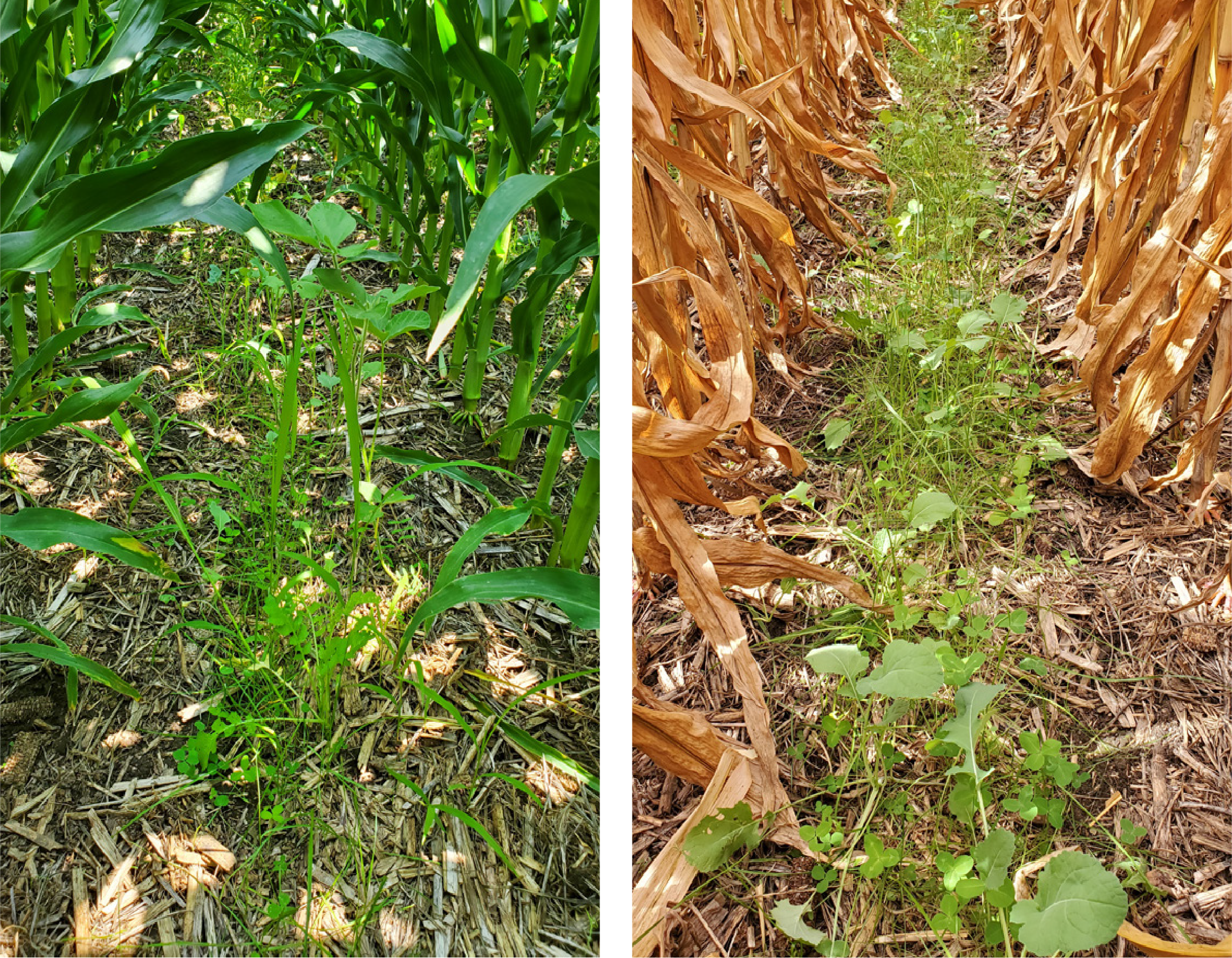
From the samples Sloan collected of the interseeded cover crop in September 2021, the mix produced 98.3 lb/ac.
2021 corn yield
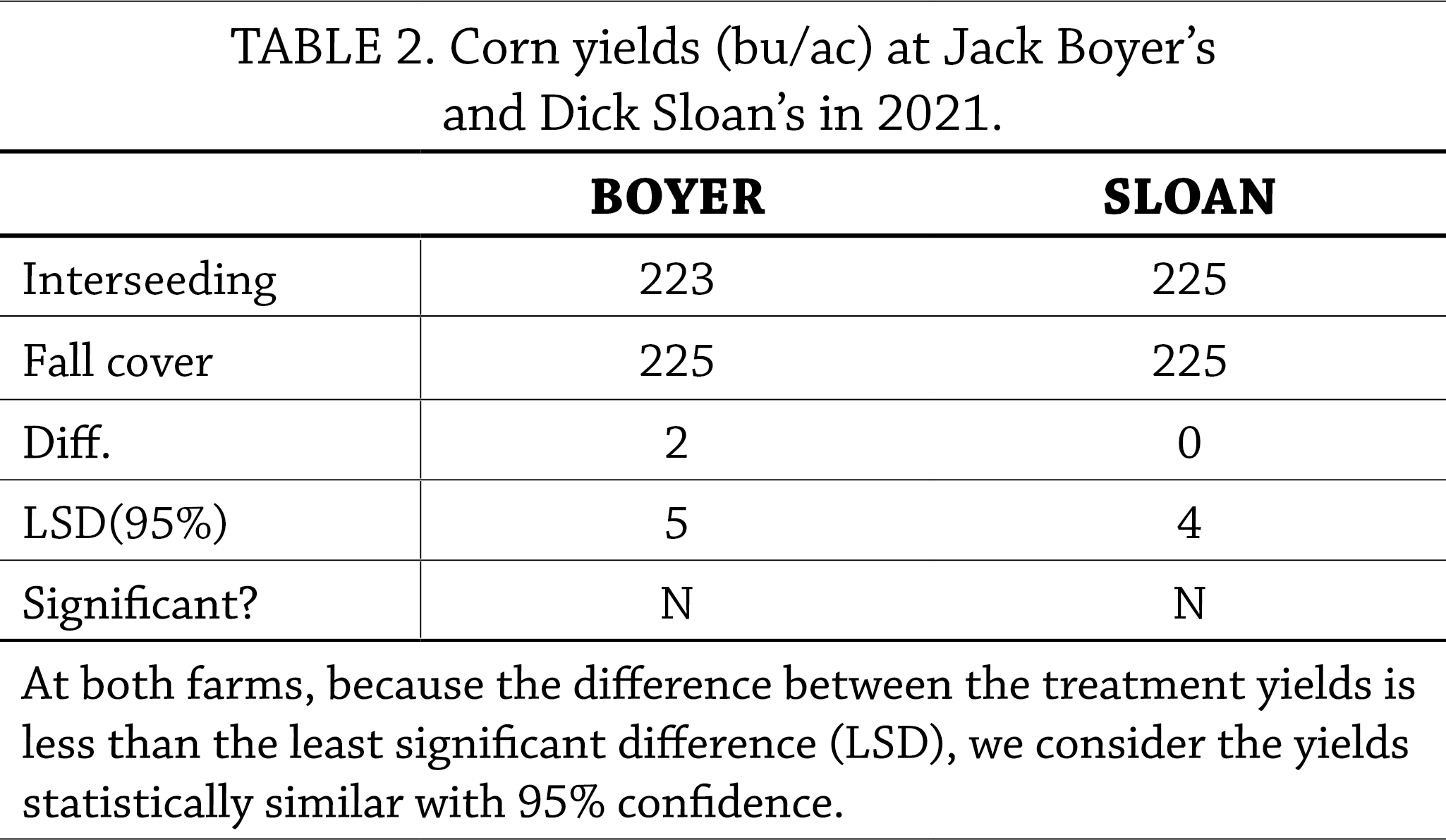
At both farms, the interseeded cover crop mix had no effect on corn yields in 2021 (Table 2). Note that during 2021 the Fall cover treatment was technically a no-interseeding treatment as far as the corn was concerned that year.
 2022 spring cover crop biomass and groundcover
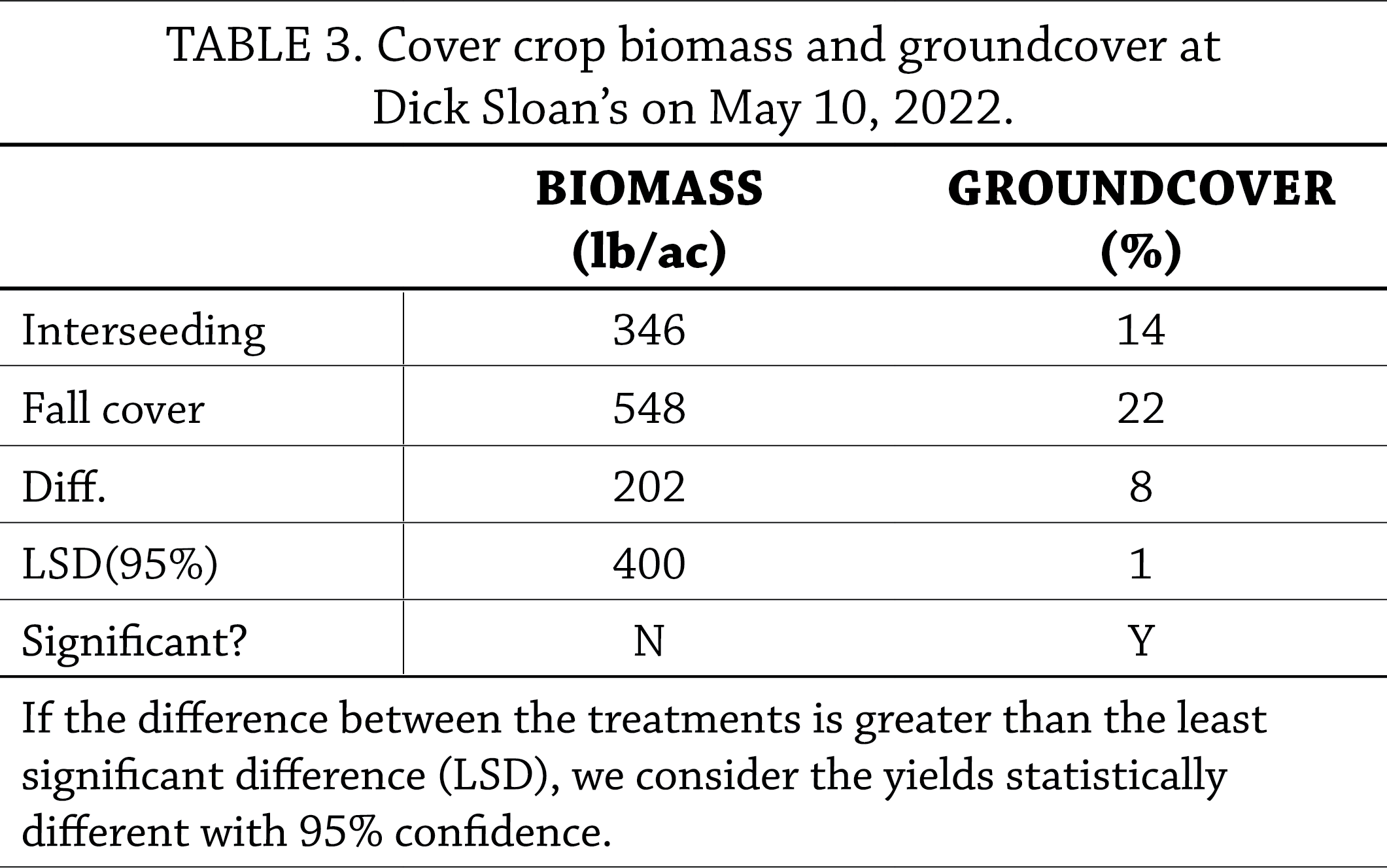
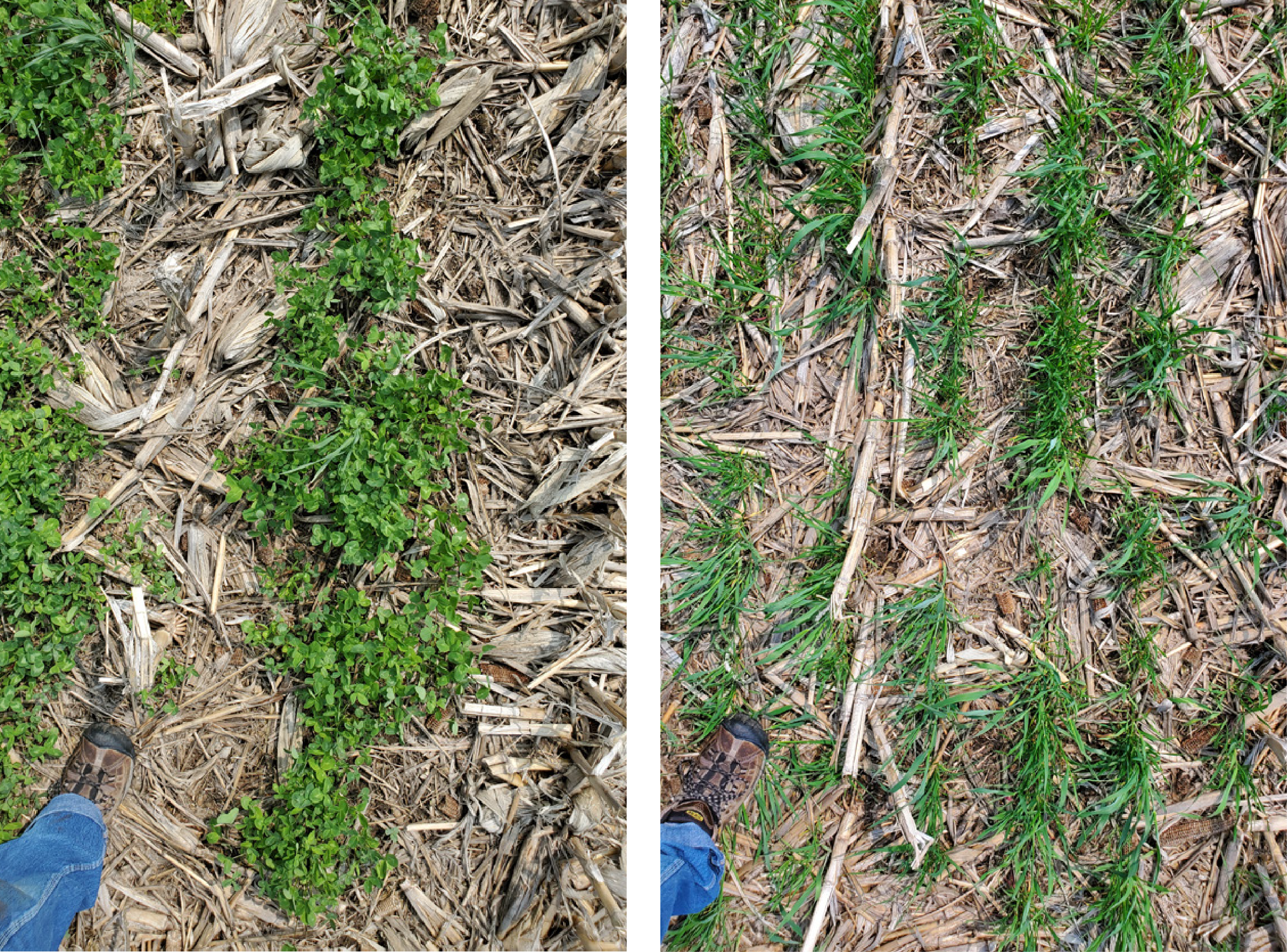
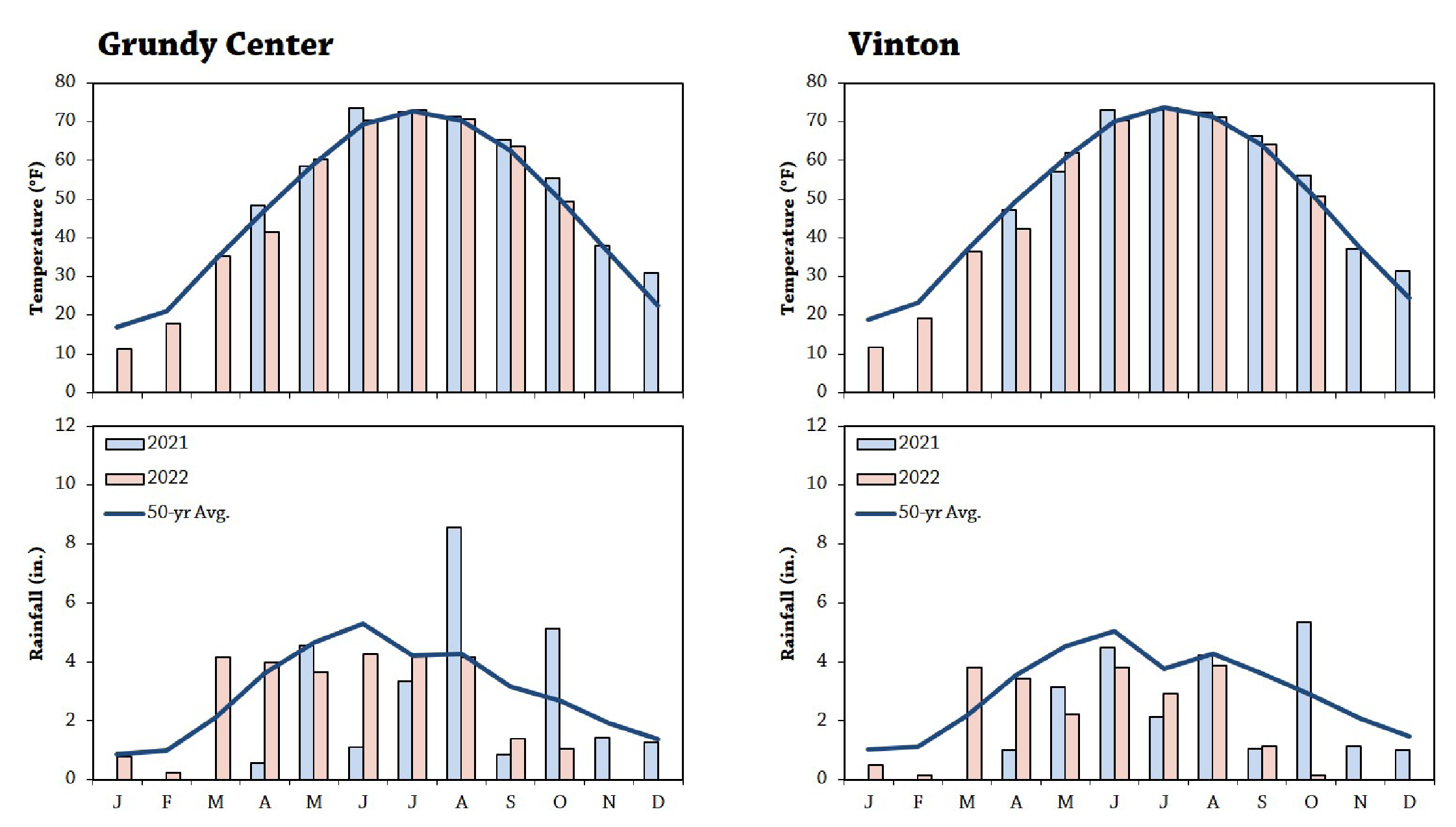
At Sloan’s, the two cover crop treatments produced statistically equal amounts of biomass by May 10, 2022 but the Fall cover (cereal rye, winter wheat, winter barley) produced more groundcover (Table 3). Timely rainfall in August and October 2021 as well as March and April 2022 likely contributed to the Interseeding successfully overwintering at Sloan’s (Figure A2b).
2022 spring cover crop biomass and groundcover
At Sloan’s, the two cover crop treatments produced statistically equal amounts of biomass by May 10, 2022 but the Fall cover (cereal rye, winter wheat, winter barley) produced more groundcover (Table 3). Timely rainfall in August and October 2021 as well as March and April 2022 likely contributed to the Interseeding successfully overwintering at Sloan’s (Figure A2b).
y Corn prices provided by Sloan.
Conclusions and Next Steps
Boyer and Sloan expressed interest in learning about different strategies for incorporating cover crops on their farms: be it cover crop species other than winter small grains or seeding cover crops in the summer rather than post-harvest in the fall. Both have had plenty of success with winter small grains like rye and wheat for years. Boyer has tried summer interseeding for a few years and has evaluated numerous species. This trial helped him identify species that may not be successful when interseeding to corn on his farm. Sloan, on the other hand, did have success with interseeding. He found this appealing because if interseeding in the summer can be a successful strategy it would reduce pressure in the fall for getting other acres on the farm seeded to cover crops. “I need to add more legumes to my cropping plans. If I can establish clover in my corn the same as I do with my small grains, it can thrive once the corn is harvested and continue to thrive the next spring,” Sloan said. “I accept that I had some beginner's luck but it's really fun to see a cover crop change give a significant boost to second-year corn yields.” When considering how to continue this practice on the farm, Sloan added the he would like to improve his interseeder with better planting units in order to get a reliable, consistent cover crop established in the summer underneath the corn canopy. “The plants we can grow with interseeding are so different than the ones we plant in October.”
Appendix - Trial Design and Weather Conditions
References
- Patrignani, A. 2020. Foliage (Version v1.). Zenodo. https://andres-patrignani.github.io/foliage/ (accessed November 2022).
- Iowa Environmental Mesonet. 2022. Climodat Reports. Iowa State University. http://mesonet.agron.iastate.edu/climodat/ (accessed November 2022).