Funded by PepsiCo.
In a Nutshell:
- Sulfur deficiencies can hurt soybean photosynthetic potential and protein content, but sulfur levels beyond sufficiency do not bring benefits.
- Chris Gaesser, Keaton Krueger, Brad Staley and Rob Stout performed replicated strip trials testing whether applying sulfur in various forms would improve soybean yields.
- Cooperating farms tested products containing sulfate and sulfide ions at levels ranging from 13 to 24 lb S/ac.
Key Findings:
- Ammonium thiosulfate (ATS) and ammonium sulfate (AMS) sulfur fertilizers did not significantly increase soybean yield at Krueger’s or Stout’s farms compared with no applied sulfur.
- Gypsum produced a significant soybean yield response at Gaesser’s farm, while Staley saw a significant response only when gypsum was paired with the SUPRGrow seed treatment.
- Overall, soybean response to sulfur was inconsistent across farms, suggesting that future trials should continue testing sulfur source, timing and grain-quality outcomes.
Background
Sulfur is an essential macronutrient for soybeans, supporting protein synthesis, enzyme activity, chlorophyll production and overall plant growth. In Iowa, sulfur deficiencies have become more common as atmospheric sulfur deposition has declined [1], [2]. Sulfur availability can be spatially complicated by the mineral composition and layering of the soil, as it is generally mobile as the soluble sulfate ion but can be adsorbed by iron and aluminum silicate clays [2]. Furthermore, sulfur status can be difficult to discern in situ because the symptoms—commensurate with inhibited chlorophyll production—match those of nitrogen deficiency.
Keaton Krueger was motivated to test sulfur in 2024 because he was interested in expanding his fertility program beyond the standard nitrogen, phosphorous and potassium to see if additional products could improve soybean vigor or yield in a cost-effective way. His strip-till soybean system also made ammonium thiosulfate (ATS) easy to include because the liquid product could be applied with the strip-till pass ahead of planting without adding a separate field operation. In that trial, soybeans that received an application of ATS plus humic acid yielded 79 bu/ac while soybeans that did not receive the application yielded 78 bu/ac, a difference that was not statistically significant [3].
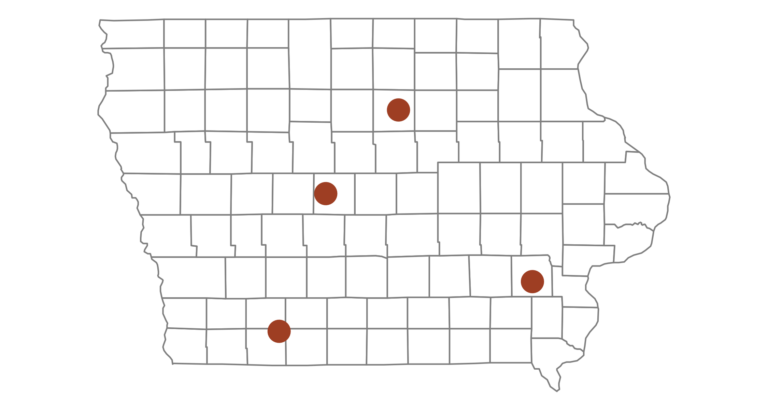
Even though the 2024 sulfur treatment did not increase yield, Krueger observed greater in-field growth and vigor where ATS was applied and was surprised that the visual response did not translate into a measurable yield advantage. Because sulfur responses can vary by field, year, soil conditions and weather, he wanted another year of data before deciding whether the practice was worth adopting. Three other farmers joined Krueger for the 2025 trial: Chris Gaesser, Brad Staley, and Rob Stout. Together they tested a range of sulfur fertilization strategies over a range of conditions on their farms.
Methods
Design
Each farm established replicated trials with two treatments:
- Control: soybeans grown with farmer’s standard practices
- Sulfur: soybeans fertilized with sulfur in addition to farmer’s standard practices
Brad Staley planted three total treatments
- Control: soybeans grown with farmer’s standard practices
- Sulfur: soybeans fertilized with sulfur in addition to farmer’s standard practices
- Sulfur+SUPRgrow: soybeans fertilized with sulfur and with seeds treated with SUPRGrow, a sulfide-containing fertilizer, in addition to farmer’s standard practices [4]
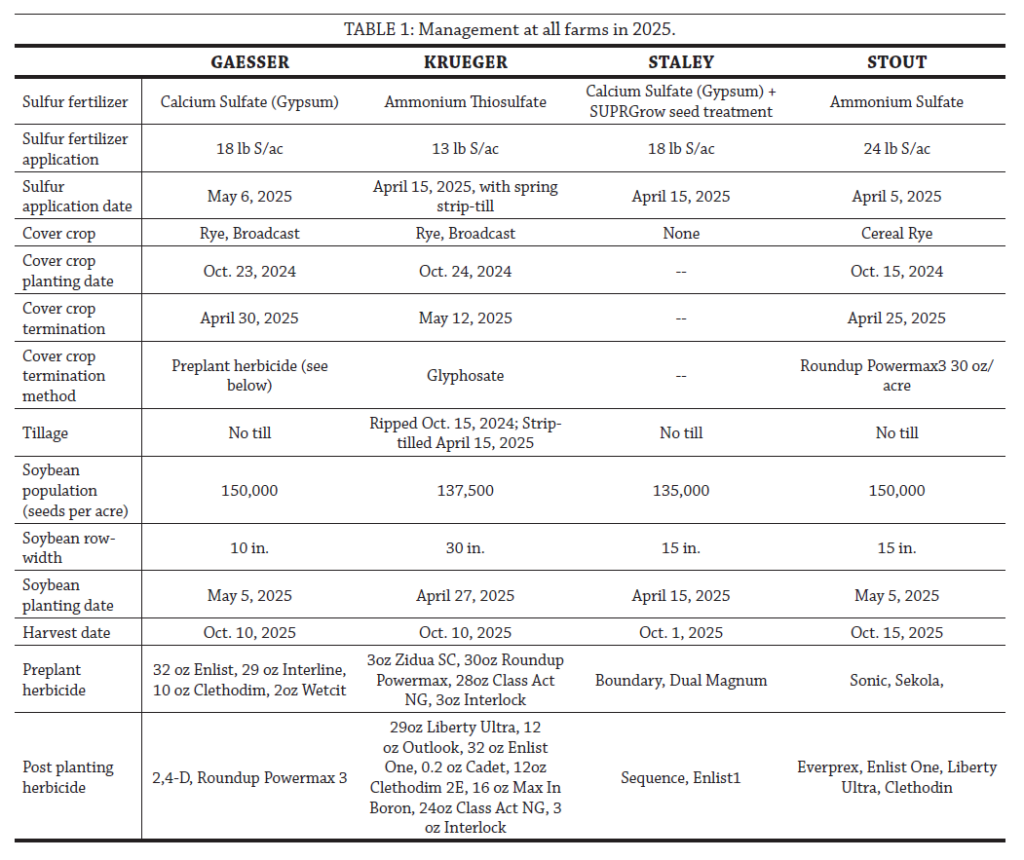
Application rates and other management details are shown in Table 1.
All farms planted at least three randomized replicates of each treatment (Figure A1). Replication and treatment randomization allow for statistical analysis and conclusions about the effect of treatments on yield.
Measurements
All farms recorded soybean yield in bushels per acre at harvest using yield monitors on their combines. Harvest moisture levels were noted, and reported yields were corrected to the standard 13% moisture for soybeans.
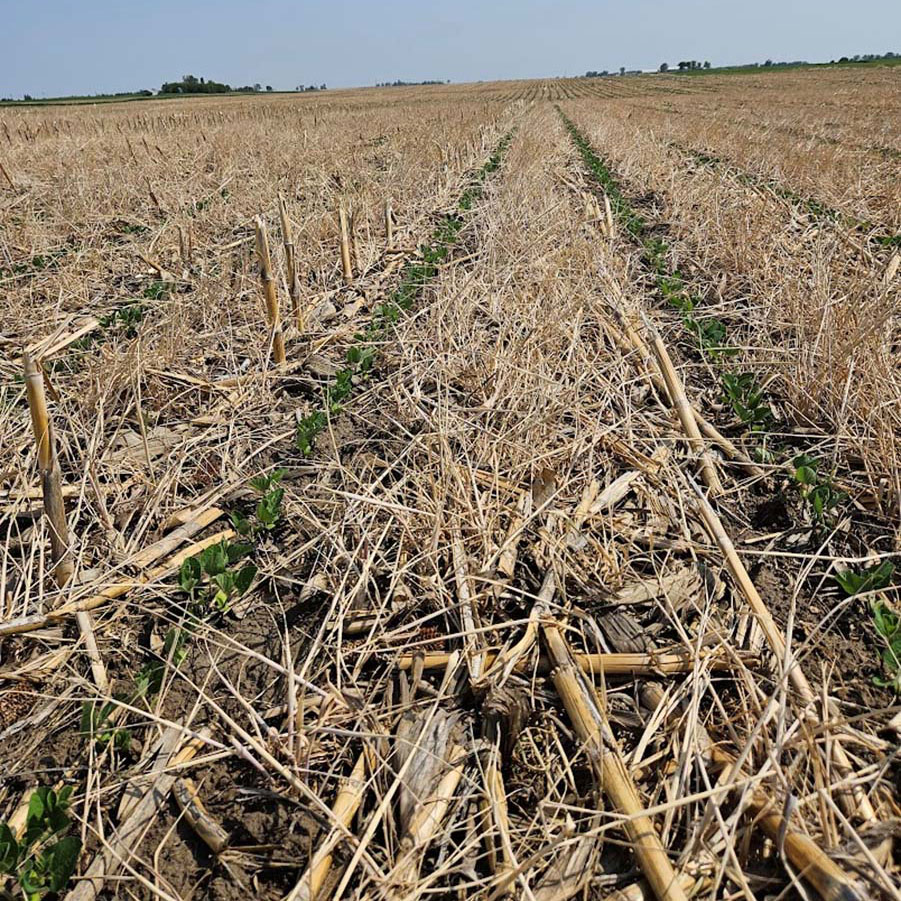
Data analysis
We used an analysis of variance (ANOVA) followed by Tukey’s HSD at a 95% confidence level to determine if there were significant differences between treatments within each experiment. A difference that is determined to be significantly different at this level is indicative of treatment effects such that we would expect the same results to occur 95 out of 100 times rerunning the experiment under the same conditions. We can perform this analysis because all farms established completely randomized and replicated experimental designs (Figure A1).
Results and Discussion
Ammonium-sulfur salt fertilizers
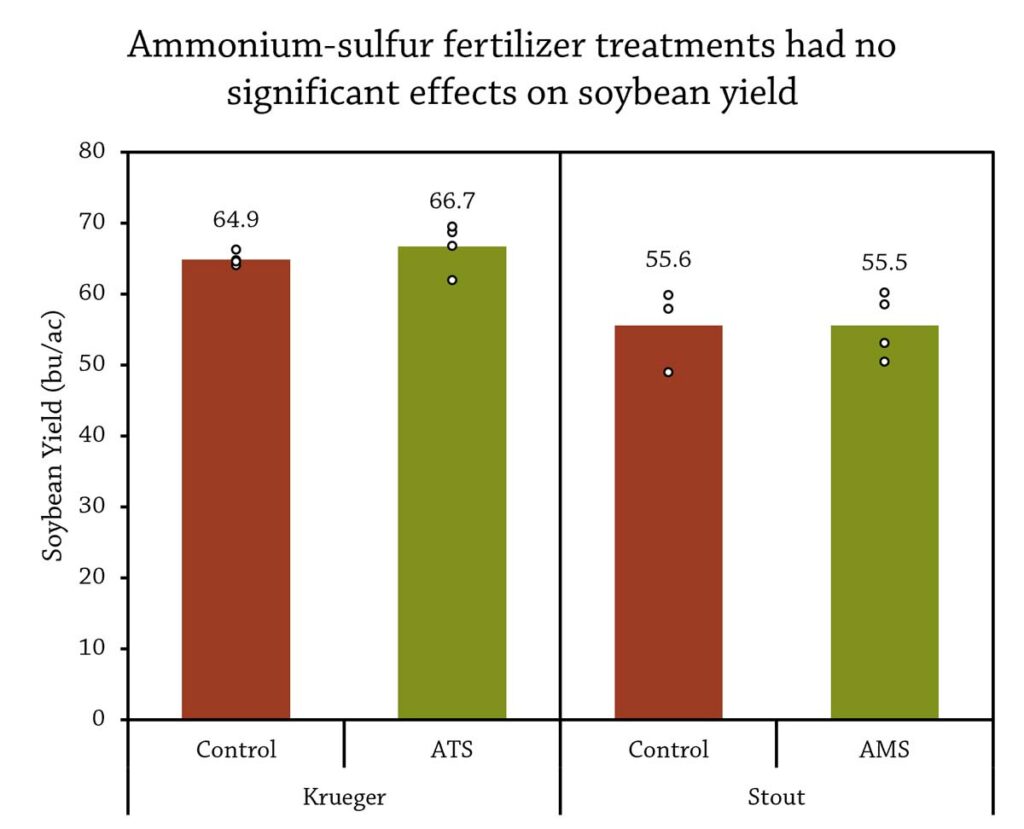
Krueger and Stout trialed ammonium thiosulfate (ATS) and ammonium sulfate (AMS), respectively, adding 13 and 24 lb S/ac to their sulfur treatment strips. Neither cooperator saw significant differences between the sulfur-fertilized and control plots (Figure 1). The lack of results is consistent both with many academic results and with what Krueger found through his 2024 PFI trial [3], [5], [6], [7], [8].
It is important to note that the ATS and AMS applied by Krueger and Stout also contain nitrogen., So, at the rates of ATS and AMS they applied, Krueger applied 6 lb N/ac and Stout applied 21 lb N/ac in addition to sulfur. Even with these additional amounts of nitrogen applied (albeit small amounts), this did not have any effect on their soybean yields.
Gypsum sulfur fertilizers
Gaesser and Staley both evaluated gypsum as a sulfur source by spreading gypsum at 100 lb/ac, which supplied 18 lb S/ac to their soybeans. Staley also included a third treatment that, in addition to receiving gypsum, involved soybean seed treated with SUPRGrow (SG), a sulfur-containing seed treatment intended to prime seeds for sulfur uptake. At Gaesser’s farm, soybean yield was significantly improved with the gypsum compared with the control treatment at the 95% confidence level (Figure 2). At Staley’s farm, yield differed significantly only between the control and the gypsum+SG treatment; gypsum alone did not differ significantly from the control at Staley’s.
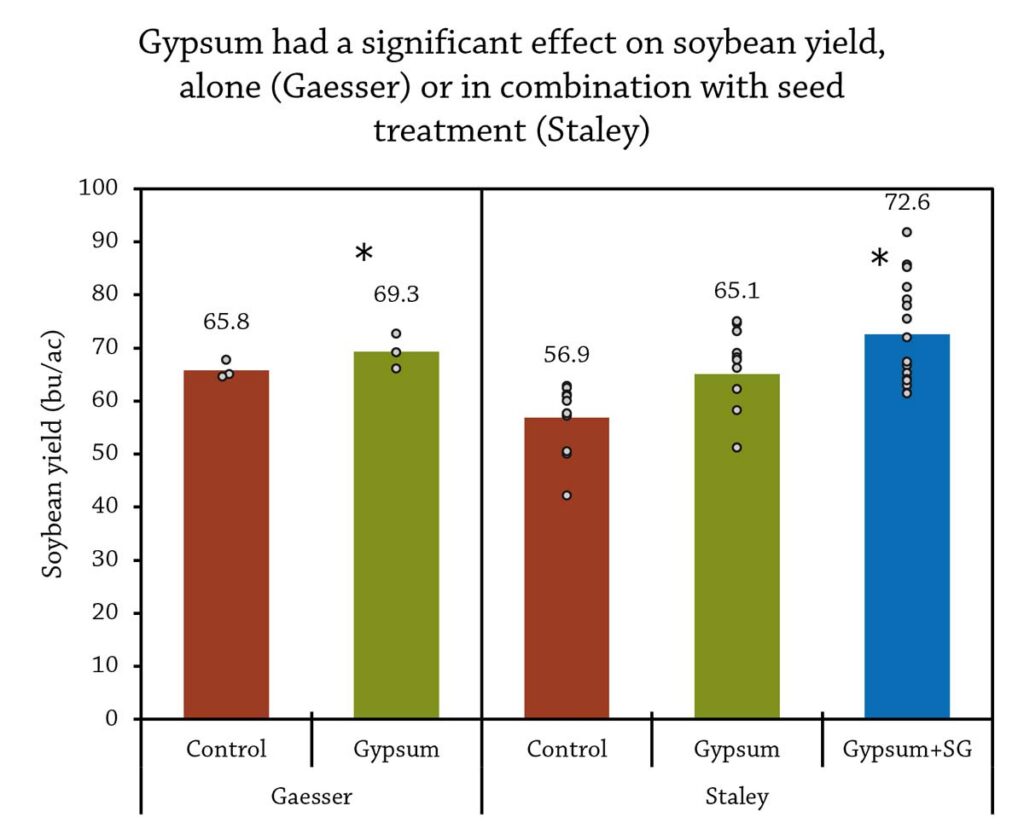
Staley’s SUPRGrow seed treatment was applied to the seed before the seed was put into the planter box. It is an aqueous solution of 48% potassium dibutyldithiophosphate with a component analysis of 0-5-6-10 [4]. The sulfur in the dibutyldithiophosphate in SUPRGrow exists as sulfide (S2-), which is less stable in the soil than the sulfate ions in gypsum and ATS, but is more readily available to the plant; sulfate is reduced to sulfide by the plant before being synthesized into cysteine molecules [1]. Staley’s application of SUPRGrow to the seeds was meant provide the seedlings a biologically available source of sulfur to jump-start their metabolization of sulfur and their growth [4]. Given that Staley’s gypsum treatment had yields that were not significantly different from either the control or the combination gypsum+SG treatment (Figure 2), we deduce that the difference in response is due to the added seed treatment. It is not clear whether there could be an additive effect of the gypsum and the SUPRGrow, or whether, given the low absolute amounts of nutrients included in the seed-coating volumes of SUPRGrow, the seed treatment had an enabling effect. Perhaps, by coating the seed with a partially stabilized but available solution of key macronutrients, the soybean seedlings were granted some advantage which enabled them to benefit more from the available sulfur. A fully iterated experiment which also tested SUPRGrow treatment alone without the gypsum could have helped parse out the effects.
Gypsum is the common name of calcium sulfate. Calcium sulfate is soluble in water and does not affect pH. The sulfate ions that dissolve out are the same ions that are in ATS and AMS and are the form that is most readily available in soils for plants to uptake. While there is no chemical reason that they should perform differently, some sources treat these different sulfur sources as different treatments and find differences in plant performance [9], [10], [11], and others do not [2], [12].
Reflecting on his two years of trialing ATS fertilization of soybeans, Krueger hypothesized that the soybeans might benefit more from sulfur being provided later in the year, as the seeds are filling. However, in this trial, all cooperators provided the fertilized sulfur at, just before, or just after planting in the spring, and all the sulfur was provided in soluble and available forms ions that would not be expected to linger for months in the soil.
Conclusions and Next Steps
Across the four farms in this trial, sulfur fertilization produced mixed soybean yield responses. Krueger’s ammonium thiosulfate and Stout’s ammonium sulfate treatments did not significantly affect yield compared with the controls; adding readily available sulfur in these systems did not translate into a measurable yield benefit in 2025. Results from the farms using gypsum were more variable: Gaesser saw a significant yield improvement from the gypsum, while Staley saw a significant improvement only when gypsum was paired with the SUPRGrow seed treatment; gypsum alone did not differ significantly from the control.
The pattern of greater responses from gypsum-treated plants is intriguing and could merit further investigation.

Appendix - Trial Design and Weather Conditions

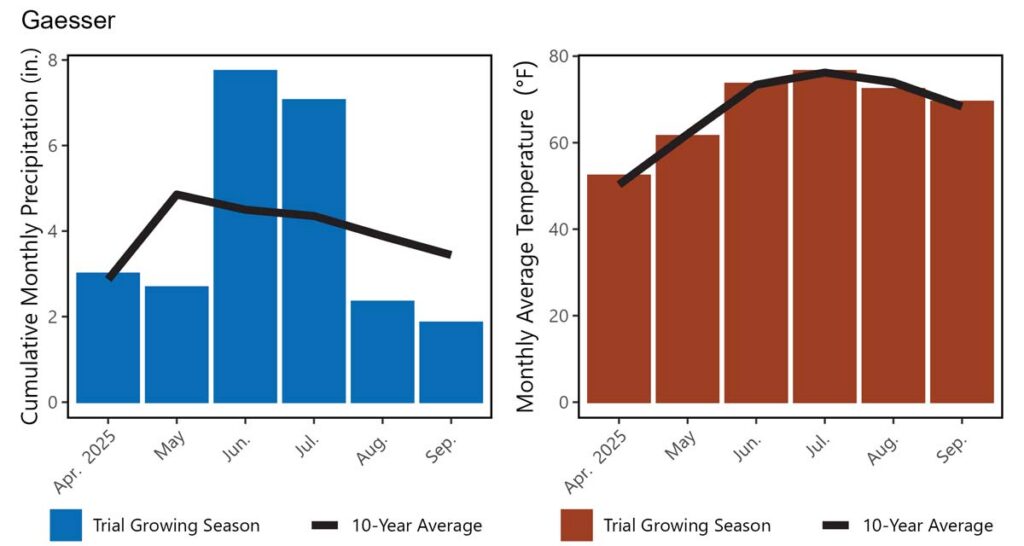
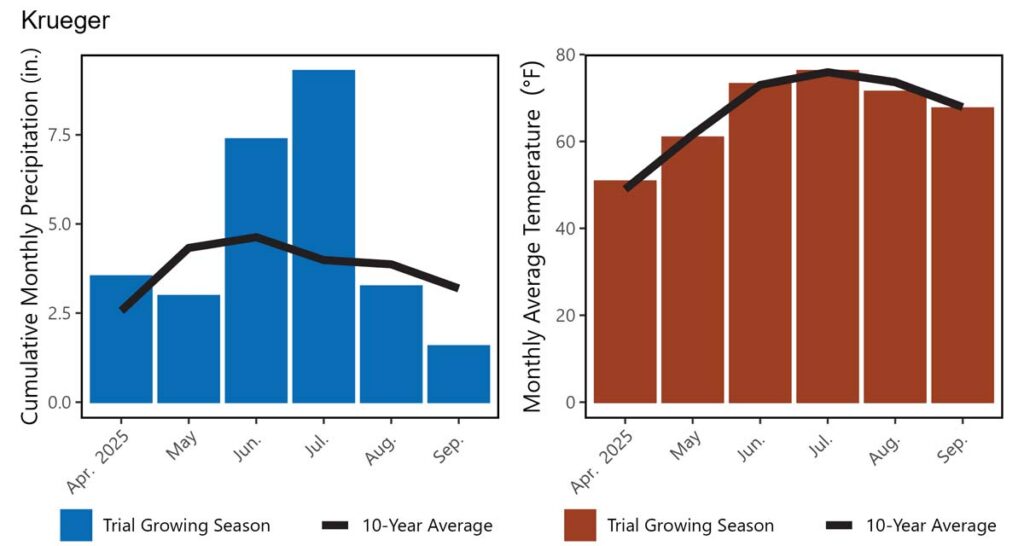

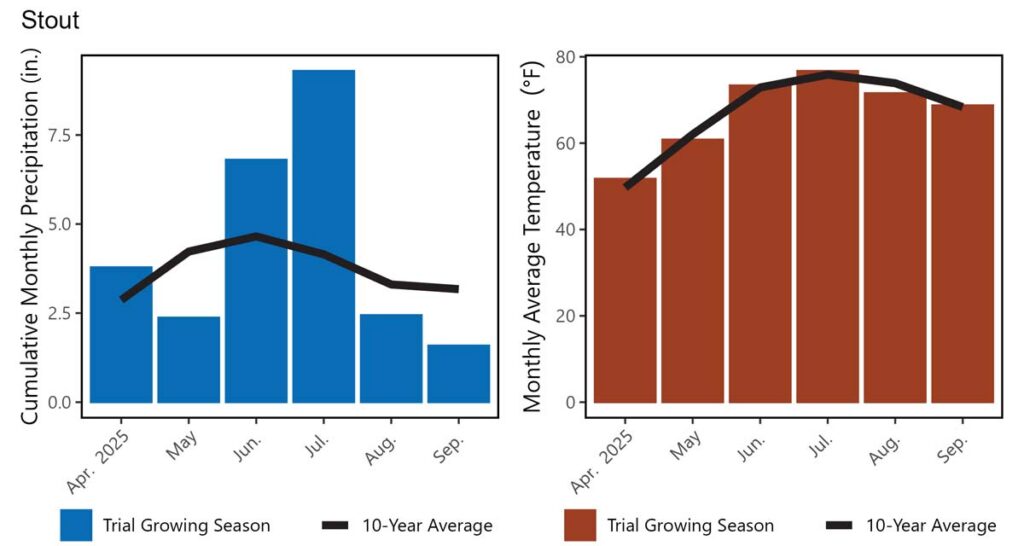
Washington Iowa [13], [14]. Click to enlarge.
References
- O. P. Narayan, P. Kumar, B. Yadav, M. Dua, and A. K. Johri, “Sulfur nutrition and its role in plant growth and development,” Plant Signal. Behav., vol. 18, no. 1, p. 2030082, doi: 10.1080/15592324.2022.2030082.
- Z. P. Sanders, J. T. Spargo, and C. M. White, “Fertilizer source and timing affect soil profile sulfur dynamics in a corn–soybean rotation,” Soil Sci. Soc. Am. J., vol. 90, no. 4, p. e70301, Jul. 2026, doi: 10.1002/saj2.70301.
- “Sulfur Fertilizer and Humic Acid Amendment for Soybeans - Practical Farmers of Iowa.” Accessed: Aug. 19, 2026. [Online]. Available: https://practicalfarmers.org/resources/research-reports/sulfur-fertilizer-and-humic-acid-amendment-for-soybeans/
- H. I. Agriculture, “Harvest Increase Agriculture,” Harvest Increase Agriculture. Accessed: Sep. 08, 2026. [Online]. Available: https://harvestincreaseagriculture.com/products
- J. E. Sawyer, B. J. Lang, and D. W. Barker, “Sulfur Management for Iowa Crop Production,” Iowa State University Extension and Outreach, 2015. Accessed: Feb. 27, 2025. [Online]. Available: https://store.extension.iastate.edu/product/Sulfur-Management-for-Iowa-Crop-Production
- S. S. Conley, J. Gaska, S. Mourtzinis, and E. Matcham, “Overview of 2020 Soybean Sulfur Fertilization Trials,” University of Wisconsin Extension, 2020. [Online]. Available: https://coolbean.info/wp-content/uploads/sites/3/2021/03/sulfur_2020yieldsummary.pdf
- J. Sawyer, “Crop Sulfur Fertilization This Spring,” Integrated Crop Management. Accessed: Feb. 27, 2025. [Online]. Available: https://crops.extension.iastate.edu/cropnews/2020/03/crop-sulfur-fertilization-spring
- A. Pieck-Hinz, “Use of Ammonium Thiosulfate (ATS) in Crop Production,” Iowa State University Extension and Outreach. Accessed: Feb. 27, 2025. [Online]. Available: https://crops.extension.iastate.edu/post/use-ammonium-thiosulfate-ats-crop-production
- N. S. Dhillon and G. Dev, “Studies on S Nutrition of Soybean (Glycine max L.) from Three Sulphate Sources,” J. Indian Soc. Soil Sci., vol. 28, no. 3, pp. 361–365, 1980.
- L. O. Lopes, M. C. S. de Moura, S. S. R. Matias, R. dos S. Lopes, and M. P. R. Teixeira, “Effect of sources and doses of sulfate on soybean crop1,” Pesqui. Agropecuária Trop., vol. 47, pp. 296–302, 2017, doi: https://doi.org/10.1590/1983-40632016v4745394.
- Md. E. H. Moni, Md. R. Parvej, A. B. Wahid, Md. M. Rahman, B. Tubana, and J. Wang, “Evaluation of soybean response to various sulfur fertilizer sources,” Agron. J., vol. 118, no. 1, p. e70266, 2026, doi: 10.1002/agj2.70266.
- L. Fleuridor et al., “Ohio grain crop response to sulfur fertilization,” Agron. J., vol. 115, no. 4, pp. 2007–2016, 2023, doi: 10.1002/agj2.21328.
- A. H. Sparks, “nasapower: A NASA POWER Global Meteorology, Surface Solar Energy and Climatology Data Client for R,” J. Open Source Softw., vol. 3, no. 30, p. 1035, Oct. 2018, doi: 10.21105/joss.01035.
- A. Sparks, nasapower: NASA-POWER Data from R. (2024). [Online]. Available: https://CRAN.R-project.org/package=nasapower