1. Seed Selection
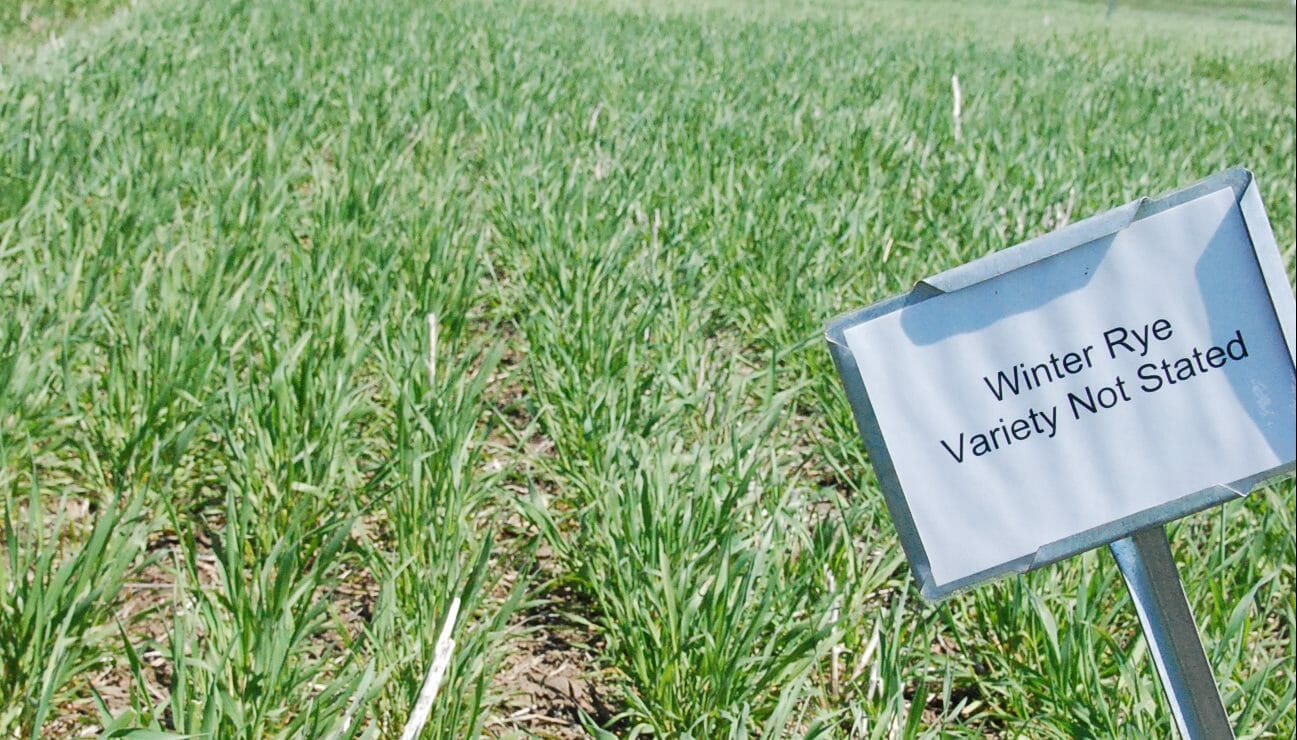
| Trait compared | Named variety rye | VNS (variety not stated) |
| Availability | Harder to source | More readily available |
| Cost | Typically more expensive | Typically less expensive |
| Uniformity of stand | Should be uniform | Varying plant heights |
| Uniformity in flowering period | Should happen within a few days | Flowering could span over several weeks, meaning fungicide applications tied to flowering could prolongated, and rye will mature at mixed times |
2. Seeding Date
Planting date is another factor you'll want to consider. For increased rye tillering that can result in higher yields, it's best to plant rye early in the fall, with a preferred planting date between Sept. 20 and Oct. 10. Due to weather challenges the last few years, however, rye seed producers have mostly planted in late October. If seeding rye after Oct. 10, be sure to seed at a higher rate – perhaps close to 1.3 million seeds per acre – because the rye will not tiller much in the fall.3. Seeding Rates
Seeding rates are one of the greatest differences between growing rye as a cover crop and growing rye for seed. Rye as a cover crop is often planted at a rate of 55-75 pounds per acre, or about 1-1.5 bushels per acre. In contrast, rye grown for seed should be planted based on seeds per acre. Wade Dooley recommends between 1 million and 1.3 million seeds per acre, depending on when you're seeding.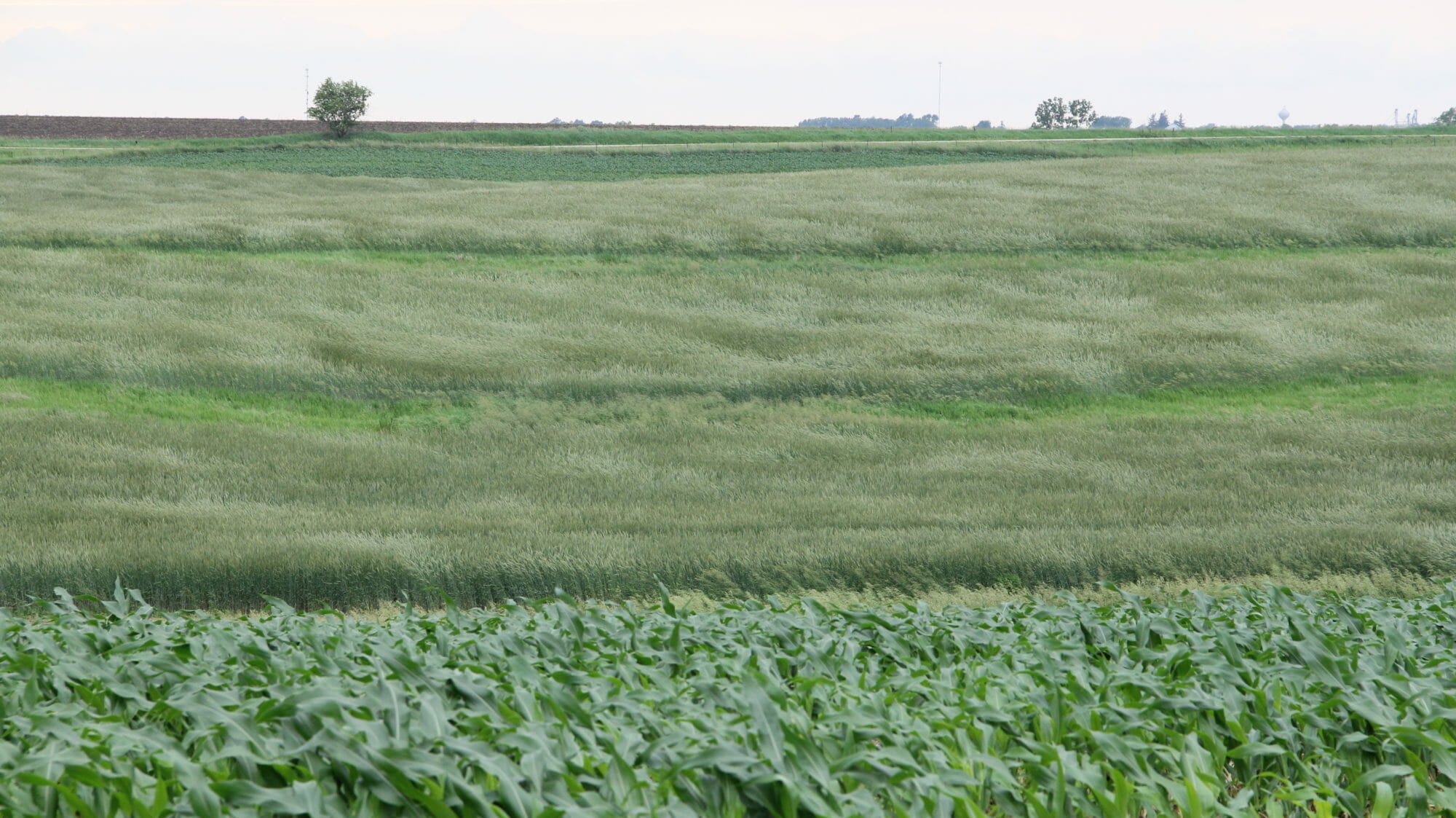
- (12,700 seed/lb) x (56 lb/bu) x (Z bu/ac) = 1,200,000 seed/ac
- Z = 1,200,000/ (12,700 x 56)
- Z = 1.69 bu/ac seeding rate
- (23,000 seed/lb) x (56 lb/bu) x (Z bu/ac) = 1,200,000 seed/ac
- Z = 1,200,000/ (23,000 x 56)
- Z = 0.93 bu/ac seeding rate
4. Inputs
Fertility When used as a cover crop, the nutrients used by cereal rye are cycled back into the soil, meaning no additional fertilizer is required. In contrast, harvesting cereal rye for seed and straw removes nutrients from the field. Sam, Wade and Tim emphasized the need to apply phosphorus and potassium in the fall to compensate for those lost nutrients – and for proper stem and grain growth of the rye. To calculate P and K rates for rye straw and grain removal, we can use Iowa State's recommendations for wheat (look at Table 7 in that publication) or Ag PhD's Fertilizer Removal by Crop app. Wade and Sam also mentioned that they topdress in the spring with ammonium sulfate (AMS) and have seen increased rye yield as a result. Pest Management When raising rye for seed, the farmers agreed that the most significant pest was fusarium head blight or “scab,” which lowers rye yield and seed germination rates. Corn stubble is a host of fusarium, so you can reduce potential incidence of fusarium by planting rye into soybean stubble.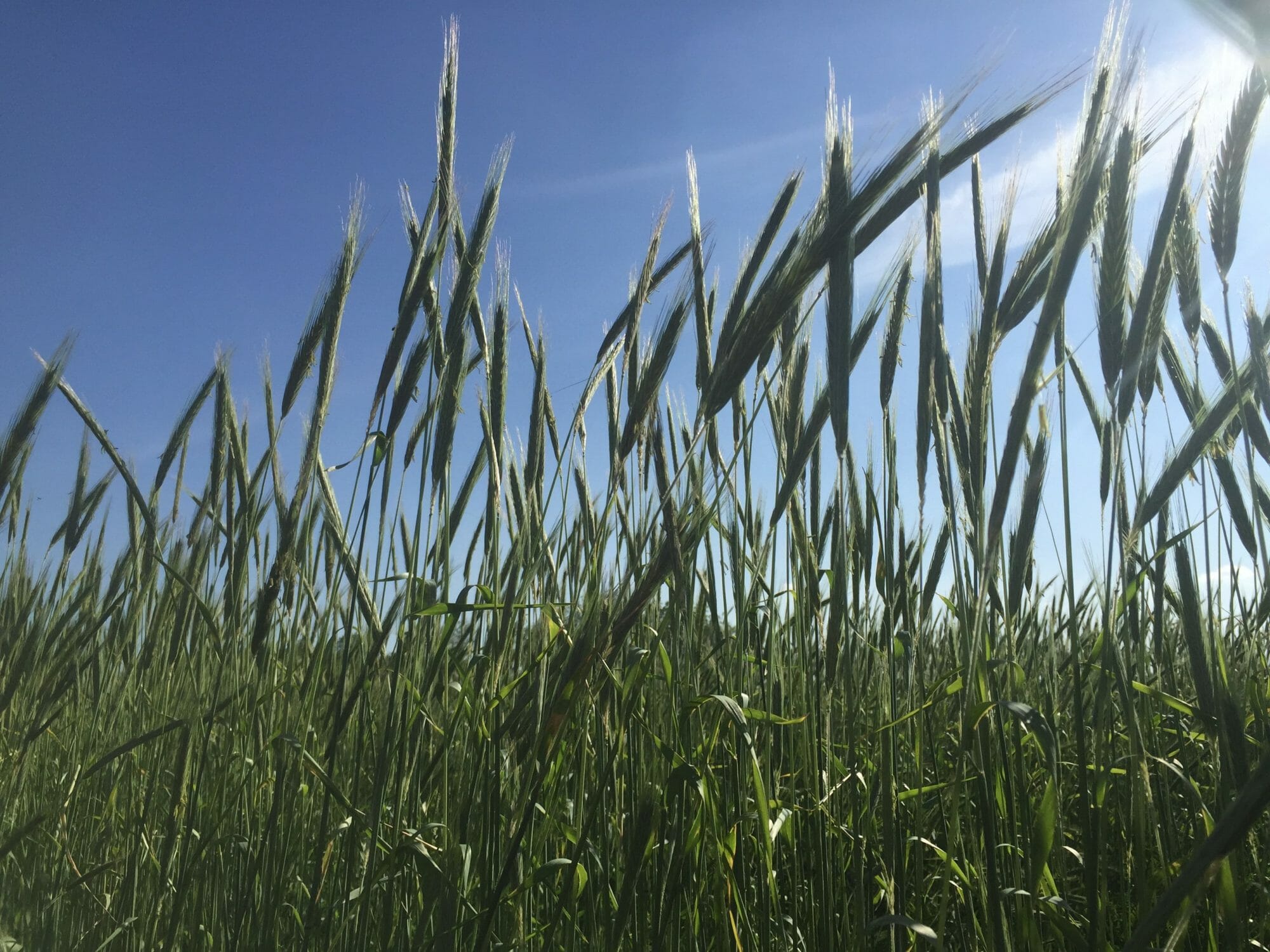
5. Harvesting Rye Seed
Sam, Wade and Tim typically harvest rye sometime between mid- and late July, and then seed a leguminous cover crop for their following cover crop. Their yields range from 35 to 50 bushels per acre. Sam estimates he is able to grow rye for about $7/bu compared to $10-$12.50 he would pay to purchase from someone else. When planting many acres of cover crops these savings add up quickly. Check out an example budget provided by Sam Bennett. Growing rye seed—a sample budget, on a per acre basis| Revenue | |||
| Unit price | Number of units | Subtotal | |
| Rye seed (used on farm and sold to neighbors) | $12.50/bu | 36 bu | $450 |
| Rye straw | $100/ton | 2 tons | $200 |
| Revenue subtotal $650 | |||
| Expenses | |||
| Rent | $285/ac | 1 ac | $285 |
| Rye seed | $10/bu | 2 bu | $20 |
| Fertilizer | $40/ac | 1 ac | $40 |
| Harvested seed cleaning | $0.75/bu | 36 bu | $27 |
| Hired labor to rake and bale straw | $40/ac | 1 ac | $40 |
| Fungicide for fusarium prevention | $15/ac | 1 ac | $15 |
| Expenses subtotal $427 | |||
6. Marketing Rye Seed
Sam emphasizes that finding rye seed markets before you plant is the most important step before deciding to grow rye seed. The farmers interviewed mention that providing seeding services alongside the rye seed makes the seed more appealing. You can also list your cover crop seed on PFI's Cover Crop Business Directory by emailing gro.sremraflacitcarp@sgninnej.nagrom