While cover crops are often heralded for their agronomic and soil benefits, they can support a surprising array of wildlife too.
Kyle Nilsestuen was glad of the tree-covered slopes that blocked the bitter December wind as he made his way across his fields, eyes scanning for turkeys.
It was on this hunting trip that Kyle witnessed a remarkable sight. Over the course of just a few hours, 18 bucks sauntered into the field, lured by the food and warmth provided by the cover crops Kyle had planted earlier in the fall.
“Most of them were up and coming, but there were a couple of lifetime bucks,” Kyle says. “For hours, I watched them eat and relax. They particularly liked the turnips and brassica. All day, they would lay down, ruminate, get up, eat and lay down again. It really was something to watch – and they were there because of the cover crops.”
Kyle is a fifth-generation farmer in the Driftless Area of western Wisconsin. The farm has been in his family since 1863 and was once a longtime dairy operation. Kyle himself majored in dairy science with a pre-veterinary focus. But he moved away from dairy in 2011 after realizing dairy was not the path for him.
Over the course of the next several years, Kyle transitioned to a beef cow-calf and row crop operation. Today, Kyle owns and operates 325 acres along with farming another couple of hundred rented acres. The total operation consists of corn, wheat and soybeans, as well as pasture and woodland.
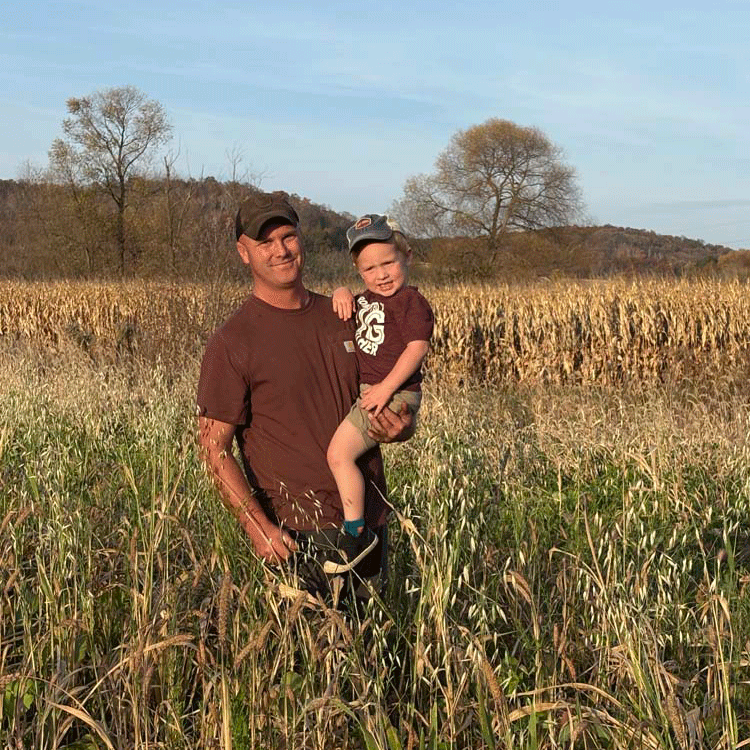
Farming in the Driftless Region often means farming with steep slopes prone to erosion during heavy rain. No-till has become a necessity for Kyle after transitioning to row crops. In 2020, to combat erosion, Kyle began incorporating cover crops into his rotation. Since then, he has seen firsthand the benefits of cover crops through the variety of wildlife calling his farm home.
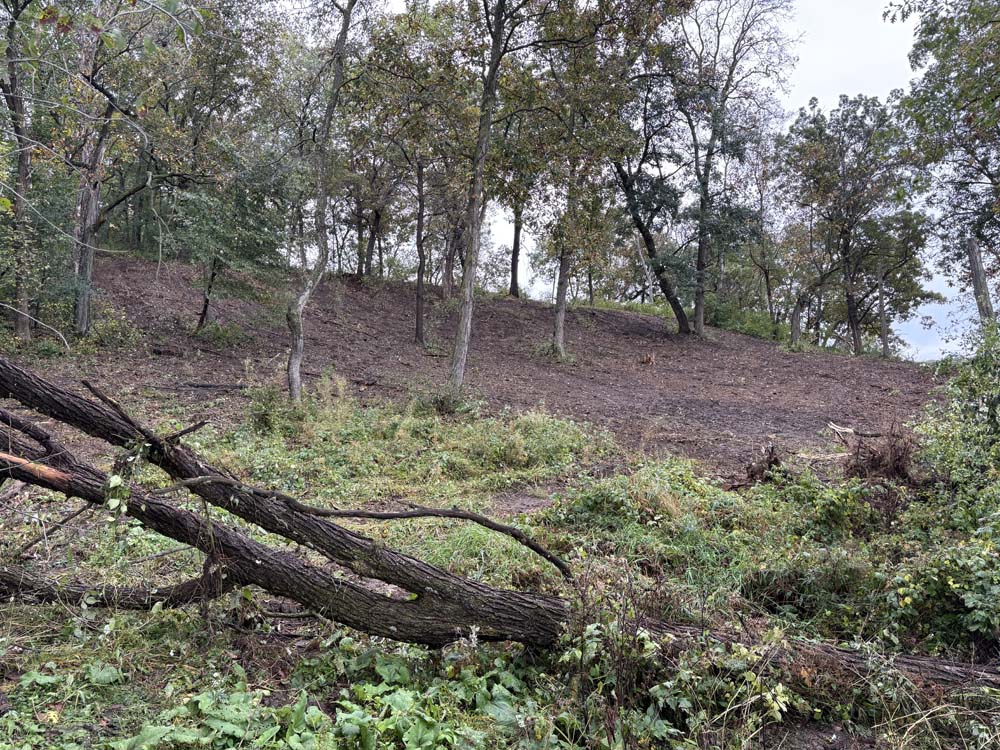
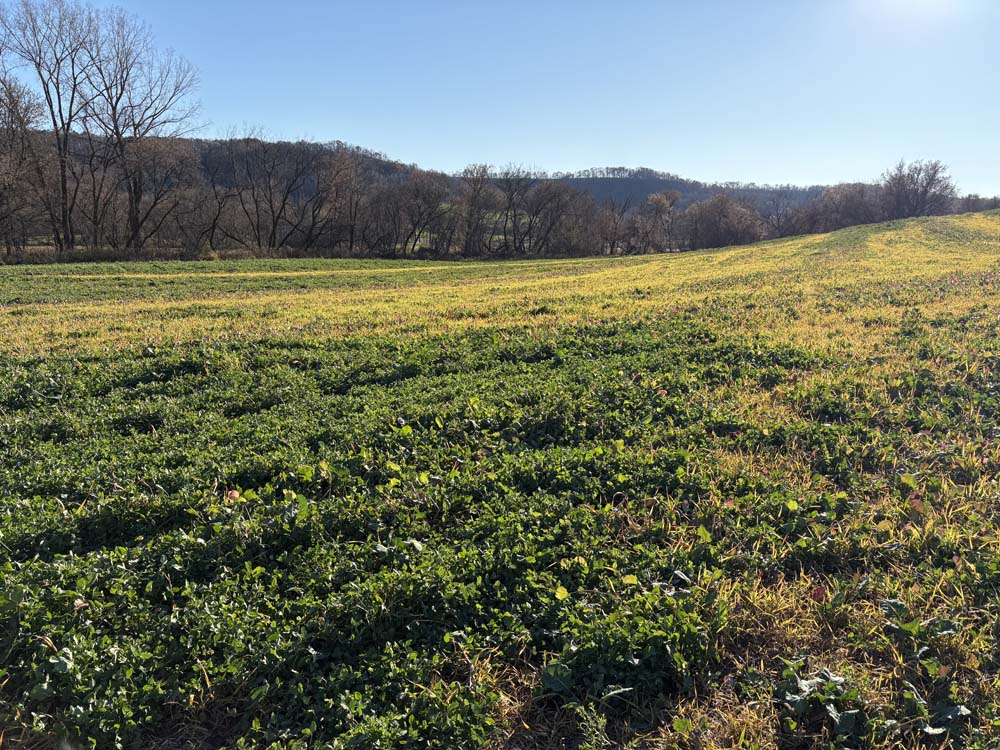
Cover crops can provide valuable habitat and food resources for wildlife during times of the year when crop fields might otherwise be bare. The added vegetation offers shelter for insects, birds and small mammals, while flowering species like clovers can provide pollen and nectar for beneficial insects.
Cover crops also support a wide range of soil-dwelling macroinvertebrates, such as earthworms, which serve as a food source for wildlife higher up the food chain, by increasing soil health overall.
Although most farmers plant cover crops for both agronomic and economic reasons, the practice can create a more wildlife-friendly agricultural landscape by increasing habitat diversity and extending living plant cover beyond the growing season.
Kyle’s Approach to Cover Crops and Supporting Farm and Wildlife
With his cover crops, Kyle practices sequential termination. With this approach, he lets legumes and brassica overwinter before corn, which creates constant fall and winter forage. Kyle has noticed that turkeys are particularly fond of the cover crops. “We are inundated with turkey,” he says. “They’ve been overwintering on the farm, digging through the snow-covered cover cropped fields.”
The abundance of turkeys and deer on his farm has opened up opportunities for Kyle. During hunting seasons, he allows permitted hunting on his land, which provides an unconventional income source.
Outside of hunting, Kyle’s cover crops have been an invitation to other wildlife. The farm now hosts both barred and Eastern screech owls. “We have great owl habitat, which tells me that I have rodents – which tells me that I have other unseen things happening on the land, which is good. It’s a good base for a functional ecosystem.”
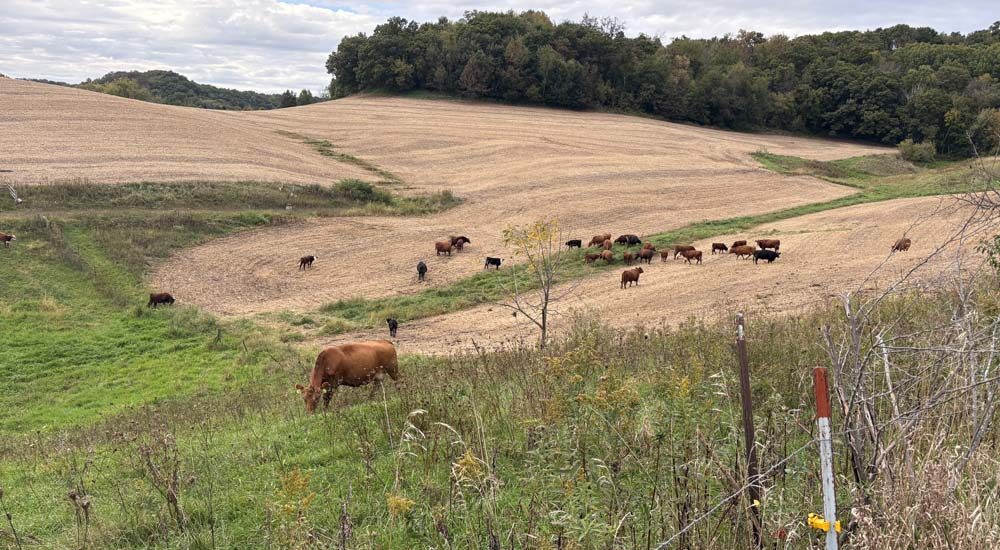
Kyle feeds his livestock in the winter with cornstalks and supplements with weekly high-quality hay bales to add some protein to the cattle’s diet. Kyle suspects that helps lure some of the rodents that then attract larger birds of prey, such as hawks and owls.
According to the U.S. Natural Resources Conservation Service, legume-heavy hays, like the ones baled from Kyle’s clover cover crops, provide critical protein not only for cattle, but for deer and other wildlife. The higher protein content provides a sustained and slow-release energy source that’s crucial for helping wildlife maintain body heat in winter.
Feeding hay also affects the broader ecosystem. When cattle trample hay, along with their manure, into the ground, they’re helping feed nutrients back into the soil. Since incorporating cover crops, Kyle has noticed an increase in organic matter and soil coverage on his land.
Planting for Wildlife
For farmers who want to enhance wildlife benefits with their cover crops, Kyle recommends using a diverse mixture that includes brassicas and clovers after wheat or other small grains. These high-energy mixes support deer, turkey and songbirds.
For farmers that want to start incorporating these mixtures, one potential way is to expand existing grass waterways. One of Kyle’s neighbors has done just that.
“By spreading his waterways with rye, instead of having a 15-to-20-foot grass waterway there’s another 30, 40, 50 feet of rye on each side that gets terminated each year, but that extra bit of catch has made a big difference in places,” Kyle explains.
For Kyle, adding cover crops has unlocked benefits that span multiple spheres. They’ve been a boon to the hunting he enjoys on his land while helping him diversify his income.
The cover crops also provide vital ecological benefits that support a cascade of wildlife. The mutual benefits illustrate how working land can support farmers economically while helping sustain the environment.
Incorporating cover crops is part of a longer goal for Kyle. He is turning toward a future goal of moving out of row crops entirely. His goal is to establish a fully grass-based grazing system for his cattle that continues to support the same wildlife his cover crops currently do.
“I really hope we can be just a cow-calf operation in the future. I enjoy the quiet times when I’m not in a tractor,” Kyle says. “I want to incorporate regenerative grazing for not only better soil health, but more robust bird populations and our key hunting species like turkey and white-tailed deer.”
He adds that seeing how his farming practices are helping those other species thrive on his land “gives me a value to the conservation practices that I might not be able to put a financial amount to.”