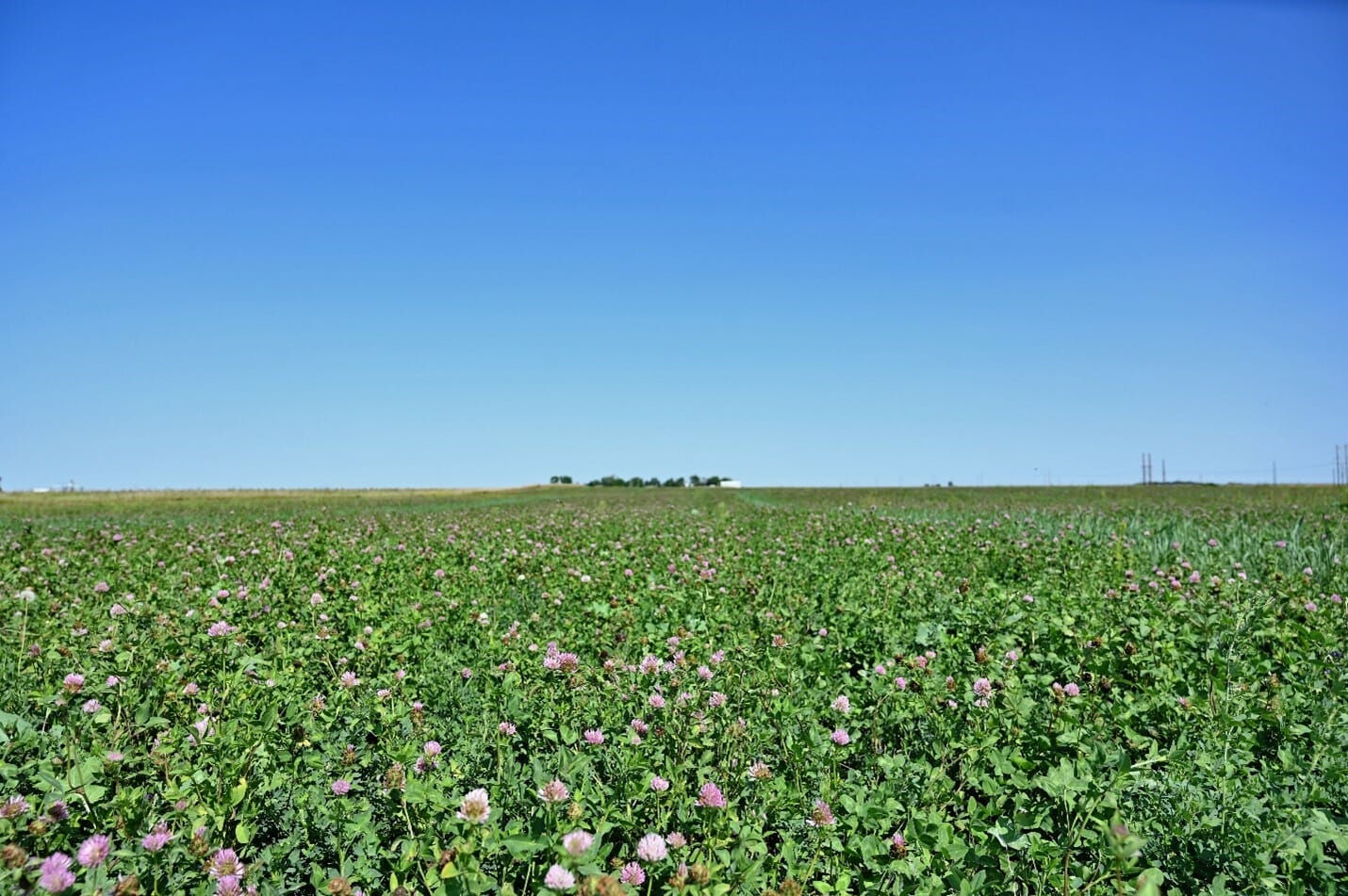
Increasing N Fixation Potential of the Legume
Decomposition for N Release
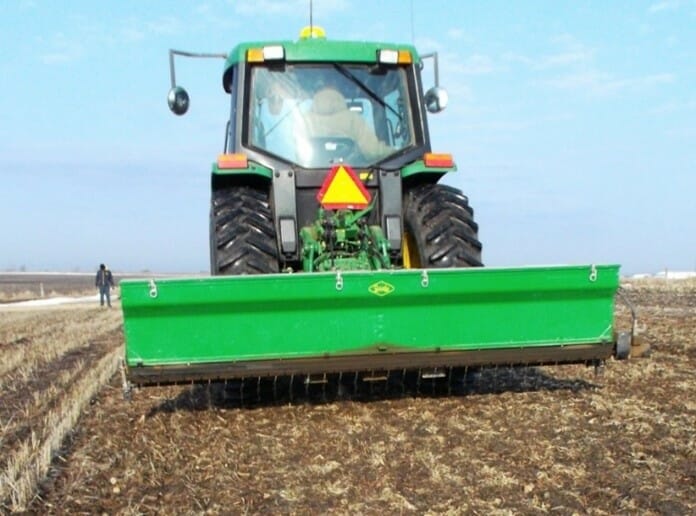
Nitrogen availability from clover or alfalfa to the following corn crop depends greatly on the timing of decomposition of the plant material. We have control over a few factors influencing decomposition timing, including whether the legume cover was incorporated into the soil with tillage. Tillage: Incorporating a legume cover crop into the soil with tillage makes the nitrogen in the aboveground biomass accessible to the microbes in the soil, enabling those microbes to break down the biomass and release N in a plant-available form. Tilling in the cover will likely result in greater N availability to the following crop, but with the caveat that tillage also has drawbacks (i.e. increased potential for soil erosion, altering soil structure). With chemical termination of a cover – without tillage – the aboveground biomass N is not lost, but will take longer to decompose on the soil surface, so less N will be available to the following crop. However, that surface biomass will eventually decompose and release N, which will increase soil N levels over the long-term. Stefan notes that it may take a few iterations of a legume in the rotation before we build our soil N levels to be able to successfully cut N rates to corn. Termination timing: Cover termination timing (fall vs spring termination) does not appear to influence N release from legume covers; Stefan cited a study from Ontario and a study from Iowa that indicated that fall clover termination and spring clover termination yielded the same amount of soil N at planting and in early June after the corn had emerged. Stefan explained that since N availability is not affected, we should consider which timing is most convenient and will have the greatest probability of success for effectively terminating the cover. While many people are interested in planting corn into green clover or alfalfa, Stefan notes that the antagonism of the legume on the corn seedling can interfere with corn establishment; therefore, the legume cover should be terminated at least seven days before corn planting. If chemically terminating the cover, Tim Sieren recommended a half pint of Banvel plus typical glyphosate rate. This extension article has helpful clover management tips. Climate: Soil microbes are most active under warm, moist soil conditions, so the legume cover will decompose and release N more quickly in warm, wet springs.Consider simple experimentation on your own field
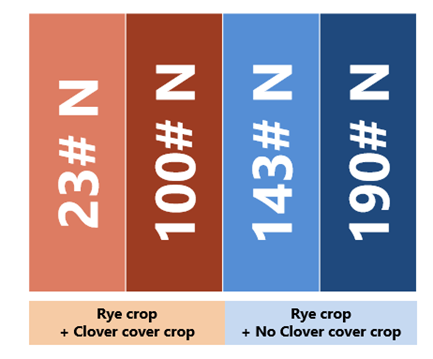
Estimating an N credit from legume cover crops is not straightforward, but we can do a few things to increase both N fixation potential and N release by the legume cover. To determine an N credit estimate from legume covers, we can experiment with nitrogen fertilizer and manure rates year to year or in strips on our field. Using a late spring nitrate test with a sampling depth of 12 inches is another helpful tool for determining N rates for sidedress.