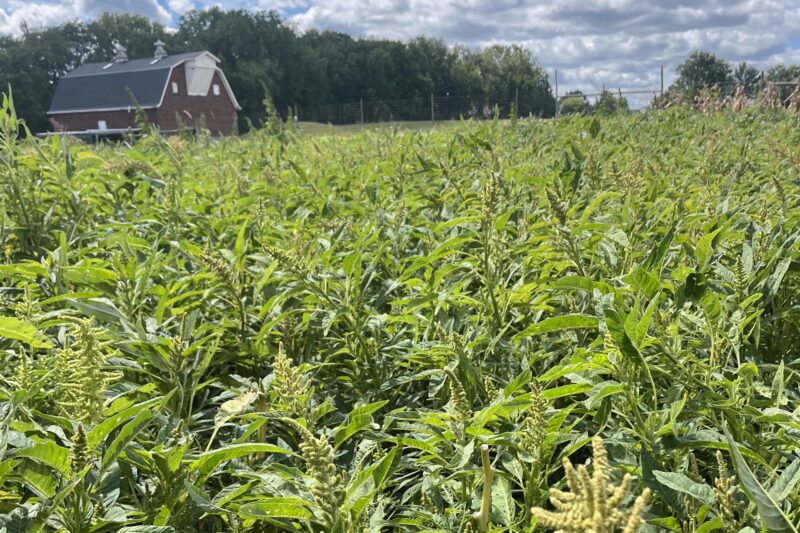
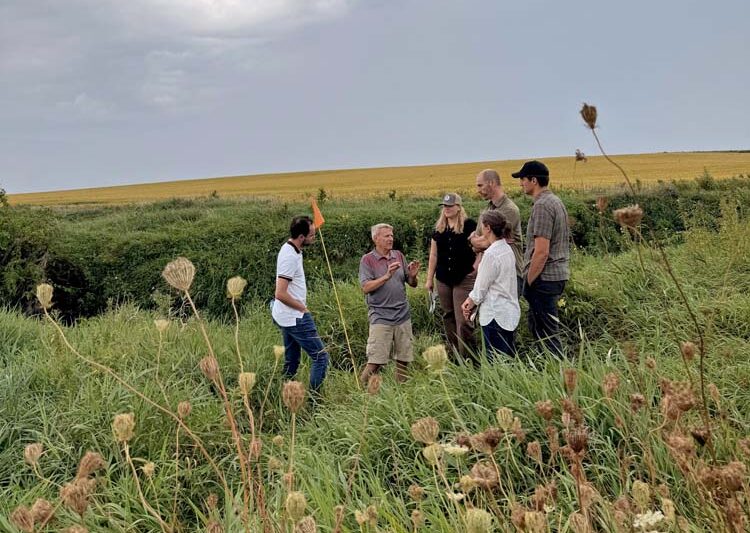
“We've gone from a diversity of crops to just a few crops . . . and that has coincided with population declines in farmland wildlife.” – Adam Janke“Because we had weedy areas where we grew chickens, or where we raised a single cow or small herd of cattle – or because we had fallow fields or diverse crop rotations – we found that generalist farmland wildlife species were able to exist on the margins of our farms quite well,” he says. “And they essentially set the soundtrack for Iowa's rural environments.” In the past few decades, however, this pastiche of on-farm diversity has measurably decreased. It's not the expansion of production agriculture that's the main culprit, Adam says, but rather the widespread shift to a two-crop system. “We've gone from a diversity of crops to just a few crops,” he says. “We've seen intensification and homogenization, and that has coincided with population declines in farmland wildlife, broadly defined.”
Removing Invasives to Restore Habitat
First-generation farmer Cait Caughey is working to restore some of that landscape diversity at Mullein Hill Farm, the diverse 25-acre farm she operates in Mondamin, Iowa. While some portions of the farm are kept in row crops, Cait specializes in flowers, native seed mixes, field vegetables and herbs. She has been farming since 2010 and says it's her love of nature and wildlife that brought her to farming.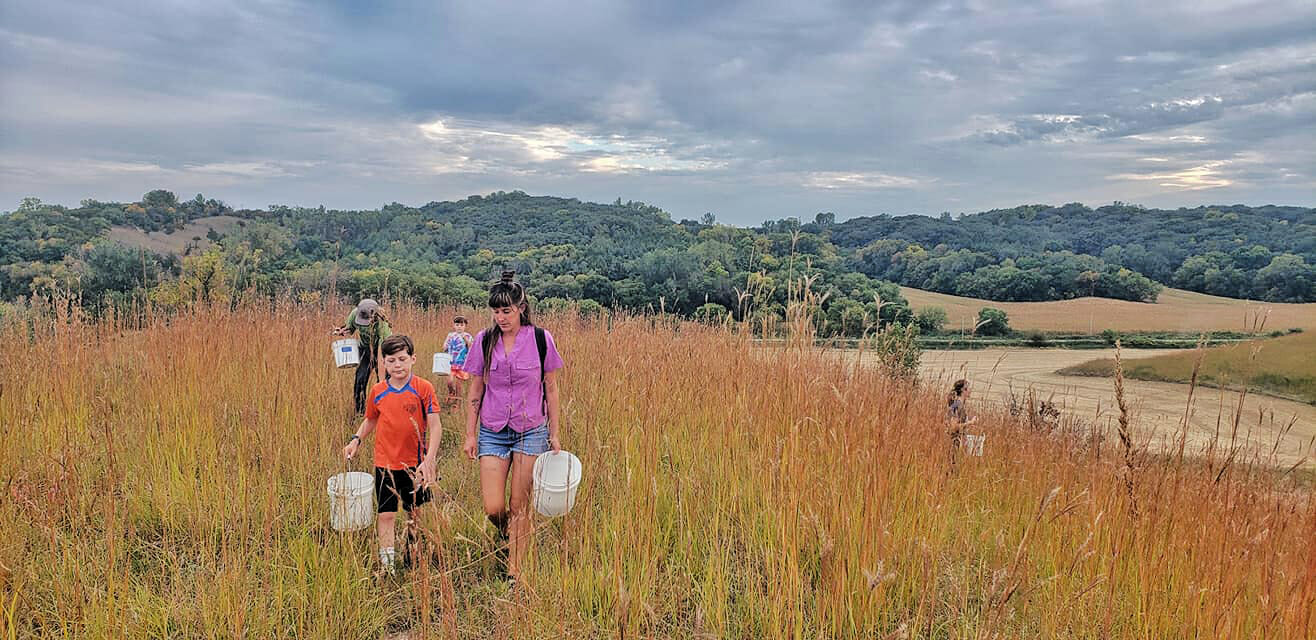
Preserving Microhabitaton Farms

“Farmers who find cleaning up their fencerows to be tedious may find joy in discovering that leaving messy fence lines in place is, in fact, creating space for wildlife.” – Marlene Ehresman
Diversifying at Bigger Scales
Farmers also have opportunities to restore on-farm diversity at a broader scale, using practices that can work with their existing farming enterprises – and that can make their farms more resilient. Some of these mutually beneficial efforts include practices like planting prairie strips, installing wetlands in less productive field areas, adding small-grain crops like oats and wheat to diversify crop rotations and planting cover crops – which the Midwest Row Crop Collaborative says can provide valuable habitat for insects, pollinators and other wildlife.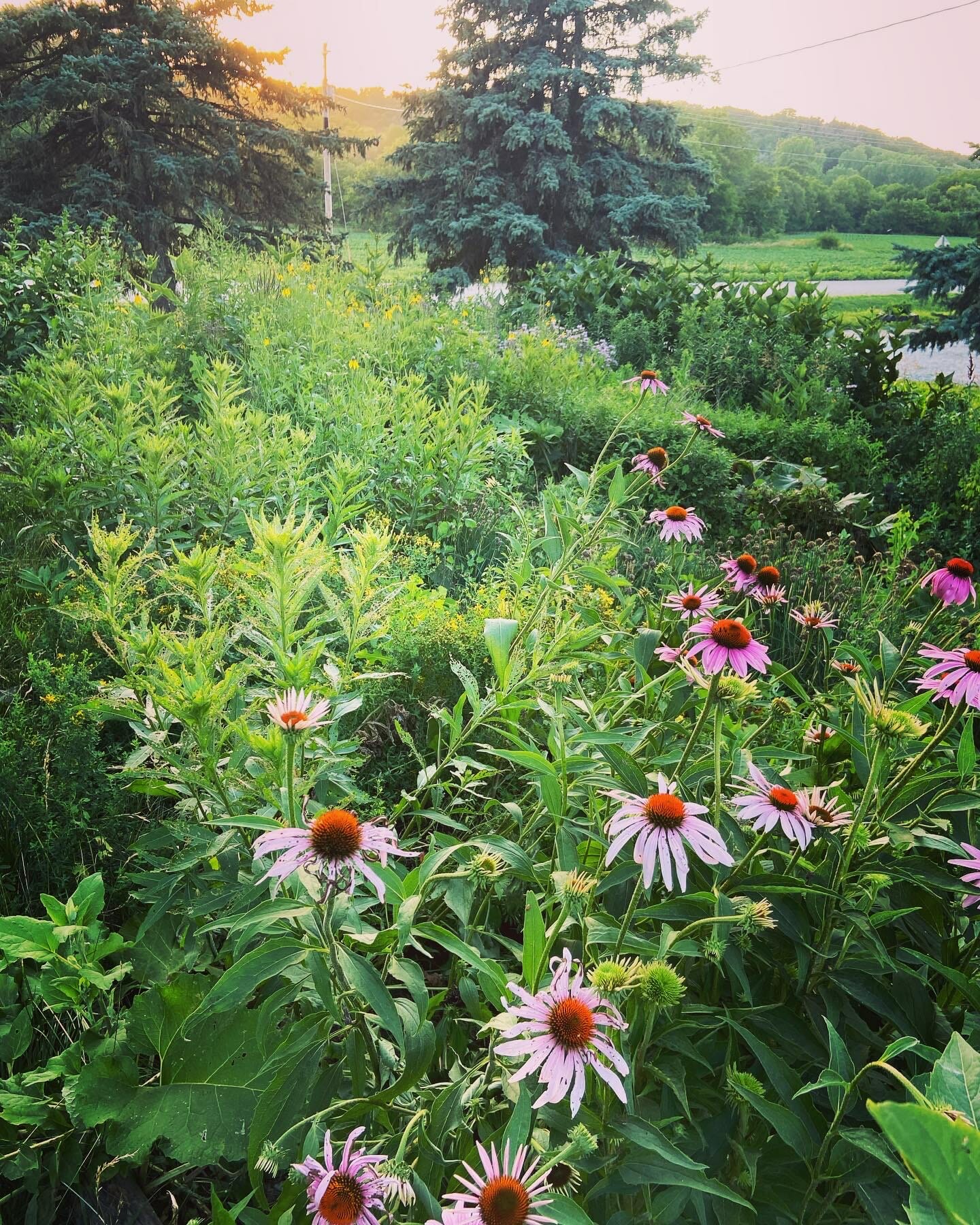 Efforts like this are vital for Iowa's native species to rebound and even thrive. Adam points to the value of prairie strips, which ISU's long-running prairie strips project has shown to have many benefits with a relatively small footprint in crop fields. “Many species of greatest conservation need – like grasshopper sparrows, dickcissel, common yellowthroat, brown thrasher, Eastern kingbird, field sparrow and Eastern meadowlark – are using prairie strips for their reproduction,” he says.
These practices aren't at odds with production agriculture either. Echoing Adam's comment about how crop diversity creates spaces for wildlife, a 2019 U.S. Geological Survey report – “The Effects of Management Practices on Grassland Birds” – notes how meadowlark abundance in Iowa “was positively correlated with large amounts of pasture, alfalfa hayland and herbaceous fencerow in the surrounding landscape and with moderate amounts of row crops.”
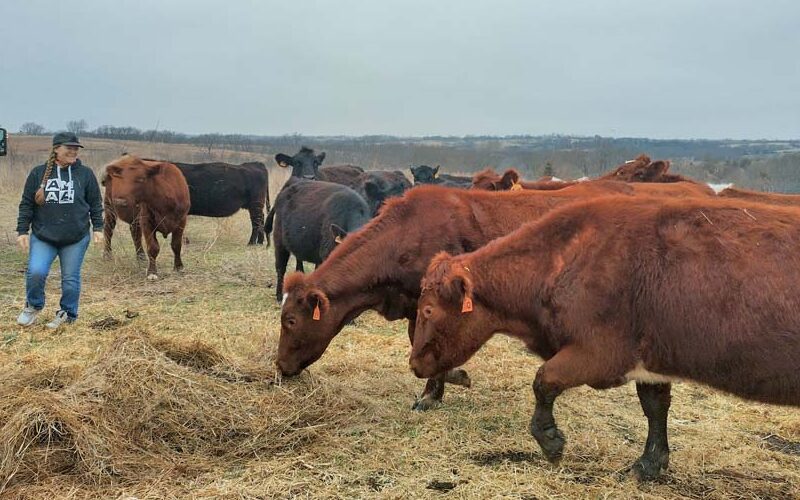
Pasture used to be common on Iowa farms when most farmers had livestock – and bringing livestock back can benefit farmers, and wildlife, in many ways. Rotationally grazing them can further benefit farmers, livestock and wildlife. “Many farmers are already using this practice to allow grazing grasses to recover,” Marlene says. “It's just one more habitat-friendly practice that preserves that bit of the natural and original landscape.”
Ultimately, she says, restoring habitat on Iowa farms “comes down to knowing the natural history of that animal, and appreciating what they can do for your farm – and what your farm can do for them.”
Efforts like this are vital for Iowa's native species to rebound and even thrive. Adam points to the value of prairie strips, which ISU's long-running prairie strips project has shown to have many benefits with a relatively small footprint in crop fields. “Many species of greatest conservation need – like grasshopper sparrows, dickcissel, common yellowthroat, brown thrasher, Eastern kingbird, field sparrow and Eastern meadowlark – are using prairie strips for their reproduction,” he says.
These practices aren't at odds with production agriculture either. Echoing Adam's comment about how crop diversity creates spaces for wildlife, a 2019 U.S. Geological Survey report – “The Effects of Management Practices on Grassland Birds” – notes how meadowlark abundance in Iowa “was positively correlated with large amounts of pasture, alfalfa hayland and herbaceous fencerow in the surrounding landscape and with moderate amounts of row crops.”
Pasture used to be common on Iowa farms when most farmers had livestock – and bringing livestock back can benefit farmers, and wildlife, in many ways. Rotationally grazing them can further benefit farmers, livestock and wildlife. “Many farmers are already using this practice to allow grazing grasses to recover,” Marlene says. “It's just one more habitat-friendly practice that preserves that bit of the natural and original landscape.”
Ultimately, she says, restoring habitat on Iowa farms “comes down to knowing the natural history of that animal, and appreciating what they can do for your farm – and what your farm can do for them.”