Timing of Roll-Crimping Rye Cover Crop and Planting Soybeans
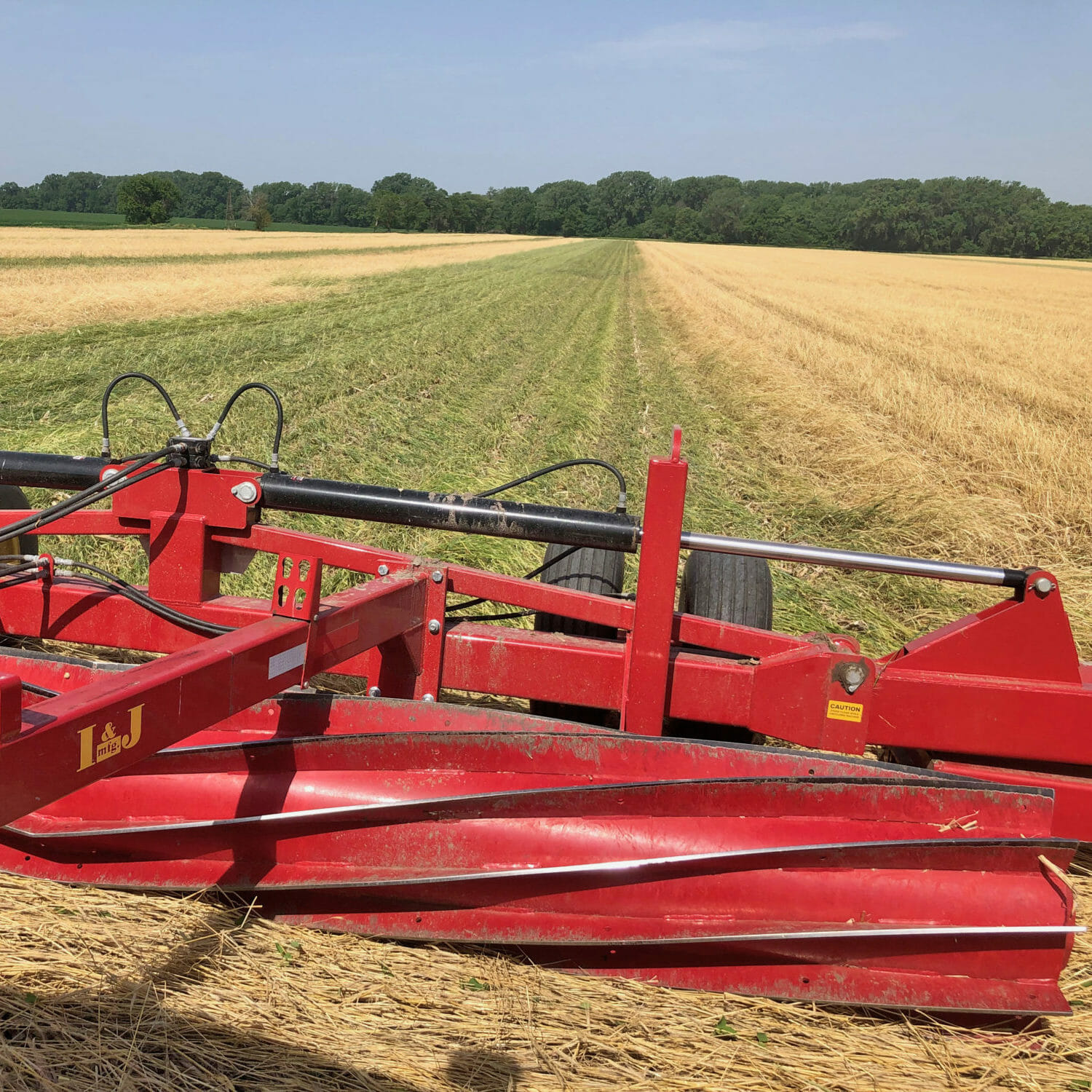 The organic no-till movement emphasizes eliminating both chemical and tillage inputs in crop production. The research on organic no-till clearly shows that successful weed control with cover crops relies on consistent, thick cover crop biomass and effective mechanical forms of cover crop termination (e.g., roller-crimpers). However, determining when to mechanically terminate a cover crop is difficult as there are tradeoffs with weed control benefits, termination efficacy and cash crop yield.
Though he is not a certified organic grower, Jon Bakehouse recently purchased a roller-crimper and wanted to know how to best use it to terminate a cereal rye cover crop in the soybean phase of his crop rotation. Jon compared soybean yield and overall profitability of roll-crimping + planting soybeans at two different stages of the cereal rye cover crop's development: at the anthesis (flowering) stage of cereal rye, and several weeks later at the dough (grain physiological maturity) stage of cereal rye.
read the results
The organic no-till movement emphasizes eliminating both chemical and tillage inputs in crop production. The research on organic no-till clearly shows that successful weed control with cover crops relies on consistent, thick cover crop biomass and effective mechanical forms of cover crop termination (e.g., roller-crimpers). However, determining when to mechanically terminate a cover crop is difficult as there are tradeoffs with weed control benefits, termination efficacy and cash crop yield.
Though he is not a certified organic grower, Jon Bakehouse recently purchased a roller-crimper and wanted to know how to best use it to terminate a cereal rye cover crop in the soybean phase of his crop rotation. Jon compared soybean yield and overall profitability of roll-crimping + planting soybeans at two different stages of the cereal rye cover crop's development: at the anthesis (flowering) stage of cereal rye, and several weeks later at the dough (grain physiological maturity) stage of cereal rye.
read the results
Can We Reduce N Rates and Improve ROI?
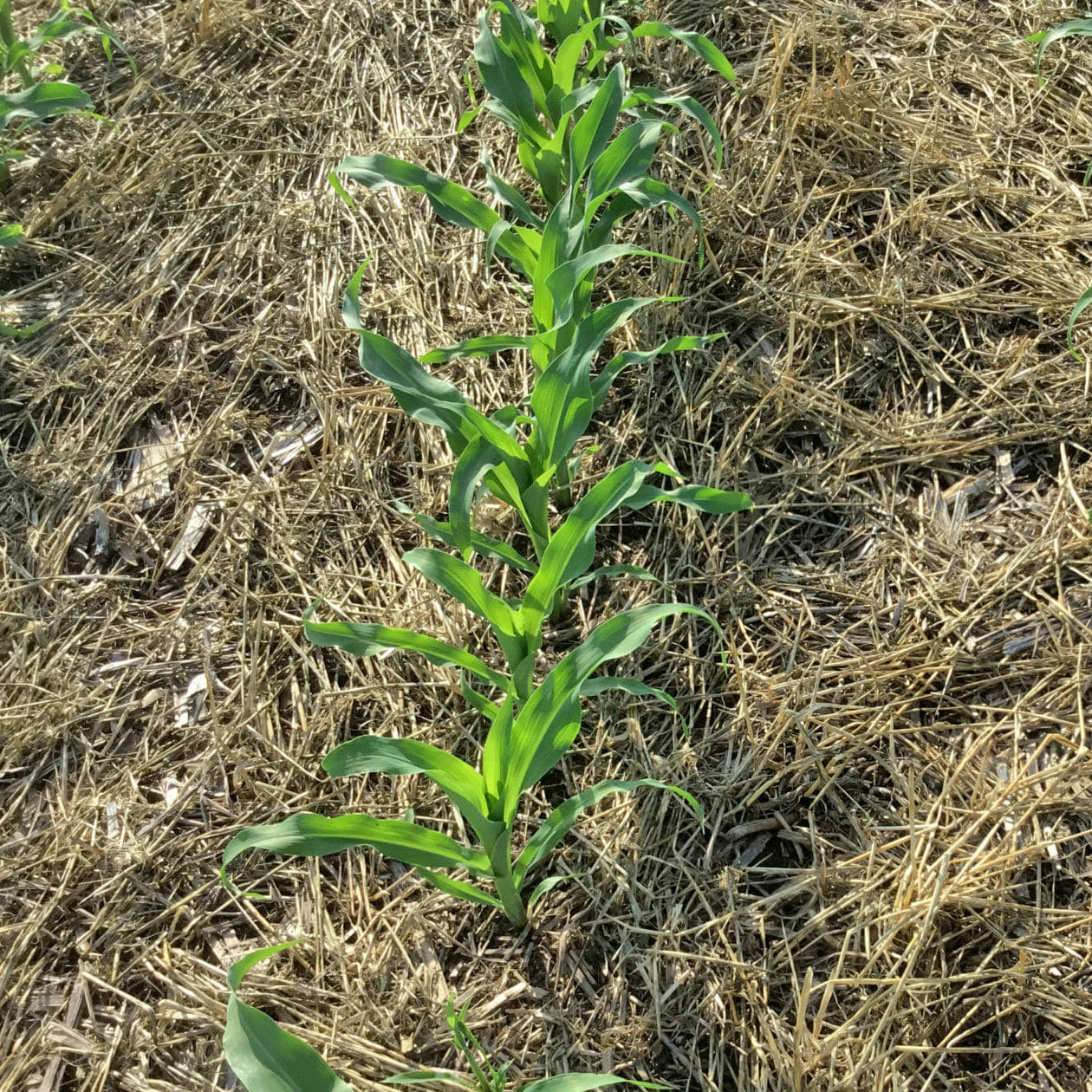 Corn farmers are wondering if the soil health-building practices they have implemented in the past five-plus years – such as reduced tillage, cover crops, diversified rotations and others – will let them reduce their typical N rates. Sixteen farmers put their soil health to the test in 17 replicated strip trials comparing their typical nitrogen rate against that rate reduced by 15%-45%. If farmers can maintain corn yields and save money at the reduced N rate, they might feel more confident reducing (or at least questioning) fertilizer rates going forward.
And what if the reduced N rate lowers corn yields and loses money? Farmers will still have gained valuable information: They can be more assured that their typical nitrogen rate is the best rate for their farm at this time, and better equipped to gauge how additional soil health-promoting practices could help reduce it in the future.
Read the results
Corn farmers are wondering if the soil health-building practices they have implemented in the past five-plus years – such as reduced tillage, cover crops, diversified rotations and others – will let them reduce their typical N rates. Sixteen farmers put their soil health to the test in 17 replicated strip trials comparing their typical nitrogen rate against that rate reduced by 15%-45%. If farmers can maintain corn yields and save money at the reduced N rate, they might feel more confident reducing (or at least questioning) fertilizer rates going forward.
And what if the reduced N rate lowers corn yields and loses money? Farmers will still have gained valuable information: They can be more assured that their typical nitrogen rate is the best rate for their farm at this time, and better equipped to gauge how additional soil health-promoting practices could help reduce it in the future.
Read the results
Flame-Weeding Organic Soybeans
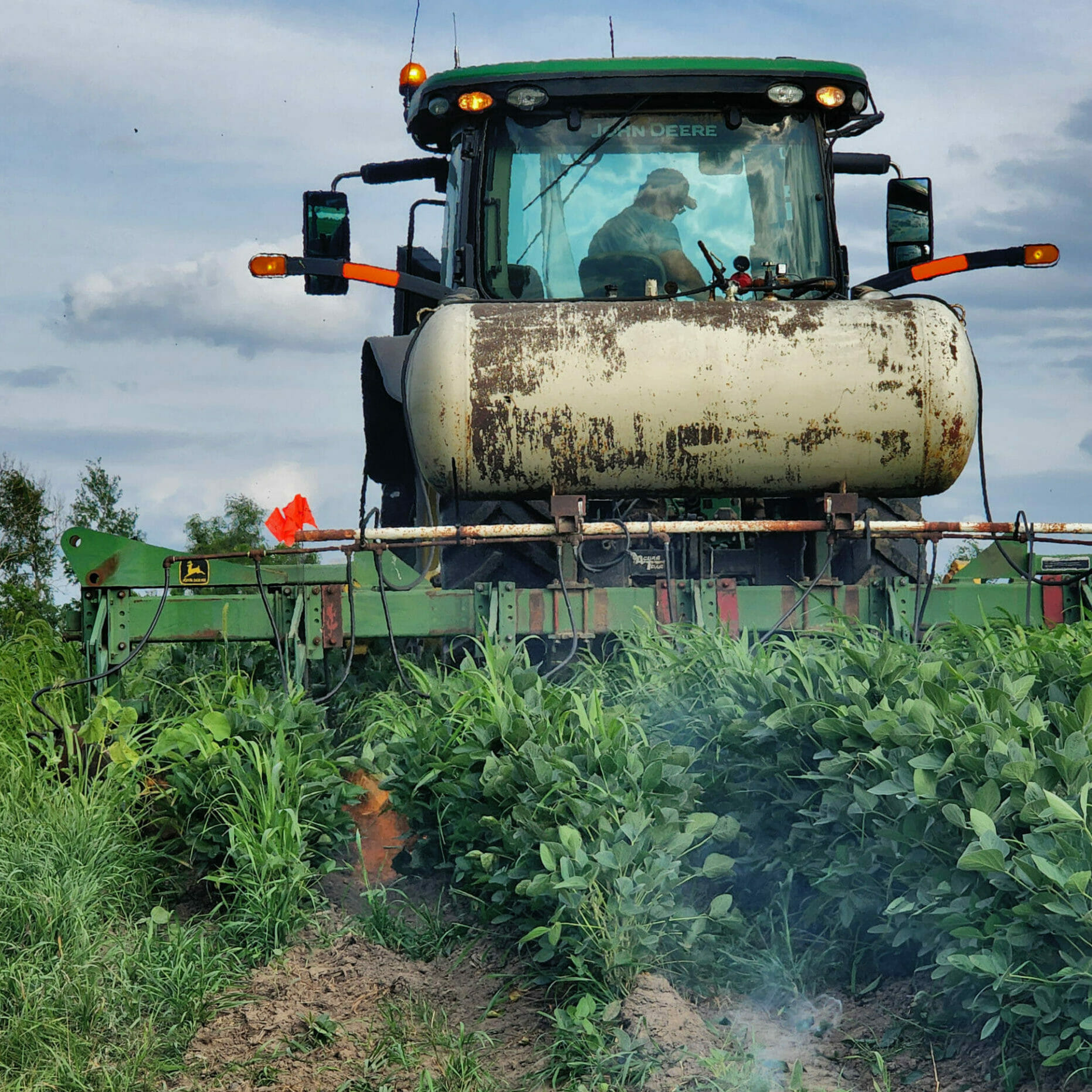 Flame-weeding is an organic weed control method in which weed plant tissues are exposed to propane-fueled flames, injuring or killing the weed. Daniel Sheetz wondered if adding flame-weeding to his standard weeding practices could decrease weed pressure in his organic soybean production. Together with PFI staff, Daniel designed an experiment with two treatments: 1) his standard practices of tine-weeding, rotary hoeing and three successive passes of cultivation compared with 2) his standard practices plus an additional pass with a flame weeder. Daniel's original plan was to flame-weed between the first and second cultivation passes. He was unable to do that and ended up flame-weeding on July 26 after the third cultivation pass.
Read the results
Flame-weeding is an organic weed control method in which weed plant tissues are exposed to propane-fueled flames, injuring or killing the weed. Daniel Sheetz wondered if adding flame-weeding to his standard weeding practices could decrease weed pressure in his organic soybean production. Together with PFI staff, Daniel designed an experiment with two treatments: 1) his standard practices of tine-weeding, rotary hoeing and three successive passes of cultivation compared with 2) his standard practices plus an additional pass with a flame weeder. Daniel's original plan was to flame-weed between the first and second cultivation passes. He was unable to do that and ended up flame-weeding on July 26 after the third cultivation pass.
Read the results
Clover Cover Crop Termination Date for a Rye-Corn System
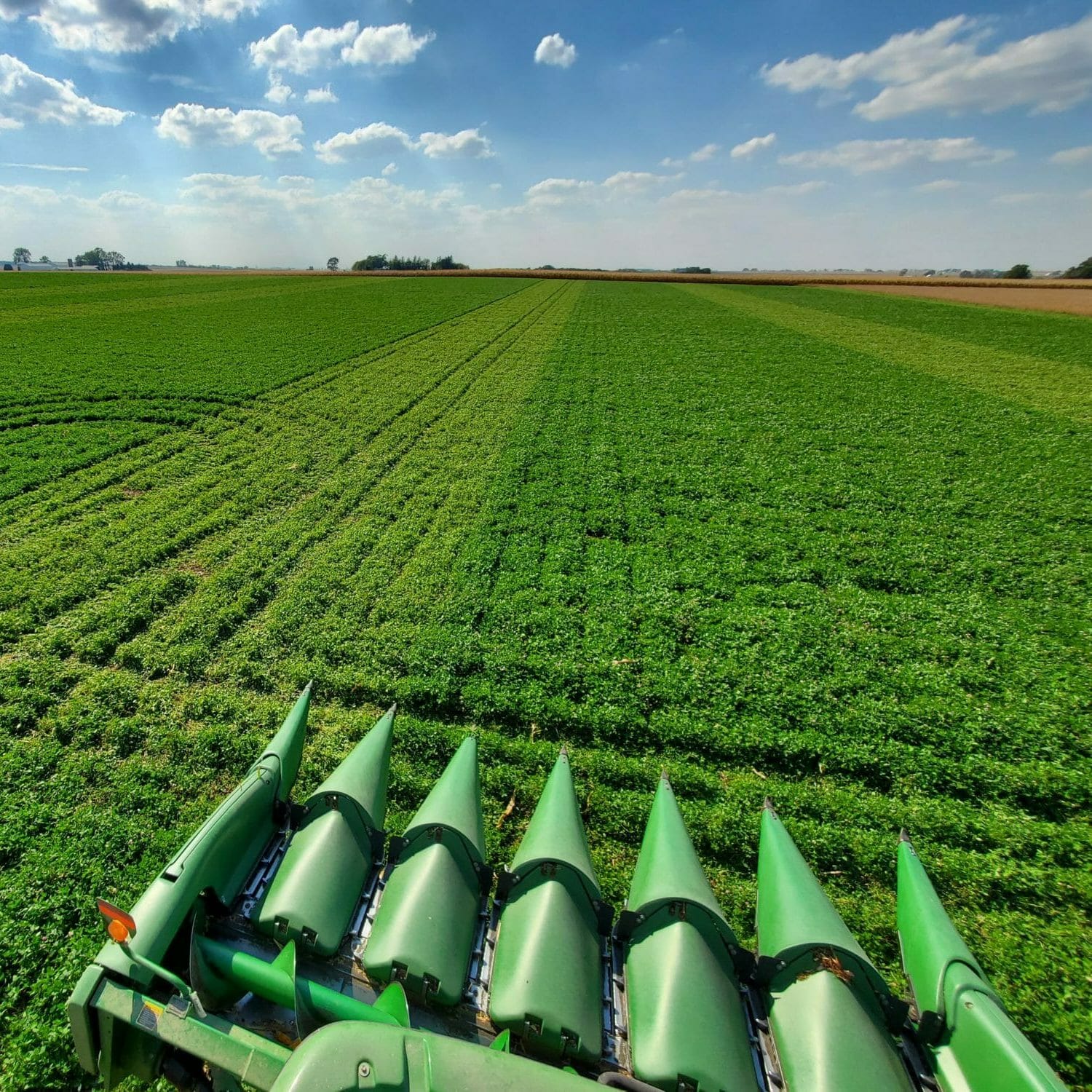 Since expanding his corn-soybean crop rotation to include small grains over the past decade, Dick Sloan has conducted several experiments aimed at optimizing management of a nitrogen-fixing green manure cover crop between the small grain and corn phases of his rotation. This year, Dick was curious about how the termination date of clover green manure might affect nitrogen availability to a succeeding crop. He commented, “By maximizing nitrogen availability from the clover cover crop, I will minimize my need for nitrogen in the corn year of my rotation.”
Dick compared corn yields and net financial returns under three different clover cover crop termination strategies: 1) fall termination, 2) spring termination and 3) spring suppression. He hypothesized that terminating clover in the fall would provide more nitrogen in the corn year and greater corn yield than terminating or suppressing the clovers in the spring.
Read the results
Since expanding his corn-soybean crop rotation to include small grains over the past decade, Dick Sloan has conducted several experiments aimed at optimizing management of a nitrogen-fixing green manure cover crop between the small grain and corn phases of his rotation. This year, Dick was curious about how the termination date of clover green manure might affect nitrogen availability to a succeeding crop. He commented, “By maximizing nitrogen availability from the clover cover crop, I will minimize my need for nitrogen in the corn year of my rotation.”
Dick compared corn yields and net financial returns under three different clover cover crop termination strategies: 1) fall termination, 2) spring termination and 3) spring suppression. He hypothesized that terminating clover in the fall would provide more nitrogen in the corn year and greater corn yield than terminating or suppressing the clovers in the spring.
Read the results
Cover Crops for Winter Squash
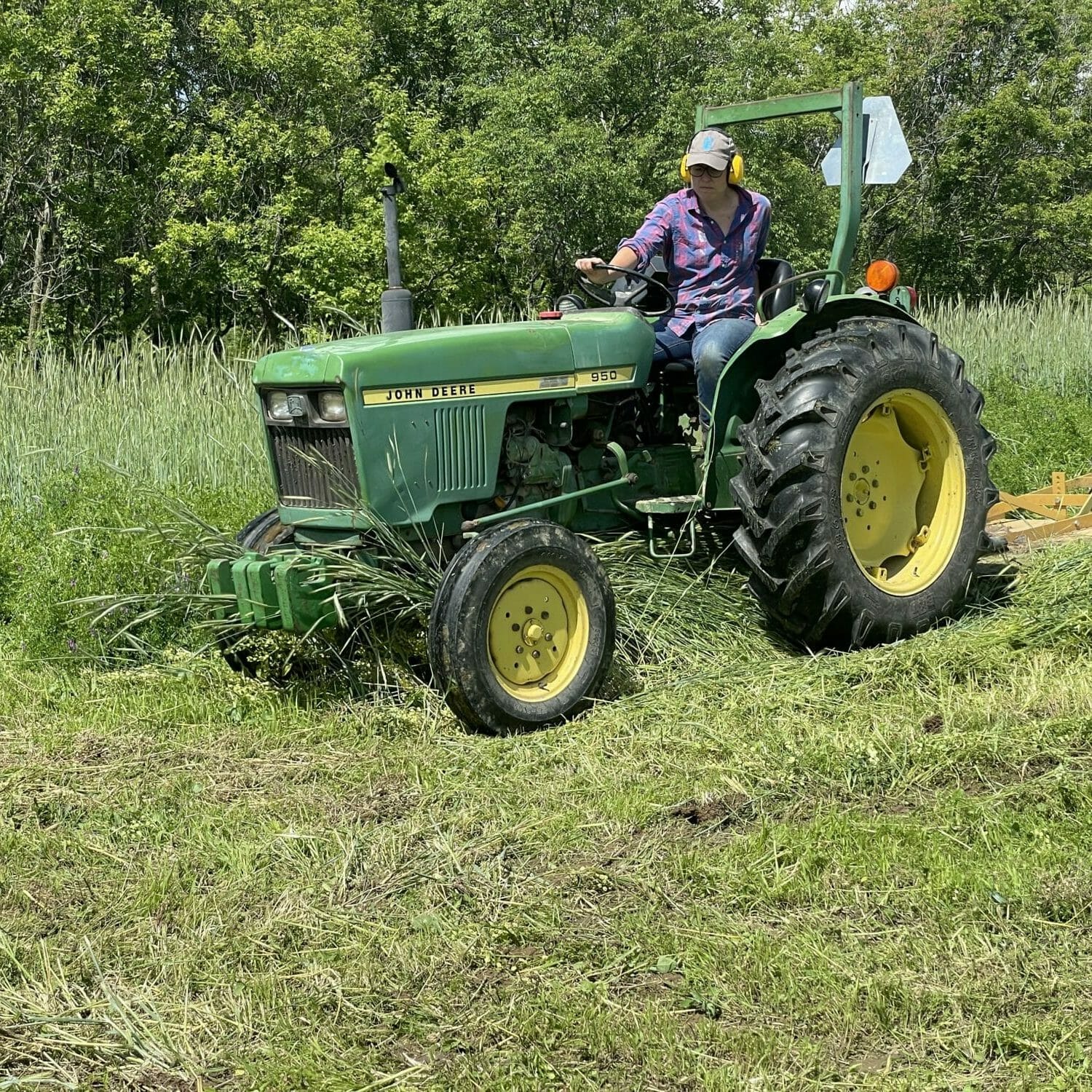 Cover crops are planted by many vegetable growers between crop cycles for the multitude of benefits they provide. Kate Edwards had previous success growing cereal rye as a cover crop and had heard of other growers having success with hairy vetch, a leguminous cover crop that has the added benefit of providing nitrogen for the next crop.
However, Kate knew vetch would not be a good cover crop option before most of her crops. “To get the best results from vetch, you have to wait to incorporate it until after it flowers,” she commented. “Winter squash and our other fall crops are the only crops planted late enough to do this.” With this background knowledge, Kate decided to test how hairy vetch and cereal rye each affected squash yields.
Read the results
Cover crops are planted by many vegetable growers between crop cycles for the multitude of benefits they provide. Kate Edwards had previous success growing cereal rye as a cover crop and had heard of other growers having success with hairy vetch, a leguminous cover crop that has the added benefit of providing nitrogen for the next crop.
However, Kate knew vetch would not be a good cover crop option before most of her crops. “To get the best results from vetch, you have to wait to incorporate it until after it flowers,” she commented. “Winter squash and our other fall crops are the only crops planted late enough to do this.” With this background knowledge, Kate decided to test how hairy vetch and cereal rye each affected squash yields.
Read the results
Living Mulch for Pathway Weed Management in Bell Peppers
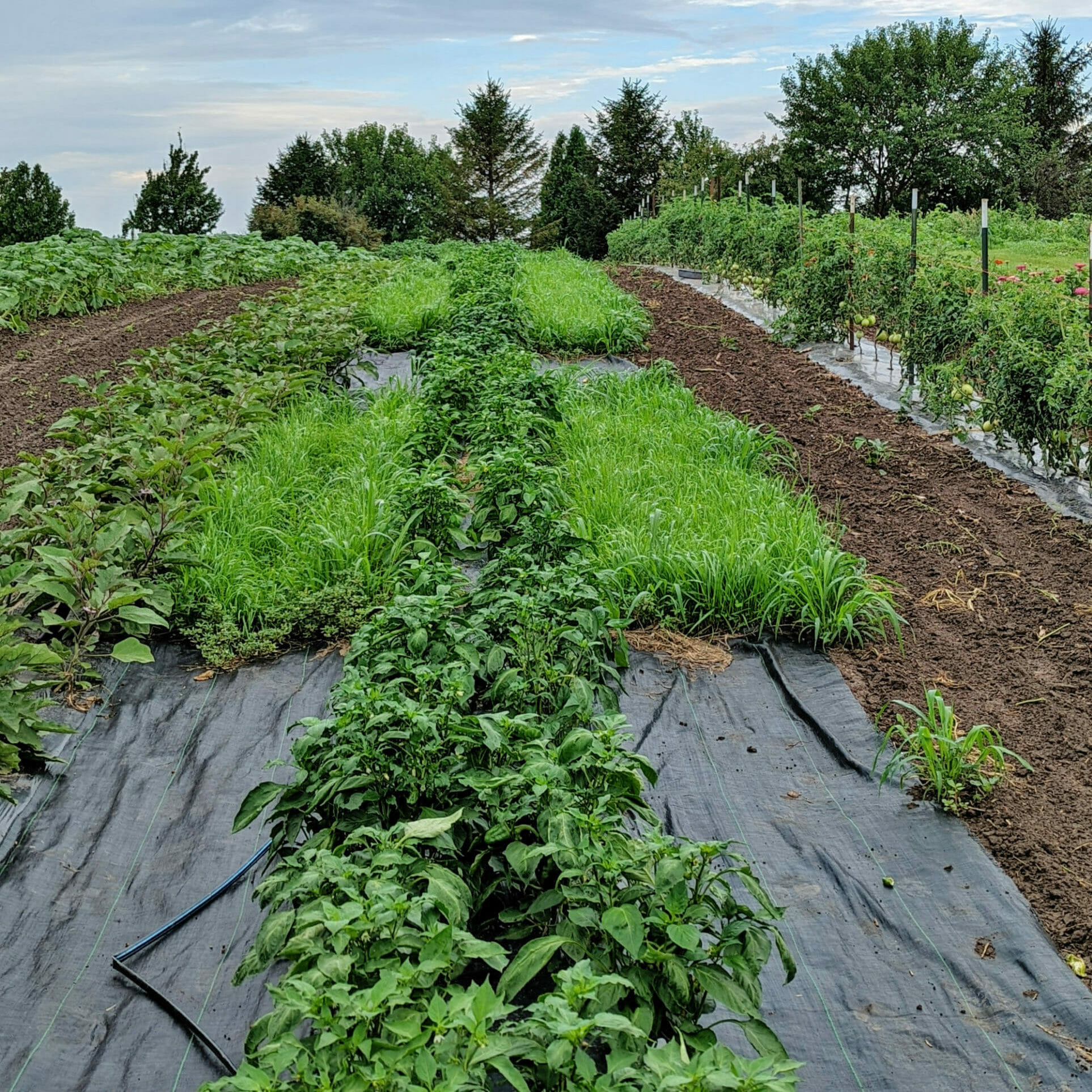 Managing weeds in the aisles between rows of plasticulture vegetables can be challenging and time-consuming. Some common weed suppression methods include applying mulches such as straw and corn stover, adding landscape fabric or planting a living mulch, which is a cover crop grown simultaneously to a cash crop. Living mulches have gained attention for potential soil health and other benefits in recent years. However, they can compete with the cash crops for water and nutrients.
Kate Edwards and Mark Quee were curious about how planting a living mulch would affect crop yield compared to other weed-suppression methods. Both farmers decided to test the effect of living versus non-living mulch on pepper yields. Kate used straw as a non-living mulch while Mark tried landscape fabric.
Read the results
Managing weeds in the aisles between rows of plasticulture vegetables can be challenging and time-consuming. Some common weed suppression methods include applying mulches such as straw and corn stover, adding landscape fabric or planting a living mulch, which is a cover crop grown simultaneously to a cash crop. Living mulches have gained attention for potential soil health and other benefits in recent years. However, they can compete with the cash crops for water and nutrients.
Kate Edwards and Mark Quee were curious about how planting a living mulch would affect crop yield compared to other weed-suppression methods. Both farmers decided to test the effect of living versus non-living mulch on pepper yields. Kate used straw as a non-living mulch while Mark tried landscape fabric.
Read the results
Pruning vs. Caging Heirloom Tomatoes in High Tunnel
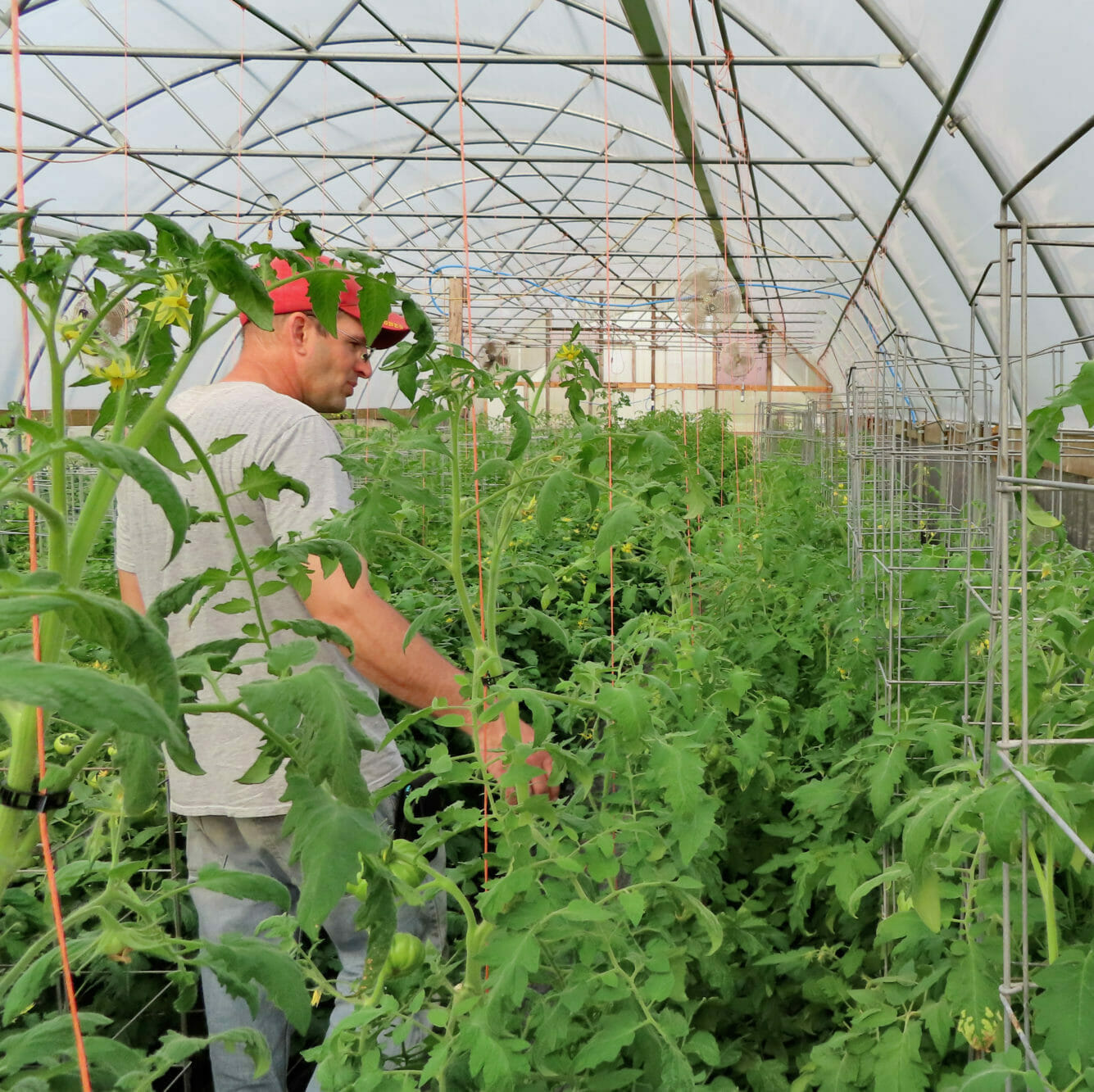 Single-leader pruning is a standard management practice for growing high tunnel tomatoes. However, Lee Matteson wondered if caging his high tunnel tomatoes would improve the quantity of fruit and reduce labor costs compared to this typical practice. Lee investigated the yield of ‘Beauty King,' an indeterminate heirloom tomato, under two management treatments: 1) single-leader pruning and 2) caging with no pruning.
Read the results
Single-leader pruning is a standard management practice for growing high tunnel tomatoes. However, Lee Matteson wondered if caging his high tunnel tomatoes would improve the quantity of fruit and reduce labor costs compared to this typical practice. Lee investigated the yield of ‘Beauty King,' an indeterminate heirloom tomato, under two management treatments: 1) single-leader pruning and 2) caging with no pruning.
Read the results
Fine-Tuning Fertility for Better Broccoli
 In this trial, Hannah Breckbill, Emily Fagan, Kate Edwards and Mark Quee wanted to know how fertilizer practices on their farms affected broccoli production. “As veggie farmers,” Kate remarked, “we are often left to figure out agronomic practices from bits and pieces from other farmers at conferences and social media. There isn't always a tried-and-true fertilizer program.” Because of this knowledge gap, experimentation is necessary for these farmers.
Each grower had different existing fertilization practices and soil fertility, and each decided to compare their typical practice with different new practices that interested them. Hannah and Emily compared their standard dose of Sustane at planting with a larger application at planting and two split applications. Kate tested how using no fertilization compared with side-dressing with blood meal and feather meal. Mark compared no fertilization with side-dressing with blood meal.
Read the results
In this trial, Hannah Breckbill, Emily Fagan, Kate Edwards and Mark Quee wanted to know how fertilizer practices on their farms affected broccoli production. “As veggie farmers,” Kate remarked, “we are often left to figure out agronomic practices from bits and pieces from other farmers at conferences and social media. There isn't always a tried-and-true fertilizer program.” Because of this knowledge gap, experimentation is necessary for these farmers.
Each grower had different existing fertilization practices and soil fertility, and each decided to compare their typical practice with different new practices that interested them. Hannah and Emily compared their standard dose of Sustane at planting with a larger application at planting and two split applications. Kate tested how using no fertilization compared with side-dressing with blood meal and feather meal. Mark compared no fertilization with side-dressing with blood meal.
Read the results
Effect of Seeding Date on Harvest Window and Yield of Overwintered Spinach
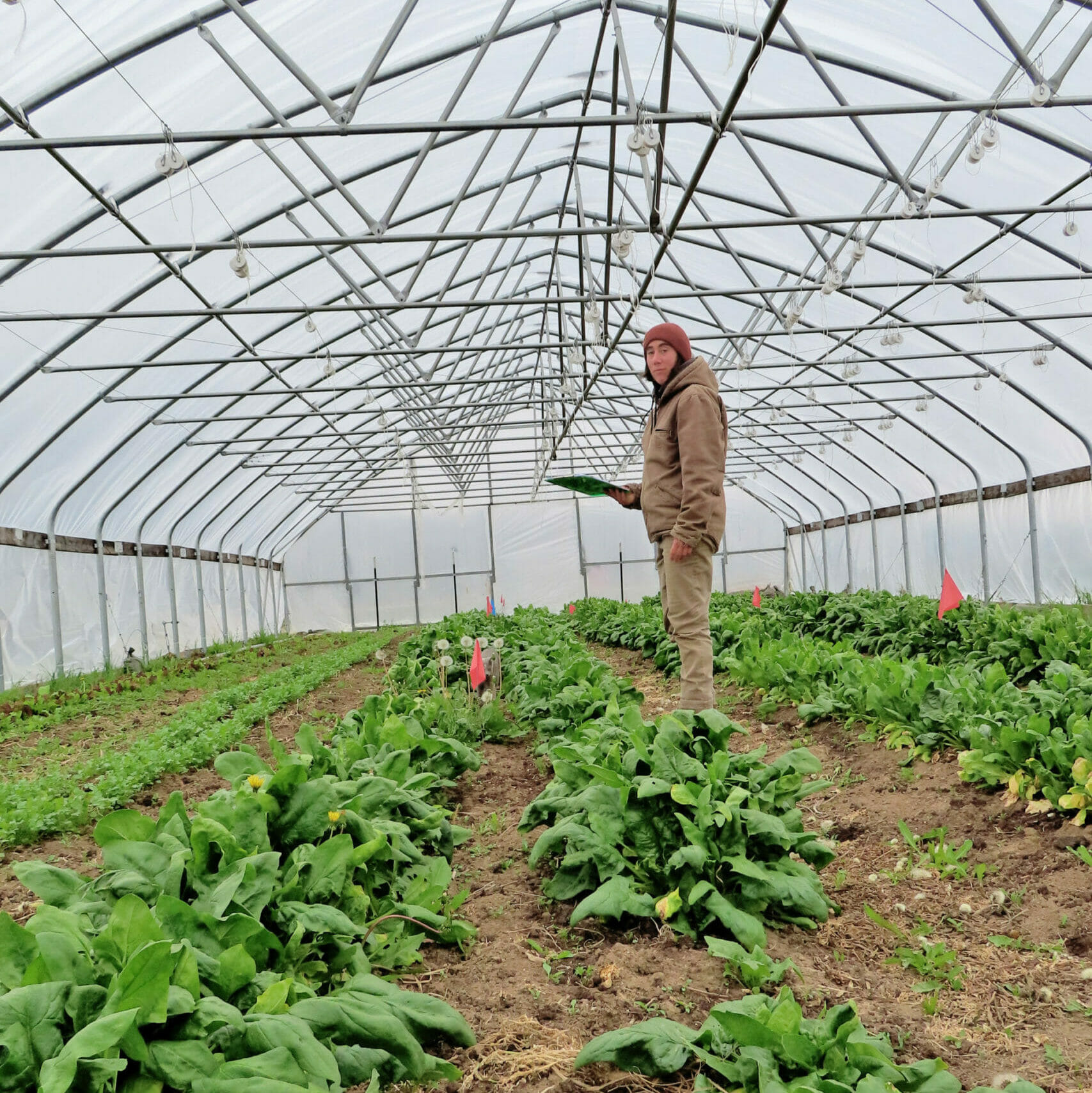 Overwintering fall-planted spinach using high tunnels and row covers gives Iowa farmers a delicious, early-spring greens crop. This spinach is highly desirable both for its sweet taste and because it can be harvested early in the season when few other crops are available. Iowa producers Emily Fagan and Hannah Breckbill of Humble Hands Harvest and Jon Yagla of The Millet Seed Farm wished to sharpen their understanding of the optimum time to plant spinach for overwintering.
“It will be great to practice getting good spinach harvests as early in the year as possible, and continuing for as long as possible,” Emily said. Both farms compared yield and harvest windows of overwintered spinach planted on three fall dates.
Read the results
Overwintering fall-planted spinach using high tunnels and row covers gives Iowa farmers a delicious, early-spring greens crop. This spinach is highly desirable both for its sweet taste and because it can be harvested early in the season when few other crops are available. Iowa producers Emily Fagan and Hannah Breckbill of Humble Hands Harvest and Jon Yagla of The Millet Seed Farm wished to sharpen their understanding of the optimum time to plant spinach for overwintering.
“It will be great to practice getting good spinach harvests as early in the year as possible, and continuing for as long as possible,” Emily said. Both farms compared yield and harvest windows of overwintered spinach planted on three fall dates.
Read the results
Deworming Pasture-Raised Pigs With SwineX
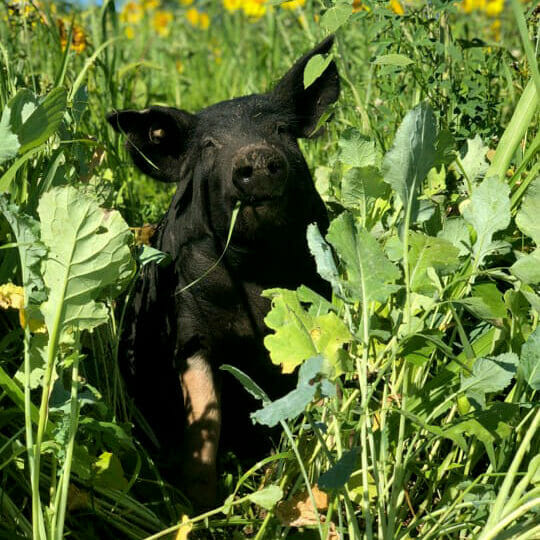 Dayna Burtness raises pigs on pasture in southeast Minnesota and has a goal of reducing her farm's reliance on chemical dewormers. Pastured pigs are naturally exposed to parasites in soil that do not affect the humans eating the pork but can cause health problems in the pigs and poor feed-to-weight conversion ratios. To combat this, many farmers, including Dayna, use chemical dewormers (e.g. LevaMed) to reduce the parasite populations in their pigs. However, there is a concern that chemical dewormers deposited on pasture via manure may harm soil organisms and soil health. Alternative, non-chemical dewormers (e.g. SwineX) are also available and may be better for soil health.
Dayna designed an experiment to test how treating pigs twice a year with LevaMed (in June and August) versus treating them once with LevaMed (in June) and once with SwineX (in August) affects pigs' average daily gains and final pig weight. She hypothesized that deworming with LevaMed twice would lead to greater average daily gains.
Read the results
Dayna Burtness raises pigs on pasture in southeast Minnesota and has a goal of reducing her farm's reliance on chemical dewormers. Pastured pigs are naturally exposed to parasites in soil that do not affect the humans eating the pork but can cause health problems in the pigs and poor feed-to-weight conversion ratios. To combat this, many farmers, including Dayna, use chemical dewormers (e.g. LevaMed) to reduce the parasite populations in their pigs. However, there is a concern that chemical dewormers deposited on pasture via manure may harm soil organisms and soil health. Alternative, non-chemical dewormers (e.g. SwineX) are also available and may be better for soil health.
Dayna designed an experiment to test how treating pigs twice a year with LevaMed (in June and August) versus treating them once with LevaMed (in June) and once with SwineX (in August) affects pigs' average daily gains and final pig weight. She hypothesized that deworming with LevaMed twice would lead to greater average daily gains.
Read the results
Replacing Corn With Oats in Ration for Pasture-Raised Broiler Chickens
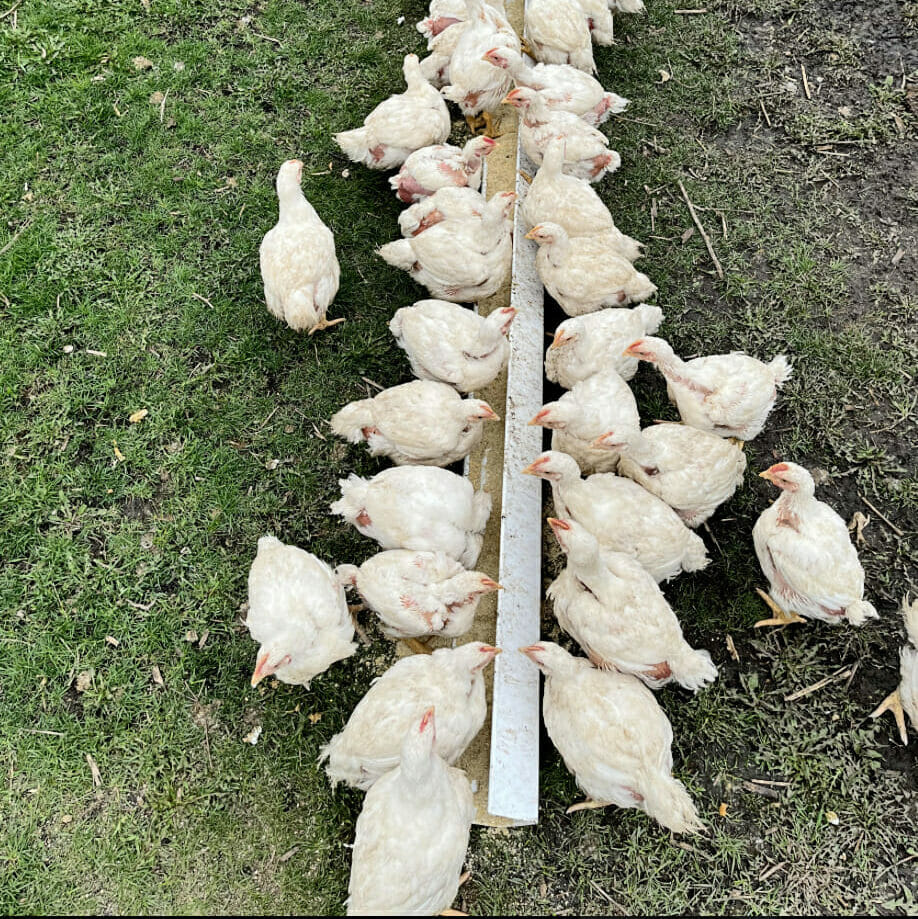 Anna Hankins and Shae Pesek, and Carlos Williams and Maja Black, raise broiler chickens on pasture and typically offer the chickens a corn and soy feed ration. They wondered whether replacing a portion of the corn in a typical ration with oats would affect weight gain and economics of the broiler chickens. Customer desire for birds fed a more diversified ration (rather than solely corn and soybeans) was the inspiration for this project. However, the ration with oats would have to be similarly priced and perform similarly to the typical feed to make economic sense. “Chicken has a very small profit margin, which is why feed efficiency is so important,” Carlos said at the onset.
Read the results
Anna Hankins and Shae Pesek, and Carlos Williams and Maja Black, raise broiler chickens on pasture and typically offer the chickens a corn and soy feed ration. They wondered whether replacing a portion of the corn in a typical ration with oats would affect weight gain and economics of the broiler chickens. Customer desire for birds fed a more diversified ration (rather than solely corn and soybeans) was the inspiration for this project. However, the ration with oats would have to be similarly priced and perform similarly to the typical feed to make economic sense. “Chicken has a very small profit margin, which is why feed efficiency is so important,” Carlos said at the onset.
Read the results