In a Nutshell:
- Based on previous on-farm research he has conducted,[1] Sam Bennett has seen evidence that a cereal rye cover crop can suppress weeds and reduce herbicide inputs in soybeans. As such, he grew soybeans following a cereal rye cover crop and compared three herbicide packages that varied in residual activity and cost.
- Bennett hypothesized that weed control and soybean yield would not be sacrificed by reducing herbicides, provided adequate cover crop growth in the spring before seeding the soybeans. “I hope that we can reduce our herbicide use and cost by enough to cover the costs of establishing the cover crop. We’re always trying to answer the question of how to make covers pay for themselves,” Bennett said.
Key Findings:
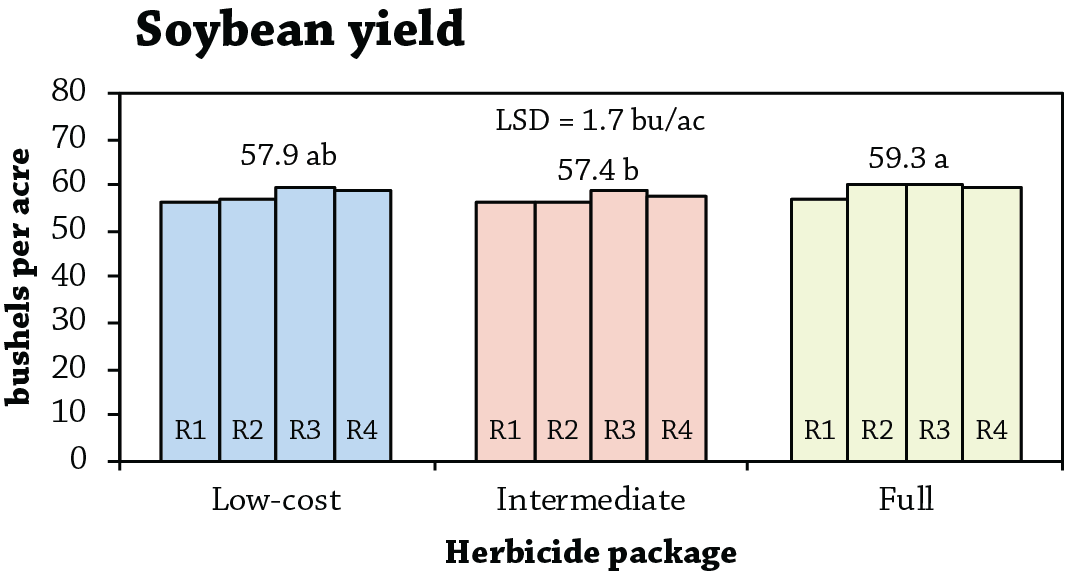
- Bennett recorded similar soybean yields between the low-cost and full (most expensive) herbicide packages he compared.
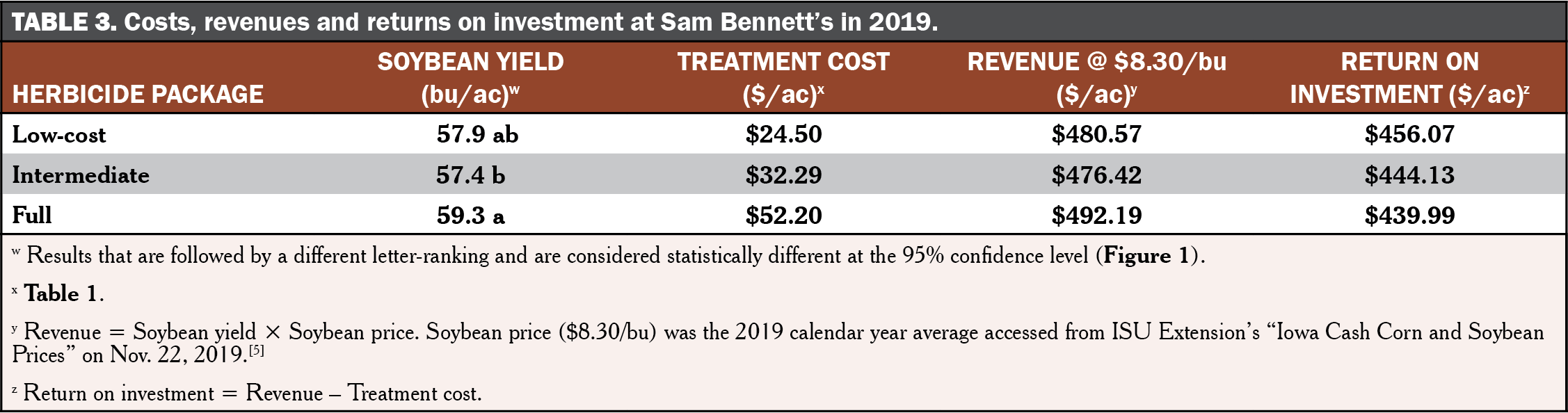
- The low-cost herbicide package improved returns on investment by $16.08/ac compared to the full package owing to reduced costs associated with the low-cost package.
Methods
Design
Bennett seeded a cereal rye cover crop on Sept. 12, 2018 at a rate of 45 lb/ac to standing corn using a high-clearance seeder. On May 11, 2019, Bennett planted soybeans to the entire field at a population of 140,000 seeds/ac in 15-in. row-widths. Six days later, on May 17, he terminated the cover crop.
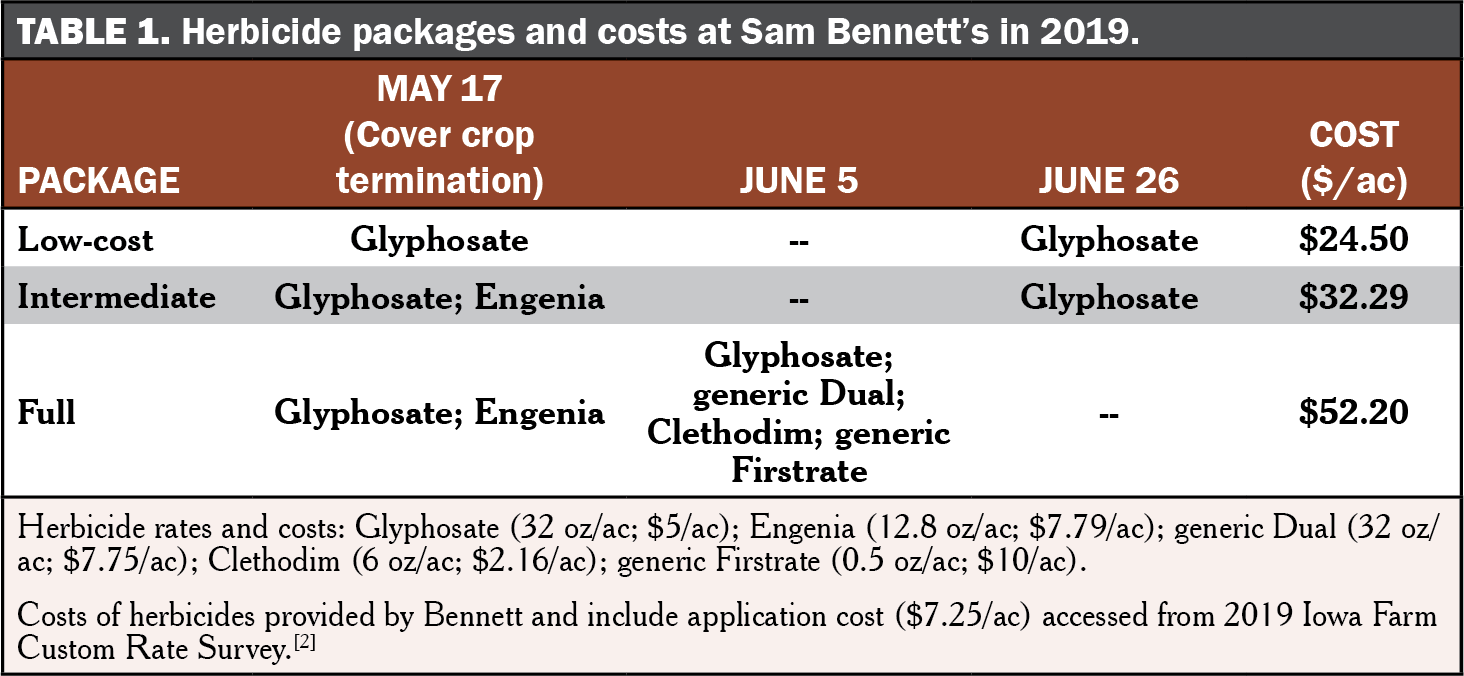
To test whether he could reduce herbicide use, Bennett compared three packages that ranged in residual activity and cost (Table 1).
Results and Discussion
Cover crop biomass
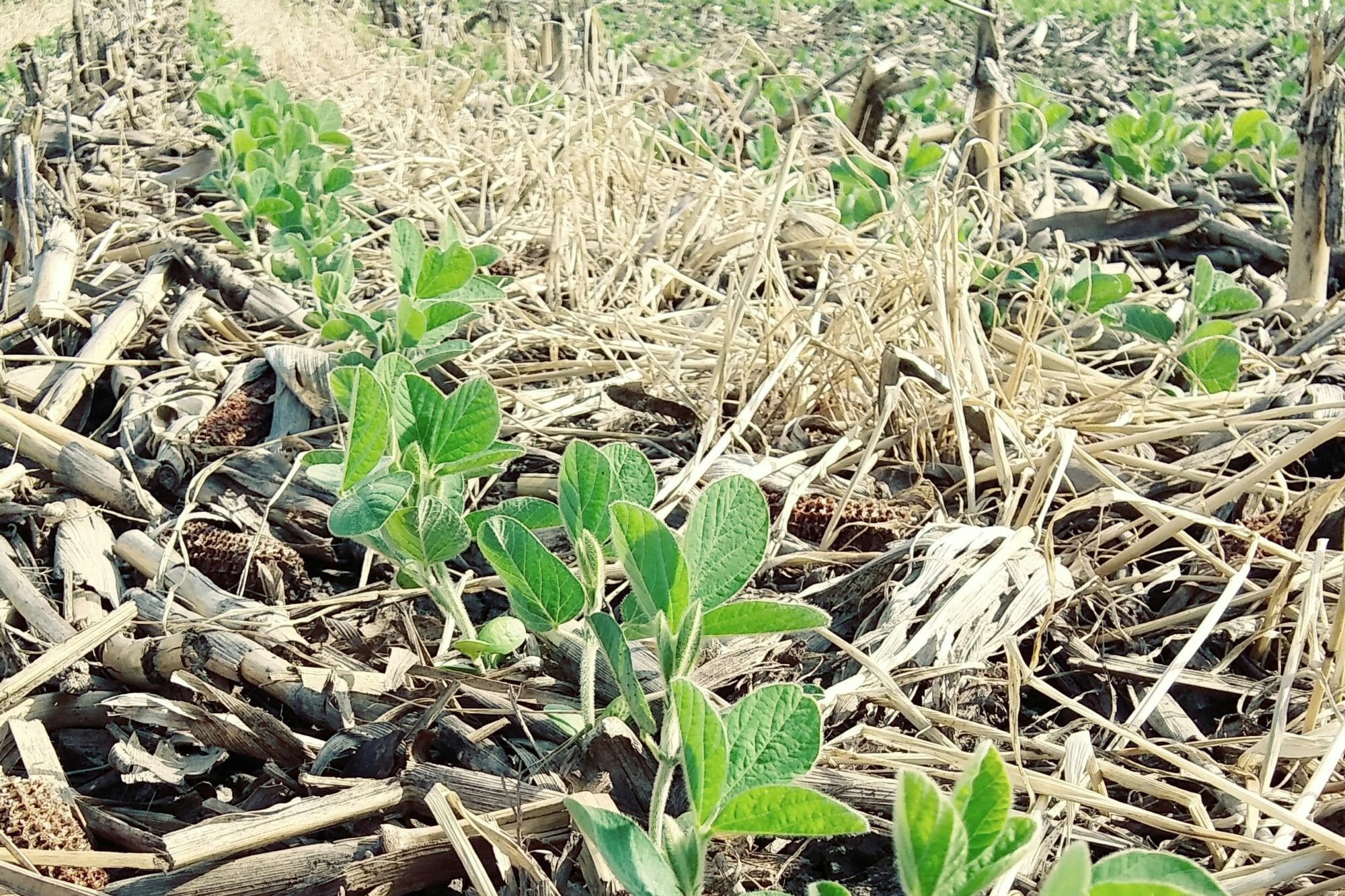
On average, Bennett’s field contained 2,993 lb/ac of aboveground cover crop biomass prior to termination of the cover crop and prior to Bennett implementing the three herbicide packages. Cover crop biomass (residue) is important for weed control because soil surface cover by the residue physically suppresses weeds.[3]
Conclusions and Next Steps
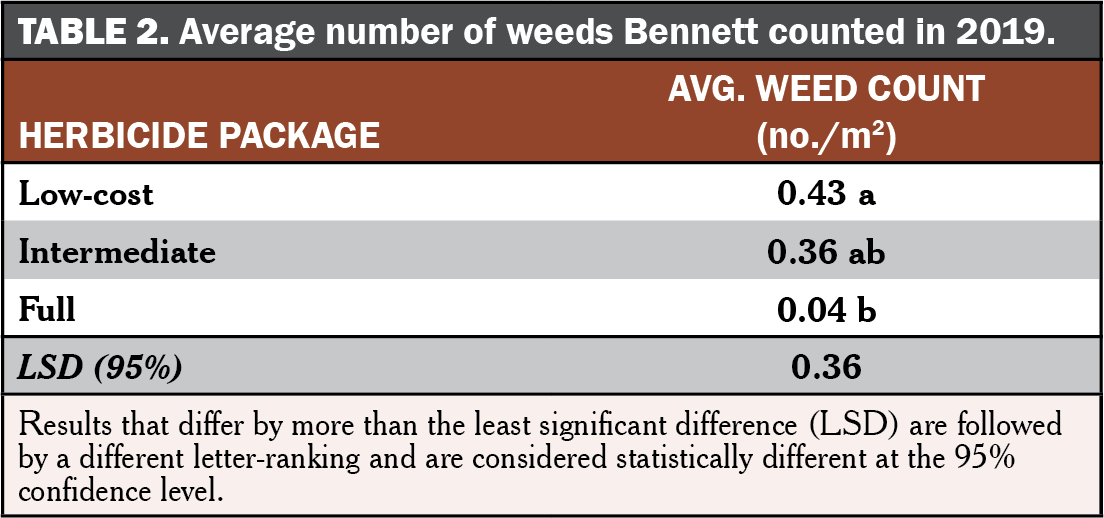
Bennett’s results provide further evidence that a cereal rye cover crop can suppress weeds and reduce herbicide inputs in soybeans. In a similar trial he conducted last year, Bennett found that of the three herbicide packages he compared in soybeans that followed a cereal rye cover crop, the herbicide package that did not feature any residual activity resulted in his best return on investment.[1] That package included pre-plant, pre-emerge/burndown and post-emergence applications of Salvo, Roundup Powermax and Clethodim. At the conclusion of that trial, Bennett wondered if he could further reduce herbicide use. In the present trial, Bennett’s low-cost package only included pre-emerge/burndown and post-emergence applications of glyphosate (again, no residual activity). With this package, he saw similar soybean yields to the full package (included residual activity, most expensive package) with nearly $28/ac less in costs. These findings also align with those recently published in a meta-analysis of 46 studies from around the world which concluded “cover crops could provide early weed control comparable to those provided by chemical and mechanical weed control methods in cropping systems.”[3] “This trial worked toward quantifying the benefit of cereal rye in suppressing weeds in the early part of the growing season.” Bennett said. “I’m building confidence that I can rely on the cover crop more heavily, and build a lower cost and reduced chemistry herbicide program around the cover crop.” With proper management, it seems that farmers could reallocate some expenses typically spent on herbicides to cover crop seed and planting. In addition to weed suppression, farmers would reap other proven environmental benefits of cover crops such as reduced soil erosion, reduced nutrient loss and improved water infiltration.
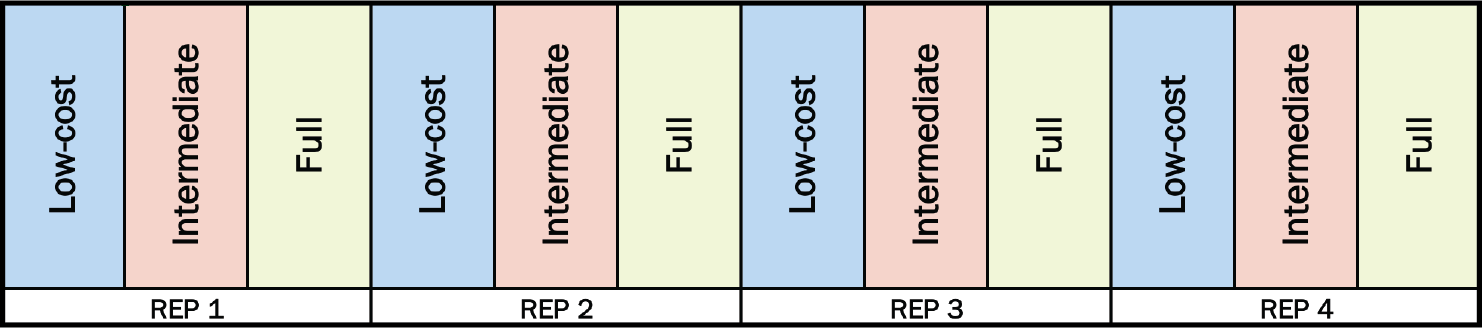
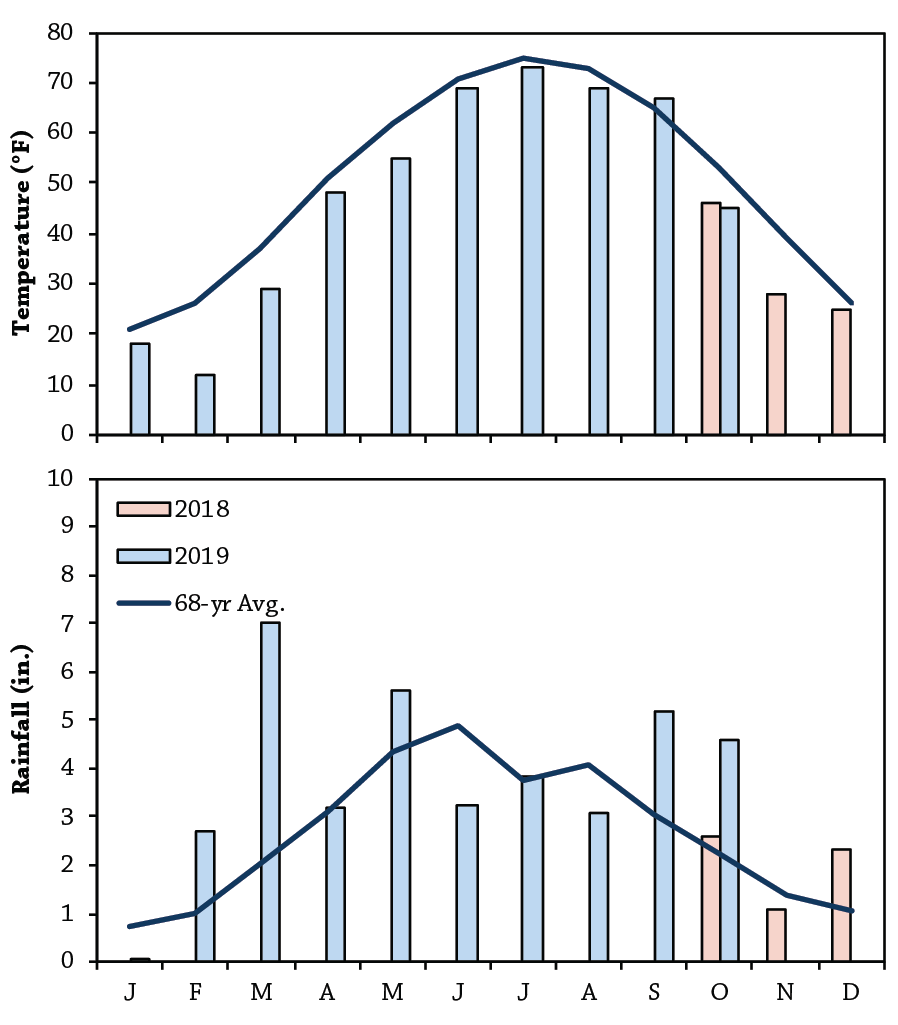
Appendix - Trial Design and Weather Conditions
References
- Nelson, H. and S. Bennett. 2018. Cereal Rye Cover Crop for Reducing Herbicides in Soybeans. Practical Farmers of Iowa Cooperators’ Program. https://practicalfarmers.org/research/cereal-rye-cover-crop-for-reducing-herbicides-in-soybeans/ (accessed November 2019).
- Plastina, A., A. Johanns and G. Wynne. 2019. 2019 Iowa Farm Custom Rate Survey. Ag Decision Maker. Iowa State University Extension and Outreach. https://store.extension.iastate.edu/product/2019-Iowa-Farm-Custom-Rate-Survey (accessed November 2019).
- Osipitan, O.A., J.A. Dille, Y. Assefa and S.Z. Knezevic. 2018. Cover crop for early season weed suppression in crops: Systematic review and meta-analysis. Agronomy Journal. 110:2211–2221. https://dl.sciencesocieties.org/publications/aj/abstracts/110/6/2211 (accessed November 2019).
- US Department of Agriculture-National Agricultural Statistics Service. Quick stats. USDA-National Agricultural Statistics Service. https://quickstats.nass.usda.gov/ (accessed November 2019).
- Johanns, A. 2019. Iowa Cash Corn and Soybean Prices. Ag Decision Maker File A2-11. Iowa State University Extension and Outreach. https://www.extension.iastate.edu/agdm/crops/pdf/a2-11.pdf (accessed March 2019).
- Iowa Environmental Mesonet. 2019. Climodat Reports. Iowa State University. http://mesonet.agron.iastate.edu/climodat/ (accessed November 2019).