In a Nutshell:
- Overwintering spinach is the practice of insulating a fall-planted spinach crop through the winter. This practice produces an early spring crop of sweet, delicious spinach.
- A group of PFI farmer-researchers wanted to continue investigating the best time to plant spinach for overwintering and test whether direct-seeding vs. transplanting performed better.
Key Findings
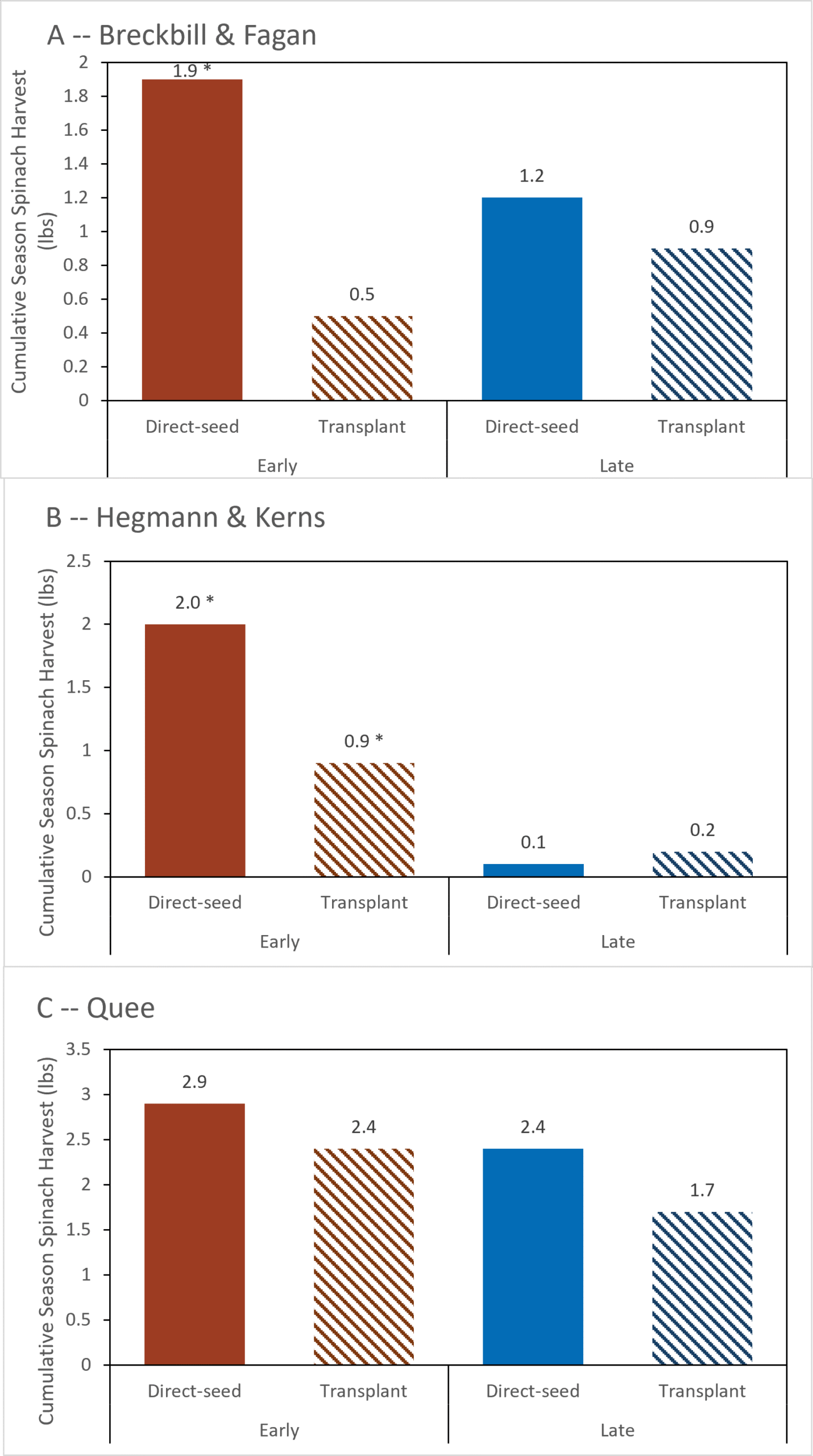
- At two of three trial locations, early-September plantings outyielded late-September plantings of spinach. At a third location, yield was not affected by planting date, but number of harvestable plants was greatest in a late-September direct-seeded treatment.
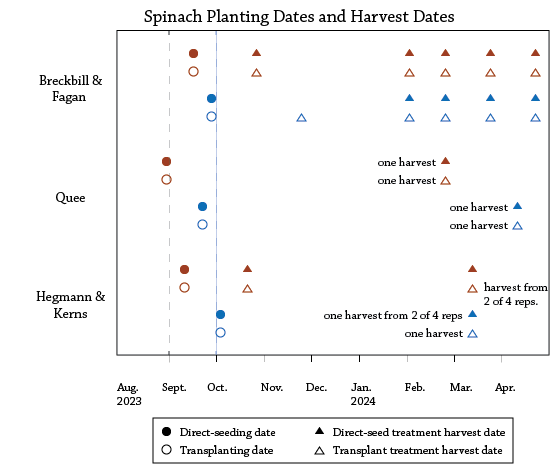
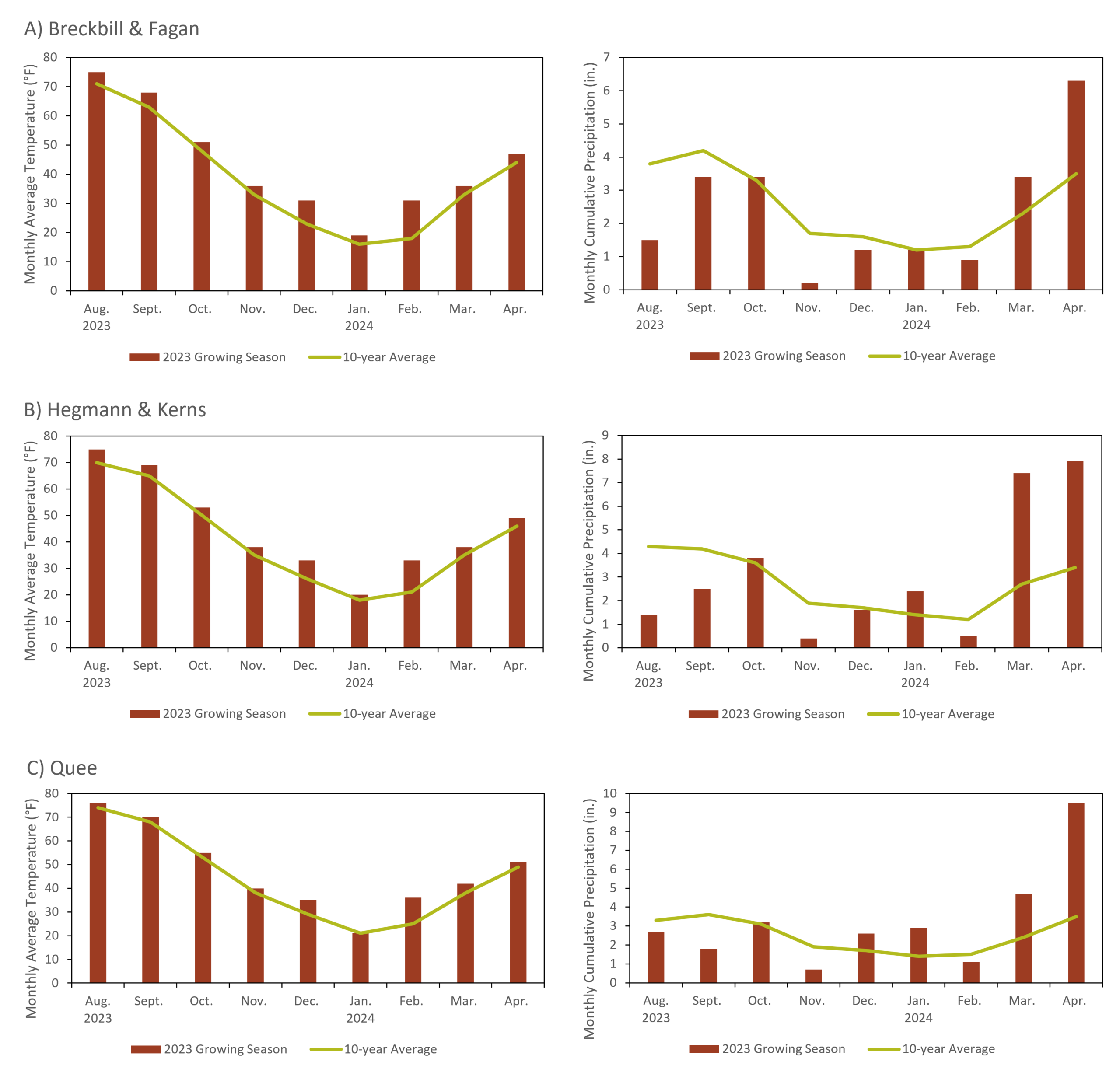
- A very warm late summer affected the ability of some farmers to start and establish transplants in September, and a warm winter led to reduced need for insulation and early spinach harvests.
Background
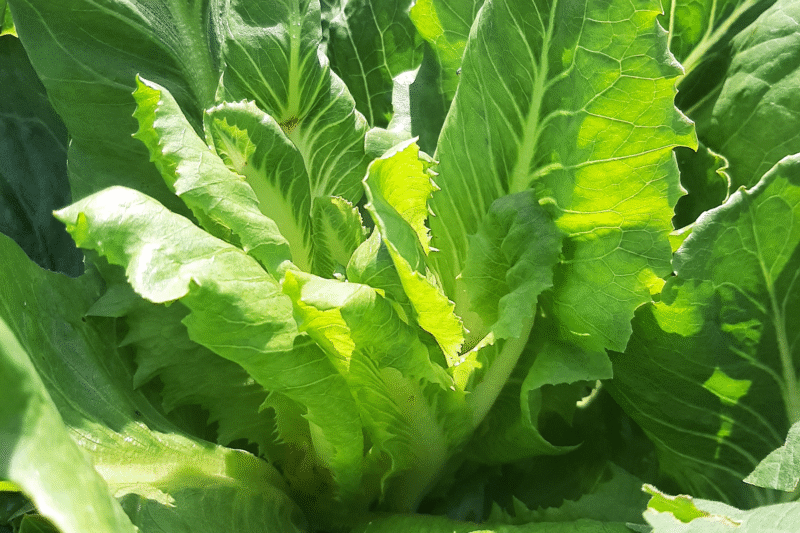
Overwintering spinach is a common practice where farmers plant spinach in the late summer, insulate the plants through the winter and harvest beginning in the early spring. This practice produces a very early season spinach crop that is uniquely sweet because the overwintered plants concentrate sugar in their leaves to prevent freezing. However, farmers routinely have questions about when and how to plant and manage spinach for overwintering, especially in increasingly volatile shoulder-season weather. PFI cooperators have previously conducted trials exploring how planting timing affects yields and harvest windows of overwintered spinach as well as other overwintered greens [1, 2, 3]. This research found that seeding spinach in early-to-mid September resulted in a longer harvest window and sometimes a larger overall yield compared to seeding in mid-October. In 2023, Hannah Breckbill & Emily Fagan, Natasha Hegmann & Peter Kerns and Mark Quee decided to explore whether planting fall spinach even earlier than mid-September could further increase yields. Because seeding methods sometimes vary by farm, they also chose to investigate whether direct-seeding vs. transplanting the spinach impacts total yields and harvest windows. Breckbill & Fagan note that they decided to conduct another trial because “it will keep us organized about our learning and help us come to a more definitive conclusion about how to plan our crops and have yields that we can count on.” Hegmann & Kerns report that they are hoping to capitalize on successful winter greens production and scale up to wholesale production in the coming years. “I've done quite a bit of messing around with tunnel greens, season extension and overwintering, but I hope that this research will bring some focus and help us dial in fall spinach production. At the end of the trial, I hope that I am a more confident spinach producer! No more questions about when I should seed or if I should seed or transplant spinach, just a plan that we can execute each year!”
Methods
Design
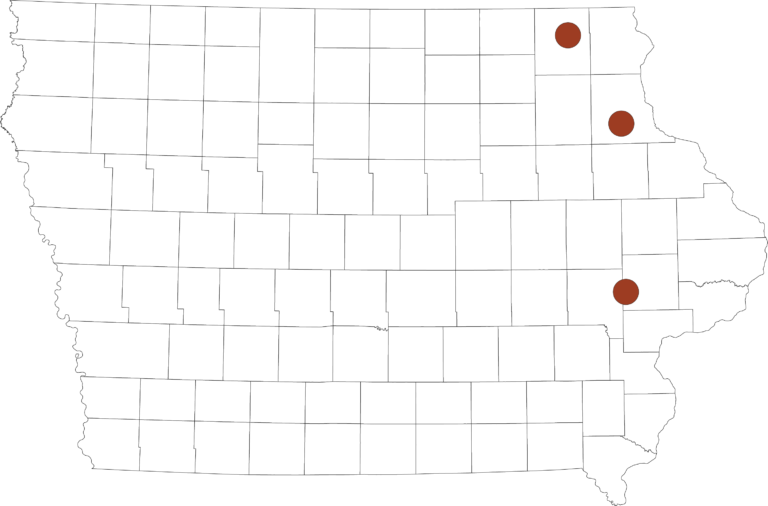
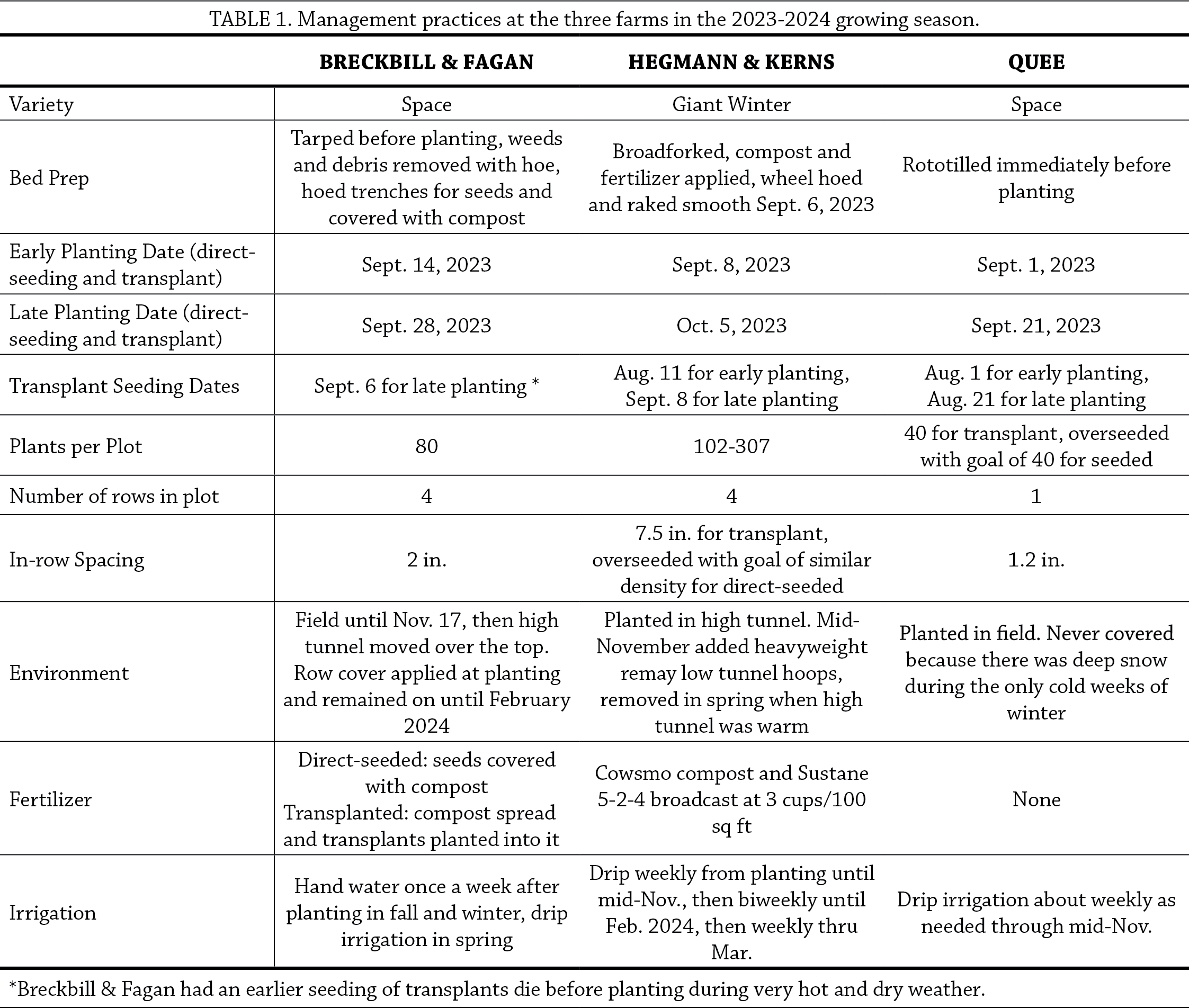
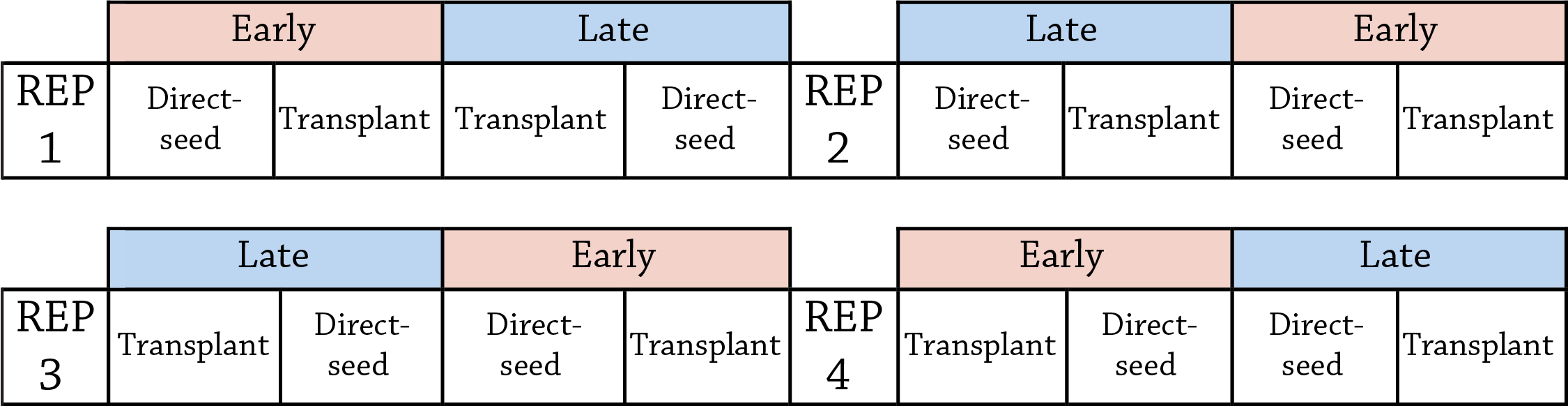
All three farms tested a total of four treatments: Early direct-seeding, Early transplant, Late direct-seeding and Late transplant. Direct-seeding and transplanting occurred at the same time at each of the Early and Late dates. Planting dates and overwintering protection strategies varied due to local weather and individual preferences and are listed in Table 1 along with management details. Figure A1 shows an example of the statistically robust experimental design used by cooperators. Cooperators randomly assigned four replications of each treatment across their beds for a total of 16 plots.
Results and Discussion
Management time
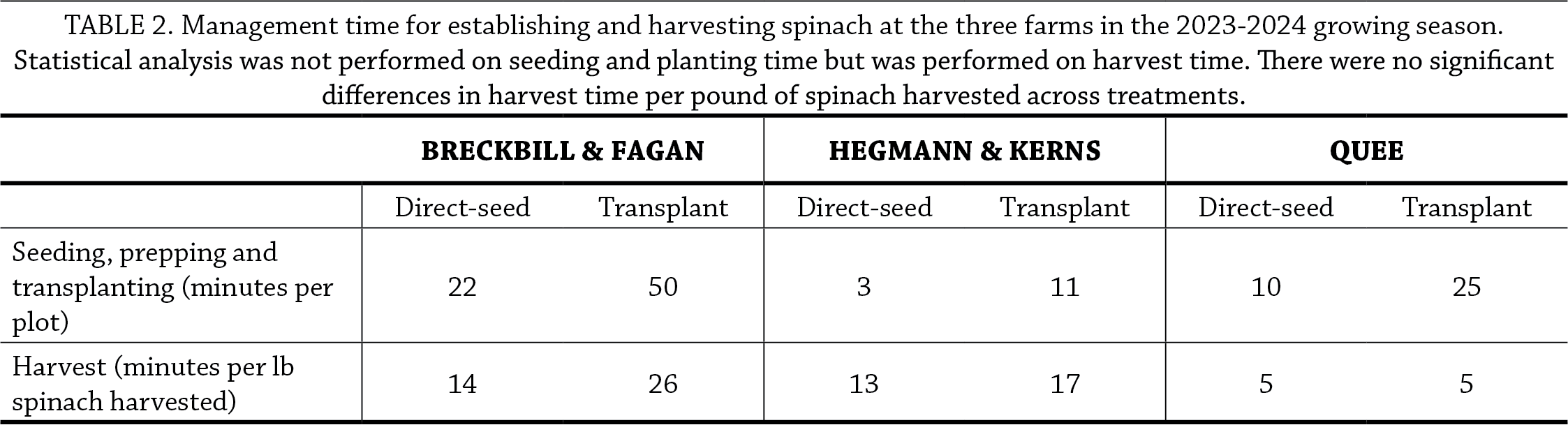
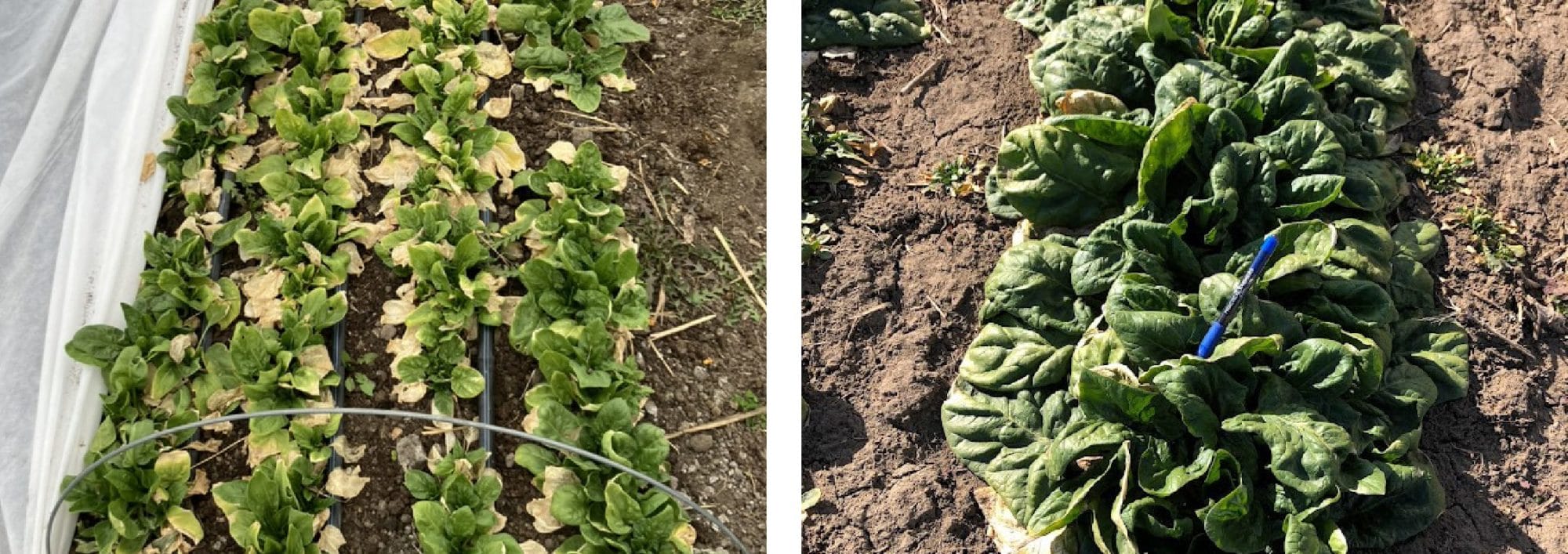
Regardless of planting date, transplanting spinach took more time than direct-seeding spinach at all three trial locations (Table 2). This was due to the extra time needed to plant the seeds into trays and plant the transplants after the beds are prepared. There were no statistically significant differences in the amount of time required to harvest one pound of spinach from the direct-seeded or transplanted treatments. There were also no statistically significant differences in harvest time per pound of spinach between Early- and Late-planted spinach in either method. Quee reflected that “I'm glad I did both transplanting and direct-seeded. I'll definitely direct sow overwintered spinach, but I still need to work out some of the details. I also learned a lot about fall soil disturbance and spring henbit (weed pressure). I really need to figure out a way to overwinter the spinach without creating perfect conditions for henbit. This was not an expected observation...”
Conclusions and Next Steps
These trials generally show that planting spinach for overwintering in early-to-mid September results in higher yields than planting later in the month and produces both a fall and spring crop in many cases. While direct-seeding does not result in definitively better yields, yields of direct-seeded spinach trended higher and direct-seeding requires less preparation and planting time than transplanting. This trial had warmer growing conditions than many cooperators were used to, which resulted in a very early spinach crop and less work covering plants to protect them from extreme cold. Hegmann & Kerns conclude that “Paying very close attention to our overwintering spinach led to a better crop and hopefully better crops in the future because of what we learned. We think we have discovered increased value and interest in very early spring spinach production.”
Appendix – Trial Design and Weather Conditions
Funding Acknowledgement
This publication or project was supported by the U.S. Department of Agriculture’s (USDA) Agricultural Marketing Service through grant 23SCBPIA1187. Its contents are solely the responsibility of the authors and do not necessarily represent the official views of the USDA.
References
[1] H. Nelson, E. Fagan, H. Breckbill, and J. Yagla, “Effect of Seeding Date on Harvvest Window and Yield of Overwintered Spinach,” Practical Farmers of Iowa, 2022. [Online]. Available: https://practicalfarmers.org/research/effect-of-seeding-date-on-harvest-window-and-yield-of-overwintered-spinach/ [2] H. Breckbill, E. Fagan, J. Yagla, H. Nelson, and S. Gailans, “Overwintered Salad Greens Variety Trial,” Practical Farmers of Iowa, 2022. [Online]. Available: https://practicalfarmers.org/research/overwintered-salad-greens-variety-trial/ [3] E. Link, E. Fagan, and H. Breckbill, “Overwintering Greens: Species and Seeding Dates,” Practical Farmers of Iowa, 2023. [Online]. Available: https://practicalfarmers.org/research/overwintering-greens-species-and-seeding-dates/ [4] A. H. Sparks, “nasapower: A NASA POWER Global Meteorology, Surface Solar Energy and Climatology Data Client for R,” J. Open Source Softw., vol. 3, no. 30, p. 1035, Oct. 2018, doi: 10.21105/joss.01035. [5] A. Sparks, “_nasapower: NASA-POWER Data from R_.” 2024. [Online]. Available: https://CRAN.R-project.org/package=nasapower