Funded by Builders Vision Philanthropy.
In a Nutshell:
- Milking goats are under high metabolic load.
- Margaret Chamas conducted a trial in which treatment does were fed corn as a supplemental fodder; all animals had access to the same base diet.
- Chamas measured milk yield weekly throughout the trial and collected samples at the beginning and end for laboratory analysis.
Key Findings:
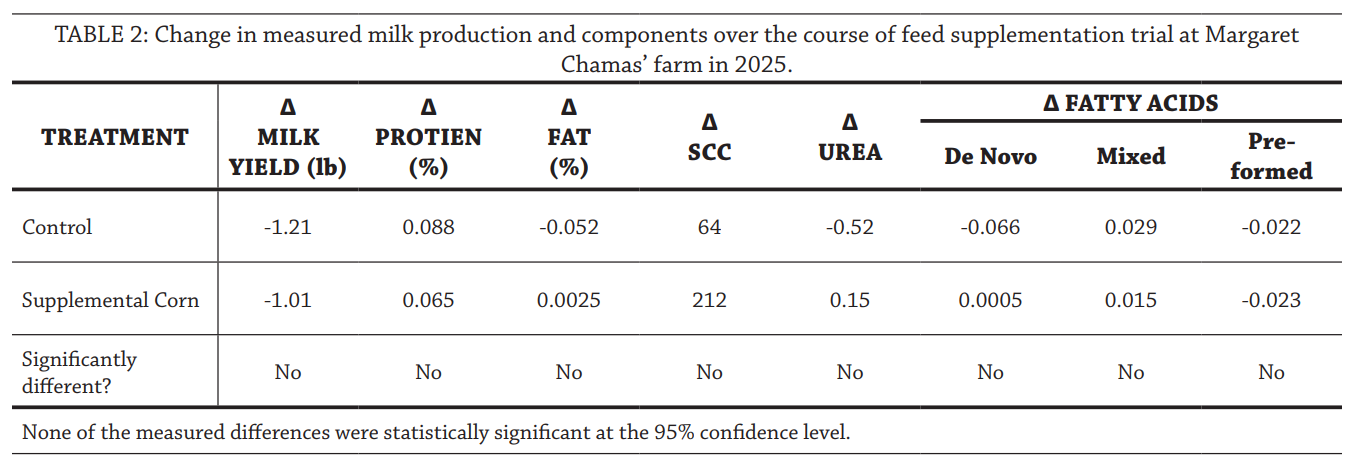
- No significant differences were found between treatments in any of the metrics.
- Milk yield decreased over time but was not related to treatment.
Background
Lactation is a massively expensive and stressful metabolic task; while a doe is producing milk, what and how much she eats matters. Nutrition amount and quality impinge directly on milk production amount and quality. Furthermore, goat breeds that have been rigorously selected for milk production tend to produce more calories in milk than they take in in food, stripping away their energy reserves over the course of the lactation period [1], [2].
Last year, an experiment was conducted to test whether extra calories could be added to does’ diets by feeding them sprouted oat seedlings [3]. Margaret Chamas’ 2024 trial was aborted because her goats would not eat the treatment sprouted grain supplement. This year, she tested a supplement that she knew her goats like: corn. Corn has another benefit beyond being tasty to goats—it is relatively inexpensive. “Feed is the single most expensive component of ANY livestock operation, and this is even more extreme in the dairy world,” Chamas said as rationale for her trial.
To meet the heightened nutritional requirement of a lactating mother while minimizing outputs, livestock managers look to balance quantity and quality of calories. A 2008 sheep study of feed supplementation to grazing ewes found that although ewes fed cracked corn produced more milk than control sheep on hay, the protein and fat percentage of that milk was lower [4]. Chamas designed this experiment to examine the possible effects of adding a cheap, easily available, and palatable supplement to her doe goats’ diets while they were in milk.
Methods
Design
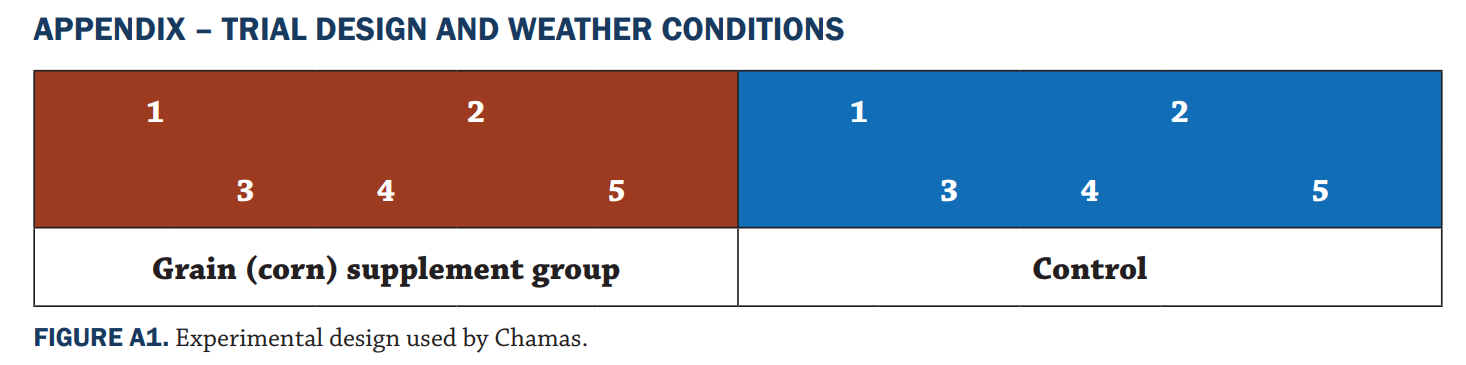
Nine does were assigned to one of two treatment groups. Five does were randomly assigned to the control group and four does were assigned to the treatment group. Chamas tried to match the two groups as closely as she could, matching kidding dates, age, parity (how many times they have kidded), breed, and (where possible) close genetic relations across treatments.
The number of does in the herd who were all at approximately the same stage of lactation limited the number of does that could participate in the trial. Small trials with subjects as variable as animals, even from the same farm and the same or similar breeds, may benefit from incomplete randomization to try to control variation, if bias is not introduced across treatment lines. By choosing sets of does with similar life and genetic histories and then randomly assigning half of each pair to each of the two treatments, we sought to limit the variation between treatments without introducing bias.
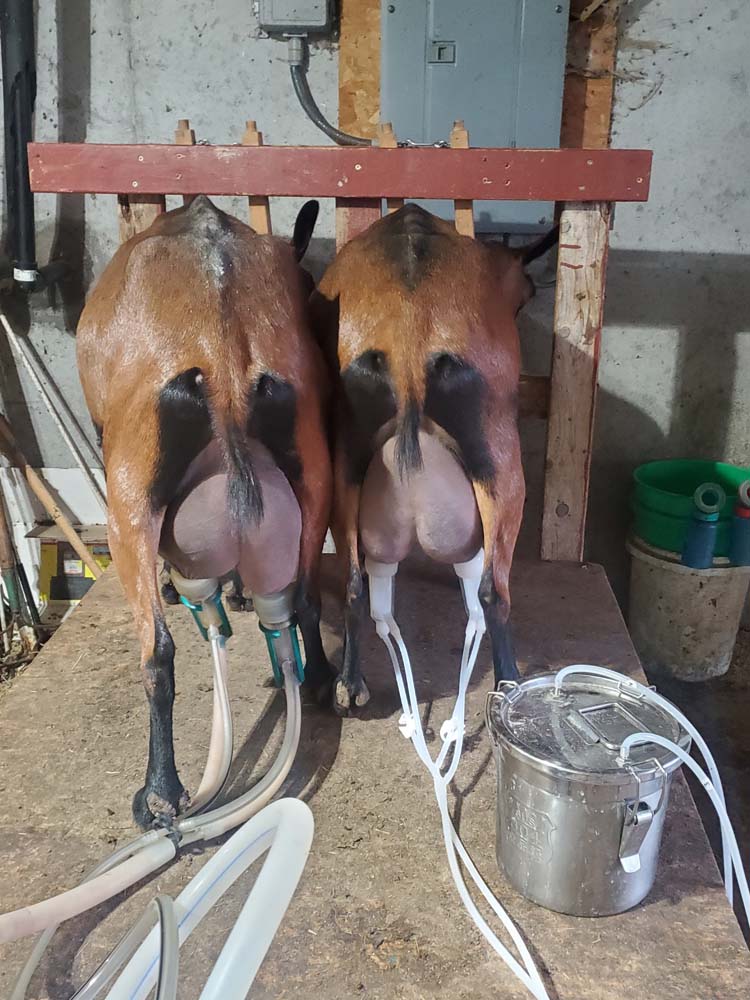
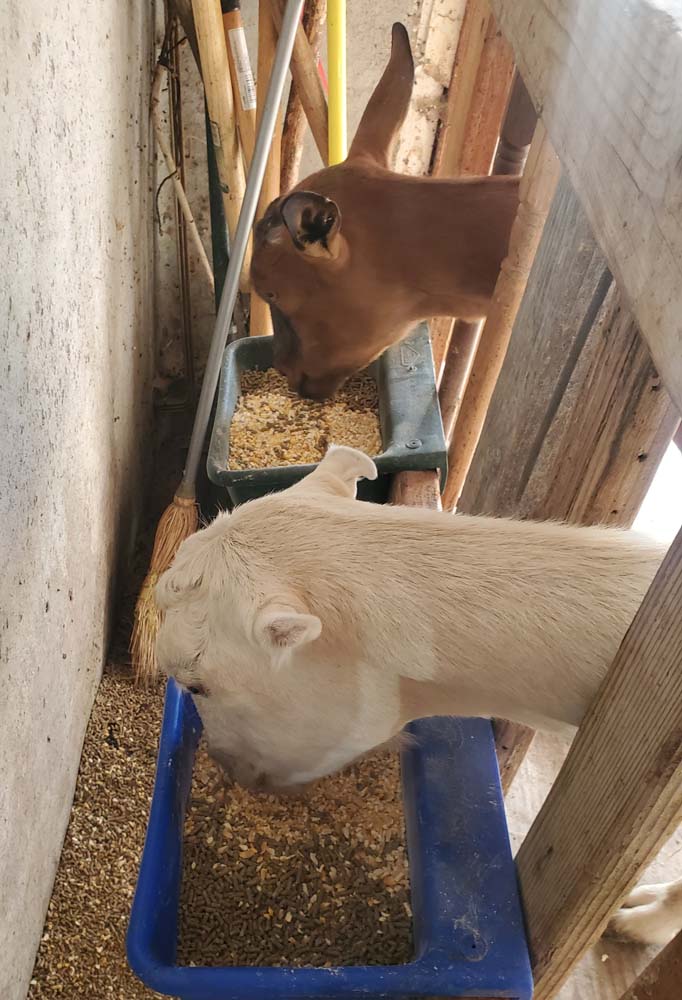
All does had ad libitum access to a hay mix of grass and alfalfa and to soy hull pellets. The base diet does were provided with Kent Home Fresh Goat Developer—a high-protein grain mix—while they were on the milking stand. The supplement treatment does were provided with high protein grain mix alongside cracked corn while on the milking stand every day from June 17 to July 8. Although the treatment does only having access to the cracked corn supplement while they were on the milking stand may have limited the amount of corn they consumed, it was the most practicable way to introduce a new food into the diet of only select does without disrupting their routines asymmetrically to the control does.
Measurements
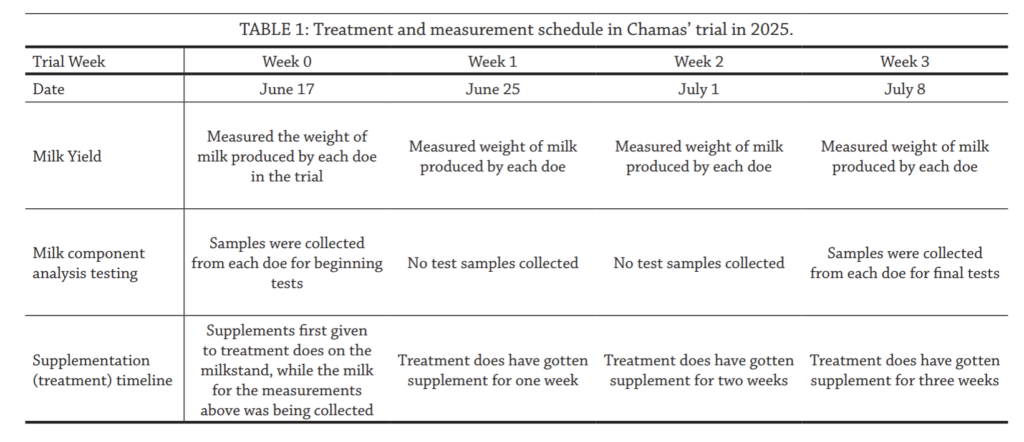
Starting the first day of diet supplementation, Chamas measured milk yields (in pounds) once a week. See Table 1 for a timeline of treatment and measurements.
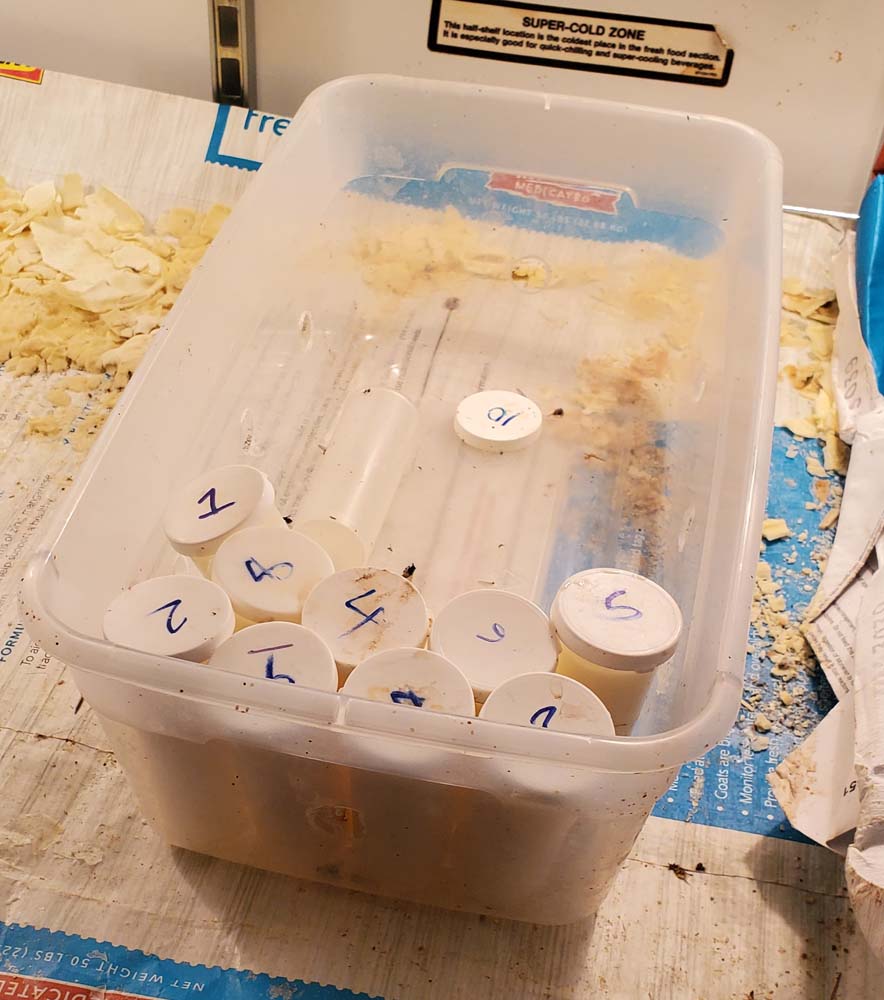
Chamas took milk samples for laboratory analysis on June 17, at the beginning of the trial period, and on July 8, at the end of the trial period. Laboratory milk component analysis tests were run by Milk Quality Testing (MQT) lab services of Kansas City, MO. These measured milk protein content, fat content, somatic cell count (SCC), milk urea nitrogen (MUN), de novo fatty acid content, mixed fatty acid content, and preformed fatty acid content. Chamas also evaluated each doe’s apparent energy reserves with a body condition score (BCS) at the beginning and end of the treatment period.
Data Analysis
To control for differences occurring both over time and between treatment groups, we calculated the differences between the post-treatment value and the pretreatment measurement and used Student’s t-test at the 95% confidence level to compare the calculated differences of the two treatments. This means any difference we declare statistically significant would be expected to occur at least 95 times out of 100 if the experiment was carried out in identical conditions. These differences (final minus initial, indicated by the Δ sign in the table) were used to calculate the values and comparisons in Table 2.
One doe suffered from mastitis, an infection of the udder, on one side during the trial. Chamas switched to milking her once a day until the infection was under control. This did not noticeably affect her milk yield or quality, except for somatic cell count (SCC). Her SCC value in the final sampling was a clear outlier and was excluded from the dataset.
Results and Discussion
Throughout the trial, including before the crack-corn supplement was given to the treatment does, the treatment group produced less milk than the control group. The treatment does produced 1.44 pound less milk than the control group does, averaged across all measurements. This is visible in Figure 1 where the ‘treatment’ curve runs consistently below the ‘control’ curve. This happened because the trial was small enough for the summed small variations between animals assigned to each group to sway the results.
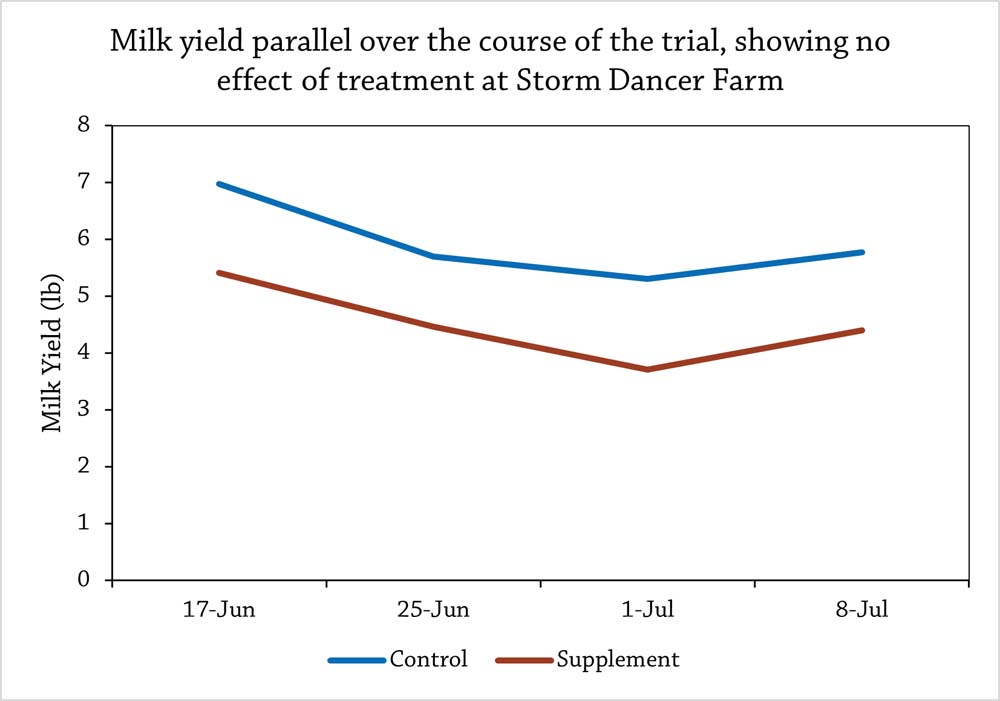
treatment. Click to enlarge.
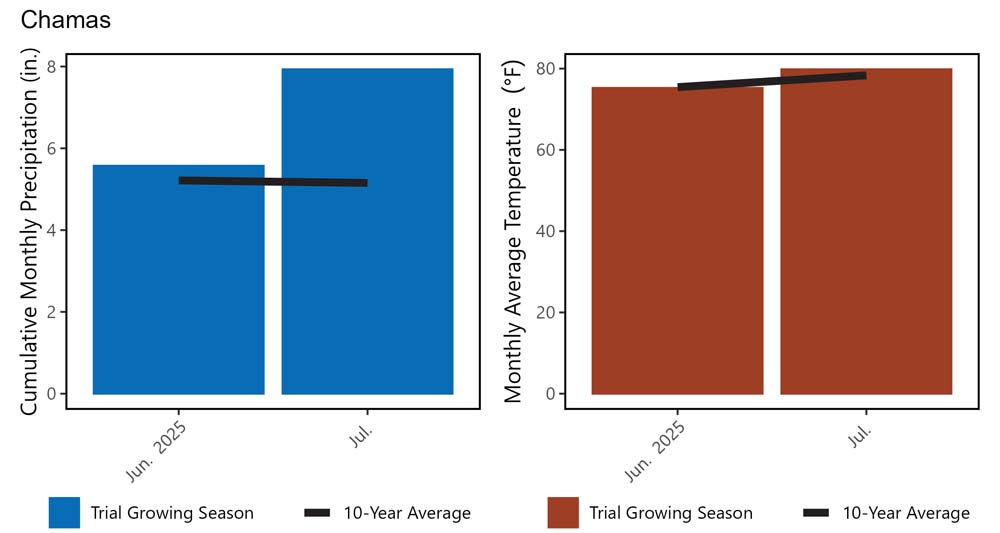
All does reduced milk production over the course of the trial. This could have been due to seasonal stresses, cyclical patterns, or a combination of factors. Hot temperatures at the end of June likely affected milk production. Chamas logged that “the trial started during a nice mild weather week, but then temps rose drastically almost immediately after (upper 80s-mid 90s during the day and mid to upper 70s overnight). All goats lost milk production and some non-trial animals really lost condition.” This is probably the best explanation for the dip in milk yields in the middle of the trial timeframe. In Figure 1 we see both treatment and control curves moving in parallel, suggesting that both groups were affected by the same conditions. The fact that the two treatments move together over time indicates that there was no treatment effect.
To control for the effects of both time and treatment, we calculated the differences between final and initial values (also referred to as ‘change in’ or Δ). We then analyzed differences between the groups in those changes of over time. If the additional corn had an effect, we would expect that by July 8, the treatment does would have responded, showing a different change from June 17 than the control does showed.
Treatment did not affect doe body condition score (BCS). Only one doe saw a decrease in her estimated energy stores. She was in the supplement treatment group and was interestingly the only goat in the experiment with Lamancha genetics—she is a Lamancha x Alpine cross, where the rest of the goats only had Alpine and Oberhasli genetics.
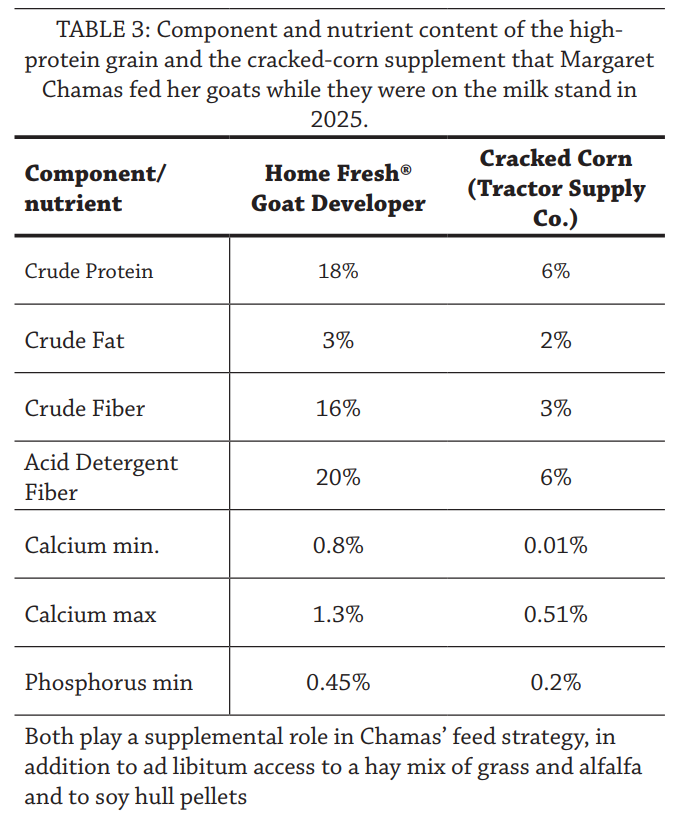
Effects of treatment might also have been limited by the fact that the high-protein grain to which the does had free access while they were on the milking stand (Home Fresh® Goat Developer) already contains a lot of energy. Although calorie measurements are not published for the formulated pellets, comparison of nutritional information shows that cracked corn has less protein and fiber, and more carbohydrates (Table 3). In the 2008 study cited in the introduction, the researchers saw an increase in milk yields and a decrease in milk fat and protein content from the does fed corn, compared to the control group who were only eating grass [4]. At Chamas’, the addition of cracked corn to the diet may have had the effect of marginally sifting the ratios of fiber, simple carbohydrates, and protein that the does ate on the stands if they chose to eat corn instead of higher-protein composite grain, but this difference was not as stark as other experimental setups. Of course, Chamas is running a working dairy, and experimental treatments were chosen that would minimize disruption, for the does and the operation.
Providing the treatment corn only while the does were on the milking stand likely limited the amount of cracked corn that the treatment does ate. However, this strategy had the benefit of causing limited disruption to the does feeding and milking and allowing otherwise totally uniform handling of the herd. Reflections on last year’s trial with sprouted grain raised questions of whether the process of selecting and separating out the treatment does to feed them the sprouted oats might have disrupted their feeding and nursing routines enough to put them at a disadvantage compared to the control doe-kid pairs.
As Chamas framed the issue at the Cooperators’ Meeting, to make more money in livestock practice one must either reduce feed costs or improve production at the same cost. There were no significant differences between the control and the supplement treatments, but one of those diets was cheaper than the other. By Chamas’ rough estimates treatment does consumed ~1 lb per day of corn. If we assume that corn replaced an equal amount of base grain (this was not measured), at a base grain price of $0.32 per lb and a cracked corn price of $0.24 per lb, having not measured or observed any ill effects over the course of this trial, Chamas may be able to save some money or stretch her feed supplies by substituting some corn into the diet. As she said “$0.08/doe isn’t much…but that’s $2/d over my whole my milking herd”.
Conclusions and Next Steps
This trial was limited in the number of goats involved, in the severity of the dosage, and in the length of time that the does were dosed.
Palatability and ubiquity make corn an easy and available addition or substitution into a ruminate diet, but there are dangers in feeding too much for too long. Simple carbohydrates ferment in the rumen and can acidify the stomach contents and shift the makeup of the microbial community. The relationship between the caloric and financial benefits of corn and the risks of too starchy a diet for the ruminants is probably non-linear. Further research is required to titrate the optimal strategy.
Appendix - Trial Design and Weather Conditions
References
- L. P. S. Ribeiro, A. K. Patra, R. Puchala, R. C. Merkel, and A. L. Goetsch, “Interaction between gestational plane of nutrition and lactation diet composition on lactation performance of Alpine goats of different parities,” Sci. Rep., vol. 13, no. 1, p. 16211, Sep. 2023, doi: 10.1038/s41598-023-43450-x.
- I. V. Nsahlai et al., “Metabolizable energy requirements of lactating goats,” Small Rumin. Res., vol. 53, no. 3, pp. 253–273, Jul. 2004, doi: 10.1016/j.smallrumres.2004.04.007.
- “Sprouted Grain Fodder to Lactating Goats: Effects on Kids of Nursing Does - Practical Farmers of Iowa.” Accessed: May 22, 2026. [Online]. Available: https://practicalfarmers.org/resources/research-reports/sprouted-grain-fodder-to-lactating-goats-effects-on-kids-of-nursing-does
- C. M. Mikolayunas, D. L. Thomas, K. A. Albrecht, D. K. Combs, Y. M. Berger, and S. R. Eckerman, “Effects of Supplementation and Stage of Lactation on Performance of Grazing Dairy Ewes1,” J. Dairy Sci., vol. 91, no. 4, pp. 1477–1485, Apr. 2008, doi: 10.3168/jds.2007-0466.
- A. H. Sparks, “nasapower: A NASA POWER Global Meteorology, Surface Solar Energy and Climatology Data Client for R,” J. Open Source Softw., vol. 3, no. 30, p. 1035, Oct. 2018, doi: 10.21105/joss.01035.
- A. Sparks, nasapower: NASA-POWER Data from R. (2024). [Online]. Available: https://CRAN.R-project.org/package=nasapower