In a Nutshell:
- Since 2015, a cohort of PFI farmers has been conducting on-farm research to determine how late they can delay the termination date of cover crops relative to planting soybeans.
- In 2021, Dick Sloan compared weed pressure, yield and profitability between soybeans with a cover crop terminated six days before planting (near-plant) and soybeans with a cover crop terminated 26 days after planting (delayed).
Key Findings:
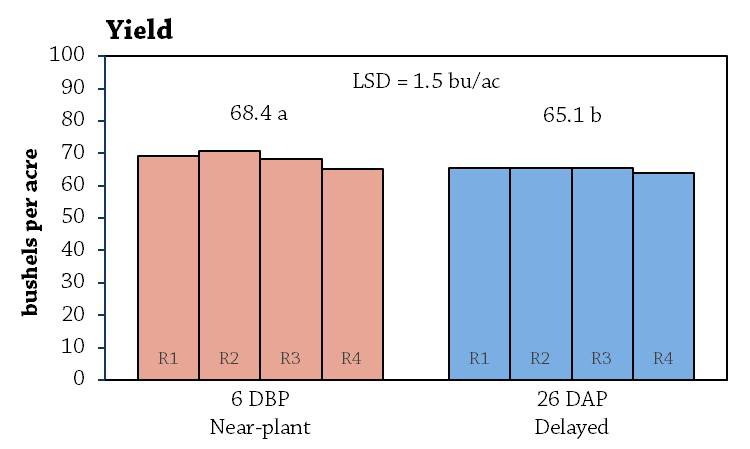
- Sloan’s data showed that delaying cover crop termination until 26 days after planting soybeans resulted in lower yield and a $39/ac loss in revenue compared to terminating six days prior to planting soybeans.
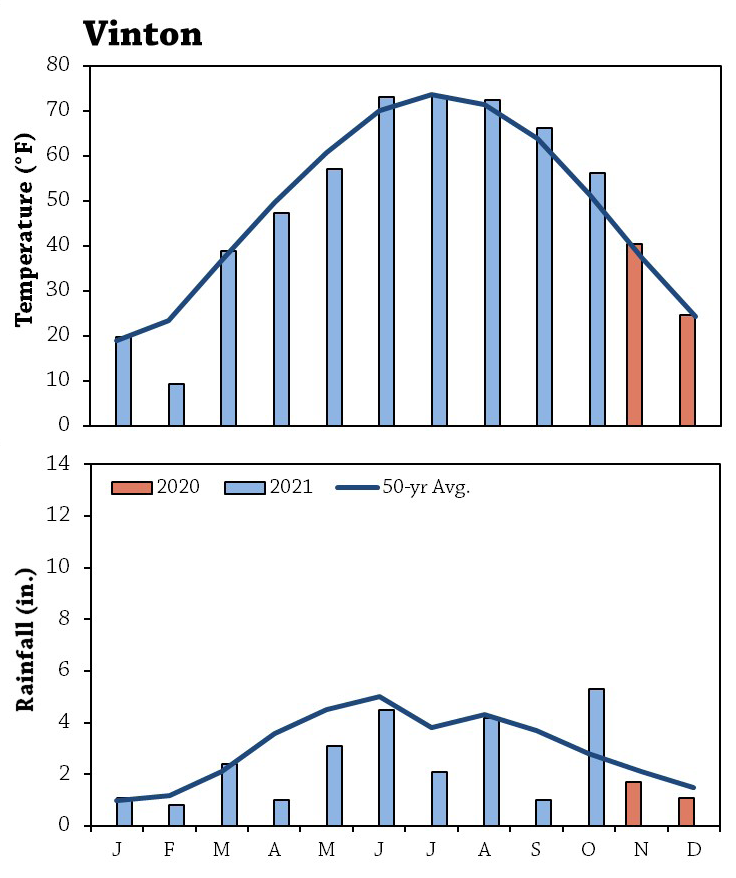
- Echoing the thoughts of farmers who conducted similar research previously, Sloan re-learned the importance of cover crop management in a dry early-season.
Background
Since 2015, a cohort of PFI farmers has been investigating termination date of cover crops relative to soybean planting. Over two years of research, Jack Boyer and Jeremy Gustafson terminated a cover crop within five days of planting soybeans and saw similar yields compared to when they terminated three weeks before planting soybeans. Terminating near the date of planting soybeans as opposed to three weeks before planting resulted in more cover crop biomass and an average savings of $45/ac due to improved weed control resulting from that biomass.[1] Joined by Tim Sieren in 2018 on-farm trials, Boyer attempted to delay termination even later – comparing termination near the time of planting soybeans to terminating 2-3 weeks after planting.[2] For both farmers, terminating several weeks after planting resulted in yield loss and a smaller return on investment. Satisfied with the findings from his three years of research, Boyer settled on terminating no later than five days after planting soybeans as the ideal for his operation; however, two more years of research on the subject were conducted by Sieren, Sam Bennett and Jon Bakehouse.[3,4] They concluded that although it was possible to delay termination up to 27 days after planting without sacrificing soybean yield, doing so under drought conditions necessitates careful management.
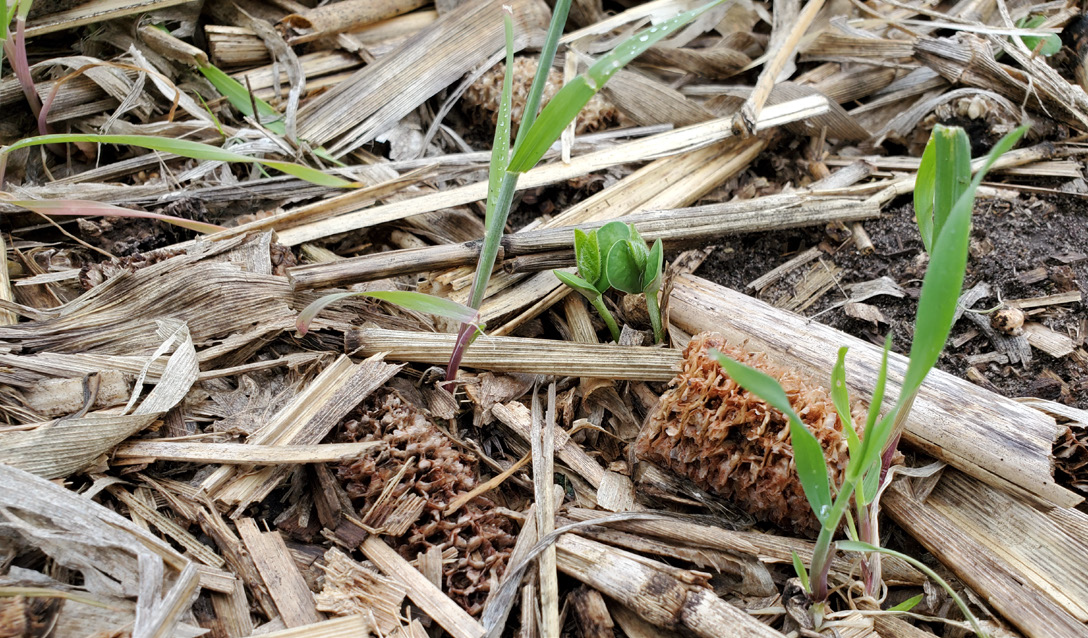
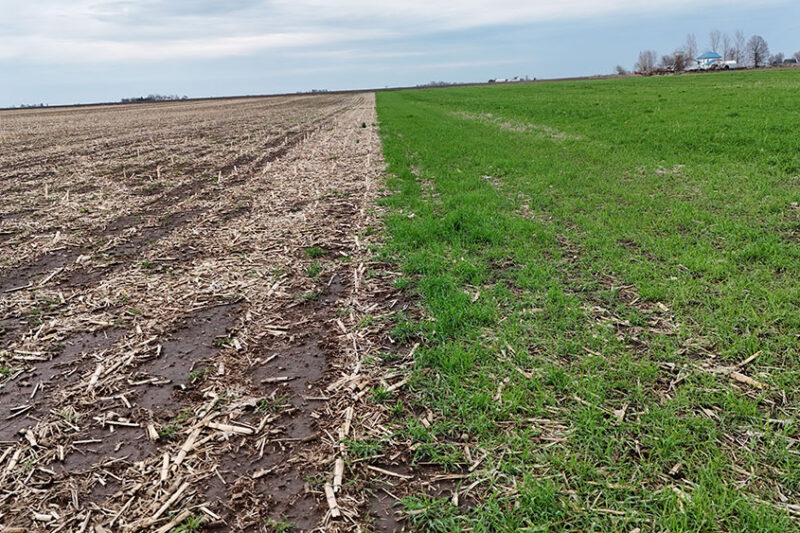
Photo taken May 19, 2021.
- Near-plant (6 DBP) – cover crop terminated six days prior to planting soybean
- Delayed (26 DAP) – cover crop terminated 26 days after planting soybeans (approximately 1st trifoliate)
Sloan commented, “I want to confirm that my normal practice of delaying cover crop termination in soybeans is advantageous for weed control and soybean yield.” His hope was for others to “realize that adding cover crop carbon to the early part of the soybean growing season scavenges deep soil nutrients and leaves them near the surface where they feed soil life and the soybean crop through the summer.”
Methods
Design
Sloan applied potash and MAP at variable rates (GPS applied) the fall of 2020. On Nov. 11, he drilled a mix of rye (50 lb/ac), triticale (24 lb/ac) and wheat (16 lb/ac) in 7.5-in. rows into corn stubble.
During the spring of 2021, Sloan GPS-applied ag lime at an approximate rate of 2 tons/ac. For weed control the same spring, Sloan applied a tank-mix of Prowl H2O (2.5 pt/ac), LV-4 (1 pt/ac) and an adjuvant (Chemsurf) on Apr. 18.
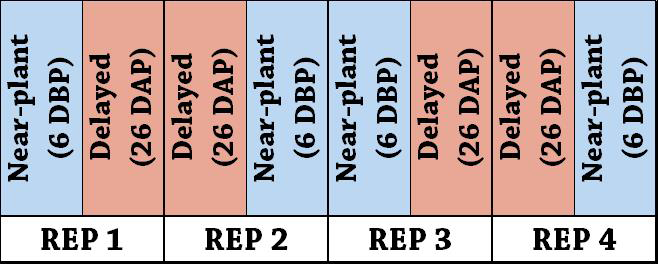
Sloan established treatment strips on Apr. 30 by terminating the cover crop in his near-plant treatment strips. He used a tank mix of Tomahawk (48 oz/ac), Corral Poly (1 oz/100 gal) and Chemsurf (1 qt/100 gal). Six days later, on May 6, Sloan drilled soybeans in all strips in 7.5-in rows and at a rate of 160,600 seeds/ac. Sloan then terminated the cover crop in his delayed treatment strips on June 1, using the same products and rates as he used to terminate the near-plant treatment strips. Treatment strips measured 45 ft wide by approximately one half mile long and were randomly arranged in pairs. Sloan replicated each treatment 4 times for a total of 8 strips (Figure A1). This arrangement allowed us to conduct statistical analyses to assess the effects of cover crop termination date relative to soybean planting date on weed pressure, soybean yield and profitability.
Results and Discussion
Weed pressure
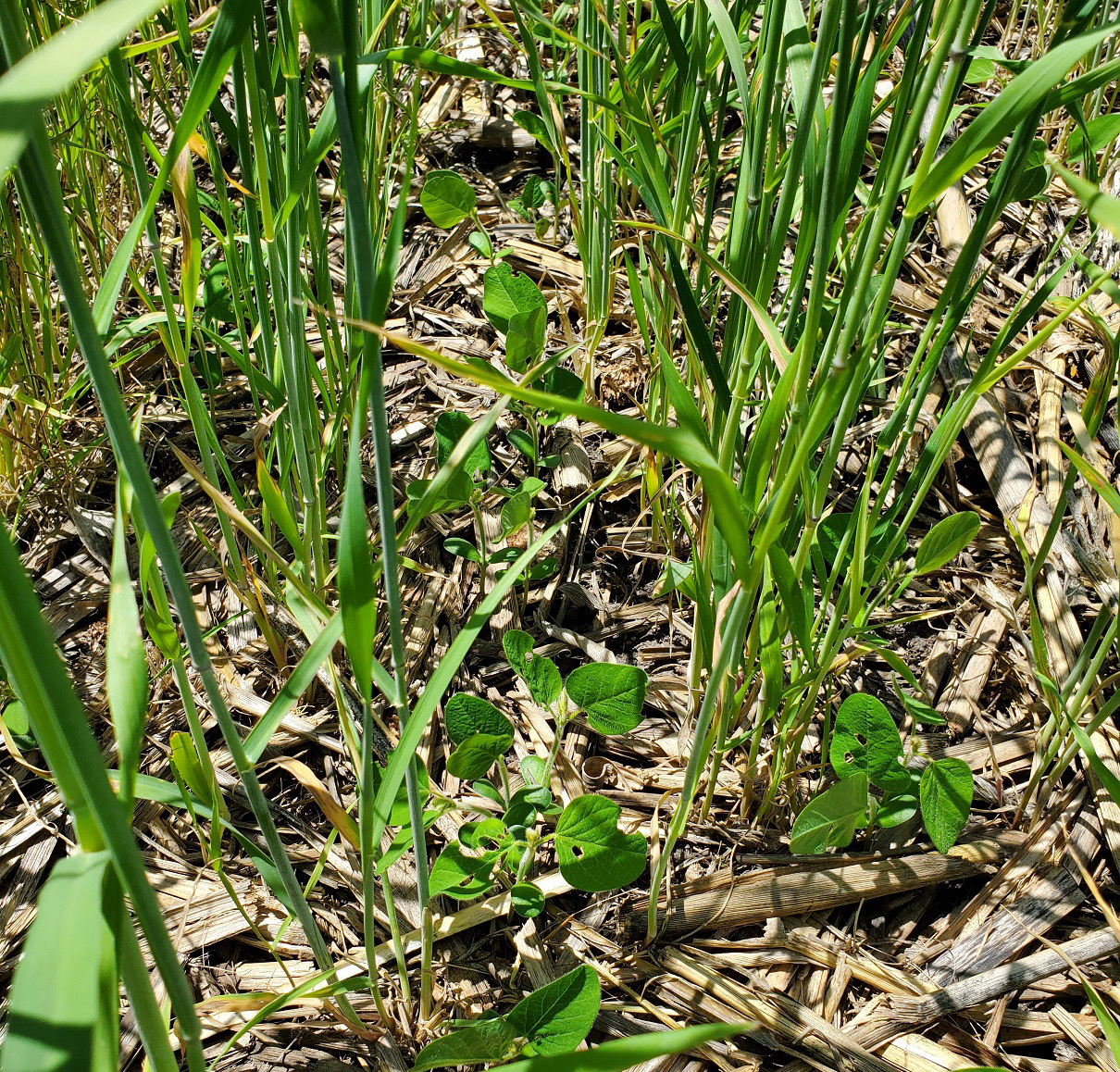
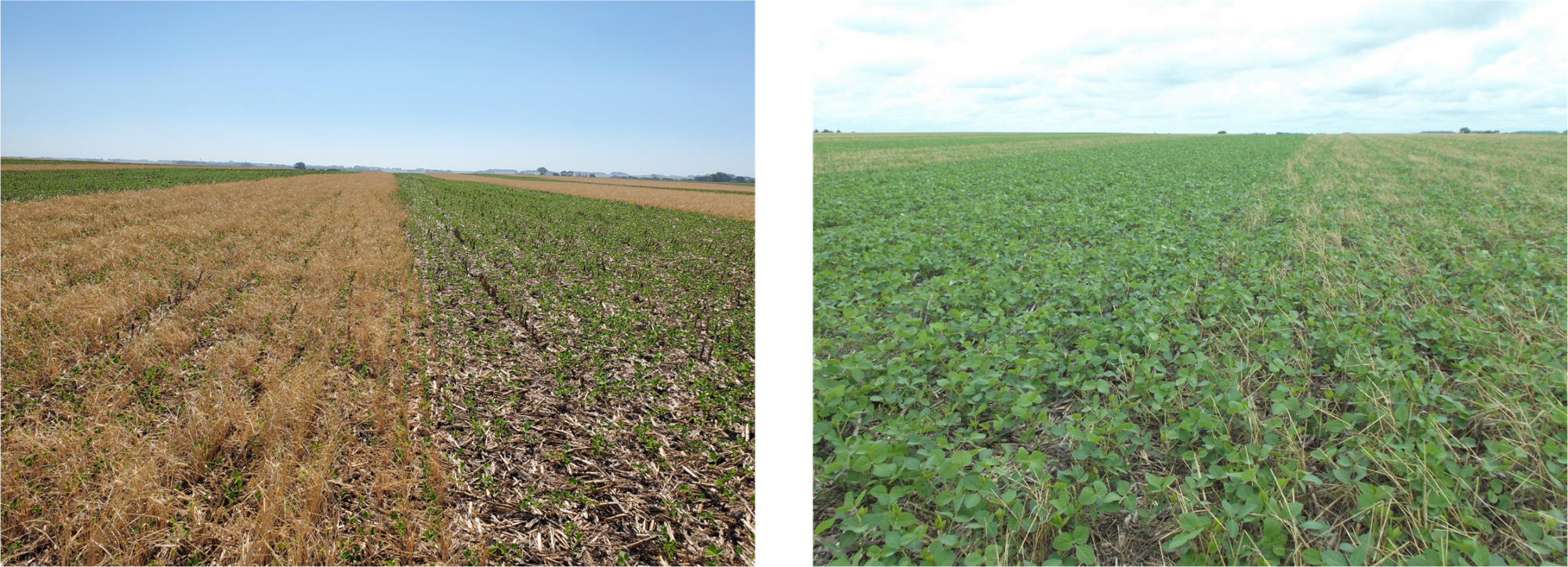
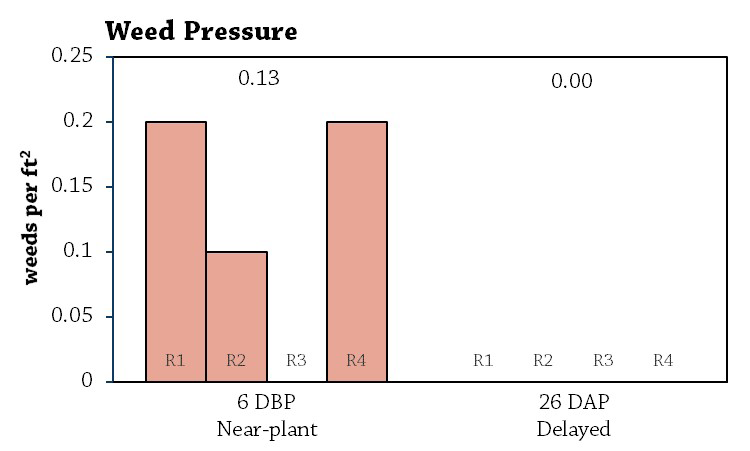
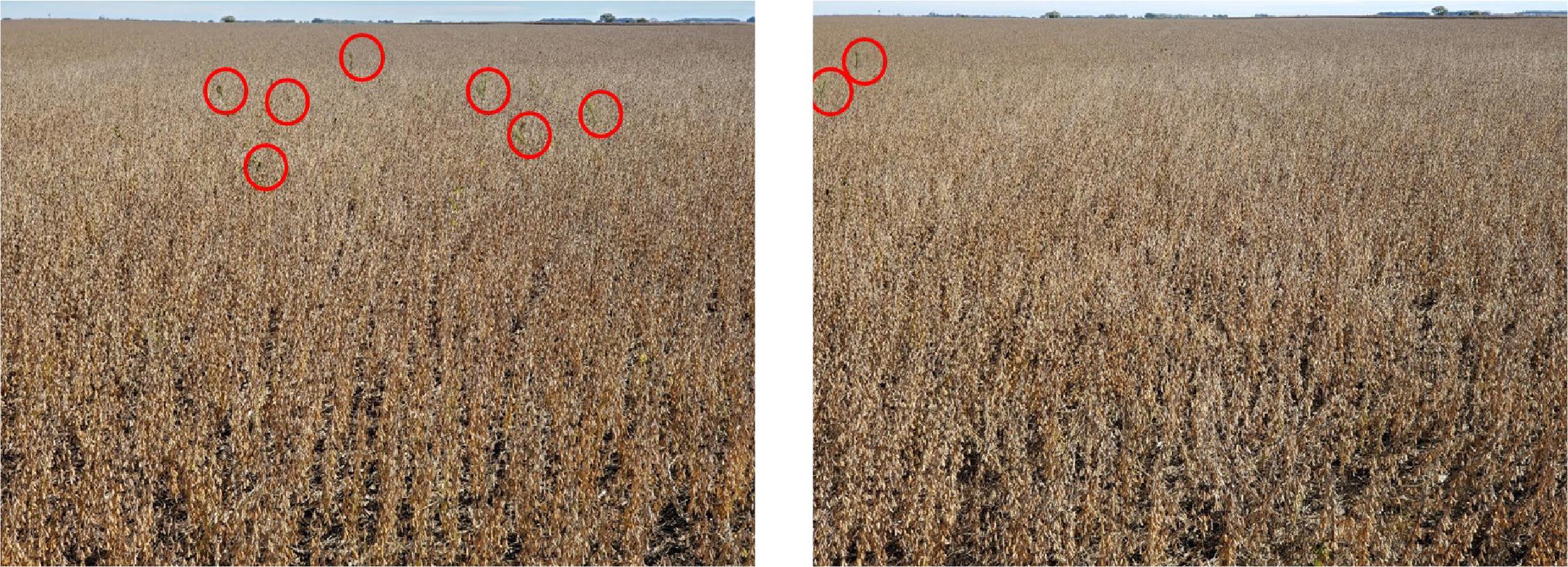
Sloan experienced very little weed pressure in both treatments (Figure 1). At the end of each strip, Sloan left a 90-ft length unsprayed in order to visually gauge the effectiveness of weed control from both cover crop treatments. In photos of the unsprayed area of each strip taken 2 days before harvest, weeds are visible in both treatments, but there appears to be a greater number in Sloan’s near-termination treatment strips. In the 8 years preceding this trial, the trial site was under continuous no-till and cover crops in a corn-corn-soybean rotation. This likely contributed to Sloan’s low weed pressure.
Conclusions and Next Steps
Sloan’s data showed that delaying cover crop termination until 26 days after planting soybeans compared to terminating six days prior to planting soybeans resulted in lower yield and a $39/ac loss in revenue. His results echo those of Tim Sieren, Sam Bennett and Jon Bakehouse’s, whose two earlier years of on-farm research led them to conclude that moisture management is key when delaying cover crop termination in dry conditions. Sloan reflected on the trial: “While soybeans can tolerate some early season competition with cover crops for light and moisture, and there is a benefit of improved weed control by letting covers grow longer, soybean yield can be reduced if covers grow too long.” Based on PFI on-farm research since 2015, farmers appear to have the most success when terminating a cover crop within one week of planting soybeans.
Appendix - Trial Design and Weather Conditions
References
- Gailans, S., J. Gustafson and J. Boyer. 2016. Cereal Rye Cover Crop Termination Date Ahead of Soybeans, 2016 Update. Practical Farmers of Iowa Cooperators’ Program. https://practicalfarmers.org/research/cereal-rye-cover-crop-termination-date-ahead-of-soybeans-2016-update/https://practicalfarmers.org/research/cereal-rye-cover-crop-termination-date-ahead-of-soybeans-2016-update/ (accessed November 2021).
- Gailans, S., J. Boyer and T. Sieren. 2018. Terminating Cereal Rye Cover Crops After Planting Soybeans. Practical Farmers of Iowa Cooperators’ Program. https://practicalfarmers.org/research/terminating-cereal-rye-cover-crops-after-planting-soybeans/ (accessed November 2021).
- Nelson, H., S. Bennett, T. Sieren and J. Bakehouse. 2020. Terminating Cereal Rye After Planting Soybeans. Practical Farmers of Iowa Cooperators’ Program. https://practicalfarmers.org/research/terminating-cereal-rye-after-planting-soybeans/ (accessed November 2021).
- Nelson, H., J. Bakehouse and S. Bennett. 2021. Terminating Cereal Rye After Seeding Soybeans (Or Not!). Practical Farmers of Iowa Cooperators’ Program. https://practicalfarmers.org/research/terminating-cereal-rye-after-seeding-soybeans-or-not/ (accessed November 2021).