Planting & 1st Year Kernza
On September 5, 2020, Ben planted his existing Kernza crop that he will harvest for the third time this year. “The very first year was a challenge due to competition with weeds," Ben said. "Kernza does not like to compete with weeds in the first year.” Planting into a clean field is a good start, but the other primary tactic is to plant early to avoid weed competition. “Of course, you can't control the weather, so if it doesn't rain, then that's a little bit hard to do.” It is recommended to plant Kernza in the fall as it needs to vernalize to produce grain, similar to other annual winter grains like cereal rye. “I planted with a no-till John Deere 750 drill, which works quite well,” Ben said. While Ben doesn't have a grass seeder on his drill, he suggests that would be the ideal set-up for planting Kernza. “This grain drill has seed cups which worked well although it was a bit of a challenge to get the seeding rate correct because it's quite a low seeding rate and it is a small, seeded crop.” The suggested seeding rate range for Kernza is between 10 and 18 lb/ac according to the Kernza Grower Guide, which is a new vital resource for getting started. Growing conditions impact the seeding rate; for example growing conventionally versus organic. Plant Kernza at a shallow seeding depth; according to Ben, "just laying it over the top, about a quarter inch down could work well." To calibrate his drill Ben ties a bag to one of his down tubes and drives 232 feet and then weighs the seed in the bag to get an approximation of lb/ac. He admits the accuracy of this method may not be perfect but could be improved by testing tubes on both ends of the drill.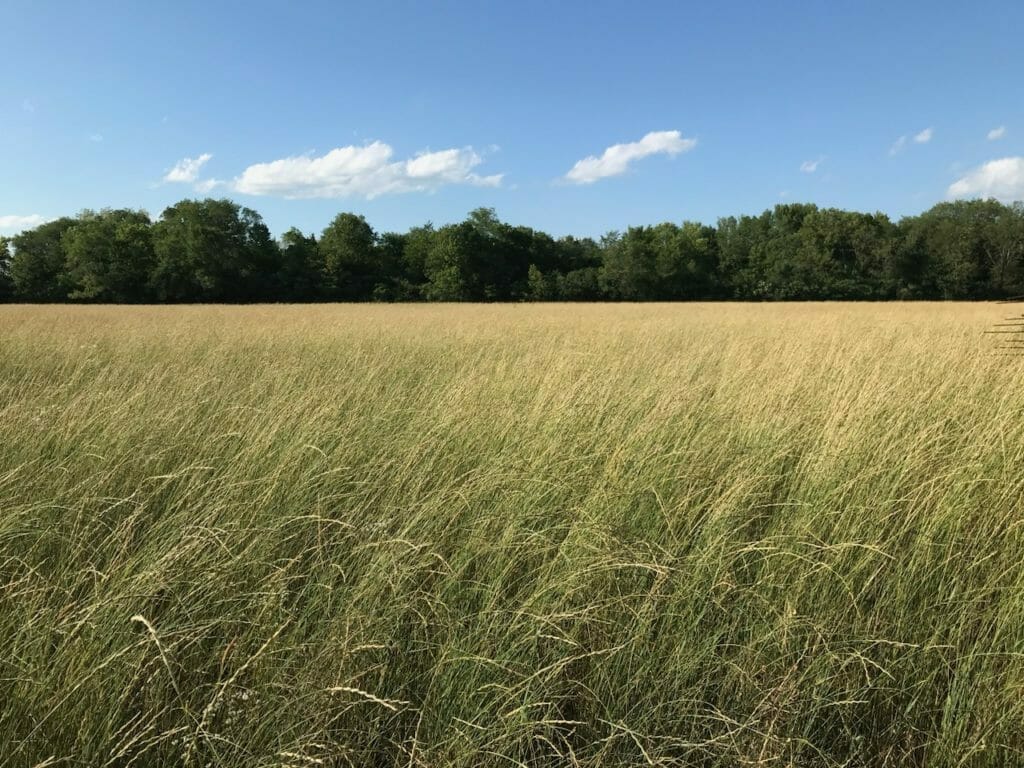
Harvest Tips
Kernza ripens from the top of the seed head down, so once the grains are ripened over two-thirds of the way down, the Kernza is ready for harvest. “It's a judgement call; once it's getting down there to those last few grains on the bottom of the head, you're okay to swath," Ben said. "What you don't want to do is lose the ones from the top, which might shatter out.” Ben does not suggest harvesting Kernza by direct or straight cutting with a combine. Instead, he recommends swathing and leaving the Kernza in a windrow for at least one day or until it is dry. “There is no Kernza setting on a John Deere combine or any combine, so part of the enjoyment of this crop is that I get to fiddle around with the different settings and figure out which one puts the most into the bin and the least back on the ground.”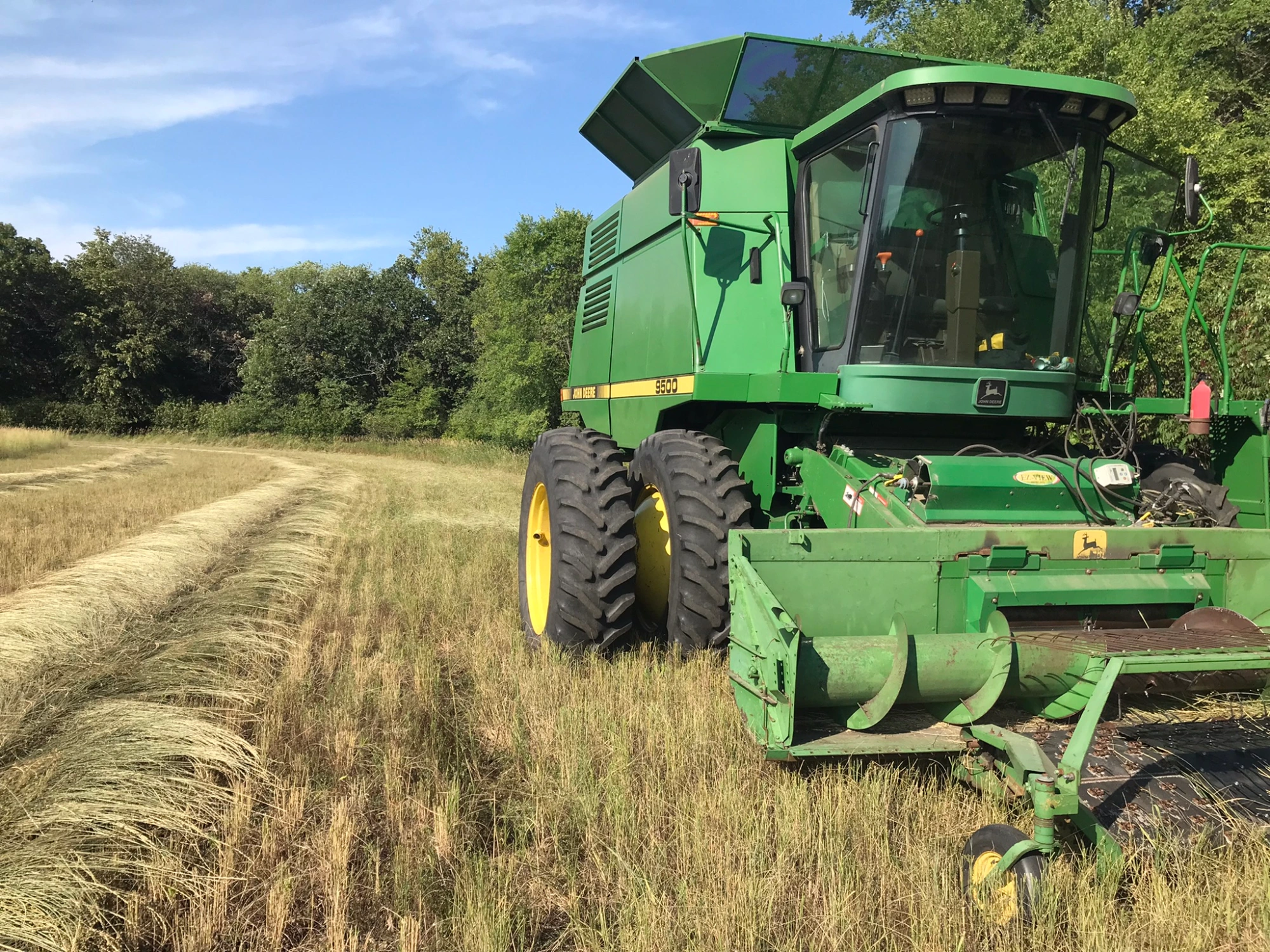
Market Opportunities
Markets are still developing for Kernza as it gains traction among farmers. In his role as vice-president of Perennial Promise, and founder of Aestiv, Ben is working to bring more market options to the table for growers. While these markets are developing, Ben shared his existing direct to consumer markets through retail, schools and breweries.“I sell whole grain flour and wheat products to nearly 25 different retailers around Minnesota, one in Kansas, and a few other institutions.”For other growers looking to get into Kernza, the first thing to do is to obtain a license from the Land Institute to grow it. Growers in Iowa, Minnesota and neighboring states can explore getting involved with Perennial Promise Growers Cooperative which currently represents 1000 acres or 30% of the world Kernza market. Seed for Kernza is currently available through Albert Lea Seed.